


Bi Gan, Gabriel Mascaro, Fernando Franco, Judith Colell, Dane Komljen, Rubén Seca, Annemarie Jacir, Romane Bohringer and Alexe Poukine trace a journey through human dignity and collective memory
The 70th edition of the Valladolid International Film Festival (SEMINCI) has had an intense day today, with the premiere of three eagerly awaited titles in the Official Section: the winner of the Grand Jury Prize at the Berlinale, The Blue Path by Gabriel Mascaro, and Resurrection by Bi Gan, Special Jury Prize at the 2025 Cannes Film Festival, as well as the latest film directed by Fernando Franco, Subsuelo, which was screened for the first time at SEMINCI. At the first of the two RTVE Galas in this edition, the audience was able to attend the premiere of Frontera by Judith Colell at the Carrión Theatre.
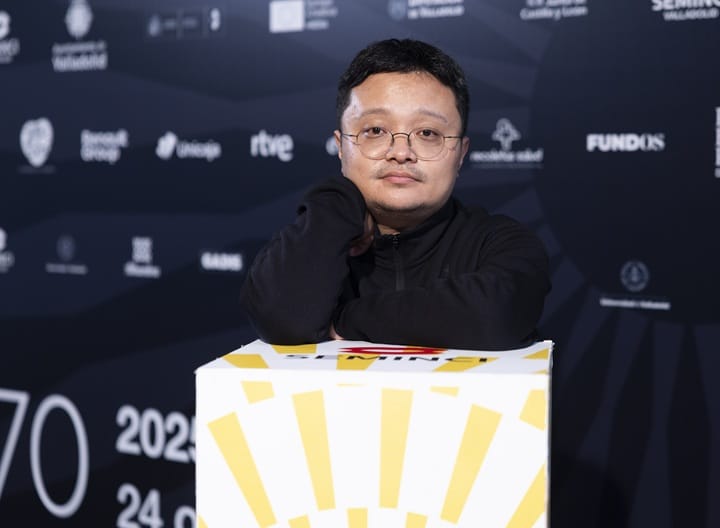
The first day of the festival began with the ambitious tribute to cinema that Chinese director Bi Gan has devised in Resurrection. Starring Taiwanese star Shu Qi, the film proposes a parallel universe where humans have lost the ability to dream. ‘We wanted to cover a specific period of time, starting at the beginning of cinema and ending with the turn of the century. Each chapter corresponds to a film genre, but also to the five senses,’ explained the director, who offered a message of hope. ‘I think we have to go back to traditional, ancient, pure, simple things. Our knowledge of the world seems flawed, but it is what builds our consciousness and our society; it is what makes us human.’
Brazilian director Gabriel Mascaro also conveys a humanistic message in The Blue Trail, a luminous story that reinvents the way old age is portrayed in cinema. The film, which premiered in Spain at SEMINCI, tells the story of 77-year-old Teresa’s unexpected journey down the Amazon, fleeing the nursing home where the government is forcing her to move after her working life has ended.
‘I wanted to make a film about the reinterpretation of an elderly person’s life that did not deal with finitude, death or nostalgia,’ explained Mascaro. The Brazilian director acknowledged the influence of works such as Michael Haneke’s Amour and Yasujiro Ozu’s Tokyo Story, but with the intention of distancing himself from them: ‘I was very reminded of Richard Linklater’s Before Sunrise and that chance romantic encounter. I wanted the film to be something like that; to play with this tradition, but displaced onto an elderly body as an act of resistance and transgression,’ he explained at the press conference.
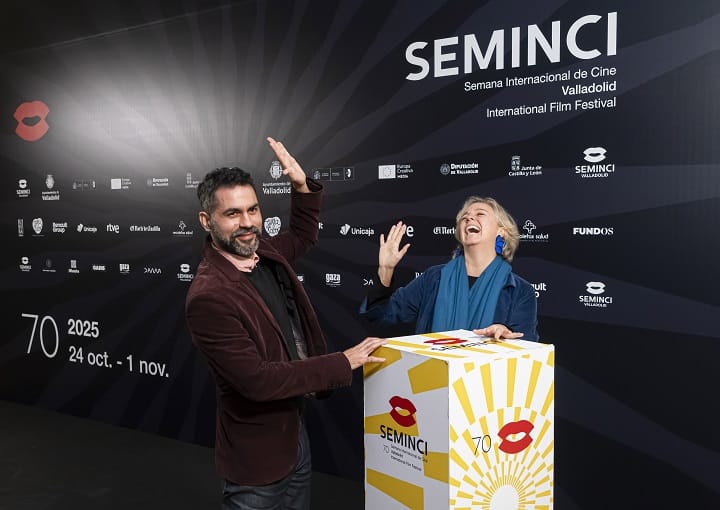
Spanish presence
Spanish director Fernando Franco presented Subsuelo in the official competition, a psychological thriller that dissects family ties through guilt, secrets and repressed desire. The film, starring Julia Martínez and Diego Garisa, marks a stylistic evolution for Franco: ‘My recurring way of filming has been to use sequence shots and a shoulder-mounted camera. But now I wanted to distance myself from that and move towards a slightly more sophisticated form.’
The actors highlighted the importance of intimacy in tackling the most intense scenes. ‘It was very easy, even though the film is tense and convoluted. We knew each other beforehand and being friends allowed us to work from a place of security,’ said Garisa about the scenes of ‘deep, twisted intimacy.’ Actors Itzan Escamilla and Iñigo de la Iglesia and writer Marcelo Luján were also present at the presentation of Subsuelo.
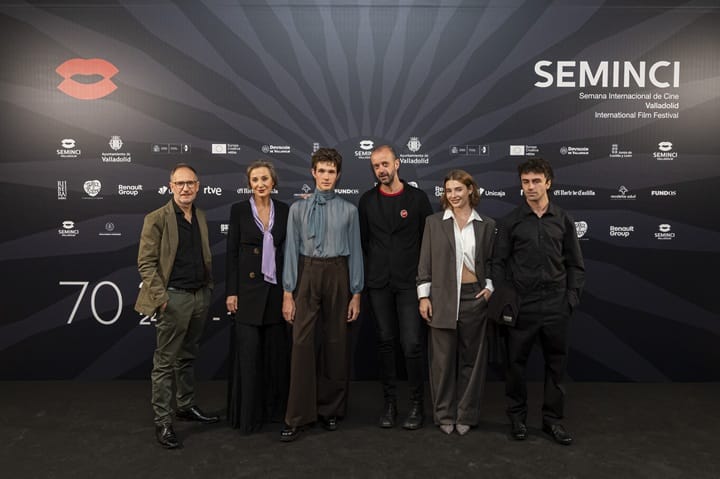
The RTVE Gala hosted the world premiere of Judith Colell’s Frontera at the Carrión Theatre. The current director of the Catalan Film Academy recovers the anonymous heroes of the Pyrenees. This period thriller set in 1943 rescues from oblivion the story of the inhabitants of a Pyrenean village who risked their lives to save hundreds of refugees fleeing the Nazi regime.
‘Reviewing the past and recovering memories are the only way to understand what is happening. And this is as important now, in the midst of genocide, as it was three years ago with the migration phenomenon,’ said Colell, establishing a direct link between the past and the present. The director emphasised that she was trying to ‘step out of her comfort zone’ by venturing into period cinema for the first time with a larger budget: ‘It is always more difficult for women to access these spaces, which is why I tend to make more intimate films.’
One of the film’s stars, actor Miki Esparbé, who travelled to Valladolid to present the film alongside María Rodríguez Soto and Asier Etxeandía, emphasised the film’s message of hope: ‘It is a call to action in times of barbarism and, at the same time, a message of hope. Thanks to people like those in this village, many lives have been saved and continue to be saved.’

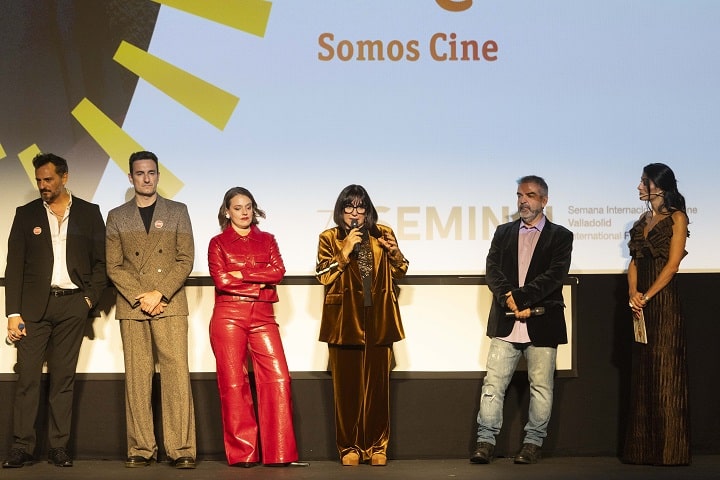
Historical and personal memory
Historical memory has been explored in other sections during this day. In Castilla y León Feature Films, Rubén Seca creates an intersection between national and family memory in Los Cangrejos, shot in Soria over five years, ‘a diamond in the rough with places to explore’ for film shoots, according to the director. Following in the footsteps of his great-grandfather’s memories, he offers an exercise in reconstruction based on the silenced voices in a region that, although far from the front lines, bears the wound of oblivion and the echo of repression. ‘In some places, there were not two sides fighting each other in the Civil War; it was the repression of some over others, especially in Castile and León.’
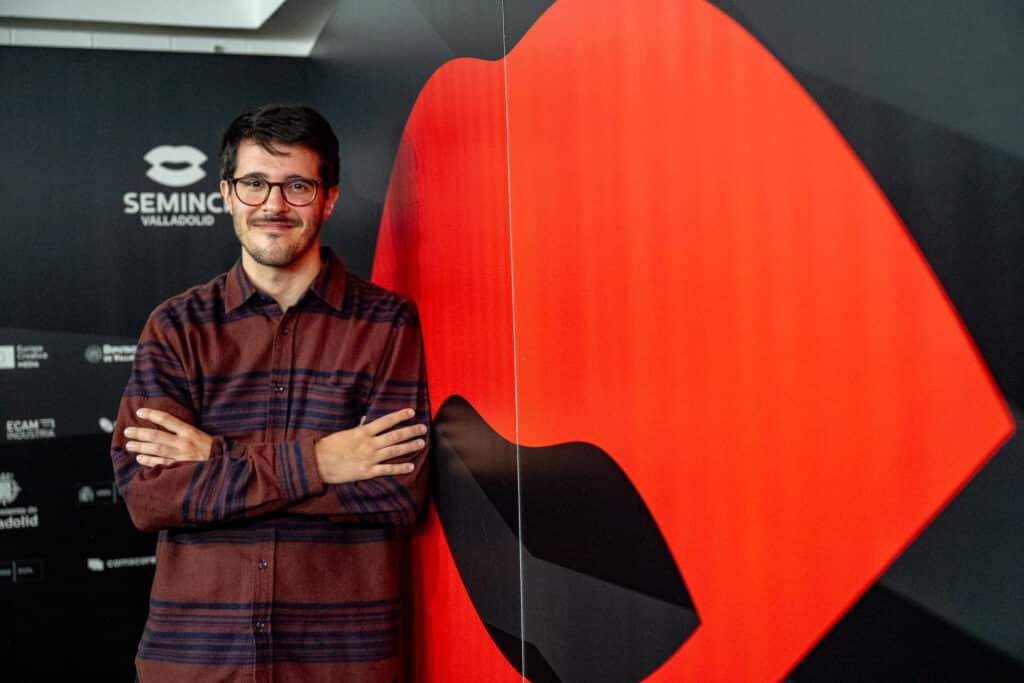
The memory of the Palestinian people reflected in Palestine 36, a historical drama by director Annemarie Jacir, focuses on a crucial year for understanding the Middle East conflict: ‘I hope this film will resonate deeply with audiences, helping them understand the importance of that year, 1936, and its immediate resonance with the present,’ said Karim Anaya, one of the film’s actors, alongside Jeremy Irons, Liam Cunningham and Hiam Abbass, scheduled in the Meeting Point section.
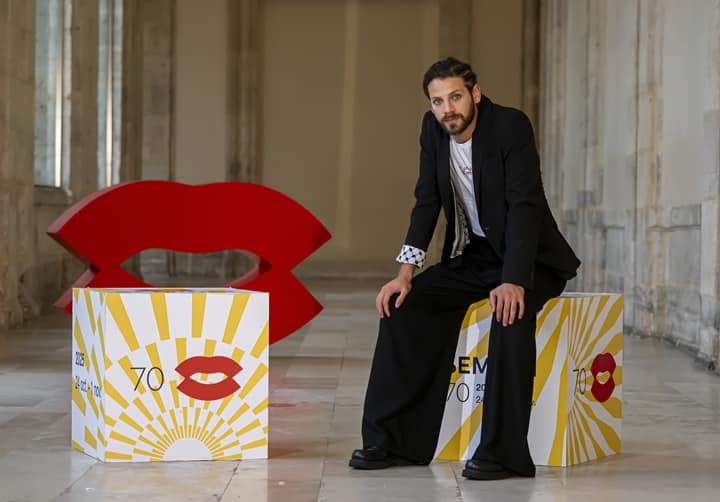
Palestine also took center stage on Saturday with the screening of Hind’s Voice, presented to a moved audience who rose to applaud, in the Constellations section. The film, by Tunisian director Kaouther Ben Hania, won the Special Jury Prize at the Venice Film Festival for its fictionalized reconstruction of the efforts of Red Crescent volunteers to save Hind Rajab, a six-year-old girl trapped in a car being bombed by the Israeli army in the Gaza Strip.
In the Time of History section, actress and director Romane Bohringer presented Tell Her I Love Her. ‘A mixture of fiction and the adaptation of someone else’s story in which I see myself reflected, about loss, the absence of a mother and a childhood marked by death, and how we try to evolve in our lives to become better adults,’ explained the filmmaker.
The irrational fear of losing her partner when she was pregnant with her second child is the starting point for Kika, a feature film programmed in Meeting Point and directed by Alexe Poukine, who visited Valladolid with the lead actress Manon Clavel, who plays a character inspired by a friend of the director, who is both a social worker and a sex worker, and tired of both jobs.
Dane Komljen, director of Desire Lines, a film programmed in Alchimies, explores in his third feature film, about an insomniac character who wanders around Belgrade in pursuit of a mysterious brother, the rebellious side of human beings, the part that resists being pigeonholed and where this can lead.
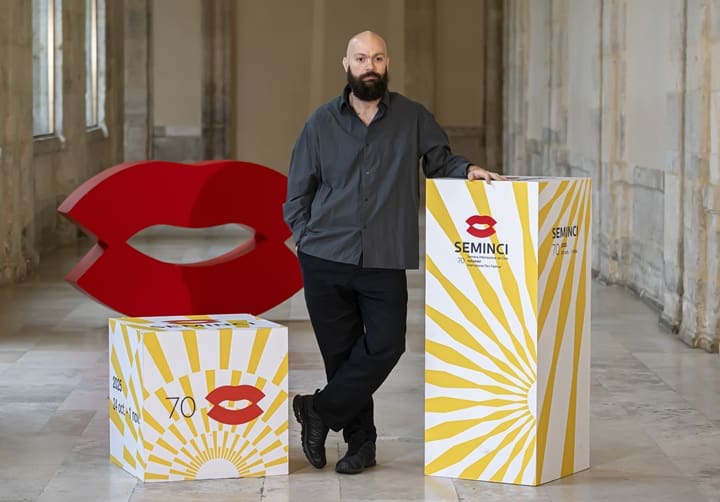
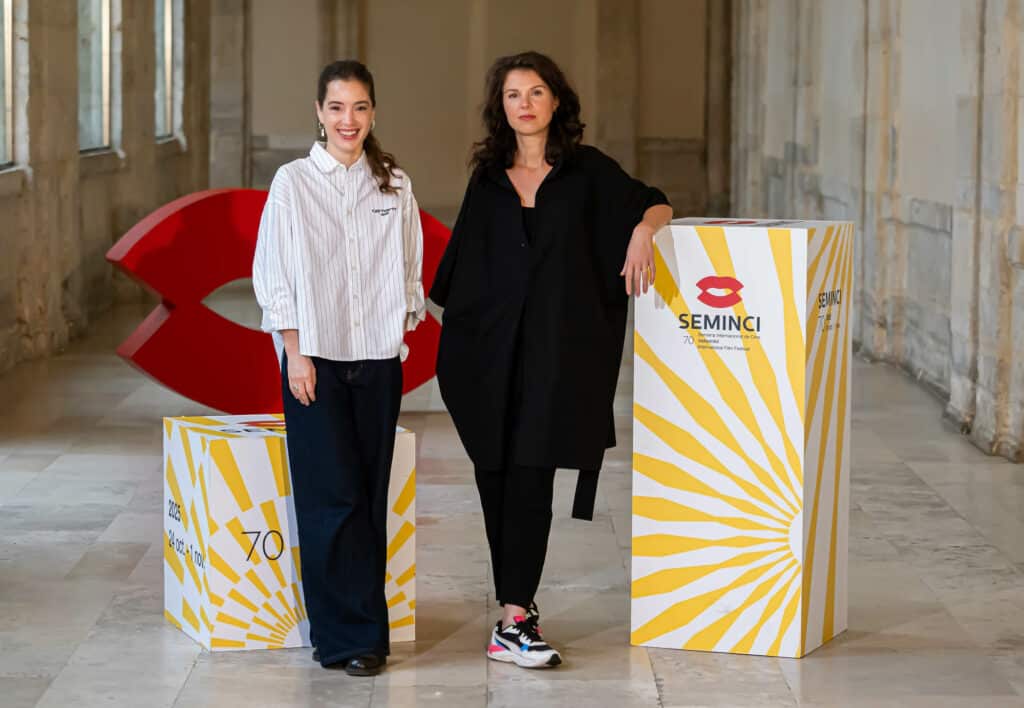
First session of short films
The short format also took centre stage today, with the screening of four short films from the Official International Short Film Section: No Skate!, Nervous Energy, Klonter and the work of Spanish director Gala Hernández (César Award winner for The Mecanics of Fluids), +10K, which delves into the life of a 21-year-old boy who dreams of earning €10,000 a month by following the advice of cryptobros and online influencers.
Saturday also featured a Special Screening of Las gafas de Isabel Coixet, a documentary from the Imprescindibles programme directed by Santiago Tabernero. This work paints an intimate portrait of the director, exploring her obsessions, the evolution of her vision and her way of understanding cinema, through testimonies from directors and actors such as Clara Roquet, Alauda Ruiz de Azúa and Javier Cámara, as well as regular collaborators. ‘I think it is impossible to understand the generational change of women that is currently taking place in Spanish cinema without the precedent set by Isabel Coixet and her solid career,’ says Tabernero.