
“Between Dreams and Hope” by Farnoosh Samadi; “The Luminous Life” by João Rosas; “Dear Tomorrow” by Kaspar Astrup Schröder; and “Memory” by Vladlena Sandu open a festival that reflects on personal and social transformations in the contemporary world
The opening day of the 70th SEMINCI began yesterday with the presence of four directors from different backgrounds who, from the Meeting Point, Time of History and Alchemies sections, give a preview of what awaits the Valladolid audience in the coming days: a programme full of diverse perspectives and powerful interpretations of today’s world.
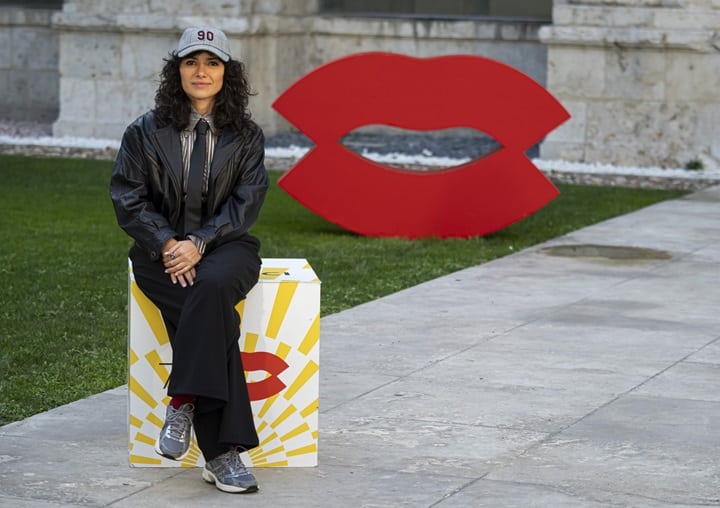
This is demonstrated by a title such as Between Dreams and Hope, with which Farnoosh Samadi returns to the Meeting Point section after winning this same section with her debut feature film The 180° Rule in 2020. ‘I am very excited to be able to bring my new feature film to a festival where I feel at home, which is already part of who I am,’ said the Iranian director. Between Dreams and Hope tells the story of Azad, a young trans man who must face family and bureaucratic obstacles to make his gender change official, showing the tension between modernity and tradition that is still latent in Iranian society. ‘I wanted to talk about love in its purest form and show the reality that exists within the minds of these characters, but also how what they experience reflects a universal problem,’ added Samadi, highlighting the power of cinema as a driver of social change: ‘The challenge lies in changing the way an entire society thinks, feels and acts, so that this has an impact at the political level.
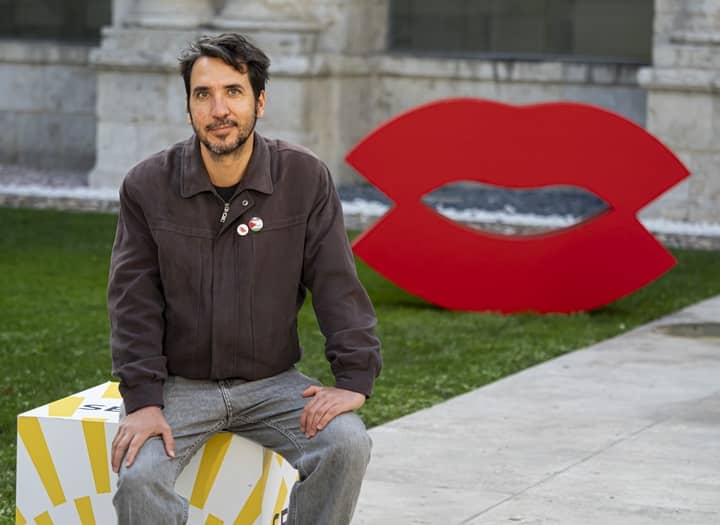
Also at the Meeting Point, Portuguese filmmaker João Rosas presented his first feature film, The Luminous Life, at SEMINCI, in which echoes of filmmakers such as Eric Rohmer, Robert Bresson and Richard Linklater can be perceived. The city of Lisbon becomes another character in this story that follows Nicolau, the protagonist of his previous short films, as he enters adulthood. ‘This film stems from my desire to continue working with a boy I met many years ago, in 2012, when he was 11. I was very interested in the relationship between childhood and cinema because, for me, both represent a curious view of the world,’ the director shared. ‘Now, at the age of 24, I was interested in exploring the idea of identity formation, learning at that moment when we leave our parents’ home, change friends or partners, and so on. Love and friendship are a fundamental part of this stage.’
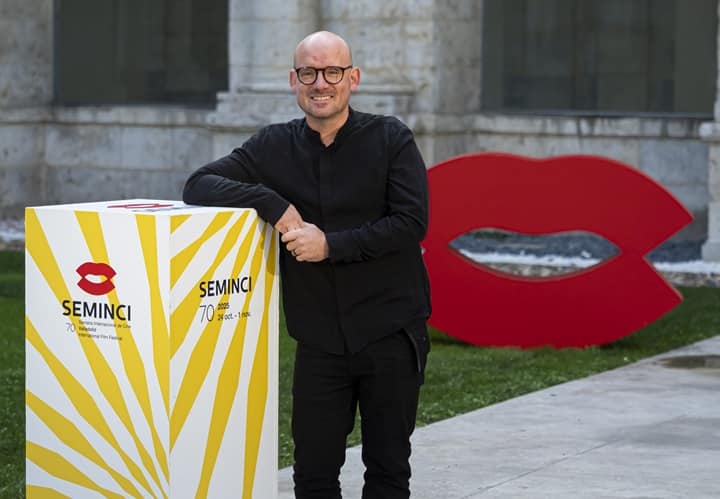
From Portugal, the day at SEMINCI travelled to Japan with Dear Tomorrow, by Kaspar Astrup Schröder (Time of History), which takes a non-fiction approach to a real crisis in Japanese society: the isolation suffered by almost 40% of its inhabitants. Melancholic and luminous in equal measure, Dear Tomorrow shows the daily lives of different people and focuses on the government measures that have been taken to counteract these circumstances, documenting a battle that is both individual and institutional. ‘Digital transformation has affected the ways in which we interact with each other and has led to a pandemic of loneliness around the world. I wanted to address this from a very personal perspective, following two characters who are going through this situation, in order to paint a portrait of society from that vantage point’, said Schröder. He added: ‘I chose Japan because, in many cases, it acts as a magnifying glass for what is happening in the rest of the world, and I believe we can learn a lot from that society.’
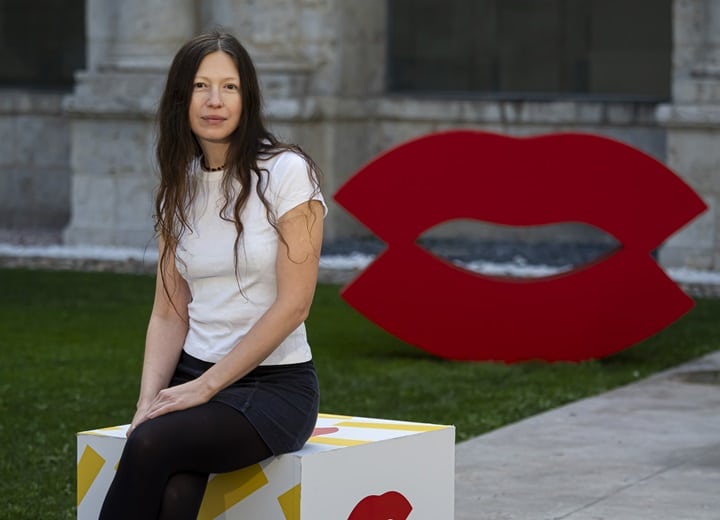
The intersection between the personal and the political lies at the heart of another offering from Time of History: Memory, by Vladlena Sandu, which premiered in Spain after receiving the Audience Award at the Giornate degli Autori in Venice. Archival images, pop effects and puppet theatre come together in this hybrid film that starts from the most intimate sphere to question the impact of war on children around the world. Sandu, who experienced first-hand the dismantling of the USSR and the Russian occupation of Chechnya, based the film on her personal diaries and the results of hypnotherapy she underwent. All this, in her words, to ‘try to create images from memory, something that is absolutely personal and at the same time can be strange, unusual, cinematic’. In addition, the filmmaker has reiterated the importance of telling these stories in the midst of the current political landscape: ‘I hope my film will be a bridge for audiences around the world to approach realities they don’t know and understand the traumatic impact that war has had and continues to have on children.’
While Memory directly relates the past to the present, Memory of Princess Mumbi incorporates the future into the equation, questioning the relationship between human beings and technology and the ways in which it determines the paths of artistic creation. Damien Hauser presented this innovative audiovisual tapestry at Alchemies, opening up the debate on a topic that is highly relevant today: the impact of artificial intelligence on art and cinema. “Since I started experimenting with AI, many moral concerns have arisen. It was very liberating to use it because otherwise I could never have made this great science fiction film. But it was also important for me to address the issues behind its use. I believe we are at a point where we can use this tool to enhance our art, but never to replace it. And we have to be very careful with this, because the future is uncertain and frightening,” warned the Swiss-Kenyan director.