


A retrospective series and a publication invite reflection on the past, present, and future of realism in cinema in the Memory & Utopia section.
The 70th edition of the Valladolid International Film Festival (SEMINCI) will dedicate the Memory & Utopia section to highlighting its historical role as a benchmark for social and humanistic cinema in Spain. To celebrate this legacy, it will offer a profound reflection on its evolution, articulated through the selection of a dozen titles released in Spain during previous editions of SEMINCI. In addition, the festival will publish a book on the different visions of realism in cinema, offering an interdisciplinary dialogue between history and film theory.
A unique history in the Spanish film scene
For seven decades, SEMINCI has forged its identity based on commitment and the deepest humanism, pioneering in our country by giving visibility to key films and authors, as well as works that have been left out of the official canon. In its 70th edition, to be held from October 24 to November 1, 2025, the festival has selected a dozen titles from its programming history, with gender parity among filmmakers, within the Memory & Utopia section.
This section was born in 2023 aiming to recover restored versions of masterpieces and forgotten or censored films. This year, SEMINCI invites the public to reconsider the place in the history of cinema of these films, which cover the different aspects of social and political cinema with an expansive look in geographical, chronological, and thematic terms.
Among them are Bernhard Wicki‘s The Bridge (1959), the great post-war German anti-war film; Ousmane Sembène‘s Mandabi (1968), which established the bases of independent African cinema; Humberto Solás‘ Lucía (1970), an innovative feature film in its narrative structure, a key piece in the development of the New Latin American Cinema; or Harlan County U. S.A. (1976), Barbara Kopple‘s Oscar-winning documentary, which set new standards for political and social documentary cinema.
Choral publication ‘Cinema under the influence of the real’
In order not to limit itself to a nostalgic celebration, Memory & Utopia projects itself towards the future of committed cinema, establishing bridges between the historical legacy and the new ways of approaching social reality from the cinematographic language through the publication of the book ‘The Capture of Time. A Cinema Under the Influence of the Real’. This choral publication, coordinated by Àngel Quintana and the magazine Caiman. Cuadernos de Cine, presents an exhaustive analysis of the multiple manifestations of cinematographic realism, from its origins to the contemporary digital era.
The book explores both the classic humanist visions of filmic realism and the technical and aesthetic devices that have transformed our perception of the real, including direct cinema, video art, and new digital technologies. Its pages dedicate special attention to dissidences and alternative voices that have questioned canonical models, thus offering a complete cartography of how the seventh art has reflected, interpreted, and transformed our relationship with reality and with the contemporary time of each era throughout its history.
An introduction by Ángel Quintana opens the publication. It unfolds and analyzes the historical itinerary of realism over the last 70 years, and then offers a broad kaleidoscope of texts signed by authors such as critic and writer Jean-Michel Frodon (former director of the French magazine Cahiers du cinéma), who undertakes to detect the heritage of André Bazin from the cinema of Roberto Rossellini to the proposals of Abbas Kiarostami, Hou Hsiao-hsien, or Agnès Varda, among many others. The Seminci programmers Eulàlia Iglesias and Carolina Martínez also participate in this ambitious essay. The former contributes the perspective of women filmmakers facing reality, and the latter traces the subjective vision of realism that can be found through experimental cinema and video art.
Carlos Losilla reviews in his article what models of realism coexist in contemporary cinema; Áurea Ortiz analyzes the heritage of anti-authoritarianism of the New Cinemas of the sixties; José Enrique Monterde starts from different theoretical conceptions of realism as an aesthetic concept to arrive at its development around Italian neorealism. For his part, Jaime Pena, director of the Filmoteca de Galicia (CGAI), discusses the influence of Bertolt Brecht’s ideas on directors such as Jean-Luc Godard, Béla Tarr, Straub and Huillet, Aki Kaurismäki, or Theo Angelopoulos; and researcher and critic Lourdes Monterrubio contributes her vision of essay cinema as a political weapon and alternative model.
The book also reviews, through articles signed by Laura Gómez Vaquero and Alan Salvador, how devices modify the way of seeing the real, exploring from observational documentary cinema to the digital era and artificial intelligence.
Complete list of titles of the Memory & Utopia section

Grandmother. Idrissa Ouédraogo (Burkina Faso, France, Switzerland, 1989)
The plot of this feature film, winner of the international critics’ prize at the Cannes Film Festival, tells the story of the friendship between a boy and a misunderstood old woman who is rejected by the rest of the rural community in which they live as a witch. Ouédraogo aims to reflect the complicity that can arise between people of different ages if social prejudices are set aside, while delving into African culture and traditions.
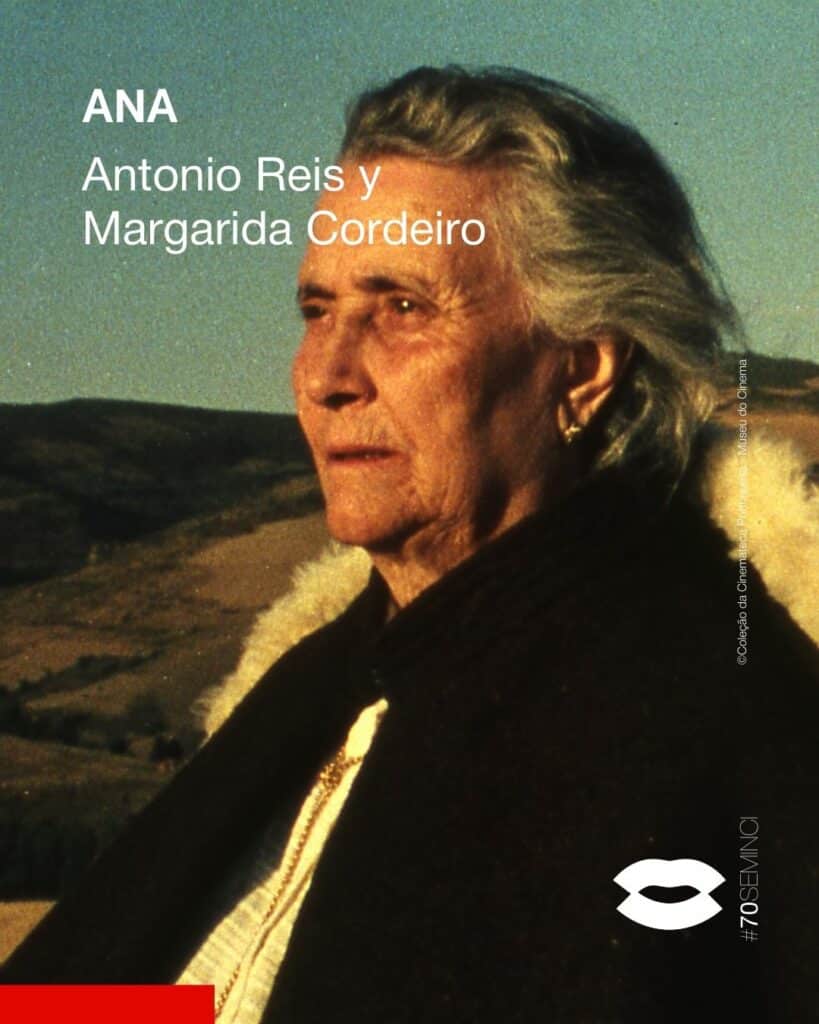
Ana. Margarida Cordeiro and Antonio Reis (Portugal, 1982)
With their poetic cinematographic style, the filmmaking couple Cordeiro and Reis won the Golden Spike at the 27th edition of SEMINCI with Ana. In this film they departed from the urban character common in much of post-Salazar revolutionary cinema and used the landscape of the Trás-os-Montes region in northeastern Portugal as an evocative setting for an intergenerational family portrait.

Beata. Anna Sokolowska (Poland, 1965)
Directed with great sensitivity by the currently under-recognized Polish filmmaker Anna Sokolowska, Beata won the Special Jury Prize at the 11th edition. This feature film reflects on hasty maturity and family conflicts through the story of a 16-year-old girl who runs away from home and her affluent life because she does not understand the hypocrisy and falsity of the adult world.
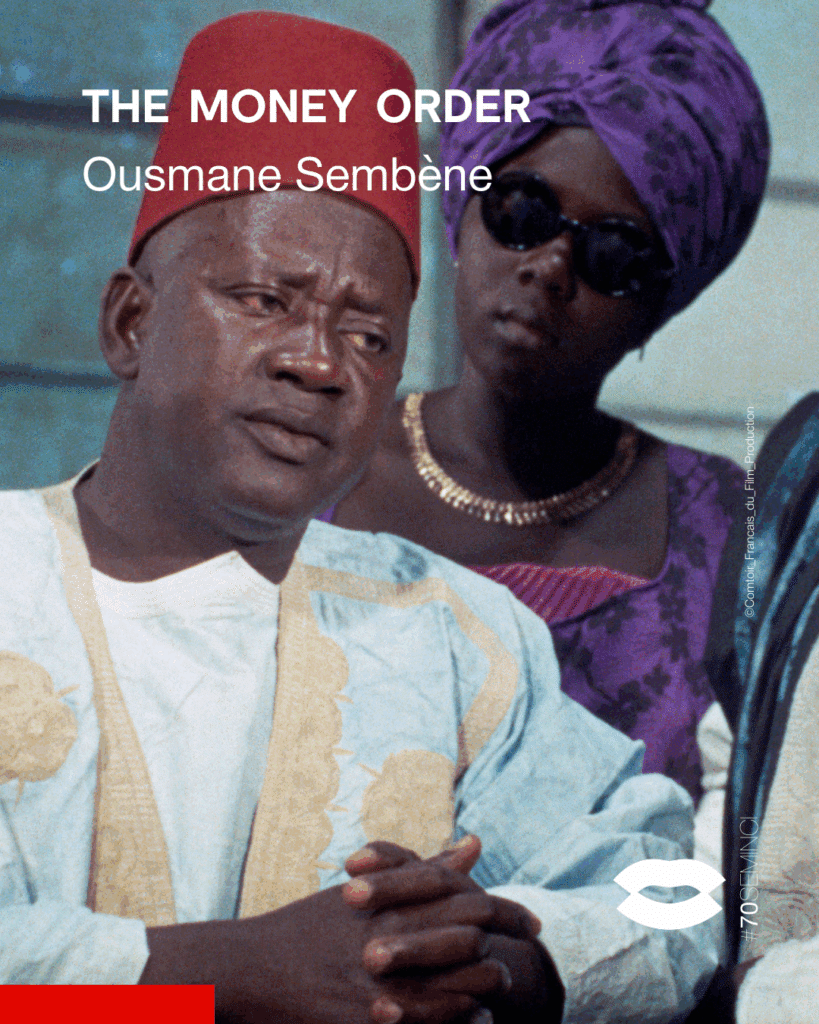
The Money Order. Ousmane Sembène (Senegal, 1968)
Winner of the international critics’ prize at the Venice Film Festival, this title by the man considered the father of African cinema was a big step towards the realization of his dream of creating a cinema by, about and for the inhabitants of his continent. Adapted from a novel by the director himself, it is one of his funniest and sharpest films and depicts with bitter irony a society marked by colonialism and ravaged by corruption, greed and poverty.

The Bridge. Bernhard Wicki (Germany, 1959)
First anti-war film shot in Germany after World War II that achieved international repercussion. In addition to the Silver Spike and the CEC Medal for Best Screenplay at the 5th edition of SEMINCI, it received an Oscar nomination and a Golden Globe. Set near the end of the conflict, it follows a group of teenagers in a small town dealing with everyday issues before enlisting as soldiers and being forced to defend their territory in a confusing and terrifying battle.
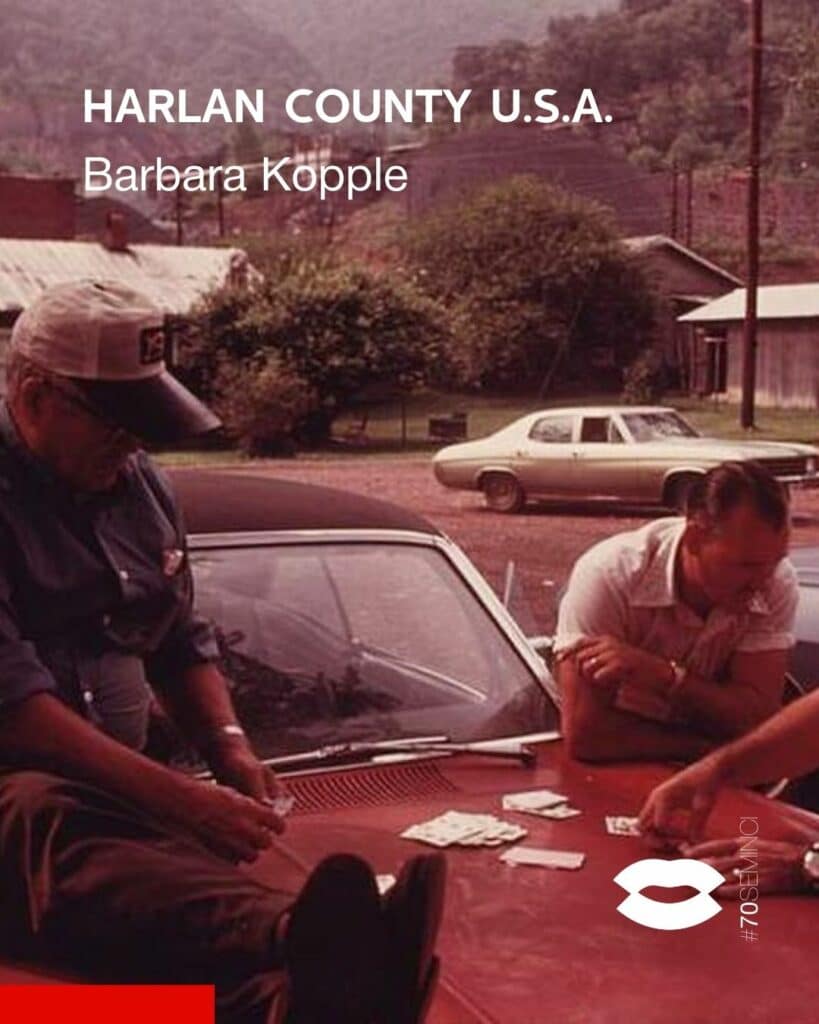
Harlan County U.S.A. Barbara Kopple (United States, 1976)
Barbara Kopple uncompromisingly depicted in this Best Documentary Oscar-winning work a hard-fought coal miners’ strike in a small Kentucky town, conflicts with scabs, local police and the company. With a country and bluegrass soundtrack, the film records over 13 months the struggle for survival of a community and the decisions of a company influenced by its bottom line.

The Basilisks. Lina Wertmüller (Italy, 1963)
The first work as a director by Lina Wertmüller, the first woman to be nominated for an Oscar for Best Director, portrays the time-lapse and inertia of the Italian provincial life of three young women, exploring the dilemmas between familiar comfort and the search for new horizons. It features a soundtrack composed by Ennio Morricone and won its director the award for best direction at the Locarno Festival.
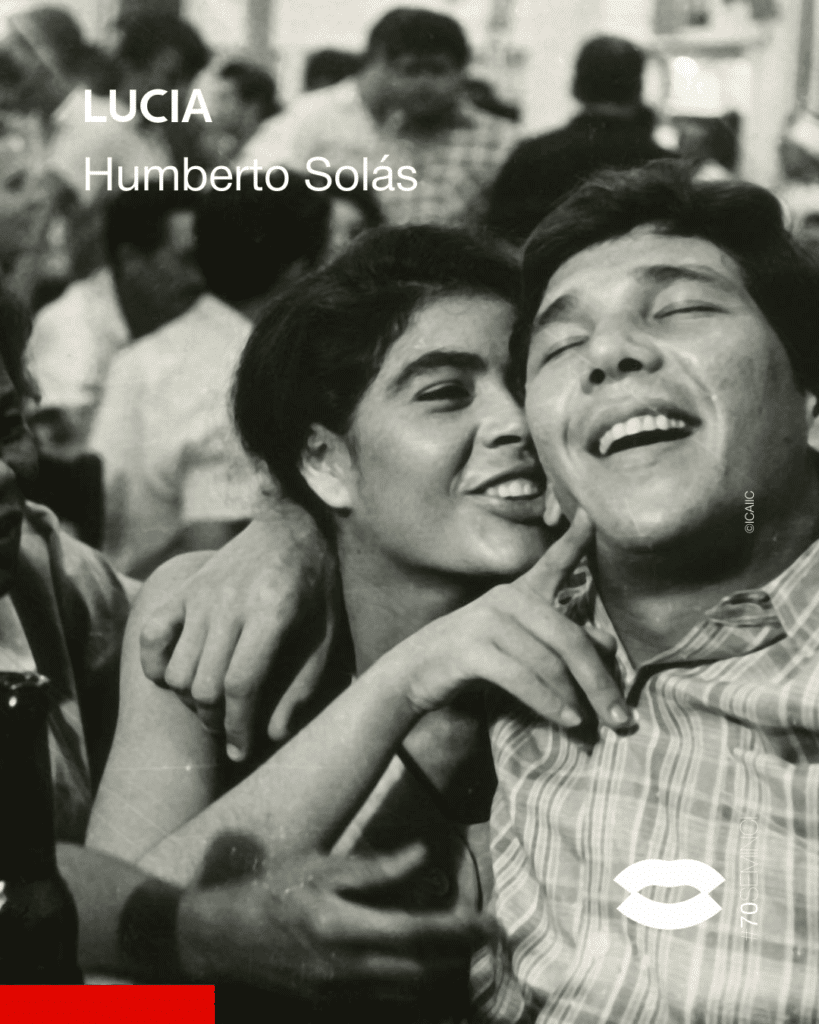
Lucia. Humberto Solás (Cuba, 1968)
The Cuban director created an innovative structure for this film, divided into three independent episodes, each focusing on a woman from a different social class and different periods of Cuban history: colonialism, neocolonialism, and the Socialist Revolution. The intention of this key title of the New Latin American Cinema was to reveal the contradictions of an era through the role of women.

Melek Leaves. Jeanine Meerapfel (Germany, 1985)
The Argentinean journalist and filmmaker based in Germany makes a semi-documentary about immigration in the Federal Republic of Germany and the invisible wounds inflicted on foreign workers through the testimony of a 38-year-old Turkish woman who, after living in West Berlin for 14 years, decides to return to her country. Meerapfel invites us to rethink the image that society shares of what a Turkish woman looks like through excerpts from interviews with the protagonist.
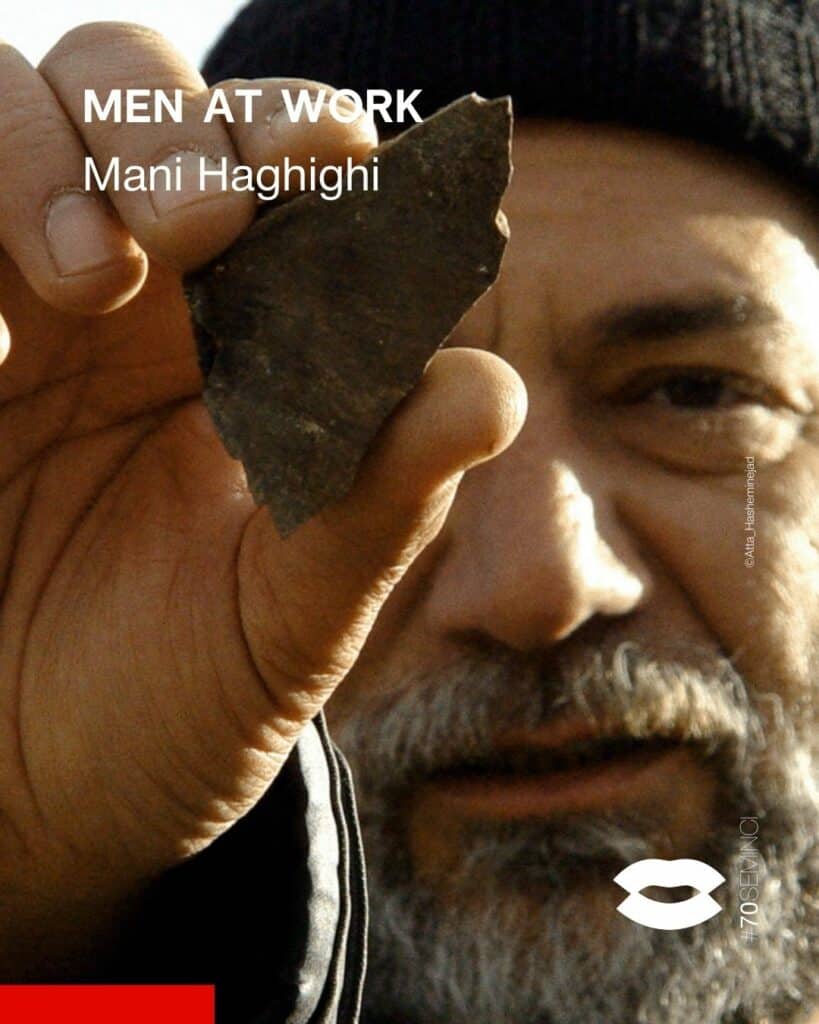
Men at Work. Mani Haghighi (Iran, 2006)
Based on a story by Abbas Kiarostami, the Iranian filmmaker’s second feature film tells, with a slow but steady upward pace in its madness, the car journey of four old friends, who encounter a strange and huge rock in the middle of a mountain road. Their attempts to dislodge the rock function as a metaphor for the obstacles of modern life and human relationships.

Time of Love. Julio Diamante (Spain, 1964)
Winner of the Medal of the Cinematographic Writers Circle at SEMINCI, it unfolds three independent stories to compose a disenchanted portrait of the difficulties that men and women had to overcome to deepen their relationships. Julio Diamante tackled with naturalness issues as delicate at the time as premarital sex, while revealing the miseries of a frustrating social order.

A Dry White Season. Euzhan Palcy (United States, 1989)
With this film about the apartheid regime in South Africa, starring Donald Sutherland and Susan Sarandon, Euzhan Palcy became the first black woman to direct a film for a major Hollywood studio. A filmmaker specializing in exploring the political undercurrents of issues such as race, gender and colonialism, A Dry White Season is a fierce portrait of a white man’s realization of the appalling discrimination of the country in which he lives. Marlon Brando earned an Oscar nomination for his supporting performance in this film.