


Film festivals, politicians, filmmakers, and institutions across Spain and Europe have praised how he championed auteur cinema for 30 years through his work leading some of Spain’s most prominent film festivals in Valladolid, Gijón, and Seville
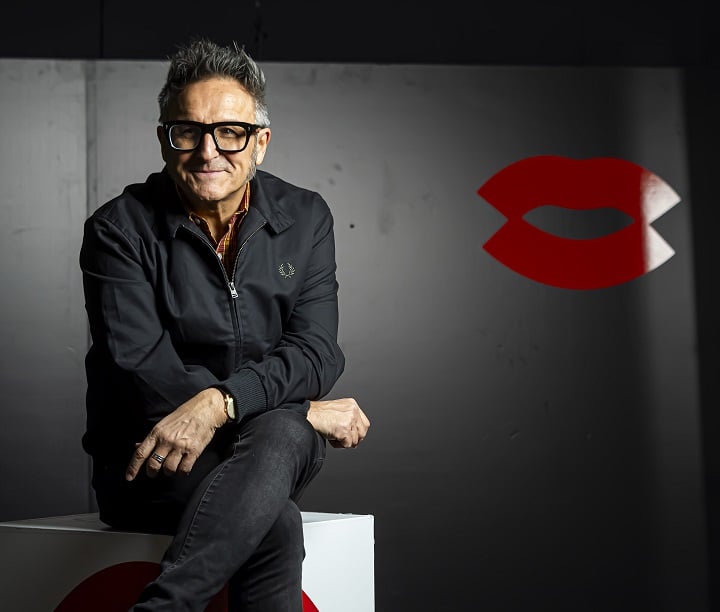
At the helm of the Valladolid International Film Festival (SEMINCI) since 2023, José Luis Cienfuegos (1964–2025) has left an indelible mark on Valladolid, a masterful epilogue to his career as a programmer and cultural manager. “With his passing, he leaves us a legacy of 30 years dedicated to promoting some of Spain’s greatest film festivals,” said Minister of Culture Ernest Urtasun. At the minister’s proposal, the Council of Ministers has approved the posthumous awarding of the Gold Medal for Merit in Fine Arts to José Luis Cienfuegos “for his innovative vision, his deep commitment to film culture, and his ability to foster a space where creators and audiences could come together.”
“He was a lover of life and people, an enthusiast, and a person full of hope. SEMINCI and the city of Valladolid will always remember José Luis Cienfuegos,” added Jesús Julio Carnero, mayor of the city where he lived for the last three years, to the professional and personal tribute woven together by those who worked closely with him every day. The councilman took to social media to express his pride at receiving the medal for his contribution to film festivals and the world of cinema, “especially for his work with SEMINCI and his legacy in the city of Valladolid.”
For Blanca Jiménez Cuadrillero, the councilor for Tourism, Events, and City Branding, Cienfuegos “gave his all for the festival, for cinema, for that realm of impossibilities that is art—a realm accessible only to a privileged few who possess the brilliant and unerring vision needed to see life.” She added on her X account: “Thank you for your genius, for your impetuosity and your determination. Cinema is freedom, and you were free.”
The president of the Regional Government of Castile and León, Alfonso Fernández Mañueco, also mourned his passing and called it a “great loss for Valladolid, for the culture of Castile and León, and for SEMINCI, an international benchmark in cinema.” A festival where “he promoted a bold and diverse program,” according to the ICAA. The Institute of Cinematography and Visual Arts has also been joined in remembering Cienfuegos by other public institutions such as Acción Cultural Española, the State Archives, and the Ibermedia program; professional associations such as the Spanish Academy of Motion Picture Arts and Sciences, the Acadèmia del Cinema Català, ADICINE, DAMA, AECINE, CIMA, AMA Audiovisual, ASECAN, and the film schools ESCAC and ECAM.
Former festival directors have also been quick to express their admiration for his work. Javier Angulo, his predecessor, highlighted among his many achievements the “Ventana Cinéfila” initiative, which each year brings cinema online to a quarter of a million schoolchildren across Spain thanks to the collaborative efforts of the festivals under the Profestivales21 umbrella. “We have lost a key figure of this century in understanding the respect and value that festivals hold today for the film industry in general, and the Spanish industry in particular. That is why he came to SEMINCI, and that is why his loss is so great and so deeply felt at the festival and in the world of Spanish cinema.”
Fernando Lara, who served as director of SEMINCI from 1984 to 2004, highlighted the energy and warmth embodied by the man who would later take his place—a man with whom he shared a bond of friendship and mutual admiration: “Cienfuegos (One hundred fires in Spanish) All of them were present in José Luis, and he projected them toward Gijón, Seville, and Valladolid. Until, paradoxically, a bolt of lightning extinguished them. He was my friend.”
“His legacy cannot be confined to a filmography or a list of awards,” summarized José María Viejo del Pozo, general director of FUNDOS, in La Tribuna de Valladolid. “It is measured in gestures, in friendships, in the spaces he helped create so that cinema could continue to be a tool for understanding and beauty.”
The same newspaper noted that “in Valladolid, he left his most personal mark: a bold, innovative project deeply connected to the industry and the public. Its latest edition, the 70th, has already become an unforgettable legacy. Spanish cinema bids farewell to a visionary whose contribution forever changed the way we experience and celebrate cinema.”
In El Norte de Castilla, Chema Cillero wrote, “Valladolid’s SEMINCI fit him like a glove.” His legacy will remain linked, according to the journalist, to the “serene yet firm renewal of SEMINCI, where he championed the blend of cinematic memory and contemporary risk. For the film community and for Valladolid, Cienfuegos leaves behind the image of an approachable director, passionate about cinema and convinced that festivals are, above all, a meeting place between films and the public.”
The void left in Valladolid’s film-loving community has been felt by local exhibitors, foundations, and associations, as well as educational institutions. As Ana Cea, coordinator of the University of Valladolid’s Master’s Program in Film, stated in El Día de Valladolid, he set a standard; he was a leading figure in the film industry and on the festival circuit. “Your example is inspiring,” she concluded. “It is very sad to lose a man with such drive, enthusiasm, and the strength to want to work,” lamented Paco Heras, owner of the Broadway and Manhattan Cinemas in Valladolid, in El Norte de Valladolid, alongside Arturo Dueñas, owner of the Casablanca Cinemas, neighbors of the Calderón Theater, the festival’s headquarters, which hosts the screenings for the juries.
News of his passing extended beyond the purely cinematic sphere. Even Real Valladolid Football Club sent a message reflecting the “deep respect and admiration we feel for his legacy and for all that he has meant to culture and to Valladolid.” Gabriel Solares and Enrique Uruñuela, co-presidents of the club, added: “He leaves us with an undeniable commitment to independent cinema and a creative and work ethic that has allowed us to continue celebrating a much-loved and respected film festival thanks to people like him.”
The Pajarillos Educa association also thanked Cienfuegos for his work in “bringing movie theaters to the Pajarillos neighborhood so that our children and young people could have a space within SEMINCI and fulfill their dreams as young filmmakers with equal rights and opportunities, using cinema as a vehicle for social transformation.”
According to the Siglo Foundation: “Throughout his brilliant career, José Luis stood out for his unwavering commitment to culture, his innovative vision, and his dedication at the helm of a festival where he left an indelible mark. Thanks to his work, SEMINCI has strengthened its prestige and established itself as an international benchmark.” The publication Screen International concurs, noting: “Cienfuegos expanded the festival’s international reach.”
A tireless advocate for independent cinema
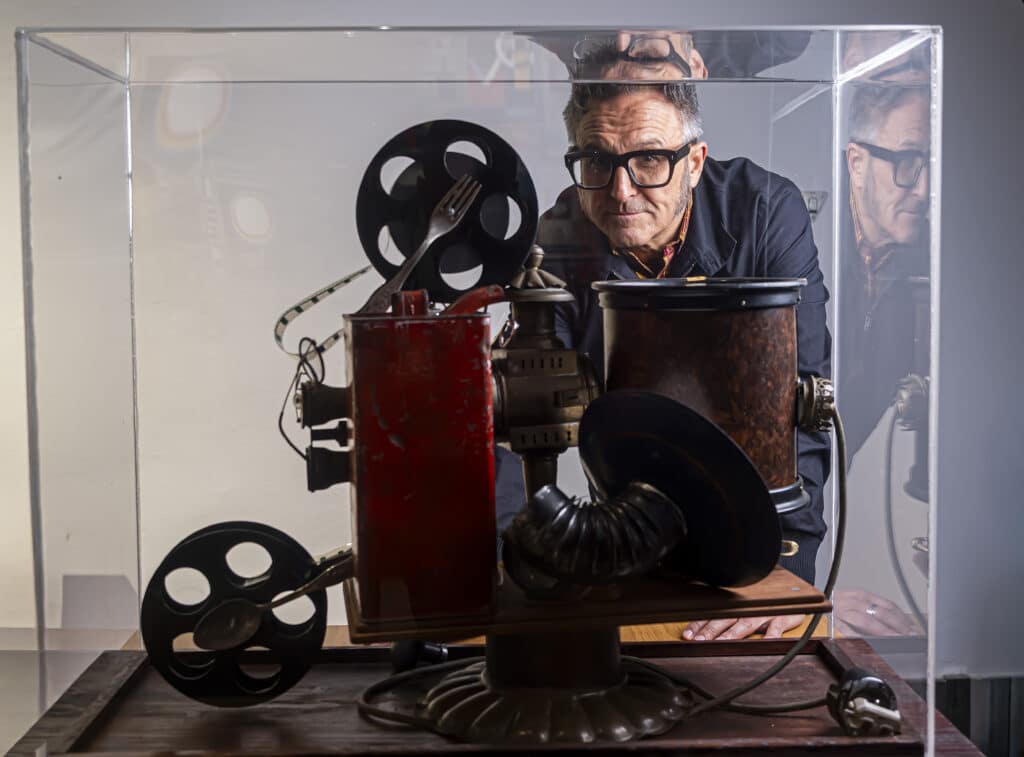
“A lion in defense of cinema.” With these words, David Trueba described José Luis Cienfuegos, director of the Valladolid International Film Festival (SEMINCI), who passed away on December 2 of this year. “The flame that bursts from the projector when it lights up the white screen of the theater burned within him,” the filmmaker added in the pages of El País. The Spanish film industry has echoed these words with countless messages of remembrance, support, and affection for the man who left that movie theater he loved so much far too soon.
José Luis Cienfuegos wove his profession—or his passion—with friendship, as highlighted by producers such as Agustín Almodóvar and Gervasio Iglesias, deputy director of RTVE’s Film Department: “Sharing his friendship has been one of the greatest gifts life has given me.” Also, visual artist Ramón Isidoro, who met him when he was programming film series for Cajastur; filmmaker Ramón Lluis Bande; and cultural journalist and writer Enrique Bueres: “As long as those of us who knew him, appreciated him, and loved him—not to mention those of us who counted him as a close friend—remember him, he will not disappear.”
“We’re losing an important part of ‘indie’ cinema, of ‘good’ cinema—the kind that needs a boost and energy,” agreed director and producer Enrique Lavigne. Distributors of the independent cinema he championed so strongly, such as Elástica Films, Wanda Visión, Avalon, Karma Films, A Contracorriente, and BTEAM. La Aventura and Surtsey Films; as well as Filmax, Andergraun Films, DeAPlaneta, and the theaters Cines Renoir, Cines Embajadores, Golem, and Cinema Truffaut have also lamented “not being prepared for his absence.”
In the same vein, director Antonio Méndez Esparza elaborated on his protective nature: “Cinema needs a home, a community that embraces a screening. José Luis Cienfuegos saw it that way. He protected and understood cinema with a critical eye and a broad desire to expand the cinematic landscape. Always driven by a personal, flexible, ambitious, and daring vision of cinema. Wherever he was, he created a unique community, always paying personal attention to filmmakers, giving them a space, and fostering in a very special way the connection between audience and work, creating unique symbioses, open to dialogue between the two.”
His role as a discoverer and promoter of new voices—“his refined, exquisite taste, daring to the point of the delirious, and a curatorial vision so modern it could be exhausting,” in the words of screenwriter and director Jorge Naranjo published in El Correo de Andalucía—“made us more discerning, more aware, and more attuned to the purity (and rarity) of cinema.”
As a tribute to this aspect of his work, the Filmin platform has prepared a selection of nearly 130 titles, chosen by Joan Sala in collaboration with the programmers who worked with him at the Valladolid, Gijón, and Seville film festivals, under the title “The Films Cienfuegos Introduced Us To.” “A titan like him deserved a tribute like this,” explained Jaume Ripoll, co-founder of Filmin.
Producer and distributor Paco Poch urged us to remember “how he acted, how he reacted, how he planned,” as a model to emulate so that he might help us improve. He described him as a great professional and a great person—“smart, quick, and forceful.”
The European Film Academy, the Vienna Film Archive, the Crossing Europe festival, the distributors’ association Europa International, and the Irish production company Samson Films have also praised his energy, passion, and dedication.
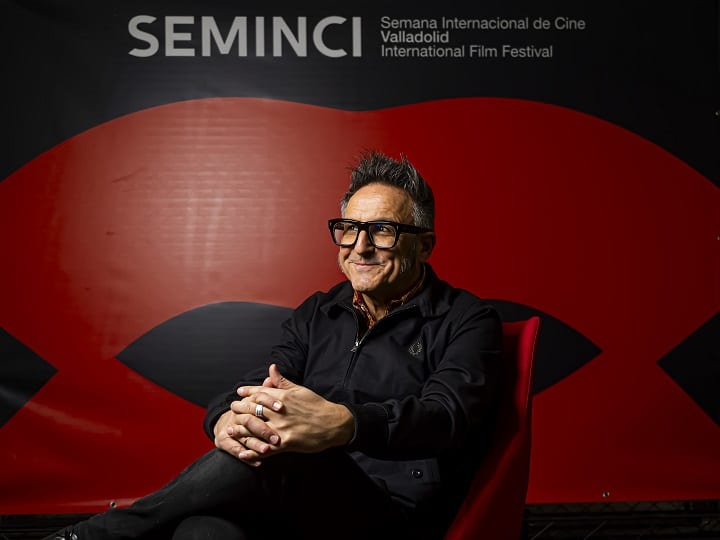
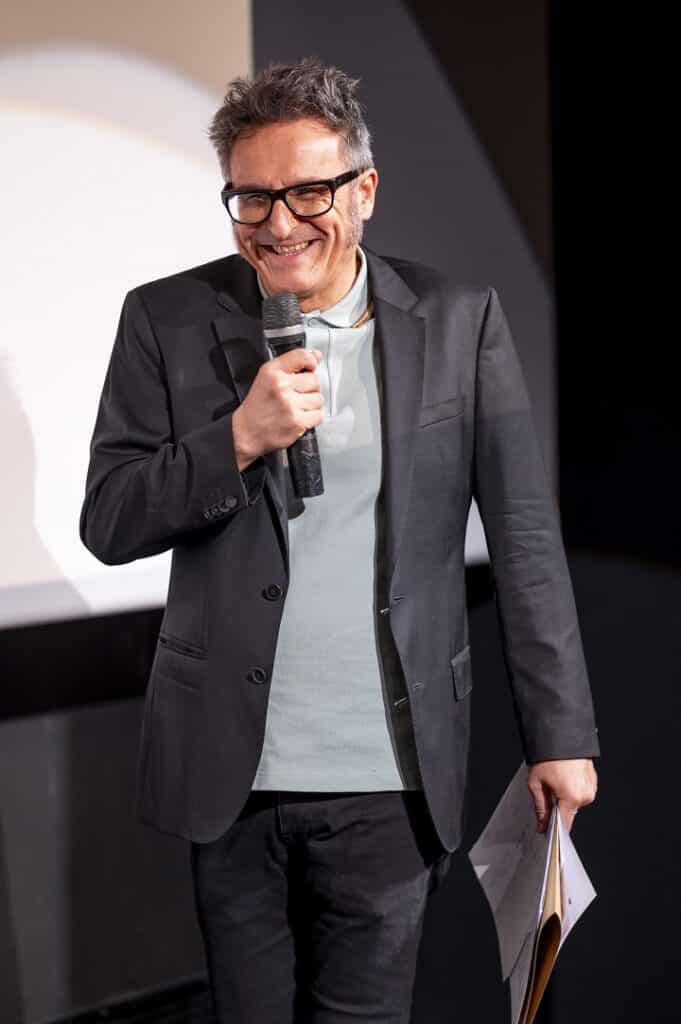
José Luis Cienfuegos. ©Seminci/Photogenic/Pablo Requejo
The Best Film Festival Director
The news has sent shockwaves through Spain’s film festival circuit, particularly the festivals in Gijón and Seville, which he directed before moving to Valladolid. The festivals in Castile and León—Aguilar de Campoo, Medina del Campo, and Ciudad Rodrigo—have been joined by those in San Sebastián, Sitges, Huelva, and Málaga in praising him as an “indispensable figure in the recent history of film festivals in Spain,” as the Barcelona festival posted on its X profile; “a role model and a dear friend,” according to Zinemaldia.
“His dedication, his unique vision, and his constant commitment to cinema have left an indelible mark on those of us who were fortunate enough to share the journey with him,” said Juan Antonio Vigar, director of the Málaga festival, in the message he sent to the SEMINCI team. Atlàntida Mallorca FilmFest, Abycine (“He set a style and a path for all of us”), L’Alternativa Fest, the Mostra Internacional de Cinema Periférico, Punto de Vista, In-Edit, D’A Festival Cinema Barcelona (“Without him, we wouldn’t understand even half of what we do”), CINHOMO, Rueda con Rueda, and Documenta Madrid (“We will always be grateful for how much we learned from him”), among others, have also joined the festivals in mourning his passing.
José Antonio Hurtado, Head of Programming at La Filmoteca Valenciana, summarized his professional career at the helm of three of Spain’s most prominent institutions in the publication Culturplaza: “With passion, power, and wisdom, he revived a dying entity (the Gijón Film Festival), gave identity to an immature one that needed to grow and find its place in the sun (the Seville European Film Festival), and revitalized another that was somewhat dormant (SEMINCI in Valladolid). He lifted them up and put them into orbit. With his powerful breath, José Luis Cienfuegos breathed life into them.”
Gijón, the first major project
Gijón was the first festival he took on, when it had only 10,000 attendees, and he helped it take off until it became a benchmark; and although he stepped down in 2012, the city still proudly remembers the Asturian director. The festival has highlighted “his tireless defense of the industry, his support for new formats, and his respect for the role of critics and distribution,” but above all, they wanted to remember the “colleague, friend, and mentor who taught us that a film festival can be a driving force for life.”
Former colleagues such as Pepe Colubi have highlighted “his radar for staying on top of everything,” as he told the newspaper La Nueva España, in addition to describing him as “a true perfectionist, sharp-witted, and ingenious.”
According to Pablo de María, director of the Oviedo Contemporary Audiovisual Week (SACO), José Luis Cienfuegos understood and paid close attention to every aspect of a film festival. At his festivals, “everything had a purpose and everything spoke to us. This, which seems so obvious, is one of the things I learned from him. Respect for the profession, for cinema, for filmmakers, and for the audience,” he wrote in the same Oviedo newspaper.
The testimony of musician Nacho Vegas, also featured in La Nueva España, reveals the extent of his influence: “Many people got into this because of him. I myself owe it to the [Gijón] Festival for teaching me a way to watch movies, to love cinema.”
The dream of a major European film festival in Seville
From Seville, where he directed the European Film Festival for ten years, the city’s mayor, José Luis Sanz, has referred to him as “an absolute icon of cinema in our country,” whose “work and vision shaped the history of the Seville Film Festival, which he drove forward with talent and commitment from 2012 to 2022.”
Similarly, the group of Young Programmers—which he launched as a pioneering initiative within the festival and has since replicated at SEMINCI—has sent a letter to the publication filmAnd in which they wish to convey to Cienfuegos the message that “they continue to dream,” because “there is a generation in Seville that cannot conceive of cinema in any way other than that of José Luis Cienfuegos.”
“With Cienfuegos at the helm, the Seville European Film Festival reached a stage of brilliant maturity,” wrote cultural journalist Andrés González-Barba in ABC de Sevilla. Patricia Godino echoed this sentiment in El Correo de Andalucía, noting that he was “the director who made Seville’s film lovers dream of a great European Film Festival.”
The festival was him
Some of the most prominent cultural journalists, as well as specialized publications, have dedicated articles, videos, or words to remembering José Luis Cienfuegos, “a cornerstone—cosmopolitan, modern, progressive, and visionary—of our country’s cultural life,” according to Carlos F. Heredero in La Nueva España. “His absence will never cease to haunt me, even as his memory continues to nourish me endlessly.”
José Luis Cienfuegos was, as Gregorio Belinchón wrote in El País, “the greatest film festival director,” who foresaw a current problem facing cinema: “Either we instilled in young people a love for this art, or they would lose their way on the path to the theaters.”
“Without him, it is impossible to understand the transformation of the many festivals he directed. His was a tireless effort, like that of many others who perform roles—sometimes administrative, less visible in the industry, perhaps less artistic—but which are essential for everything to function and to elevate films, to help them succeed,” explains Pepa Blanes, director of the program El Cine en la Ser, in a video posted on social media.
As Javier Zurro wrote in Eldiario.es: “He believed in the transformative power of cinema, but not from a position of moral superiority; rather, he trusted that anyone with access to good films could enjoy them. He created a community of people who loved cinema and who met at those screenings. That transformative power also affected cities, which saw how cinema made them better. The world of film festivals is what it is thanks to him. He will be sorely missed.”
Likewise, Luis Martínez noted in El Mundo that “for him, as he liked to say, a film festival isn’t just a place to watch movies. Above all, it’s a space for gathering, for dialogue, for debate as well, and always, always, for recognition. Cinema isn’t there to be watched, but rather to be seen.”
The now inevitable sense of longing felt by all those for whom film festivals are a way of life has been expressed by David Martos, director of Kinótico, who stated that “he embraced us with brotherly warmth—that is, without paternalism—wherever he went. He possessed that ambition that moves the world, because Cienfuegos drew the world along with him in his quest. Those around him had no choice but to move and learn, to learn from him. It seems to me that his passing leaves us with an invaluable lesson: that the quest, the drive, and the restlessness are worth it.”
“Forging ties between filmmakers from different countries, between creators and audiences, and establishing a cultural dialogue through the incredibly diverse selection of films that made up his programs became his hallmark,” according to Juan Silvestre in Fotogramas magazine. “José Luis believed in difference, championed diversity, and took risks in a circuit where it’s not easy to break with the established order and start from scratch,” he adds.
Ricardo Aldarondo, a cultural journalist and film critic, highlights the symbiosis between film and music that defined his vision of film festivals: “It is not only the world of cinema that is reeling from the death of José Luis Cienfuegos, but also the world of music, because the film festival model he invented was inconceivable without concerts, DJs, parties, and all manner of expressions of the most vibrant alternative culture.” In El Correo, Oskar Belategui added: “José Luis Cienfuegos always exercised rigor, risk, and honesty in his love for cinema. He was the ‘pince-nez’ of Spanish cinema.”
Yolanda Flores (De Película, RNE), who followed Cienfuegos for 27 years through all the festivals he directed, put it this way: “Because José Luis was the festival, he was cinema, he was the friend, he was the person you had to follow.” Another veteran radio festival reporter, Conxita Casanovas, lamented that “with Cienfuegos, we are losing a member of the family, because those of us in cinema are family.”
“In Seville, as he had previously done in Gijón and would later do in Valladolid, Cienfuegos ‘managed to give each festival its own distinct voice,’ stated Javier del Pozo in El Confidencial Digital. ‘His personal style, which shunned the limelight, was instrumental in transforming mid-sized festivals into leading events on the European scene. Beyond the positions he held, Cienfuegos embodied a unique way of understanding cinema as an experience. His legacy lives on,” the text continues.
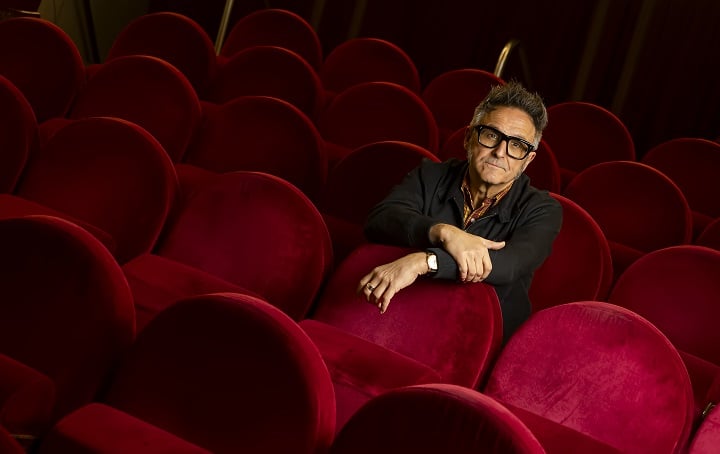
Eva Güimil echoes this portrait in her article published in El País: “So recognizable, so discreet, and yet so central. Active, curious, fun, professional. He was the festival, and the festival was him.” José Luis Cienfuegos believed that the public was demanding and, therefore, festivals had a duty to bring them the best films, added Rufino Sánchez on the TVE program Días de Cine. “And that made him a bit of a Quixote and a cinema revolutionary.”
Marta Echeverría states on Radio 3’s Hoy empieza todo program, he “redefined the concept of independent cinema,” Caimán CdC magazine wishes to remember him “for what he truly was: a pivotal figure not only for film festivals in Spain, but also for the understanding of culture and cultural curation in this country.”
Orphaned by his absence but inheriting his love for cinema, SEMINCI will dedicate a tribute to José Luis Cienfuegos, to be held in Valladolid in 2026.