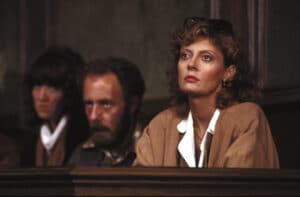
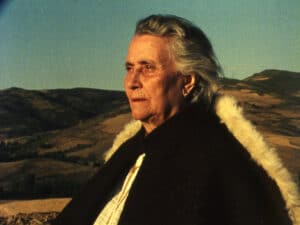
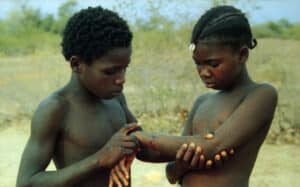
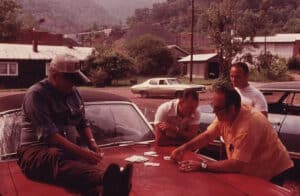
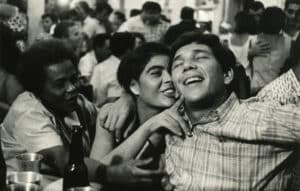
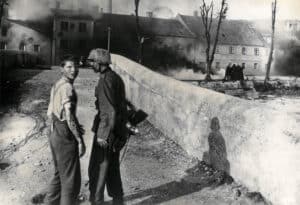
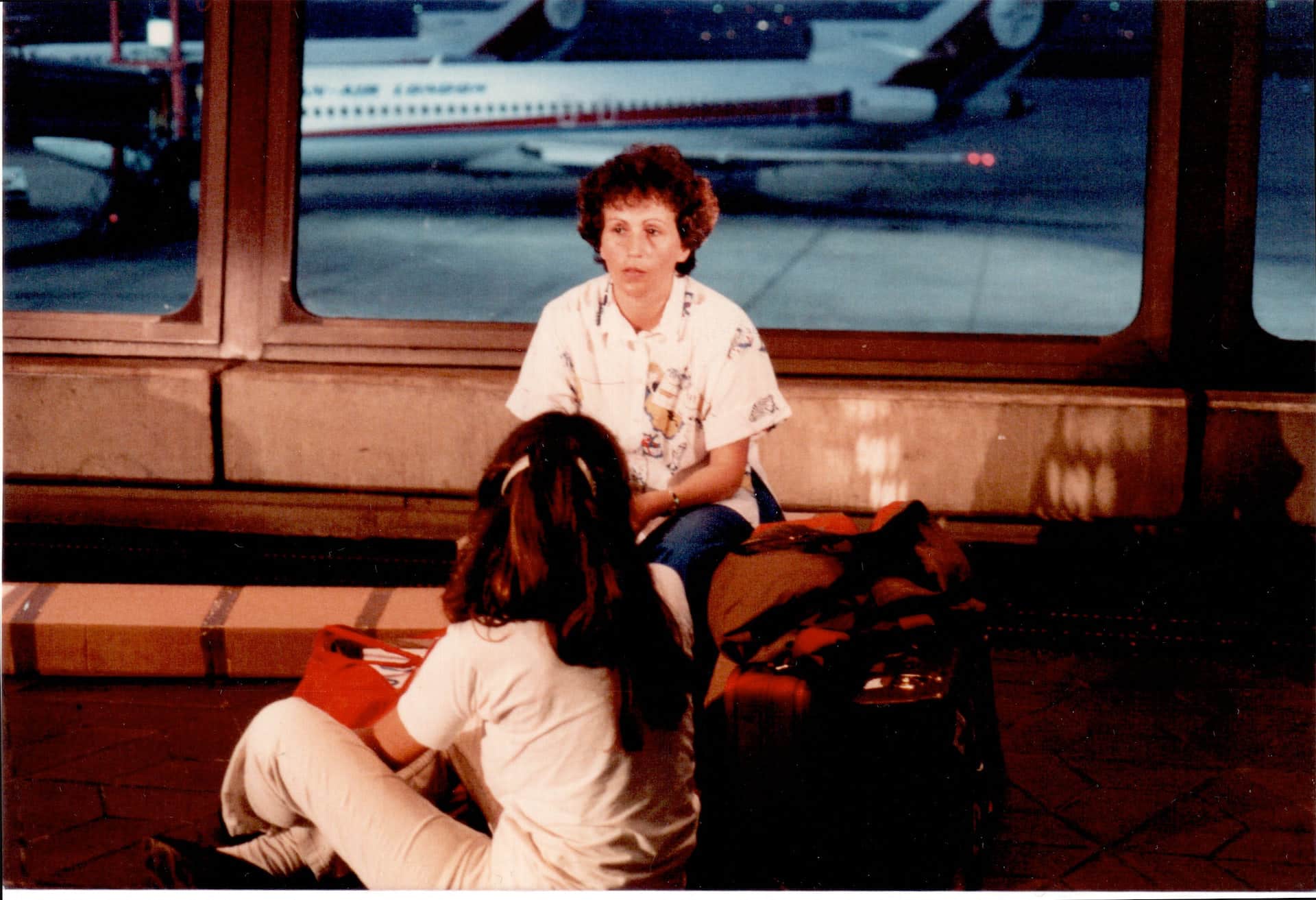
Melek, a 38 years old Turkish woman, decides to go back to her home country after 14 years of living and working in Berlin. This is the portrait of an unusual person, a woman with quite a lot of chuzpeh and a strong will to survive. She forces us to reconsider the stereotyped idea we commonly have about a ‘typical’ Turkish woman. It’s impossible to classify Melek into one-sided categories. And the same happens to the film about Melek: it is a documentary but alsoa piece of fiction, a collection of images and associations about her Istanbul dreams and her Berlin experiences.‘Melek Leaves’ is an attempt to describe the invisible wounds that have marked a ‘Gastarbeiterin’, a migrant worker, after 14 years in West Germany.
Jeanine Meerapfel
Born in Buenos Aires, Argentina, in 1943, she studied Journalism there. She has lived in Germany since the 1960s. She studied film with Alexander Kluge and Edgar Reitz at the Ulm Design Academy. Her first feature film, ‘Malou’ (1981), won the Critics' Award at the Cannes Film Festival, and her films ‘Melek Leaves’ (1985), ‘Days to Remember’ (1987), and ‘The Girlfriend’ (1988) competed at the Berlinale, the latter also earning its two leads, Liv Ullmann and Cipe Lincovsky, the Best Actress Award at San Sebastian. Her filmography also includes ‘Amigomío’ (1994), ‘Anna’s Summer’(2002), ‘The German Friend’ (2012), and ‘Eine Frau’ (2021), among others. The Bundesplatz-Kino Berlin and the Cinemateca de Cuba in Havana organized a retrospective of her work in 2018 and 2019. After directing the Akademie der Künste, she was the main driving force behind the European Alliance of Academies in 2020, and since 2021 has been the honorary president of the Federal Association of Directors (BVR).