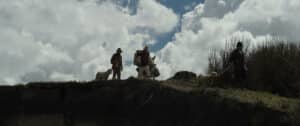
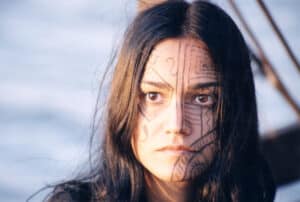
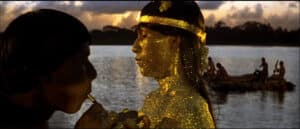
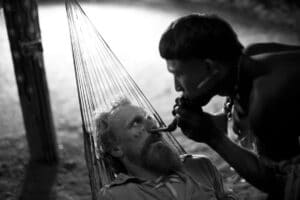
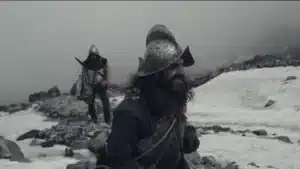
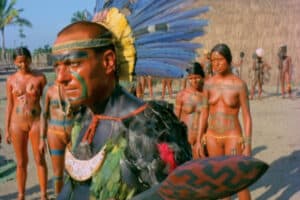
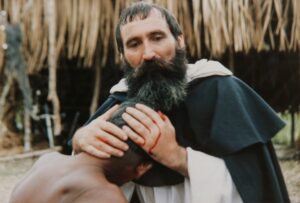
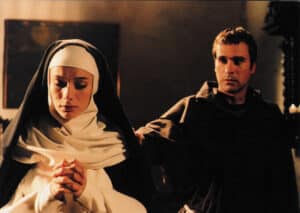
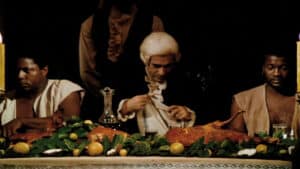
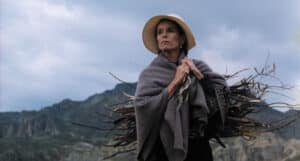
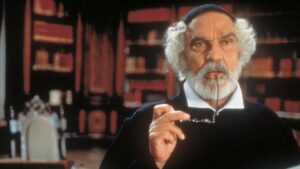
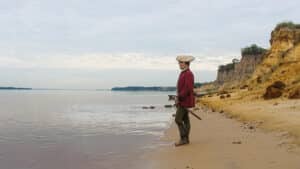
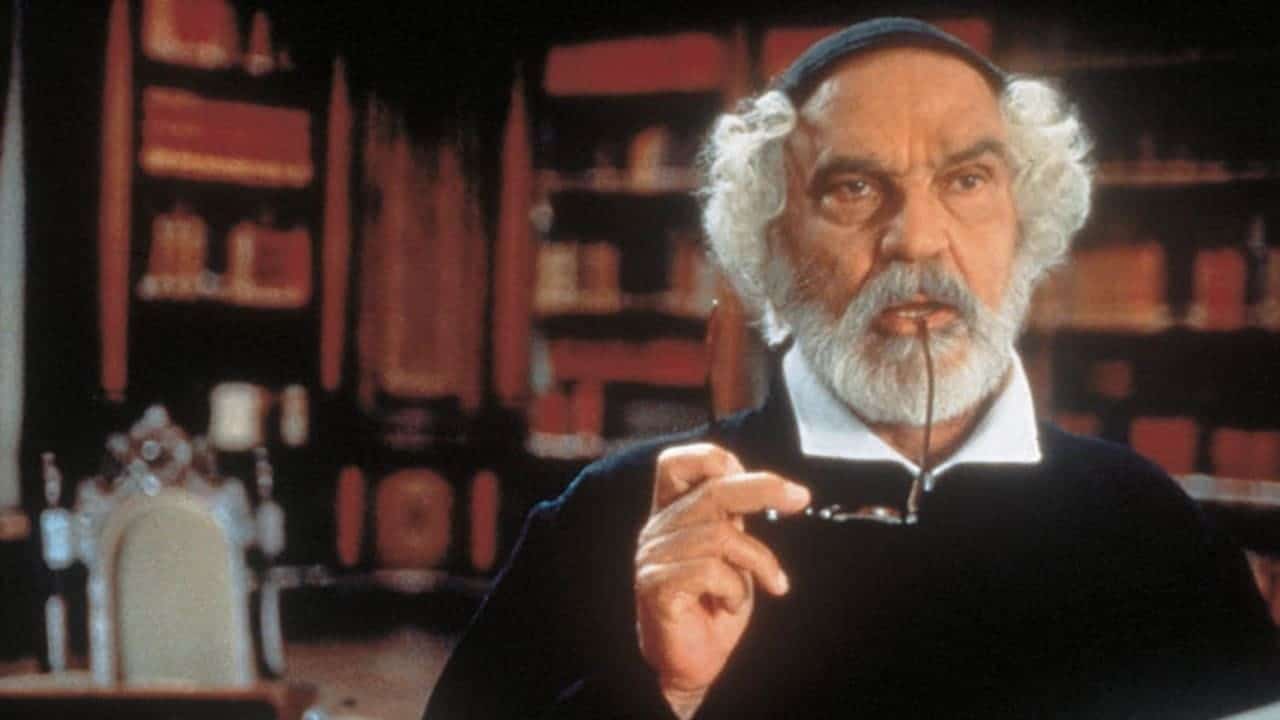
Father Vieira (Lisbon, 1608) dedicated his life to combating exploitation and slavery, and to defending the Indigenous people. His stance in favour of human rights and against racial injustice caused him lifelong conflict with the Church itself, the Inquisition, and the political establishment. Brazil, Lisbon, Rome, the Azores, Sweden, and France were all countries that witnessed his joys and misfortunes. The fame he acquired for the charm of his sermons and the power of his communication with his parishioners gave him the opportunity to meet the Pope. He finally died in 1687 in San Salvador de Bahía, blind and nearly deaf.
Manoel de Oliveira
A Portuguese filmmaker born in Porto in 1908, he died in his hometown in 2015. He was the only filmmaker whose career spanned from the silent era to the digital era. Among his countless awards, he won the Honorary Spike at Seminci in 1981, the Special Golden Lion in 1985, the Golden Lion for his Lifetime Achievement at Venice in 2004, the Honorary Prize at the European Film Awards in 2007, the Honorary Palme d'Or at Cannes in 2008, and the Berlinale Camera in Berlin in 2009. His extensive filmography includes unforgettable titles like ‘Aniki Bobo’ (1942), ‘Bread’ (1959), ‘Doomed Love’ (1979), ‘Francisca’ (1981), ‘The Cannibals’ (1988), ‘Abraham’s Valley’ (1993), ‘Voyage to the Beginning of the World’ (1997), ‘The Letter’ (1998), ‘Word and Utopia’ (2000), ‘I’m Going Home’ (2001), ‘The Uncertainty Principle’ (2002) or the collective work ‘Historic Centre’ (2012), all of which won awards at festivals around the world.
DIRECTOR
Manoel de Oliveira
SCREENPLAY
Manoel de Oliveira
CINEMATOGRAPHY
Renato Berta
EDITOR
Valérie Loiseleux
SOUND
Henri Maïkoff, Jean-François Auger
MUSIC
Carlos Paredes, Massimo Scapin
PRODUCTION
Paulo Branco
PRODUCTION COMPANY
Madragoa Filmes, RTP - Rádio e Televisão de Portugal, Gemini Films, Plateau Produçoes, Wanda
CAST
Lima Duarte, Luís Miguel Cintra, Ricardo Trêpa, Miguel Guilherme, Leonor Silveira, Renato De Carmine, Diogo Dória, Paulo Matos