

Thinking about cinema at SEMINCI began today with The Controversy of Valladolid and the reunion of Paco Plaza and Pablo Guerrero to discuss “La suerte”
Monday at the 70th edition had a dress code for breakfast: leather jackets in the style of Marlon Brando in The Wild One or the bikers in Scorpio Rising, Kenneth Anger’s cult film. Two references that came up in the conversation between director Harry Lighton and actor Alexander Skarsgård with the audience and the media about Pillion. Lighton’s first feature film, which won the award for best screenplay at Cannes, is participating in the Official Section.

The film, based on the novel Box Hill by Adam Mars-Jones, tells the story of the sexually dominant relationship between Colin, a shy young man, and Ray, the leader of a biker gang. ‘I didn’t want to shy away from the sex that took place on screen; I wanted the audience to decide whether they found the sex exciting or repulsive. It couldn’t be provocative just for the sake of it,’ Lighton said of the intimate scenes. Skarsgård added, ‘When I read the script, I was glad to see that it hadn’t crossed that line of morbidity and that in the most intimate scenes, you stay with the characters.’
Also in competition, director Pietro Marcello presented his reconstruction of a period in the life of Italian actress Eleonora Duse between 1917 and 1923, and her approach to fascism. Duse, a film starring Valeria Bruni Tedeschi, ‘is not a classic biopic, but a look at the irreverent spirit of a character,’ according to the director. ‘There are hardly any archives about her, just a few lost audio recordings and this small role in cinema; that’s why our intention has been to interpret a facet of Duse,’ he added, approaching a period that ‘transformed the country forever’ and exploring ‘the relationship between art and political power.’
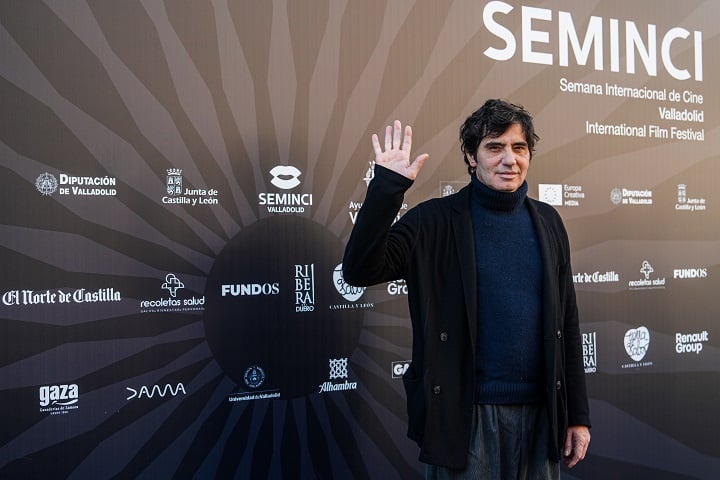
The Spanish representative of the day was the director from Murcia, Carlos Saiz, who premiered his debut film Lionel at the 70th SEMINCI, a family portrait somewhere between reality and fiction that is competing for the Golden Spike. The film, based on the short film La hoguera (2020), tells the story of Lionel Corral and his son Lionel Corral Bernal, who play themselves in a road movie from Murcia to Marseille. ‘We had a classic narrative script that laid out the route, but I never showed it to the actors. I didn’t want them to prepare, and I realised that the fewer instructions I gave, the better,’ Saiz explained about his working method.
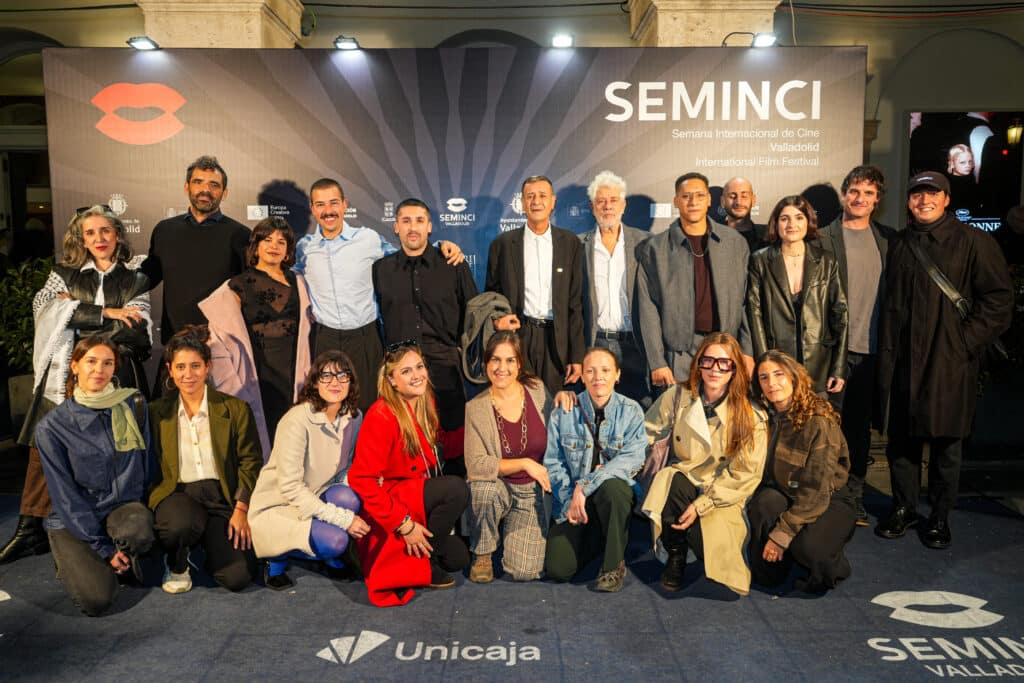
Meeting Point
The director and screenwriter of Olivia and the Invisible Earthquake, Irene Iborra, and Maite Carranza, the author of the novel La película de la vida (National Youth Literature Award in 2011), on which the film is based, programmed in the Meeting Point section, gave a talk to students at the Valladolid School of Art about Olivia’s journey from literature to cinema. The first stop-motion film directed by a woman in Spain is a representation of the drama of evictions through fantasy and humour. ‘The film underpins the anger and concern for people who had no family or homes to settle in,’ said Maite Carranza. The process of editing and recording the feature film puts into perspective the enormous effort involved in making a stop-motion film. ‘We wrote more than 11 different versions of the film. Our team consisted of nine animators, each of whom produced four seconds of footage per day,’ confessed director Irene Iborra.

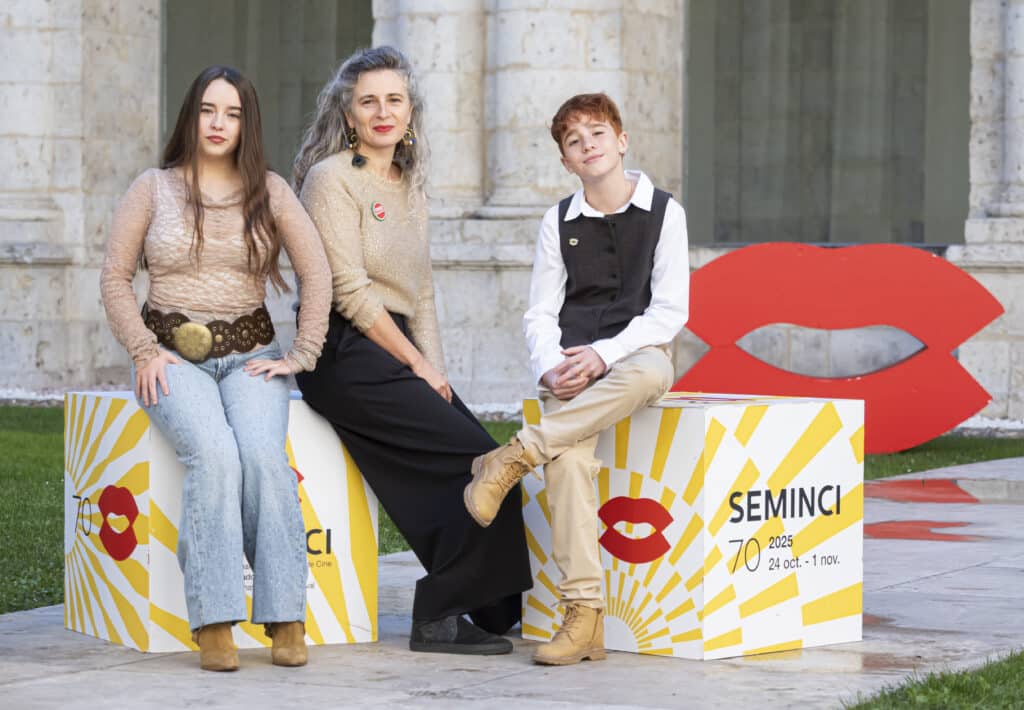
In the same section, director Gabriel Azorín presented Last Night I Conquered the City of Thebes. According to the filmmaker, it is ‘a representation of friendship between men’ and fiction gave him the opportunity to convey things he had not dared to say to his friends. ‘The Roman baths were an ideal place to find that intimacy and tranquillity to be able to talk about anything,’ explained the filmmaker.
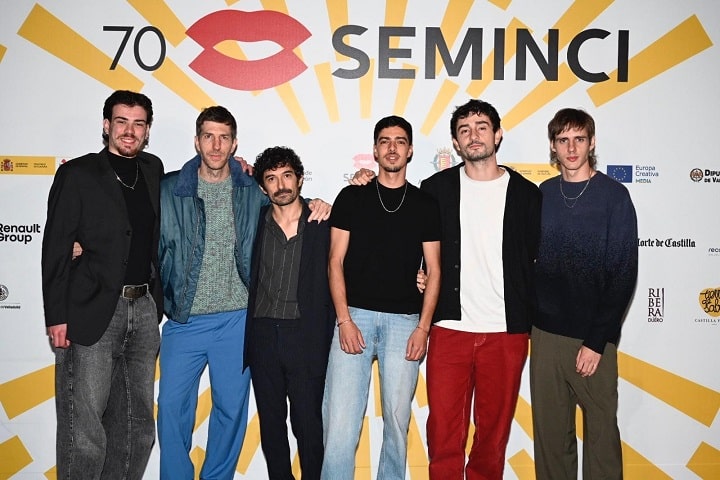
Within the Alqumias section, Colombian director Carlos Federico Atehortua presented Forenses, a film that intertwines three stories of missing persons, exploring the links between memory and national identity. Through an essayistic exploration of personal loss, combining archives, animations, dreams, maps and multiple formats, the film reveals that the history of Colombia is also the history of its missing persons.
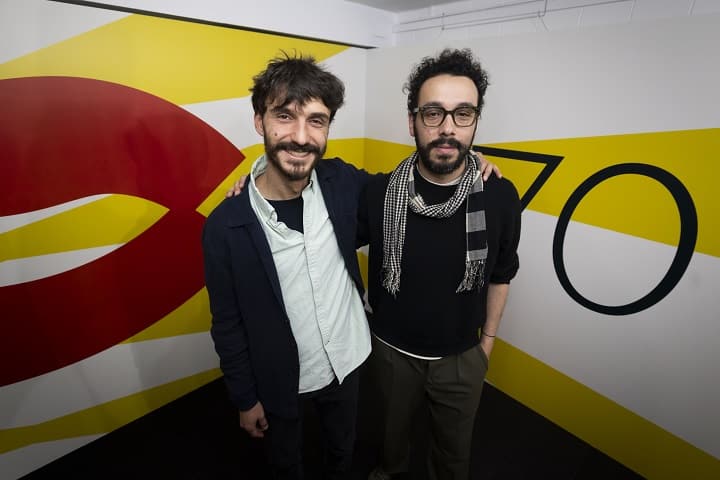
Heartbreak and memory hover over Notes of a True Criminal, a documentary that draws parallels between the tragedies Ukraine experienced in the 20th century and the current Russian invasion, which serves as a basis for co-director Andriy Alferov to reflect on the future of his country and the need for European support. He co-directed the feature film with Ukrainian documentary filmmaker Alexander Rodnyansky, who was sentenced in absentia by the Russian authorities to eight and a half years in prison for criticising the invasion of Ukraine. The film looks to the past and present to understand how this situation has come about and explains how conflict changes people’s nature.
Thinking about cinema at SEMINCI
SEMINCI today launched the “Thinking about cinema at SEMINCI” series of conferences and meetings to explore creative processes and bring the voices of filmmakers and thinkers closer to the festival audience. A transatlantic conversation in the auditorium of the University of Valladolid dedicated to the 475th anniversary of the Valladolid Controversy and its relevance in the contemporary debate on human rights kicked off this series of five meetings to reflect on cinema and the world, or the world through cinema. The meeting, held in the auditorium of the University of Valladolid, was attended by historian Víctor J. Vázquez and Alejandra Trelles, director of the Uruguayan Film Library, and was moderated by philosopher José Manuel Chillón Lorenzo.
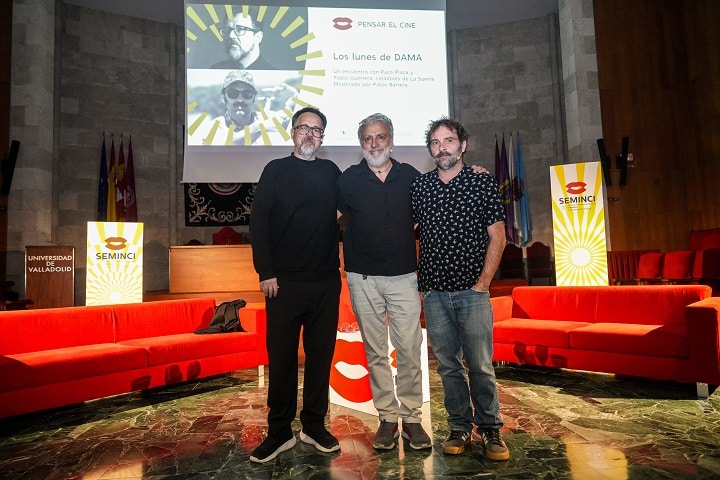
There was also a round table discussion entitled “Los lunes de DAMA” (DAMA Mondays), a meeting with Paco Plaza (REC, Verónica) and Pablo Guerrero (Alba, Entre tierras), moderated by Pablo Barrera. The filmmakers discussed Fate (La suerte), a Disney+ series that has brought them together for the first time since they met while attending film school in the late 1990s. ‘It was precisely a series of coincidences that led us to end up one night at a party in a bullfighter’s room. Suddenly, we discovered a galaxy where elite athletes, politicians, the royal family, singers… people you would never imagine would coincide in space and time and who formed a dissonant group,’ said Paco Plaza about the origin of the project. ‘The idea wasn’t to be funny, but realistic. The thing is, when you talk about the reality of Spain, comedy inevitably comes up. Our way of being has a lot to do with our sense of humour,’ added Plaza.
Short films
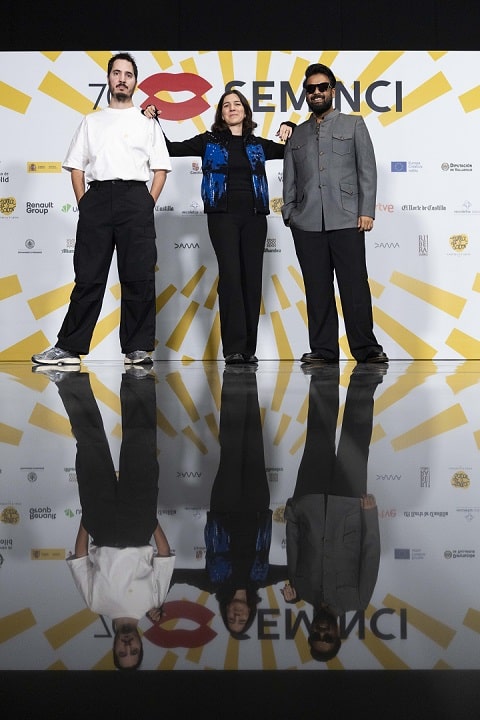
The International Official Short Film Section presented its third session, entitled “Inhabitants of the Void”, at the Teatro Zorrilla with four proposals that explored loneliness and intermediate spaces from different perspectives. The programme included Ali, by Bangladeshi director Adnan Al Rajeev, who was accompanied by producer Tanveer Hossain; The Inhabitants, by filmmaker Maureen Fazendeiro alongside producer Beli Martínez; Lucus, by Galician filmmaker David Fidalgo; and I’m Glad You’re Dead Now. The session allowed the Valladolid audience to get closer to the new voices of international short films and talk to their creators about the creative processes behind each piece.
At the same time, the Quercus Work in Progress section brought together six projects in development at Broadway 3, showcasing the vitality of emerging Spanish cinema. The session kicked off with La biblioteca by Carlos Zalama, followed by Mujeres (En el bosque lácteo) directed by Alfonso Ordoñez; Enroque by Juan Rodríguez-Briso; Max by Jaime Alonso de Linaje; Canina by Néstor López; and Brannia Ossaria by Miguel Sánchez González. Filmmakers can receive feedback from the audience and the industry before finalising their works, establishing itself as a fundamental platform for promoting new talent within the Spanish festival circuit.