

- The filmmaker from Murcia makes his feature film debut with this drama about a family competing for the Golden Spike
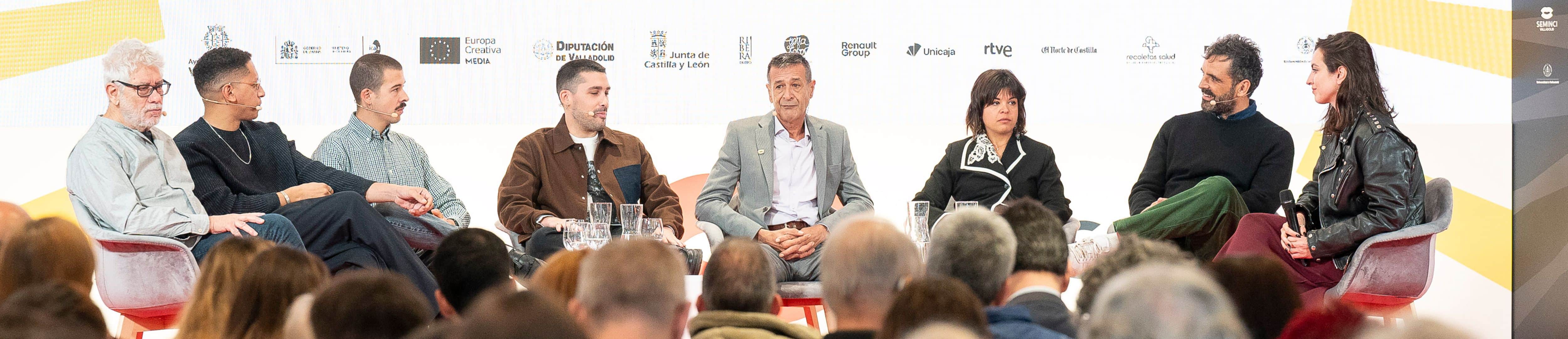
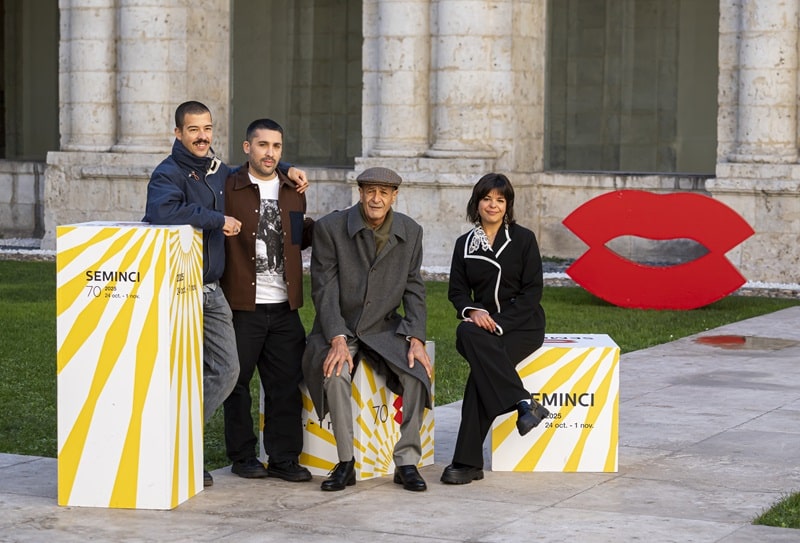
- The director attended the event in Valladolid accompanied by non-professional actors Lionel Corral, Lionel Corral Bernal and Alicia Corral, and producers Mario Fornes, Nabil Ejey and José Nolla
The 70th edition of SEMINCI hosts the world premiere of Lionel, the debut feature film by young Murcian director Carlos Saiz, known for his work directing music videos for bands such as Los Planetas, Carolina Durante and Él Mató a un Policía Motorizado. Halfway between fiction and non-fiction, the film tells the story of Lionel Corral and Lionel Corral Bernal. Father and son play themselves in this intimate road movie, capturing on screen the complexities of their relationship during a trip from Murcia to Marseille.
The project began in 2020 with the short film La hoguera (The Bonfire). “We made the short film without much ambition. It came out of a screenwriting exercise when I was studying. Then it did very well at festivals and the producers saw the possibility of it becoming a feature film. La hoguera ends just before they leave on their trip, so in a way it works as the first act of the film,” shared Carlos Saiz, adding that at that point he began a long and energetic process to get the film off the ground in five years.

Freedom and intimacy during filming
According to producer José Nolla, Lionel is an ‘example of cinema outside the norm, which takes narrative and production risks’. For 45 days, the film crew got close to this family, seeking to tell their stories with complete freedom. Regarding such freedom, Saiz stated: ‘We had a classic fiction script that set the course, but I never showed it to the actors. I didn’t want them to prepare, and I realised that the fewer instructions I gave, the better.’ He added: ‘The energy of the journey is very similar to that of filming; it was a dynamic that came naturally and with a great deal of freedom.’
This was something that the actors welcomed. ‘The freedom was felt in the simple fact of being in front of the camera, without a script, and being able to express ourselves as we wanted,’ said Alicia Corral, the third member of this family portrait. Lionel Sr. reaffirmed this feeling: ‘In the film, I did whatever I wanted,’ he said while laughing. To which Lionel Jr. added: ‘In the end, Carlos is just another member of the family. We trusted his work completely.’
An emotional journey
Respecting the characters’ privacy and the story’s integrity was a logistical challenge, producer Nabil Ejey confessed: ‘The production design couldn’t be purely logistical, and we often went against it to always favour the story. We really did the journey together; we all felt the emotional weight that Carlos placed on the camera from the very beginning.’
This is how Lionel manages to express in emotional terms what the physical journey means for its characters, a space in which the open wounds of the family’s past resurface. ‘We all have something in our families that can connect us in one way or another. I don’t think there is such a thing as the perfect family, and that’s why these stories touch us all,’ noted producer Mario Fornes.
In addition, as Saiz pointed out, music played a central role in conveying the characters’ emotions: ‘During the scriptwriting process, we had a Spotify playlist made by Lionel. And from the beginning, it was very clear that the music had to correspond to what the characters hear and feel. For example, when we go north, it’s as if everything cools down and the French music is more disconnected from Lionel. But when we go south, the heat and sun return, so we hear his songs again. The lyrics fit in with the characters’ emotional journey.’