


- The filmmakers, together with actor Octavio Bertone, presented the film in competition in the Official Section of the 70th edition of SEMINCI
The Valladolid International Film Festival (SEMINCI) welcomes the Spanish premiere of The Night is Fading Away to its Official Section. This is the first feature film co-directed by Ezequiel Salinas and Ramiro Sonzini, who won the Silver Spike for Best Short Film in 2021 with My Last Adventure.
This ode to 1930s cinema, infused with countless references to film noir and melodrama, features the Hugo del Carril Municipal Film Club in the city of Córdoba, a place the directors have frequented throughout their lives: ‘It’s the centre of cinematic activity in the city, a place where people meet. It is also a very special building, serving not only as a set but also as something symbolic,’ said Sonzini. ‘We decided to film it in black and white because we wanted to associate it with the aesthetic of the type of films we like, but not just as a reference, but as a visual resource to compensate for the low budget,’ added Salinas.

The film follows the adventures of Pelu, the projectionist at the Cine Club, who loses his job and begins spending his nights there as a security guard. According to the filmmakers, the project originated as a reaction to the political and economic crisis in Argentina, which has particularly affected the film industry: ‘Filming in a cinema was like exorcising a nightmare. The Argentine government is willing to cut anything that has to do with culture,’ said Salinas, reflecting his own precarious employment situation as a result of the Milei government’s restrictive policies.
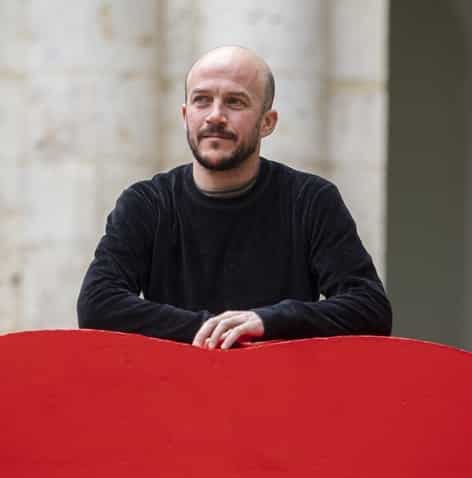
The other main character in the film is the Cine Club’s projectionist and actor,
Octavio Bertone
, who had previously worked with the filmmakers: ‘The fact that the project is set in the Cine Club made me feel very comfortable, not only because of the space, but also because the other characters in the film are actors who regularly go to the Cine Club. It’s fiction, but it’s close to what we experience,’ said the actor. ‘The protagonist of our previous short film has a lot in common with Pelu. We want to continue filming Octavio forever, to see how he evolves and ages,’ added Ezequiel Salinas.
The present of Argentine cinema
The team shared the sense of playfulness that surrounded the filming, based on the aesthetics of the 1930s: ‘It wasn’t just about transferring our experience to fiction, but inventing and experimenting as if it were a costume contest. Playing at cinema had to do with that, with getting in front of the camera and taking on a personality that isn’t your own,’ said Sonzini. Emphasising the playful dimension that has accompanied the political crisis and invaded the construction of the project, he added: ‘When we thought we were never going to film again, we said: let’s enjoy ourselves and have fun.’
For the filmmakers, the film serves as a symbol of the current state of Argentine cinema, and they defend the idea of community that runs through the Cine Club workers as a way of combating the precariousness of the sector. Salinas commented on this: ‘We saw that among friends we could make a film, not because it was going to be in festivals, but because it was better to be together for two weeks than to suffer alone.’ He added: ‘We are clear that we are not going to stop making films; not only making films, but also actively participating in the Cine Club, working to make it more alive and stronger.’

With regard to the future of the Argentine audiovisual industry, both filmmakers are optimistic, confident in the ability of workers to move forward with an industrial model that learns from the mistakes of the past: ‘We don’t know if Milei will continue or not, but what we do know is that Argentine cinema has recovered from worse things,’ said Ezequiel Salinas. ‘Filmmakers have resisted more ferocious enemies politically and aesthetically. We know that Argentina will return to producing as it did in its best years, and hopefully we can continue to contribute to that,’ concluded the filmmaker.