

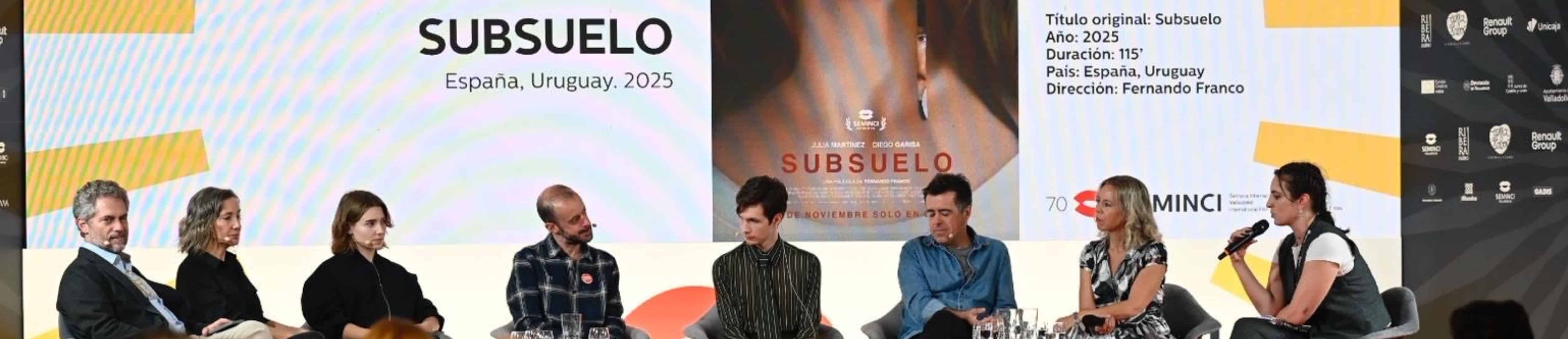
- The director, winner of the Goya Award for Best New Director for ‘Wounded’ in 2013, is competing in the Official Section for the Golden Spike at the 70th edition of SEMINCI.
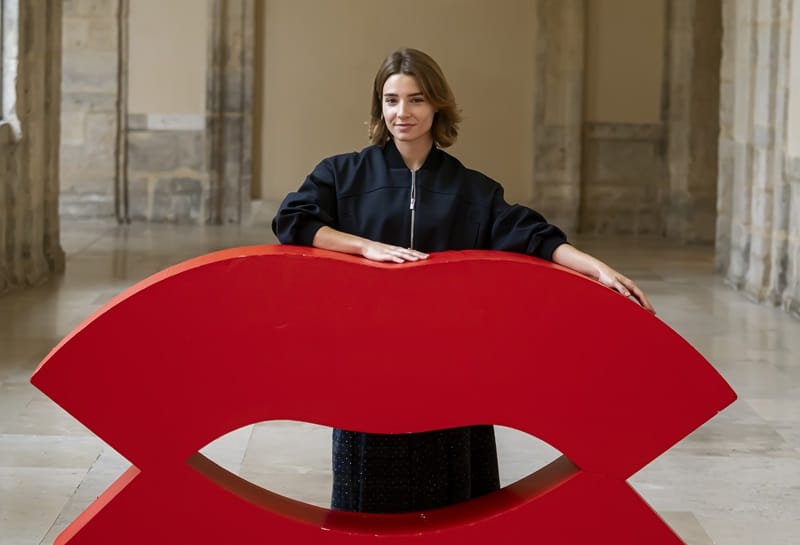
The profound dissection of family ties proposed by director Fernando Franco in Subsuelo had its world premiere today at the Valladolid International Film Festival (SEMINCI) in the Official Section. The filmmaker, accompanied by actors Julia Martínez, Diego Garisa and Sonia Almarcha and producers Koldo Zuazua (Kowalski Films), Guadalupe Balaguer and Gonzalo Salazar-Simpson (LAZONA), presented the film in Valladolid.
The film is a thriller that tells the story of the strange bond between two siblings, played by Julia Martínez and Diego Garisa, who, after an accident, see their relationship change forever, clouded by guilt. A story about secrets, manipulation and repressed desire, but also about maturity and revenge as the only way out of a suffocating situation, narrated from various perspectives that intertwine through the characters’ gazes.
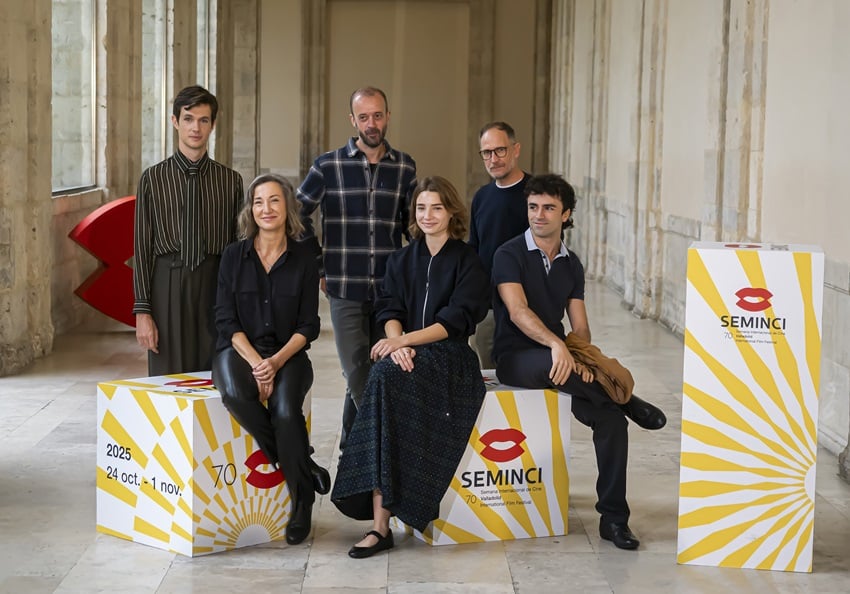
The director highlighted the complexity of adapting Marcelo Luján‘s novel of the same name: ‘I had been wanting to make a genre film for some time, and I found the book’s complex treatment of time very interesting. There are notable differences between the material, but fundamentally the seed was the desire to approach the novel as a thriller and tackle this intense subject.’ In this regard, he pointed out the need to depart from the text in certain cases, especially in the character played by Julia Martínez: ‘In the novel, Eva is more codified as a femme fatale or a typical Lolita from film noir, and for me it was important to take her out of that mould. That’s why the character of Nacho Sánchez also ends up being unintentionally redrawn, becoming a lifeline for the protagonist.’
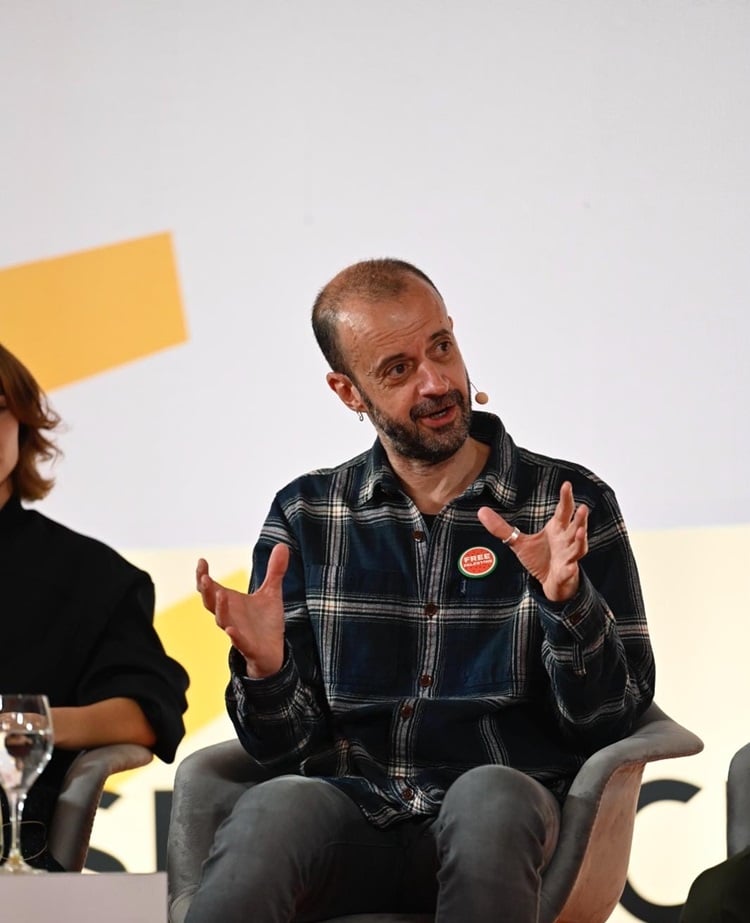
This foray into the thriller genre has also meant an evolution in the filmmaker’s style, which in turn has involved more pre-production work on the film: ‘My recurring way of filming has been to use sequence shots and a shoulder-mounted camera. But now I wanted to distance myself from that and move towards a slightly more sophisticated approach, with a steadycam and more planning. The shoot has been a continuous learning process.’
Intimacy work
One of the great challenges of the film, according to the director and cast, was precisely the work of intimacy between the actors and the need to create a safe space for those scenes of maximum tension between the brothers: ‘It’s my first film and it requires enormous emotional involvement. Trust and communication were crucial, being able to create a separate world that you can enter and leave,’ said the lead actress, Julia Martínez.
Diego Garisa, for his part, spoke of the scenes of ‘deep, twisted intimacy’ that are at the heart of the film, expressing the importance of that mutual complicity: ‘It was very easy, even though the film is tense and tangled. We knew each other beforehand and the fact that we were friends allowed us to work with confidence and ease of knowing that everything was fine. The team took great care with the intimate situations between the two of us.’
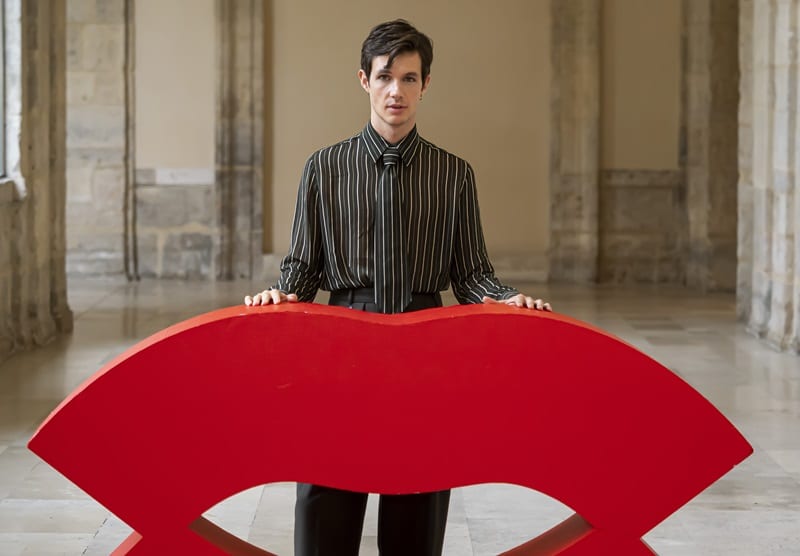
In addition, actress Sonia Almarcha pointed out: ‘In a film in which the actors’ physical work and the silences that say more than words are so important, we had the opportunity to rehearse a lot and make mistakes; so when we got to the shoot, the family was practically made. That’s the trick to making the looks full of meaning.’ In this regard, Diego Garisa also reflected on the difficulty of building from silence: ‘It was a new experience to work from silence and subtlety rather than from the text. The camera captures things that are not written, such as the look your partner gives you, which only arises thanks to the artifice of cinema.’