

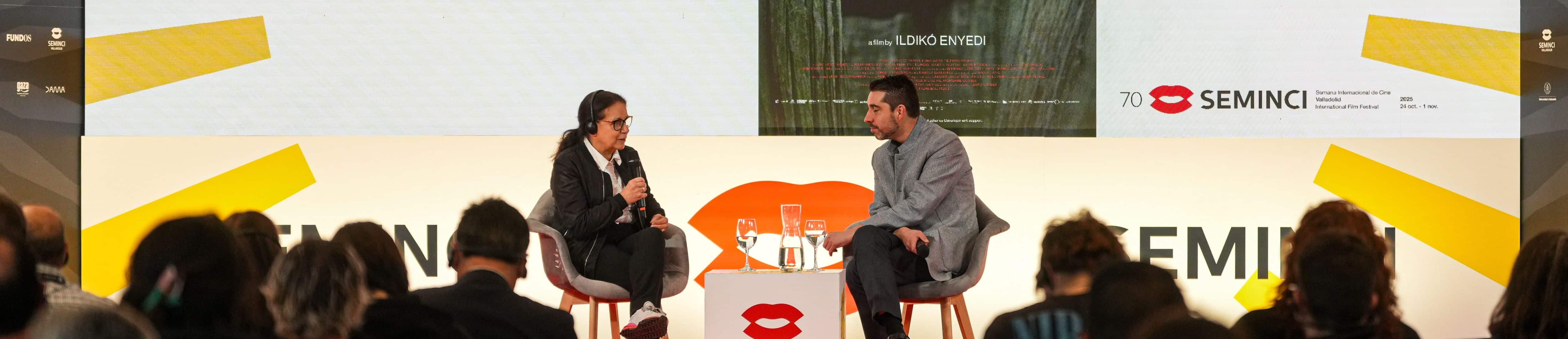
The Hungarian filmmaker premieres a humanistic story in the Official Selection, starring Tony Leung, which revolves around a mysterious tree.
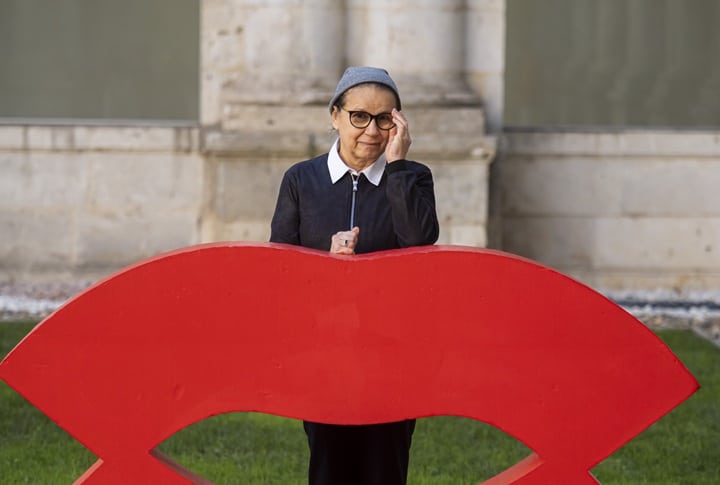
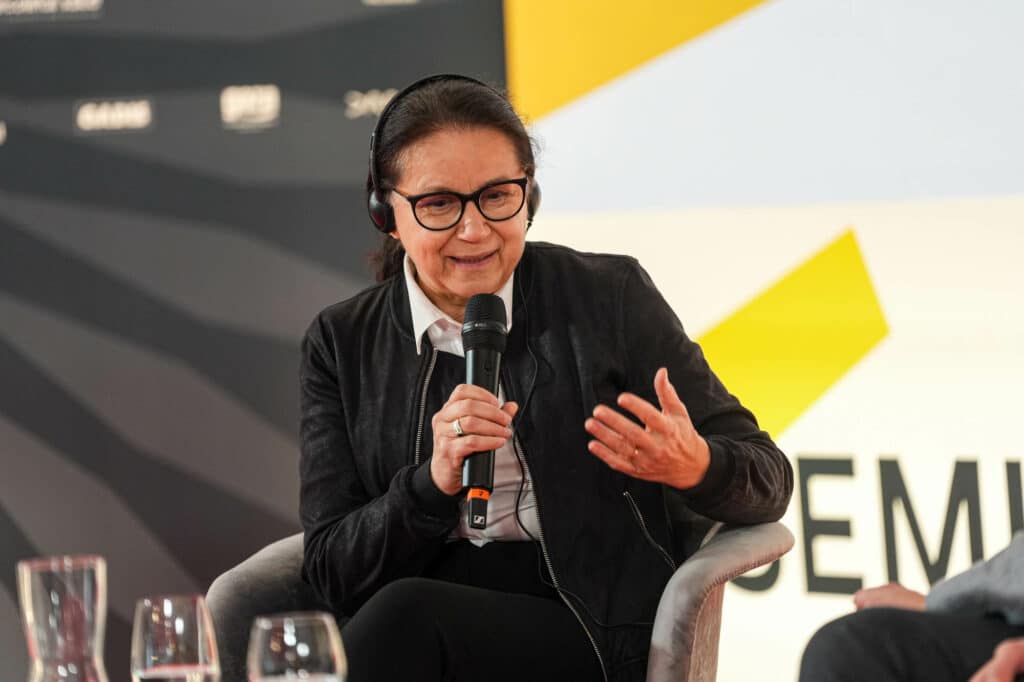
The 70th edition of the Valladolid International Film Festival premieres one of the cinematic experiences of the year in its Official Section, the new film by Hungarian filmmaker Ildikó Enyedi, winner of the FIPRESCI prize at the Venice Film Festival. Through a temporal game that connects brief moments in the lives of three characters who contemplate a majestic gingko biloba tree in a botanical garden in Germany, the director offers a moving glimpse into the world of plants: ‘As human beings, we can only perceive small moments of the long life that plants experience. My intention was to draw attention to the fact that what we call reality is often something ephemeral,’ said Enyedi.
The film intertwines three stories that take place in different periods of German history, representing important moments of social and human change. ‘I was very interested in the experience of a female student in the early 20th century in this very restrictive world, where clothing, schedules and even the garden speak to us about control. I also wanted to delve into those first cracks that emerged in the 1970s, when I was a teenager and that new generation was thinking about the possibilities of reformulating the framework of their thinking, their relationships and even their senses. Finally, I wanted to talk about Covid as a collective experience; it was horrible, but at the same time it gave us time to rethink the way we live,’ explained the director.
Actor Tony Leung (In the Mood for Love, by Wong Kar-wai) plays a neurologist who researches cognitive perception in babies and gets stuck in a university during the pandemic, which leads him to connect with the tree in the botanical garden: ‘Tony has actually been my silent friend during filming, along with the plants. In our culture, verbal communication is very important, but at the same time there are many things we exchange without using words. I needed someone with a very imposing presence, who also had a great ability to express themselves through actions in those empty spaces, not just using words,’ said the filmmaker, also emphasising the outsider nature shared by the characters in the film, which encourages this need for mutual communication.
Getting closer to the plant world
The film’s great strength is its sensory approach to plants, something the filmmaker has spoken about in depth: ‘We took as our starting point the work of Karl Blossfeldt, a photographer who worked with everyday plants in the early 20th century, revealing their quality as works of art. We wanted to achieve this feeling of accessing a new world, while trying to maintain the human premise. A key technique was to change the lens angle and focus on the leaves and trunks. It’s a very simple but very effective way of entering their perspective.’
Sound and image design
The visual design of Silent Friend, which combines three different film formats and on which she worked alongside director of photography Gergely Pálos, was based on the director’s desire for ‘simplicity and transparency’ and a highly immersive experience. ‘We used 35 mm to portray the past, when she discovers the artistic side of photography. On the other hand, 16 mm helped us to convey the feeling of the 70s, and also to achieve an impressionistic atmosphere, making touch, smells and hormones visible. I’ve worked a lot with 16 mm and it’s been a great rediscovery. I wanted to see those vibrant colours and feel what you feel when you look at an impressionistic painting. Finally, we wanted to give the digital format the respect it deserves, trying to be very simple but very expressive at the same time,’ the director explained.
She also talked about the film’s sound design as one of the key tools for creating that feeling of immersion: ‘We had to come up with all sorts of sounds, imagining what goes on in a plant. It was great fun and a really nice way to experiment with natural and artificial sounds, trying to keep it simple and not go overboard. When you’re underground, you see things you shouldn’t, and we wanted to convey that feeling by increasing the volume of certain sounds that are sometimes imperceptible. I was looking for something that would take us into another dimension.‘ She added: ‘I like how these different realities touch each other, without the possibility of fully understanding each other.‘