

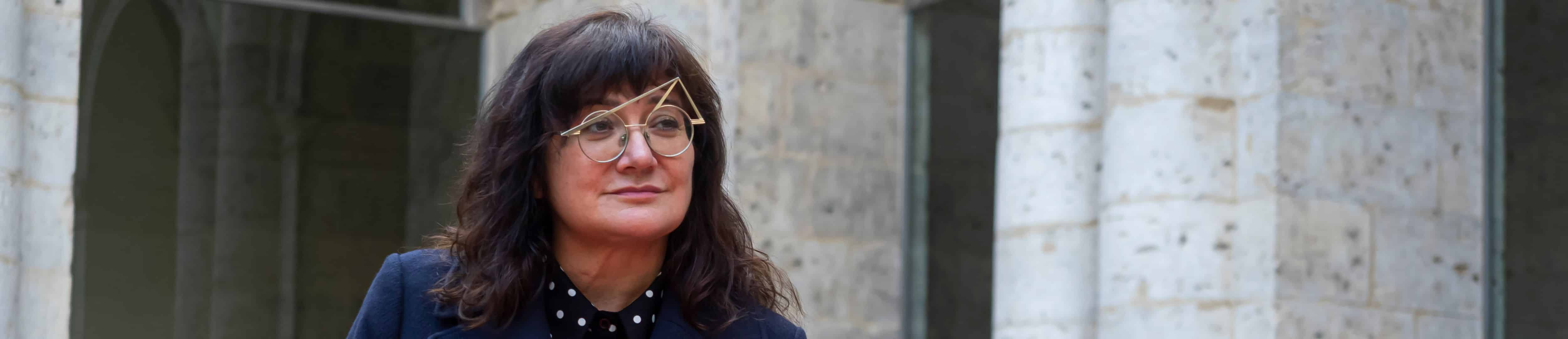
- The 70th edition of SEMINCI hosts the Spanish premiere of her latest film, “Three Goodbyes”, which opens the festival’s Official Section tonight.
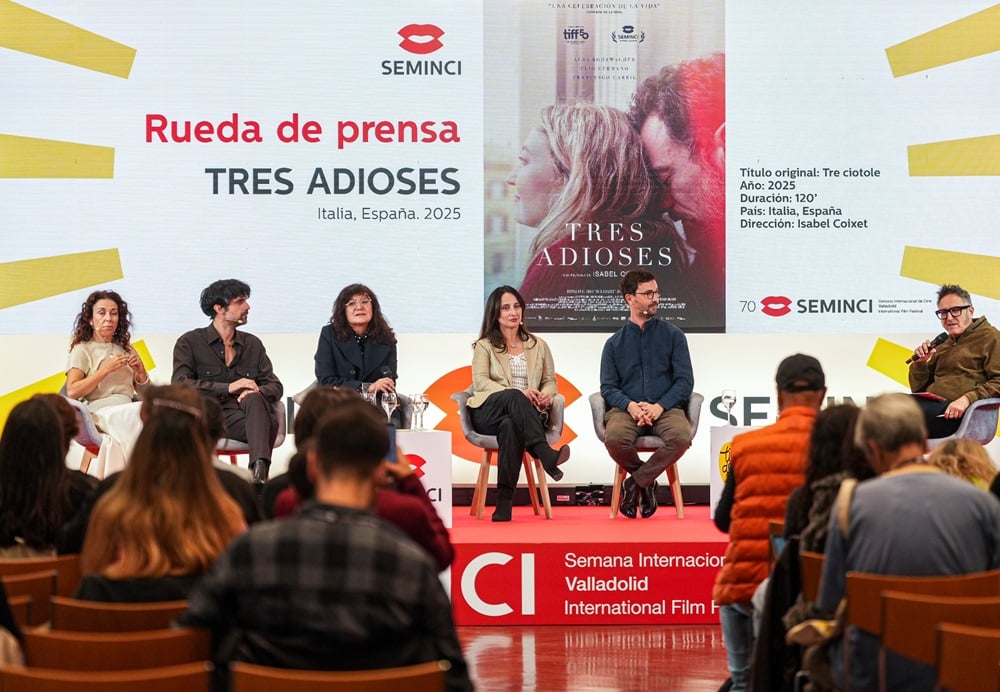
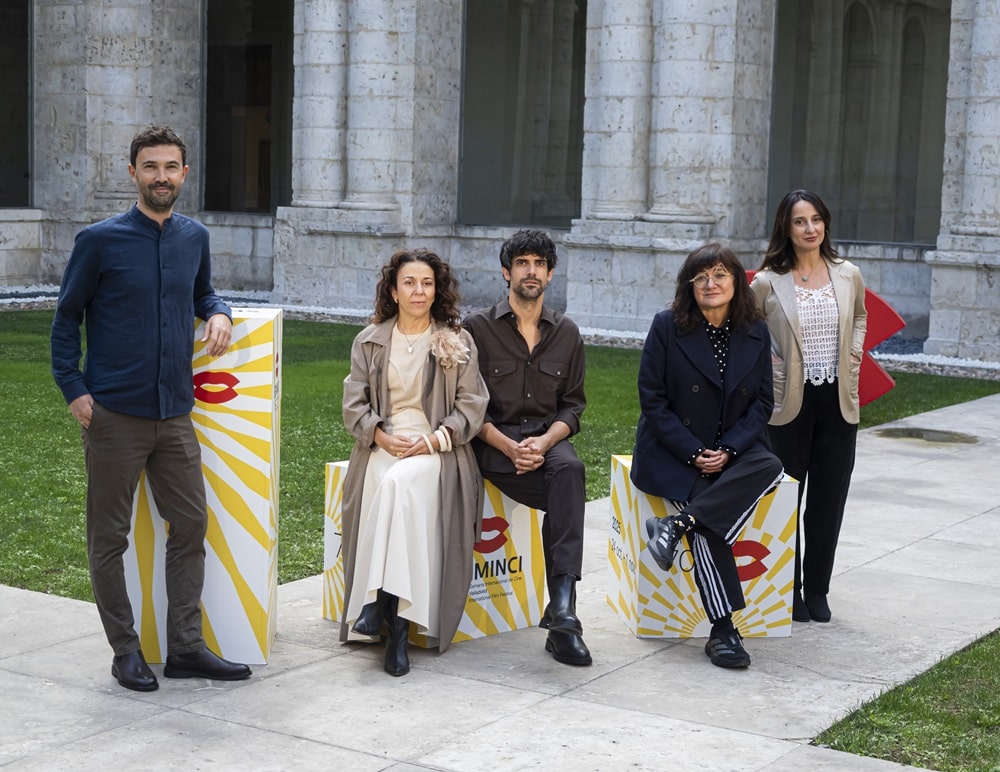
- The filmmaker was accompanied by actor Francesco Carril and the film’s producers, Alex Lafuente (Bteam Pictures), Marisa Fernández Armenteros (Buenapinta Media) and Sandra Hermida (Perdición Films).
Director Isabel Coixet has arrived in Valladolid with her new project, the Italian-Spanish co-production “Three Goodbyes”, with which the filmmaker, winner of two Goya Awards for Best Film for “The Secret Life of Words” (2008) and “The Bookshop” (2018), opens the festival for the third time in her career. With this film, an adaptation of Michela Murgia‘s literary work Tres cuencos: Rituales para un año de crisis (Altamarea Edición de Libros Sl), Coixet collaborates once again with producers Marisa Fernández Armenteros and Sandra Hermida after Un amor.
Three goodbyes follows Marta, a high school teacher who, during her emotional breakup with her partner Antonio, receives the sad news that she has a terminal illness. ‘I found in the film a way to put a new spin on one of my obsessions, talking not so much about how to die well but how to live knowing that we are going to die,’ said the filmmaker.
A difficult adaptation
The process of adapting the work of writer Michela Murgia to the screen was a difficult one, as Coixet emphasised. She tackled the task alongside screenwriter Enrico Audenino, and the challenge lay in translating a chaotic and unfinished book to film: “I took a while to say yes at first because of the direct thematic connection with my film My Life Without Me (2003), but I saw a way to access a very different character.”
Producer Marisa Fernández Armenteros pointed out about this initial process of making the film: ‘We saw a very interesting opportunity to portray on screen what happens when you are told that you have little time left to live and you leave no legacy behind.’
The director considered approaching the city of Rome that appears in Murgia’s stories, taking on the task of filming in a place considered an icon in the history of cinema: “It was beautiful and it was difficult. We had to adapt to a filming structure typical of the big studios at Cinecittà, something I’m not used to. There are moments reminiscent of classic films, but also moments of genuine intimacy when we film three people with a £25 Kodak camera”.
This approach to the Italian capital was also greatly influenced by current events, with the film seeking to offer a critical view of tourism: “One of the first things I thought about was Tripadvisor, which trivialises food and only promotes places that are crowded and soulless; something I have also experienced in Barcelona. I always ask myself what the plan B is, what other ways there are to inhabit a city. I wanted to criticise that, but at the same time I think we used it as a means to channel the protagonist’s final message.”
Working with the actors
One of the highlights for the producers and the filmmaker was working with the actors from the conception of the project: “I feel like the casting is the best I could have hoped for. Alba immediately came to mind when I first saw her in Sworn Virgin. She is a totally timeless actress whose face has an expression, yet underneath there is ten times more than you think. She is also a very meticulous person, paying attention to details that weren’t so important to me,” said the filmmaker in reference to the protagonist, the prestigious Italian actress Alba Rohrwacher. The cast is completed by Elio Germano and Francesco Carril.
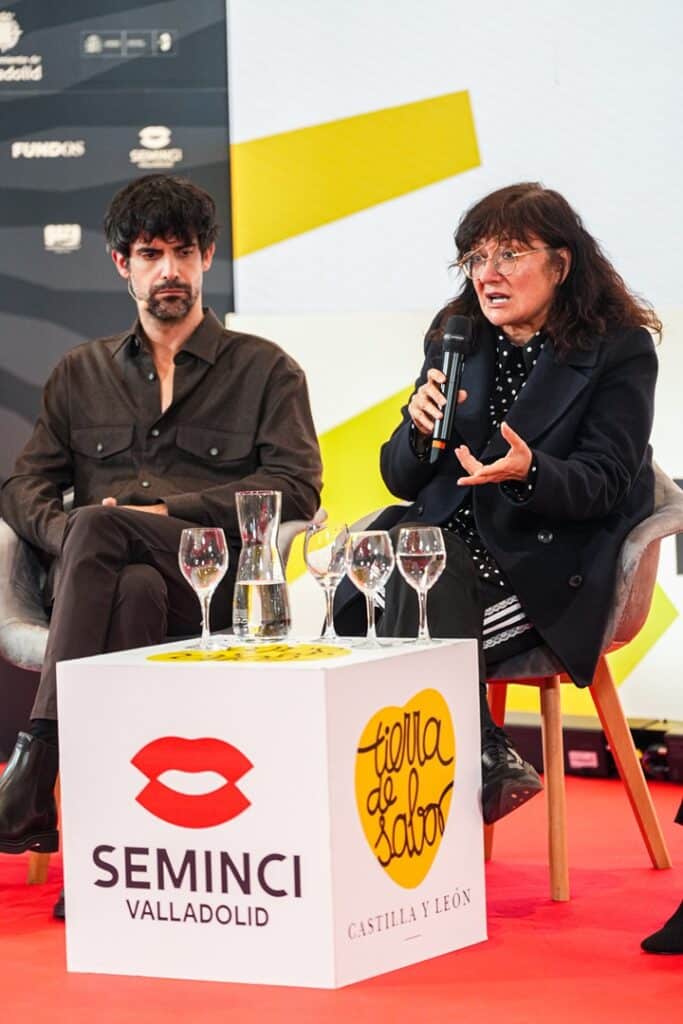
The Spanish actor, who was already present at the 69th edition for his work in Rodrigo Sorogoyen‘s Los años nuevos, spoke precisely about his experience acting for the first time in his mother tongue, Italian: ‘I felt a great freedom of expression; I saw that even the tone of voice was different and that I could do something with the text that I would not be able to do speaking Spanish.’
Coixet added that the character was written with Francesco in mind: ‘I remember when he talked about his mother from Pisa and his relationship with Italy. That allowed me to think a lot about that character and include a friend in the film.’
The Italian-Spanish co-production has been a huge hit at the Italian box office since its recent release. In this regard, Alex Lafuente, from Bteam Pictures, emphasised the co-production work with the Italian company Cattleya and the need to make them understand the benefit of shaping Isabel Coixet’s very personal film from Spain, highlighting the importance of approaching this type of film, which can have a great international impact, with affection.