

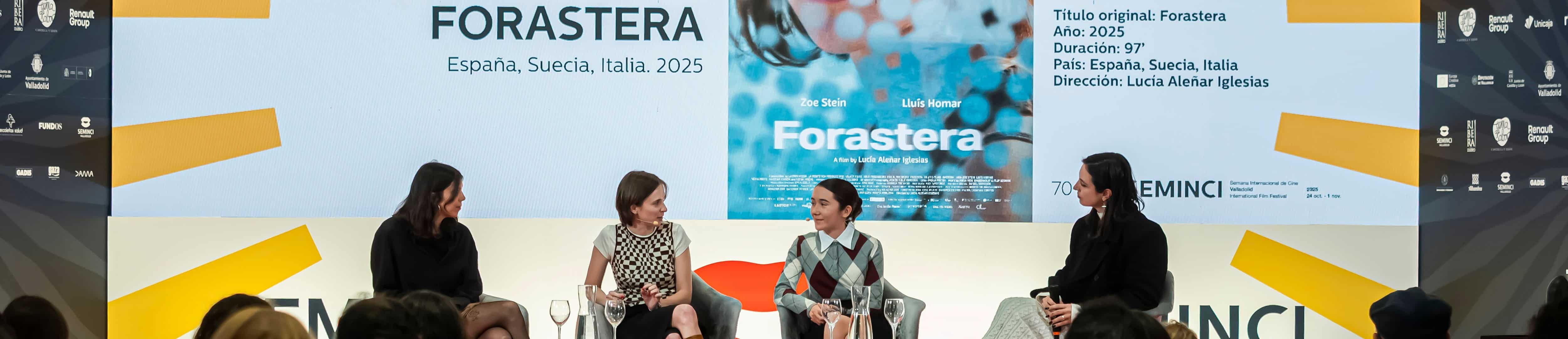
- Starring Zoe Stein and Lluís Homar, the director’s debut film competes in the Meeting Point section
The 70th SEMINCI welcomes the Spanish premiere of Forastera, the debut feature film by Lucía Aleñar Iglesias, which arrives in Valladolid after receiving the FIPRESCI award at the Toronto Film Festival. Actress Zoe Stein and producer Marta Cruañas accompanied the director.
Competing in the Meeting Point section, Forastera tells the story of Cata, a young woman who, in the middle of her summer holiday in Mallorca, must face the death of her grandmother. This story of grief quickly takes an unexpected turn when Cata begins to assume her grandmother’s identity, trying on her dresses and imitating her voice in an act of resistance to letting her go.
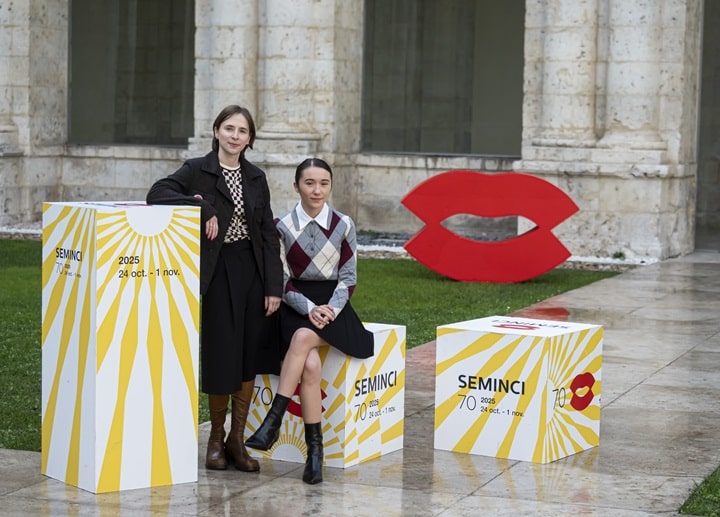
Lucía Aleñar Iglesias takes as her starting point the short film of the same name that she made in 2020. The adaptation process five years later posed several challenges for the director and actress: ‘I knew that the subject matter had more to offer, but I also knew that I didn’t want to tell exactly the same story. It was a process of changing the character and opening her up to the family to see how they were also affected by the grief she is experiencing,’ said Aleñar. Meanwhile, Zoe Stein shared: ‘For me, it was really nice to have the opportunity to move from a short film to a feature film in which we could explore many other themes in greater depth. It was a challenge to find a new Cata.
Grief and family
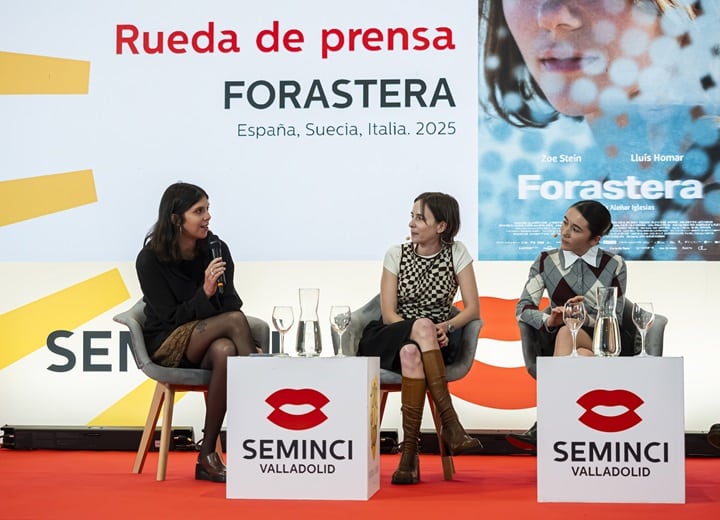
One of the elements that differentiates Forastera, the feature film, from the short film is its emphasis on family relationships and how they are affected by grief. ‘It’s very interesting to observe family dynamics. When there is a loss, a void is created and the question arises of how to fill it, how to restructure. It’s complicated and tense, and it’s very important to experience that grief together,’ said the director. She concluded: ‘The theme of grief affects us all. Although this film deals with the subject in a somewhat particular or imaginative way, it is a process that you end up connecting with in one way or another.’
A stranger at home
Loss and absence permeate Cata’s journey of self-discovery, as she finds herself at a crucial moment in her life, experiencing new things and looking to the future. ‘I find that moment in adolescence interesting, when you’re allowed to do some things, and yet for others, you’re still a child. I wanted to give the character a little more power in terms of her decision-making, that curiosity that comes from within herself,’ said the filmmaker.
Location was a key element in that sense, as Lucía Aleñar pointed out. She has lived outside Spain for a long time and knows first-hand what it feels like to be a stranger in her own home: ‘The Mallorca we portray is that of a stranger. We play a lot with the presence of the sea, which for someone who is not from the area is something that is always there. But also with the interiors, that house is almost like a postcard, very close to reality but almost too perfect.‘ She added: ‘I wanted to create a maze-like space, to build a world around Cata’s emotional journey. What I find very interesting about outsiders, Spanish people from the mainland who go to Mallorca, is how they always move through spaces from a more observant point of view. Cata doesn’t interact much, she just observes.’
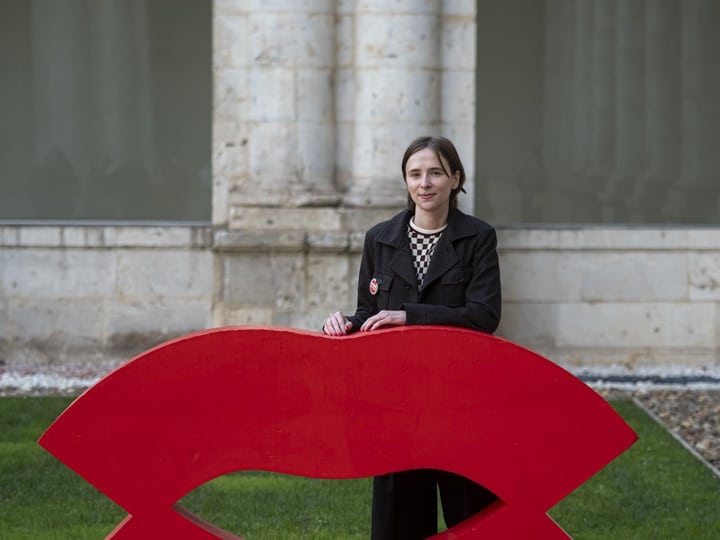
Zoe Stein elaborated on this idea, noting: ‘I wanted to delve into that ambiguity. Not much is said in the film; things are left there, without explanation. And that ambiguity creates an atmosphere that can be felt in the house. Arriving there was like stepping into the story immediately.’