

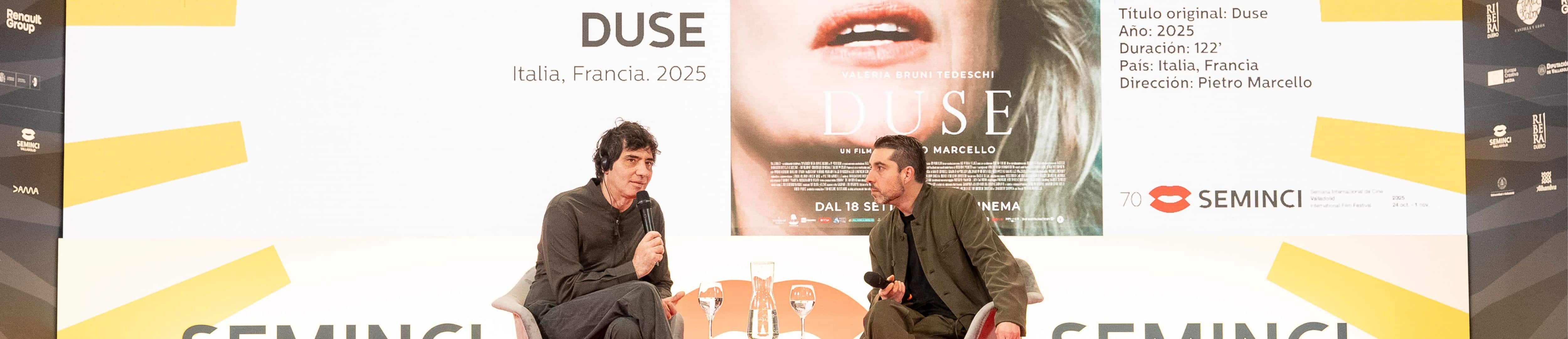
- The relationship between theatre and Italian politics in the context of World War I, in competition at the 70th edition of SEMINCI
The Official Section of the 70th edition of the Valladolid International Film Festival (SEMINCI) today includes the Spanish premiere of Duse. The latest film by Pietro Marcello (The Mouth of the Wolf), a foray into the Italian actress’s return to the stage between 1917 and 1923, her relationship with her daughter and her assistant, and her approach to Italian fascism.
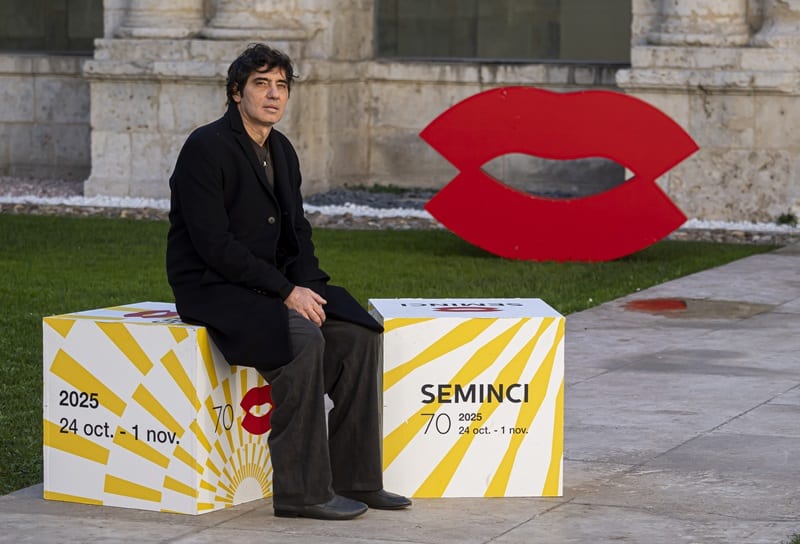
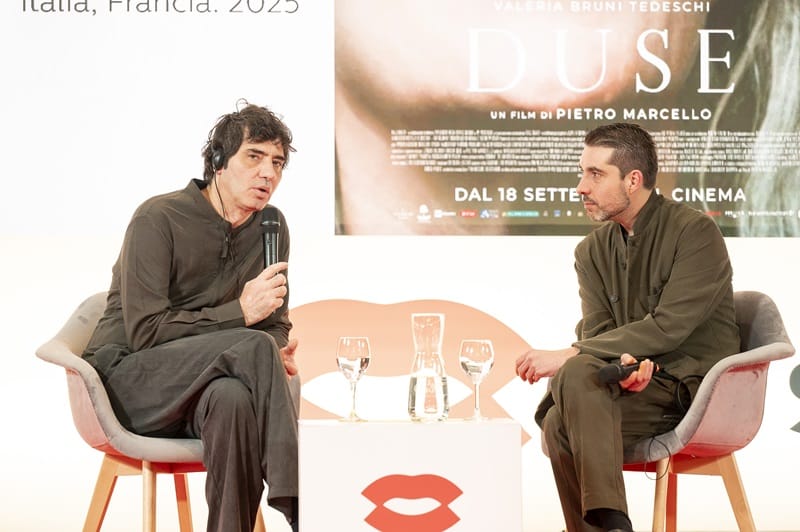
The filmmaker has emphasised his intention from the outset to construct the film as an unconventional biopic, insisting on the link that Duse has with one of his previous works, Martin Eden: “It’s as if both films were twins; they are not classic biopics, but rather a look at the irreverent spirit of a character, in this case a heroine from Italy’s past who was part of the national theatrical tradition between the 19th and 20th centuries,” he said.
Valeria Bruni Tedeschi, winner of the Best Actress Award at the 61st edition of SEMINCI for Like Crazy by Paolo Virzì, stars in this unique portrait that explores the public and private life of the actress during the turbulent interwar years. ‘I thought of Valeria from the very beginning when I was writing the script. That’s why there was no casting as such, since in addition to being a great performer, I’m very interested in her work as a director, something that could contribute a lot to the personification of Eleonora Duse,’ acknowledged the director, dwelling on the in-depth work with the Italian actress to bring out Duse’s aura on screen, which Marcello has defined as ‘a spirit halfway between the human and the divine.’
The characterisation of a figure such as Eleonora Duse, of whom only one appearance in a 1916 Italian film entitled Cenere remains, was a challenge for Marcello: ‘There are hardly any archives about her, just a few lost audio recordings and this small role in cinema, so our intention has been to interpret one facet of Duse; I don’t have the necessary sources to make a conventional biopic.’ The director also recalled his experience in documentary filmmaking and how it has influenced his work with Valeria Bruni, saying: ‘For me, it’s essential that there are unforeseen events on a shoot, to leave room for the accidental, and with Valeria Bruni it was a constant epiphany, it’s as if the film was made in a state of grace.’
Revisiting History
One of the crucial aspects of the film, which approaches a changing political landscape from various perspectives, has been the extensive research work. ‘To change history, we must know it, because it is always the ones who win that tell the story. That’s why I was interested in this character who stood out at a time when women were relegated to secondary roles in theatre. At the same time, I wanted to explore this period that transformed the country forever, something similar to what happened in Europe,’ the director acknowledged.
For Marcello, the use of archive material represents a parallel counterpoint to Eleonora Duse’s own journey, ‘a character who carries history on her shoulders’. He explains: ‘That’s why I was very interested in focusing on the last years of her life, on the uncertainty of the new century and the relationship between art and political power.’