

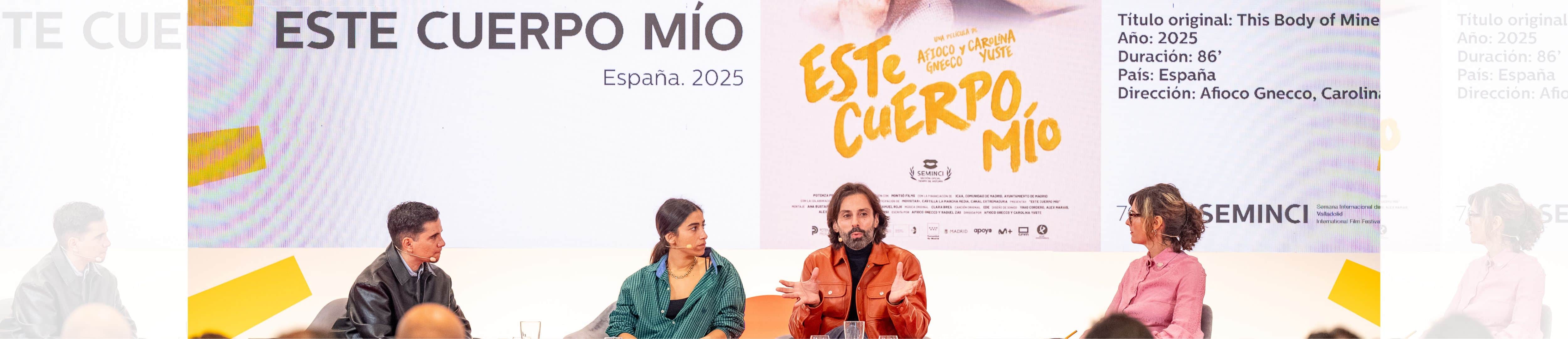
- The Italian-Chilean filmmaker and Spanish actress present the world premiere of This Body of Mine in the Time of History section of the 70th SEMINCI.
The 70th SEMINCI hosts the world premiere of This Body of Mine, a documentary directed by filmmaker and queer activist Afioco Gnecco (Diversxs, No binario) and actress Carolina Yuste, two-time Goya winner (Carmen y Lola, La infiltrada). The film, which is participating in Time of History and is also competing for the Rainbow Spike, documents Gnecco’s gender transition process in the form of a filmed diary dominated by an intimate gaze, love and an ode to friendship.
This Body of Mine stems from the previous short film Ciao bambina (2024), nominated for a Goya and awarded the Biznaga de Plata at the Malaga Film Festival. For Yuste, the feature film contains ‘a deeper question, an exercise in reflection’. In addition to ‘a return to the origin; Afi’s enormous desire to find himself from the most atavistic point’. In his case, it was Chile, where he was born and had not returned for 20 years. And it was about seeing how this opened up other emotions and other wounds.
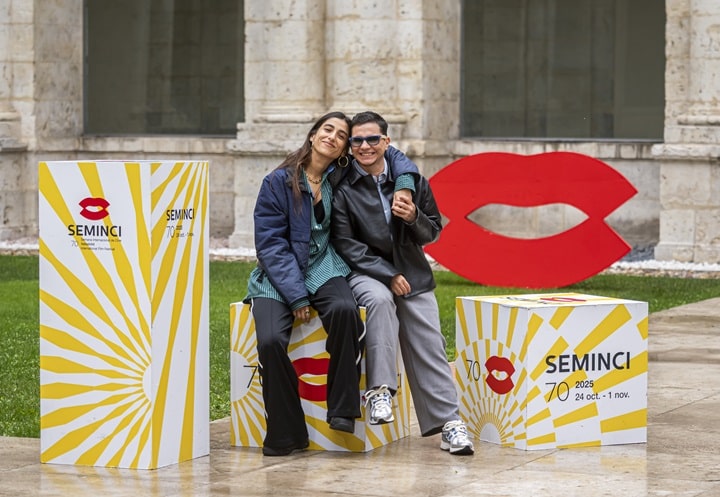
Gender and love
According to the team, the message the film wants to convey is ‘that we all rethink what gender is, what it means to be a man or a woman.’ Carolina Yuste explained: ‘I’m not just talking about gender dissidents, but about anyone who, for whatever reason, hasn’t reached that point. I also think it’s important to talk about love and friendship all the time, non-stop.’
She also praised cinema that does not bow to the demands of the industry and continues to understand that the important thing is to give visibility to these types of stories: ‘Art has to serve that purpose, to tell all those social stories that touch people’s souls. We must never forget the responsibility that art and culture have to build more loving and empathetic societies. That is what we have tried to do in this film.’
The search for this honesty was the guiding light for Gnecco and Yuste throughout the filming and post-production process. ‘There was an agreement from the beginning: whatever appeared in the film had to be true. And in the editing, we left out sequences that were shot spectacularly, with a large crew, in order to prioritise the moments of greater intimacy. Carol taught me to seek out emotion, and that’s much more important than an aesthetically perfect shot,’ said Gnecco. To which Yuste added: ‘Any flaws the film may have work in favour of the story it tells, of breaking down the idea of genre and structure; of how one should exist and how one should make films.’
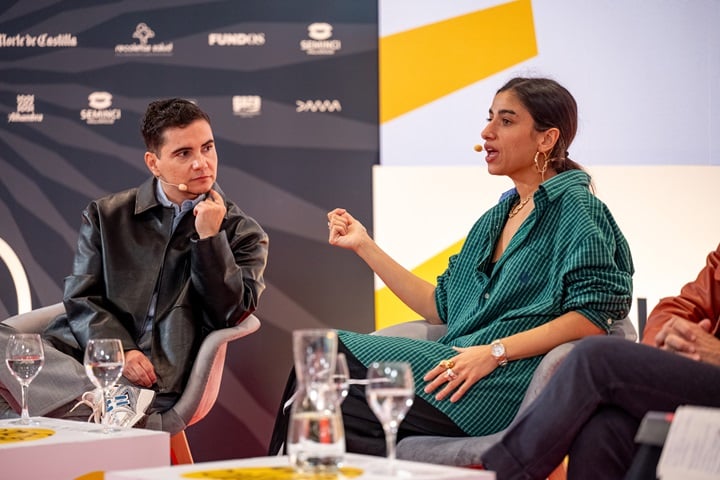
The film’s aesthetic changes at the same time as Afioco Gnecco’s physical changes: ‘It starts off ugly, it’s poorly filmed, Carol doesn’t know how to frame the shot… but I love that the more I see myself, the more beautiful the film becomes,’ he said. Yuste also stated: ‘Co-directing means understanding each other. It’s nice because it’s not his film or mine; it’s a mixture of our two energies, always in favour of talking about trans realities and masculinities from a positive, loving and luminous point of view.’
Social perspective
When asked if she would be interested in continuing on the path of filmmaking from a social perspective, Yuste said: ‘I have more and more conflicts with this social cinema thing. All cinema is social because everything is part of society. The thing is, which part of it do you choose to tell? The thing is, when the majority of us have only seen one specific type of reality, of family, gender, sexuality or work, anything that strays a little from that is immediately considered social cinema.’ And concluded: ‘I hope that all these terms will eventually fade away so that we become more accustomed to seeing other diversities, other experiences, other lives. It has to do with empathy and learning to look more closely. I don’t know where this film will take me, but that’s what interests me.’
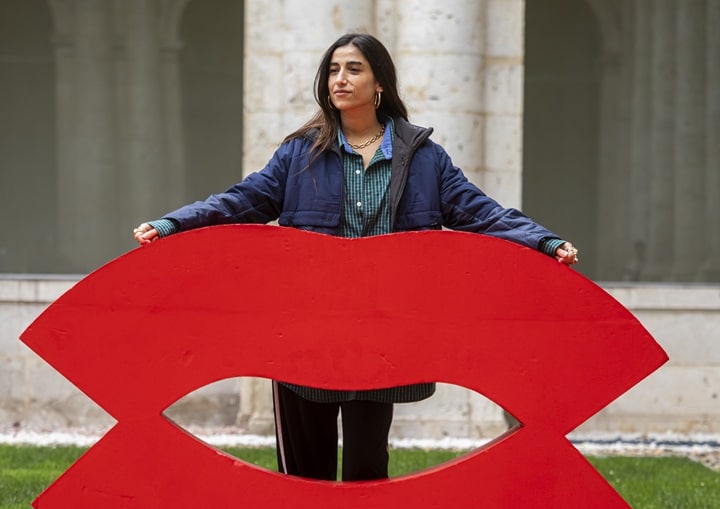
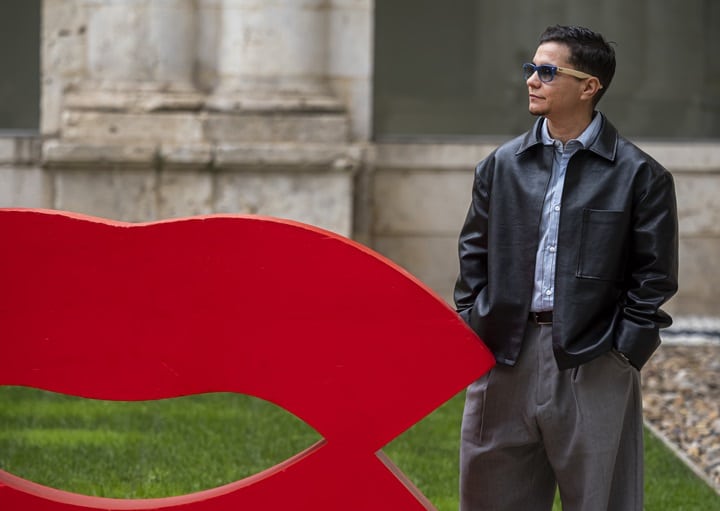
Meanwhile, the co-director wanted to thank the NGO Apoyo Positivo, which currently focuses on drug addiction and supporting transgender people, for its collaboration in the early stages of the short film and, consequently, the feature film.
Regarding financing, producer Carlo D’Ursi explained the ‘puzzle of trying to receive all the aid and, at the same time, respect creative freedom as much as possible.’ And highlighted the friendship between the two filmmakers: ‘We are talking about an intimacy that begins with the two of them; I am just a fortunate witness to that process. The film is about finding your place in the world, your square metre of peace. And the honour for me has been to have found that square metre within such a great and powerful friendship.’