

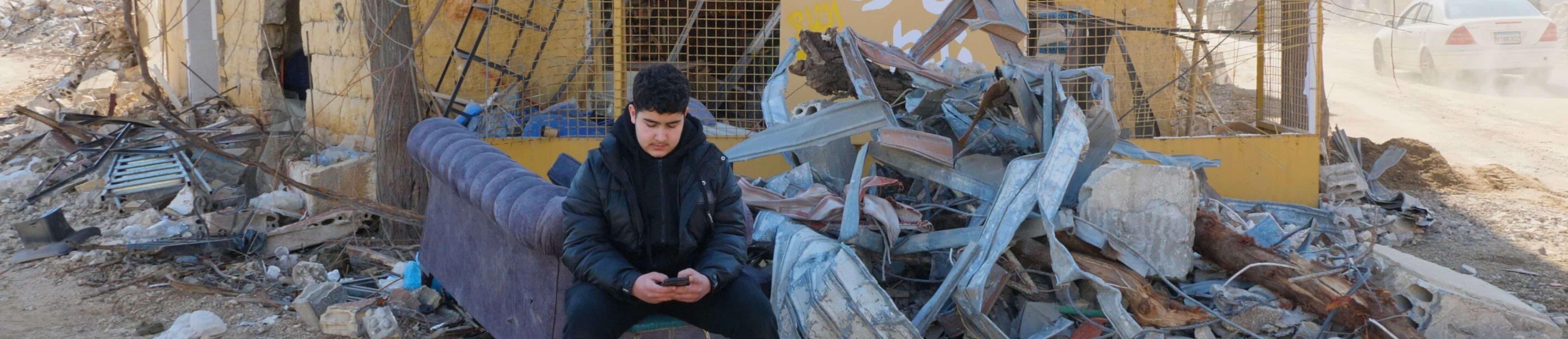
The mosaic of non-fiction films proposed by the 70th SEMINCI includes selections by Kamal Aljafari, Abbas Fahdel, Alexander Rodnyansky, Aleksandr Sokurov, and Federico Veiroj, among others
The panorama of contemporary documentary cinema brought together by the Time of History section at the 70th edition of the Valladolid International Film Festival (SEMINCI) reflects a society marked by deep fractures. From the ruined cities of Gaza and Lebanon to the small, lonely apartments of Tokyo, the recent non-fiction works selected construct a disturbing mosaic of our time: a world where war is perpetuated, families disintegrate, and individuals are lost in the labyrinths of loneliness.
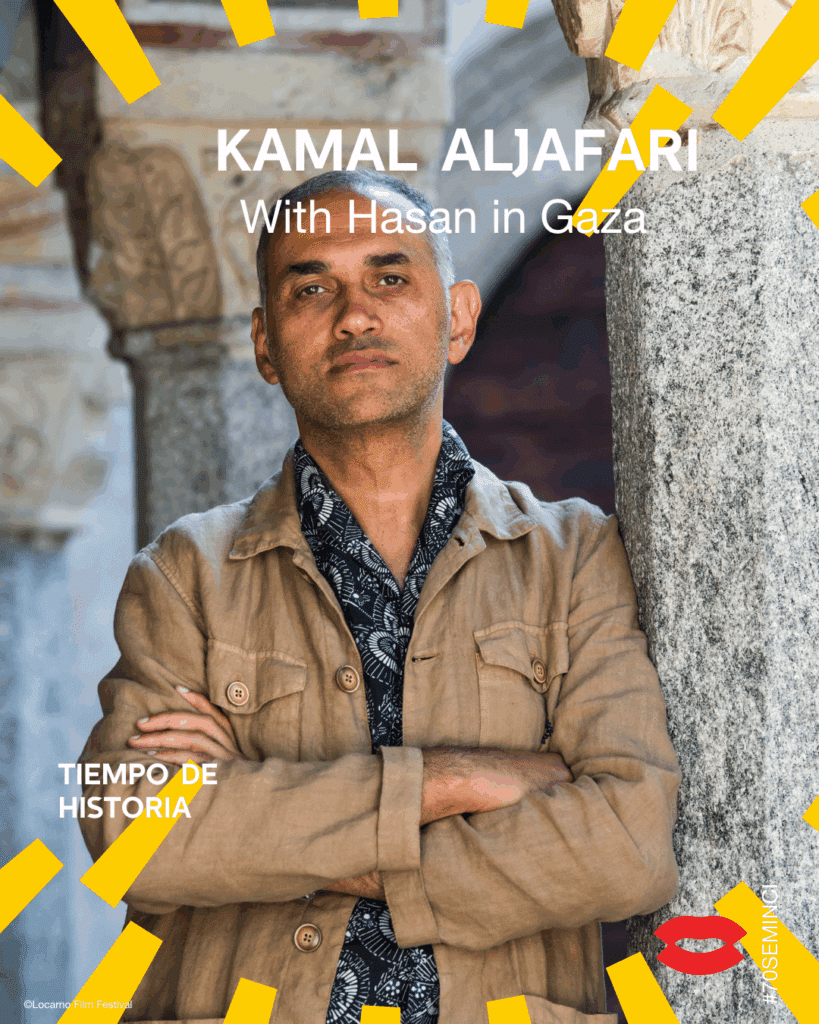
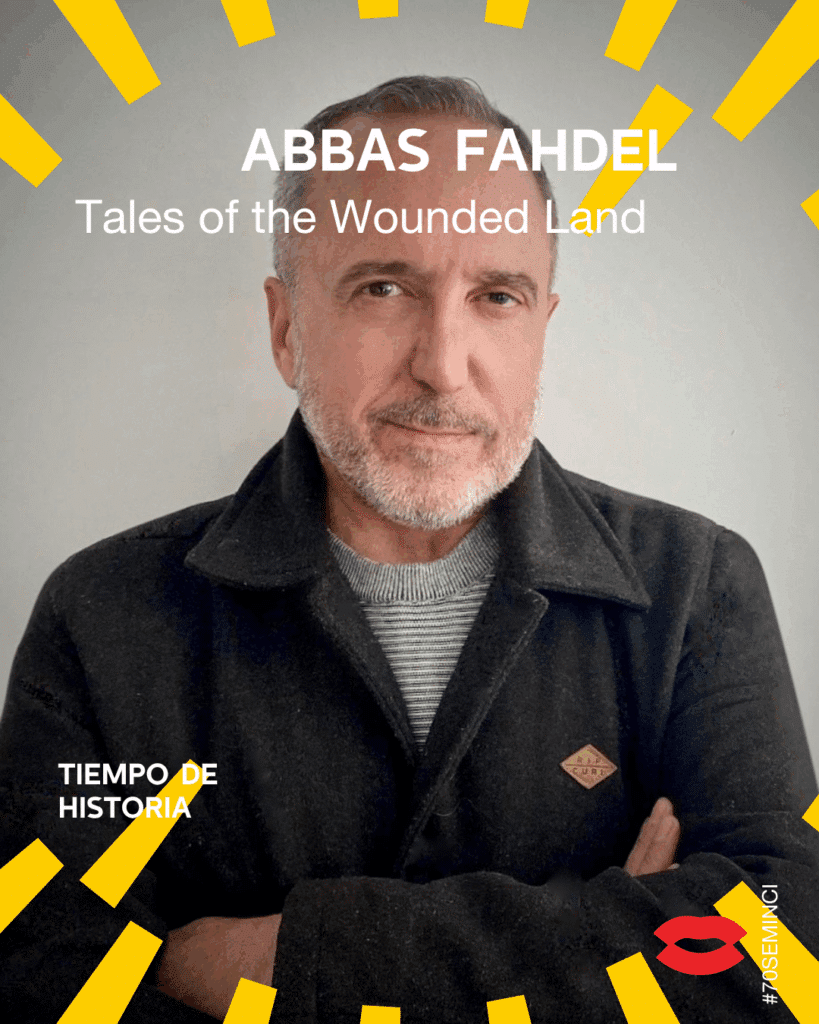
War conflicts occupy a central place in the program. Documentary audiovisual material lays bare the harsh reality of the conflicts in Gaza, Lebanon, and Ukraine. Palestinian filmmaker Kamal Aljafari, who presented his previous work, A Fidai Film, at the 69th SEMINCI, constructs a testimony to the decades of destruction suffered by the Palestinian people in With Hasan in Gaza. The bombings of Lebanon are the stark landscape depicted in Tales of the Wounded Land by Abbas Fahdel, winner of the Best Director award at the Locarno Film Festival.
In the other major current battleground, Russia’s invasion of Ukraine, producer and director Alexander Rodnyansky reflects in Notes of a True Criminal on key events in Ukrainian history and how they affected him and his family: the referendum to decide whether the country would become independent of the Soviet Union in 1991, the Babi Yar massacre, the Chernobyl tragedy, and the Russian army’s invasion in February 2022. He uses documentary footage and images shot by his relatives to paint a picture of the difficult journey through the 20th century, marked by profound pain, which continues to this day.

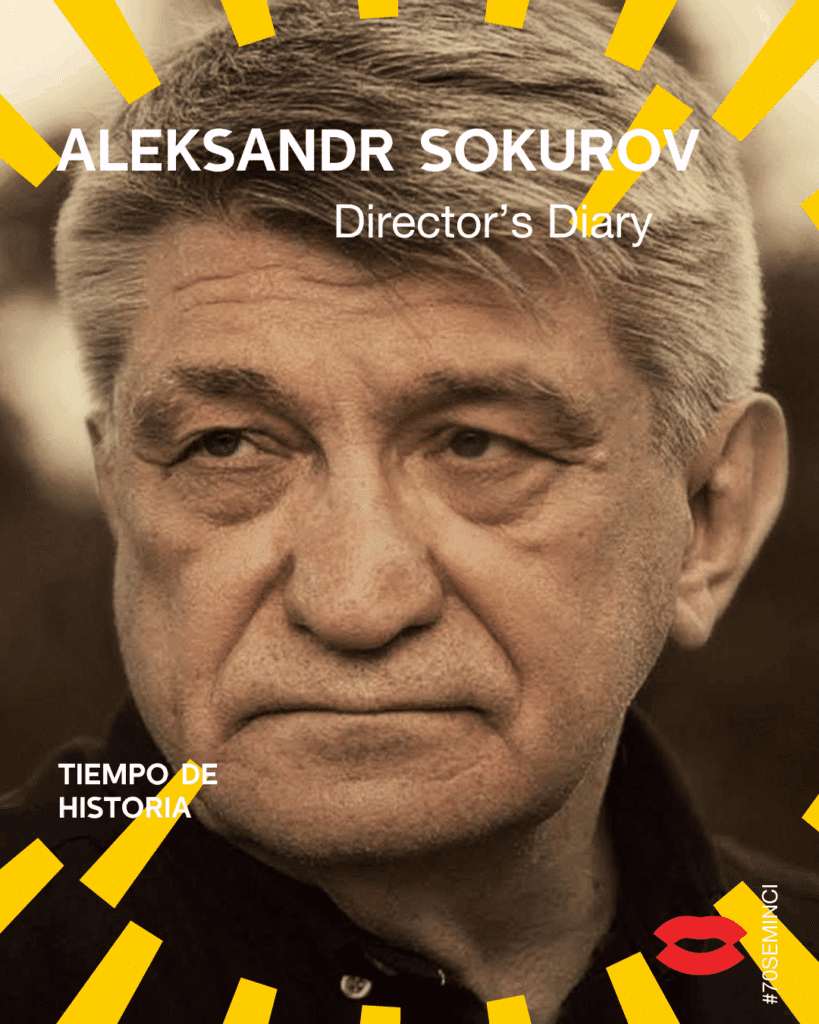
In addition to those already mentioned, this year’s festival has managed to bring together some of the most notable names in contemporary cinema. Among them is the Russian master Aleksandr Sokurov, winner of the Golden Lion in Venice, who presents Director’s Diary, a work in which the pen and the camera merge surprisingly in a monumental history lesson that intertwines personal reflections and archival material.
Uruguayan Federico Veiroj, who has an acclaimed fiction filmography (Acné, La vida útil), makes his documentary debut with Face to Face, in which he explores his relationship with an absent father through 30 years of home recordings.
The different approaches, ranging from the lyrical to the political, of five female directors are reflected in the diversity of contemporary documentary filmmaking that will be showcased at this year’s festival. The Tale of Silyan, by Macedonian Tamara Kotevska, who was nominated for an Oscar for Honeyland, and The Seasons, by Portuguese Maureen Fazendeiro, who has developed a stimulating career as a director and screenwriter both solo and alongside Miguel Gomes (Grand Tour), sketch two territorial portraits of the landscape and its relationship with its inhabitants.
For their part, filmmakers Vladlena Sandu and Amber Fares offer a very personal view of conflicts. The former imaginatively recreates her childhood experiences during the Russian invasion of Chechnya in Memory, which won the Audience Award at the Venice Film Festival. Fares won the Special Jury Prize for Freedom of Expression at the Sundance Film Festival for Coexistence, My Ass! for giving a voice to a comedian and activist critical of the Israeli occupation of Palestine. The fifth is the well-known French actress and director Romane Bohringer (César Award for Most Promising Actress for Savage Nights), who in Tell Her I Love Her offers an autobiographical reflection on motherhood and absence.
The programme is rounded off by Danish director Kaspar Astrup Schröder’s take on loneliness in Japan and the search for emotional connections in Dear Tomorrow, as well as the previously announced Spanish productions Yrupê, by Candela Sotos; This Body of Mine, by Carolina Yuste and Afioco Gnecco, and David Delfín. Muestra tu herida, by César Vallejo de Castro, Ángela Gallardo Bernal and Rafa Muñoz.


War as historical continuity
The films about armed conflicts grouped under Time of History share the premise that no war breaks out by chance; they are all rooted in previous tensions, historical grievances or conflicting interests. Based on this conviction, the filmmakers have chosen different paths: some rescue images from their family archives, others adopt an autobiographical perspective, and still others challenge the limits of documentary filmmaking.
Palestinian filmmaker Kamal Aljafari, who presented his previous work, A Fidai Film, at the 69th SEMINCI, has recovered in With Hasan in Gaza recordings he made two decades ago documenting daily life in the ruined streets while searching for a man he met in prison as a teenager. The film functions as a personal archive and collective memory, creating a powerful portrait that transcends the merely documentary to become an urgent testimony to a tragedy that has spanned decades, en una demostración de que el sufrimiento de la población palestina no es una anomalía reciente, sino una constante histórica que se perpetúa.
In Tales of the Wounded Land (prize for best director at the Locarno Festival), Franco-Iraqi director Abbas Fahdel revisits the war in Lebanon after Tales of the Purple House (2022) and Bitter Bread (2019). The filmmaker, who achieved international recognition for his cinematic account of the invasion of his native Iraq that he shot in Homeland (Iraq Year Zero), uses his daughter’s childlike gaze as a witness to the destruction of his environment. Fahdel, true to his relentless style, offers a raw and overwhelming testimony of the Israeli bombing. However, the documentary is presented as a chronicle of the regeneration, of the capacity of the Lebanese people to survive.
Canadian-Lebanese filmmaker Amber Fares takes an unexpected look at the Palestinian-Israeli conflict in Coexistence, My Ass!, The director follows for five years the Israeli comedian Noam Shuster-Eliassi, a frontline anti-government activist and peace and development worker in various organizations, including the UN. The documentary includes excerpts from his performances (Palestinian festivals, Harvard University…), in which he denounces the violent occupation of settlers in Palestine and the normalization and justification of the situation by the Israeli society.
Alexander Rodnyansky, renowned producer of films such as the Oscar-nominated Leviathan (2014) and Orphan (included in the Official Section of the 70th SEMINCI), comes back to the documentaries with Notes of a True Criminal 31 years after his first project. With the collaboration of Andriy Alferov as codirector, and combining current images with archival footage of the most important historical moments in Ukraine over the last 75 years, he attempts to put the war into a wider and more intimate context, portraying war as a persistent curse that has shaped his life, that of his children and that of his parents and grandparents. Rodnyansky has been sentenced in absentia by a Russian court to 8.5 years in prison for his anti-war stance.
Based on the manuscript diary of the Russian filmmaker Aleksandr Sokurov, Director’s Diary offers a monumental historical panorama of five hours in duration that retraces the great events which took place in the world between 1957 and 1991, Based on diary entries and archival material of political, social and cultural events. The winner of the Golden Lion at the Venice Film Festival for Faust (2011) and author of Russian Ark or Mother and Son builds a history class from an autobiographical perspective. The images are read like a book, whose pages are recognizable, sometimes unexpected, but always emotionally evocative.
Vladlena Sandu recalls her childhood memories during the Russo-Chechen war in her feature debut, Memory, Audience Award at the Venice Film Festival. Sandu transcends the documentary genre by creating a colorful and creative visual oneiric proposal, mixing recreations, archive images and animation, which opens different paths within the territory of non-fiction.



Broken identities: when the family becomes a conflict zone
Traumas have other battlefields in the family. Maternal and paternal relationships can be reflected as devastated territories where abandonment and incommunication generate wounds that last over time. The two autobiographical works that explore family traumas programmed in Time of History use personal archives to show how bonds broken in childhood project into adulthood.
Renowned French actress Romane Bohringer has chosen the autobiography of feminist politician and activist Clémentine Autain as the starting point for her second feature film as director, Tell her I love her. Bohringer, who has a long career with titles led by André Téchiné, Chantal Akerman, Benoît Jacquot or Agnieszka Holland, transfers the memories and the memory of Autain to her own life, sharing both the absence of the maternal figure from an early age, and reflects on overcoming the trauma and her own experience as a mother.
Federico Veiroj, a fundamental Uruguayan director of the new Latin American cinema thanks to works of fiction such as A Useful Life or Belmonte, examines the complex and broken relationship with his father in his first documentary feature, Face to Face. Veiroj debuts worldwide in SEMINCI this autobiographical reflection on the complicated figure of his progenitor through fragments of recordings made over 30 years, among which is the psychiatric evaluation session in search of a diagnosis to which they submitted their father.
Returning to the roots as a response
Faced with this panorama of war and trauma, directors Tamara Kotevska and Maureen Fazendeiro propose a return to the connection with the territory as alternatives to contemporary defeatism.
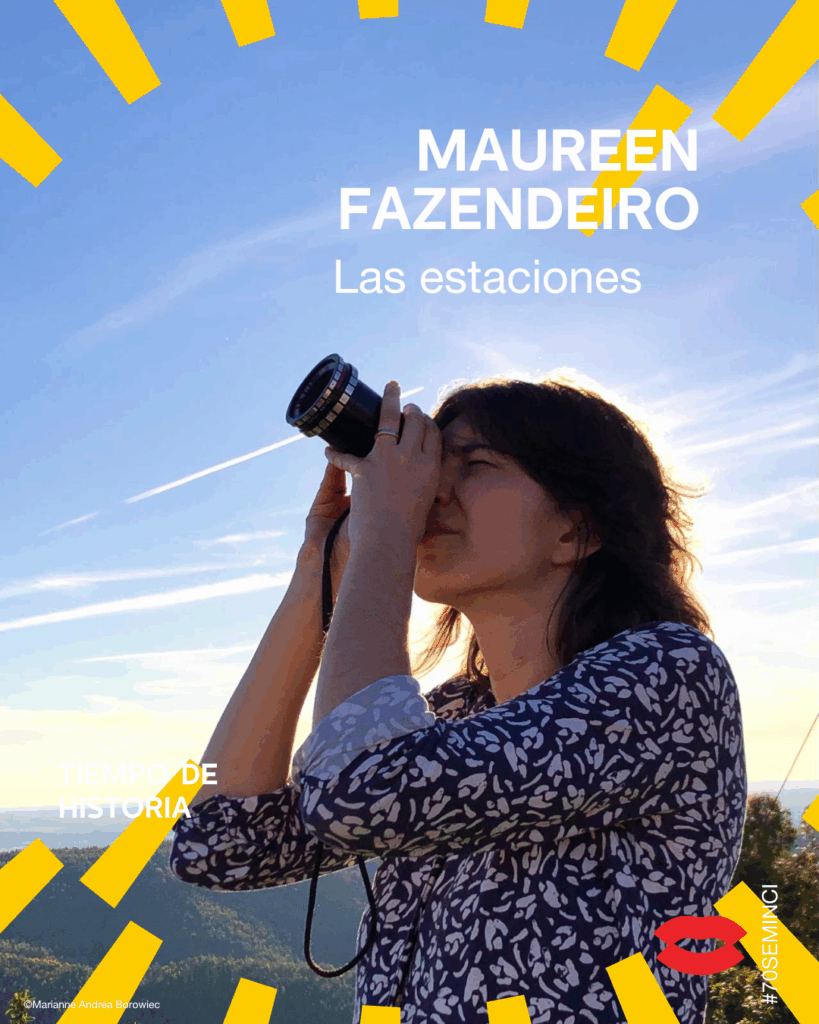
The history, legends and people of the Portuguese region of the Alentejo are the setting for the mixture between documentary and fiction in Las estaciones, the solo debut directed by Maureen Fazendeiro, co-director of The Tsugua Diaries with Miguel Gomes. The director, who also competes in the Official Section with the short film Les Habitants, brings together objects, songs, letters and testimonies to create a song of love for the beauty of this territory, from the cooperative agriculture that flourished after the decline of the Portuguese dictatorship to megalithic archaeological sites. Filmika Galaika, who presented La Parra by Alberto Gracia at the 69th edition of SEMINCI, a film that won the Alchemies section award, is involved in this Hispanic co-production.
Macedonian filmmaker Tamara Kotevska, recognized for the documentary nominated for two Oscars and a finalist in the 2019 European Film Awards Honeyland, investigates The Tale of Silyan on the roots of Northern Macedonia and its historical and cultural meanings. With a filmography focused on migration and nature conservation, Kotevska recounts the friendship of a farmer whose family has emigrated in search of sustenance, and a wounded stork as a mirror of the changes that is the state dependence of small farmers, the economic migration of young people, family break-up or tensions between ecology and food production.
Loneliness as a contemporary epidemic
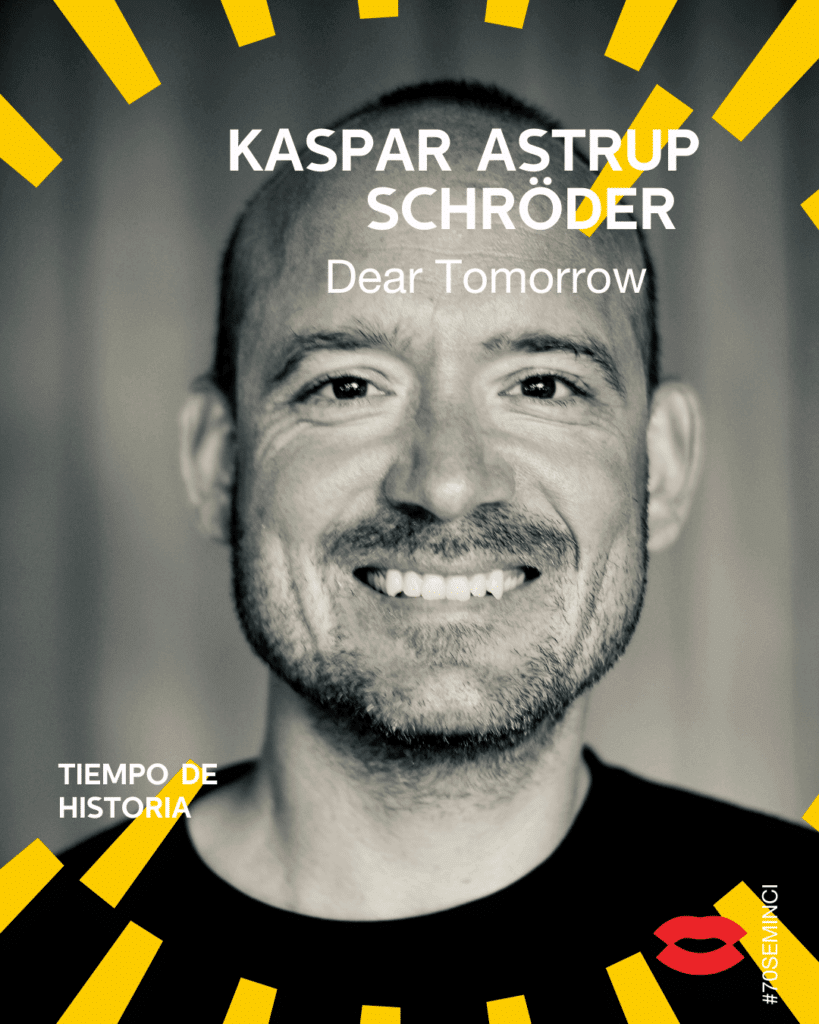
Closing the selection is the Danish filmmaker Kaspar Astrup Schröder, who presents in Dear Tomorrow a portrait of the extreme loneliness that some people live in Tokyo, a symptom of the loss of empathy and emotional communication with other parts of Japanese society, where in 2021 was appointed the minister of loneliness. The filmmaker reflects on three people who seek emotional sustenance through virtual interactions that they exchange in a government-funded, volunteer-assisted chat for loners.