- Schools will have free access to six feature films and three short film programmes aimed at pupils at different stages of their education
- Cinephile Window is a joint initiative of the Valladolid, Seville, Sitges, Huelva and Málaga film festivals, in which nearly 320,000 students took part last year
For the seventh consecutive year, the Valladolid International Film Week (SEMINCI), the Sitges Film Festival, the Seville Film Festival, the Huelva Film Festival and the Málaga Film Festival – united under the ProFestivales21 umbrella organisation, in collaboration with the FILMIN platform – are once again promoting film education for young audiences through the online channel Cinephile Window. The initiative, aimed at schools, offers a selection of recently released international films, bringing cinema into the classroom and helping to cultivate a new generation of film-goers. Schools can register between 15 September and 27 November to take part in this year’s edition.
The project offers students the opportunity to discover a programme of feature films and short films selected and agreed upon by the programmers of five of Spain’s most important film festivals. The choice of films takes into account not only their cinematic quality, but also their thematic and aesthetic balance and their suitability for students of different ages. The activity will run from 15 October to 30 November.
Each school will also receive a comprehensive teaching guide for each film, enabling teachers to enrich classroom discussions before and after the screening, as well as to explore different subjects in depth and across the curriculum. The screenings will be accompanied by a recorded presentation by the programmers, offering insights into the films and highlighting the merits of each title.
Since its launch in 2020, Cinephile Window has screened 45 feature films and 70 short films, including both animated and live-action works, covering a wide range of themes and reflecting current social issues at the time. In 2025, the programme reached 319,587 pupils in primary, lower secondary and upper secondary education, with the participation of 900 schools in Andalusia, Castile and León, and Catalonia, and 1,727 registered teachers.
- Code requests: from September 15
- Screening period: October 15–November 30
- Deadline to request screening codes: November 27
Films selected for Cinephile Window
This year’s Cinephile Window programme includes six feature films and three short film programmes aimed at students of different ages. The films explore themes relating to personal growth, imagination, finding one’s own path, relationships with others, and some of the social realities that form part of the contemporary world.
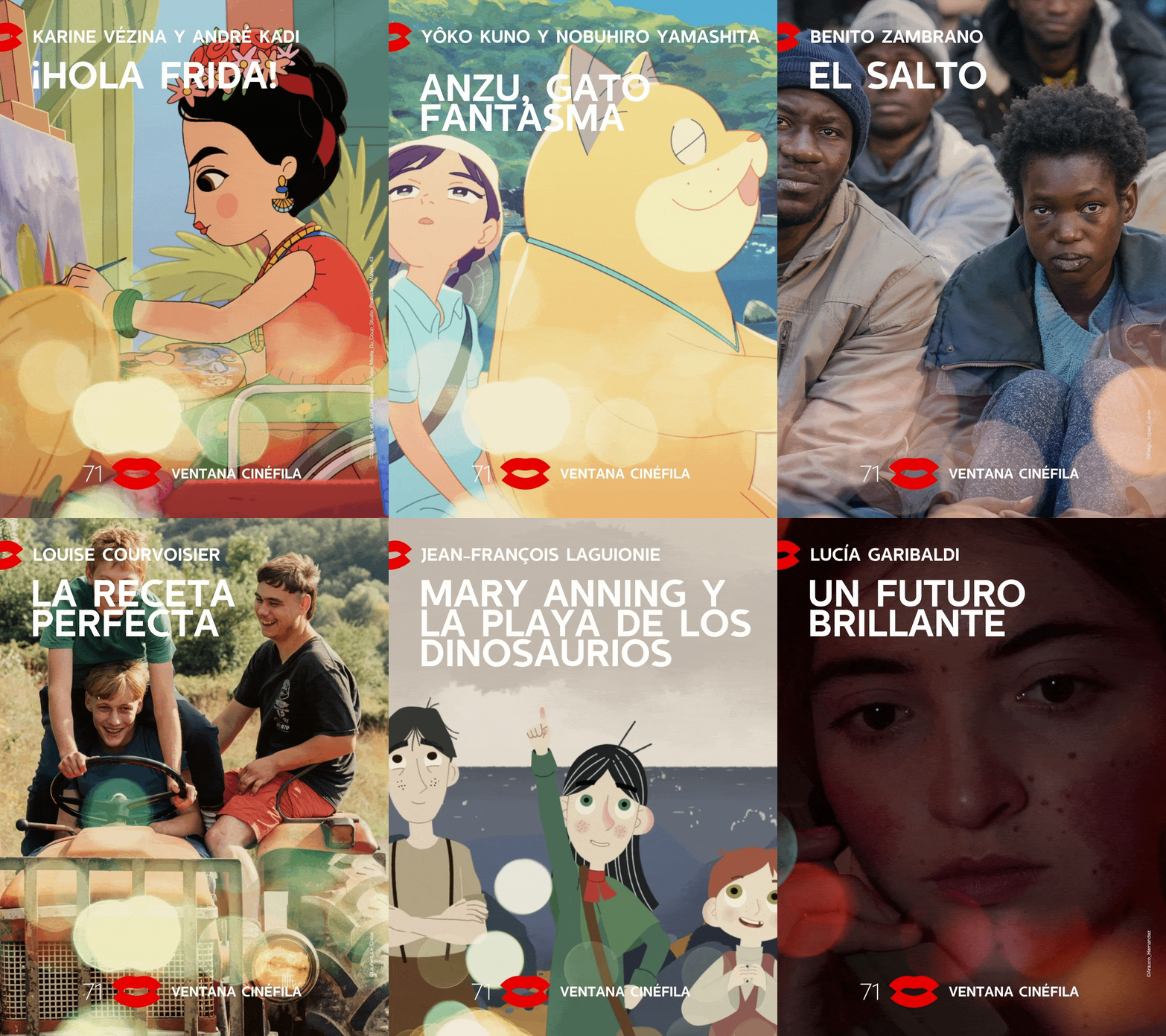
A number of this year’s feature films explore personal growth and the search for one’s own path through very different situations. The Perfect Recipe, by Louise Courvoisier, follows a young man who, following his father’s death, must take on new responsibilities and look after his younger sister; whilst A Bright Future, by Lucía Garibaldi, uses science fiction to explore the expectations placed on young people and their right to decide what future they want for themselves.
Taking a very different approach, Benito Zambrano’s El salto explores migration and borders through the story of Ibrahim, who is trying to return to Spain after being deported to Guinea, his country of birth, and to rebuild the life he had built in Madrid. The film aims to shed light on this reality through the personal stories that lie behind the images and statistics usually presented in the media.
Curiosity and discovery take centre stage in the animated films Hola Frida!, by Karine Vézina and André Kadi, and Mary Anning, by Marcel Barelli. The former revisits Frida Kahlo’s childhood and her ability to transform adversity through creativity; the latter explores the life of this pioneering palaeontologist, from her earliest discoveries to her passion for fossils. Joining them is Ghost Cat Anzu by Yôko Kuno and Nobuhiro Yamashita, an adventure in which humour and Japanese folklore accompany a young girl in her quest to be reunited with her deceased mother.
The selection of short films aimed at younger children (aged 5 and over) draws on a variety of animation techniques to tell stories imbued with imagination, cooperation, trust and the overcoming of prejudice. Their protagonists face unknown worlds, pursue dreams, conquer fears or discover new ways of relating to those around them.
The programme for students aged 10 and over explores issues relating to identity, friendship, violence, responsibility and the expectations others place on us. Through a wide variety of stories, the films also encourage us to question first impressions and reflect on how we form our views of others.
Meanwhile, the selection of short films for those aged 13 and over tackles more complex and contemporary issues, such as the consequences of war, sexual violence, the barriers associated with deafness, and the influence of social media and certain models of success on young people’s aspirations. Taken together, they encourage viewers to look beyond the obvious and consider the personal and social circumstances that shape the decisions of the characters.
Feature films
- Hola Frida!, by Karine Vézina and André Kadi (Canada, France, 2025)
- Mary Anning, by Marcel Barelli (Switzerland, Belgium, 2025)
- Ghost Cat Anzu, by Yôko Kuno and Nobuhiro Yamashita (Japan, 2024)
- El salto, by Benito Zambrano (Spain, 2024)
- The Perfect Recipe, by Louise Courvoisier (France, 2024)
- A Bright Future, by Lucía Garibaldi (Uruguay, Argentina, Germany, 2025)
Short films (+5)
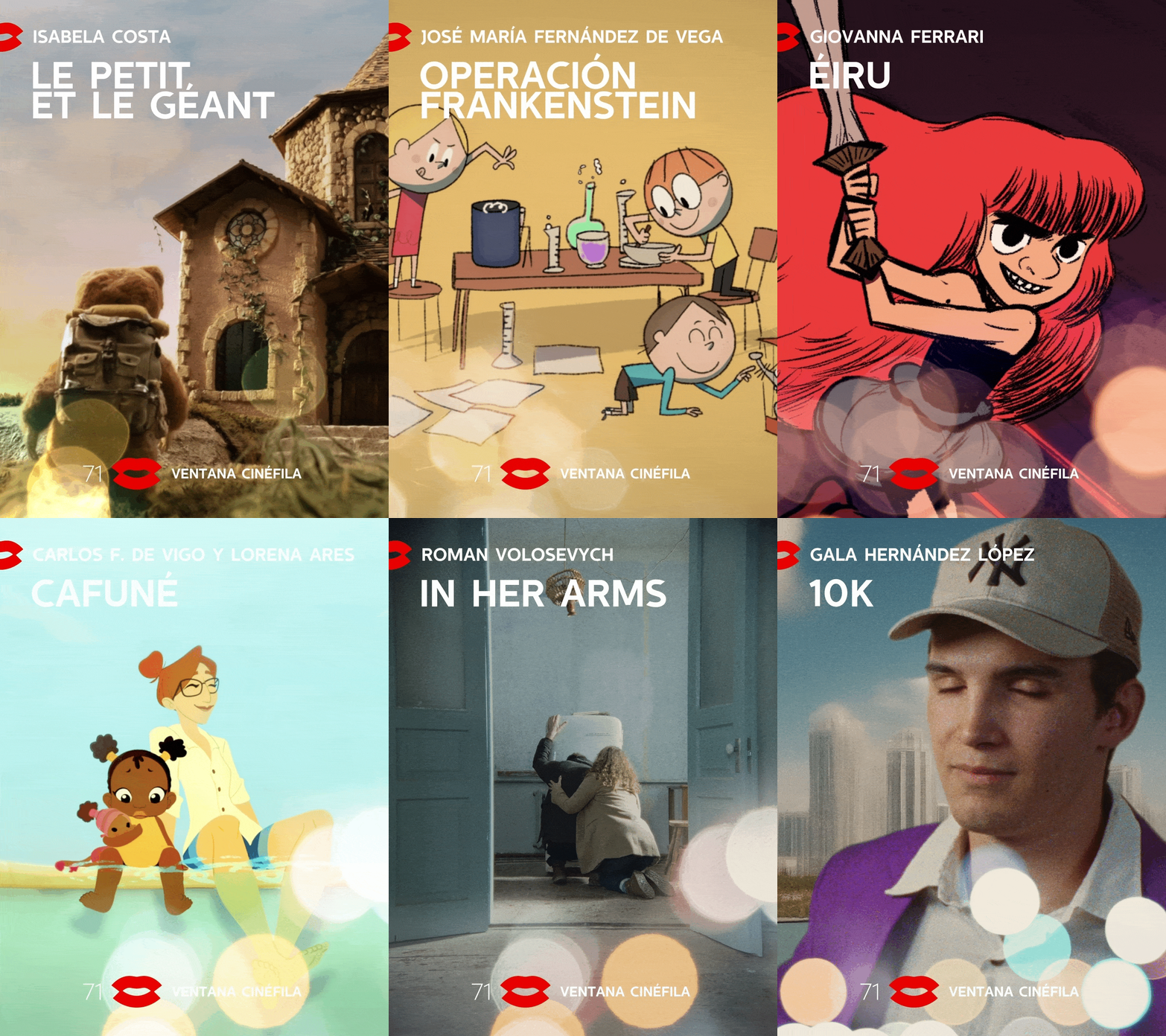
- Le Petit et Le Géant, by Isabela Costa (Brazil, France, 2025)
- Estela, by Manuel Sicilia Morales (Spain, 2024)
- Bobel’s Kitchen, by Fiona Rolland (Belgium, 2024)
- Filante, by Marion Jamult (France, 2024)
- Operación Frankenstein, by José María Fernández de Vega (Spain, 2022)
Short films (10+)
- Nens, by Anna Martí Domingo (Spain, 2024)
- Éiru, by Giovanna Ferrari (Ireland, 2025)
- Gilbert, by Alejandro Salueña García, Arturo Local Ruiz and Jordi Jiménez Xiberta (Spain, 2024)
- Cafuné, by Carlos F. de Vigo and Lorena Ares (Spain, 2023)
- La fuerza, by Cristina Martín Barcelona and María José Martín Barcelona (Spain, 2024)
- Los Danubios, by Jaume Claret Muxart (Spain, 2023)
Short films (+13)
- In Her Arms, by Roman Volosevych (Ukraine, 2025)
- Mercy (Nade), by Hedda Mjøen (Norway, 2025)
- Sorda, by Nuria Muñoz and Eva Libertad (Spain, 2021)
- +10K, by Gala Hernández López (Spain, France, 2025)