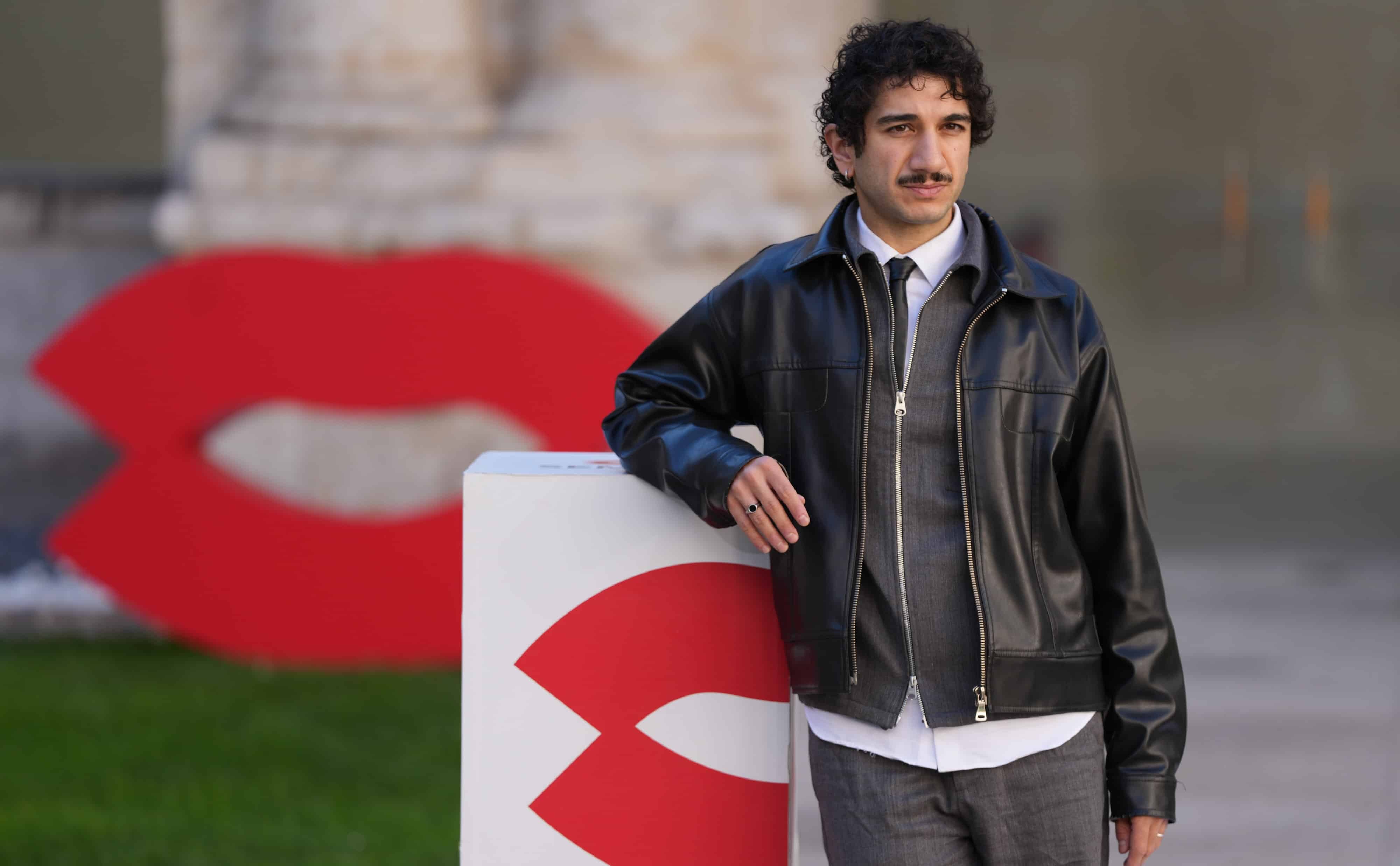
- The German-Iranian filmmaker is competing with his second feature film in the Official Section and the SEMINCI Youth section of the 71st SEMINCI.
- Blending drama and thriller, Prosecution explores the structural violence embedded in the German judicial system, shedding light on the country’s current political climate.
The sixth day of the 71st SEMINCI hosted the Spanish premiere of the second feature film by Faraz Shariat, winner of the Audience Award in the Panorama section of the Berlin International Film Festival. In Prosecution, the German-Iranian director examines the violence experienced by people with intersectional identities within a very specific context: Germany’s judicial system. First-time feature actress Chen Emilie Yan plays a young prosecutor determined to confront far-right violence who, faced with a lack of justice, decides to take charge of the investigation into her own case as the victim of a racist assault.
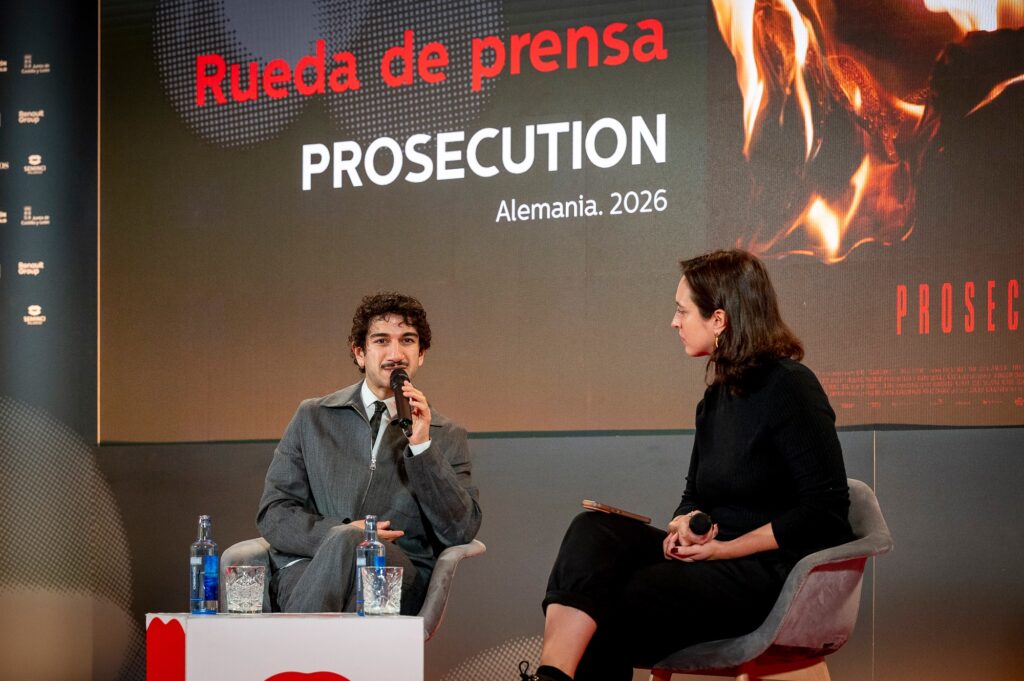
The message of Prosecution comes at a crucial moment, as its director pointed out: “In Germany and across Europe, we are witnessing a rise in the far right. This is a film that speaks very much to the present moment, but also to the history of right-wing violence and fascism that has always been part of this country. It is woven into the very fabric of our nation.” He added: “Fear is one of the emotions exploited by fascist regimes, and we must ask ourselves how to stand up to that fear, what we can do to set the machinery in motion, and what strategies we have for resisting it. These are questions the film raises and the characters grapple with.”
A Vigilante Making Her Debut
One of the film’s greatest achievements lies in Chen Emilie Yan’s performance, marking her feature-film debut. Discussing the process of creating a queer, anti-racist character, Shariat explained: “She is a fictional character in a documentary-like setting. When writing the screenplay, we delved into the shortcomings of the judicial system, and everything is closely connected to what happens in real life. That is the context Seyo faces: she wants to change the system from within, but is gradually pushed out. This is happening now: the presence of the AfD, Germany’s far-right party, has changed the landscape of the judicial system, and left-wing people working within it are experiencing all this violence.”
These circumstances shape the character’s evolution into a kind of queer vigilante, a transformation strongly influenced by the actress herself. “Seyo changes her appearance and becomes a ‘punk’ vigilante. Although this was Chen’s first role, she brought very strong ideas about what it means to be a heroine and to be queer. Her performance is deeply thoughtful, with a suppressed emotionality that forces the audience to look more closely.”
This character development is also reflected in the film’s blend of genres, which Shariat considers essential to Prosecution: “Genre cinema provides a very good framework for tackling serious and complex subjects in an accessible and entertaining way. Cinema needs to reinvent itself to find ways of communicating these issues to younger generations. I want to make unapologetically political films, but in an entertaining and accessible way.”
A Political Art Form
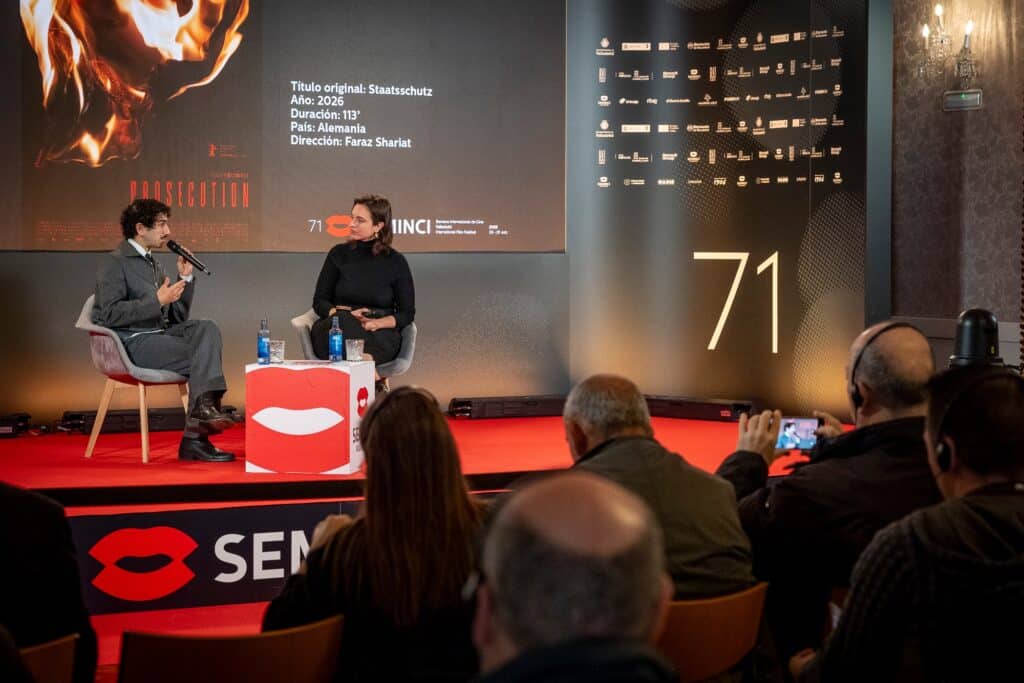
Prosecution had its world premiere at the latest edition of the Berlin International Film Festival, where jury president Wim Wenders argued for the need to separate art from politics. Shariat takes issue with this position, reaffirming the forceful and direct message of his film. “Being there at the Berlinale with such a political film, those words felt like a slap in the face. Global culture and politics are always in tension, and there is one side that believes we should preserve the idea of culture as something beautiful and untouched. I have a very different view of what art and culture should do. I don’t want cinema that distracts us or helps us escape from the world. I want cinema that intervenes and sabotages, that puts its finger on the wound.”
All of this is reflected in a film that, despite being fictional, remains firmly rooted in the realities of contemporary Germany. To achieve this, Shariat and his team undertook a research phase before writing the screenplay. “The film’s screenwriter, Claudia Schaefer, spent time inside the judicial system observing how people worked. Many of the lines of dialogue come from conversations she overheard there.
And, of course, the cases are also inspired by real-life events. The film’s central theme is the trivialisation of far-right violence. Structural violence is always invisible, and we wanted, in a way, to make it visible,” the filmmaker explained. He concluded: “In my work, I am always looking for hope. Prosecution is a dark and twisted story, but its final sequence makes us feel that we must not give up. To do that, we have to keep believing that another world is possible — one in which fear changes sides.”