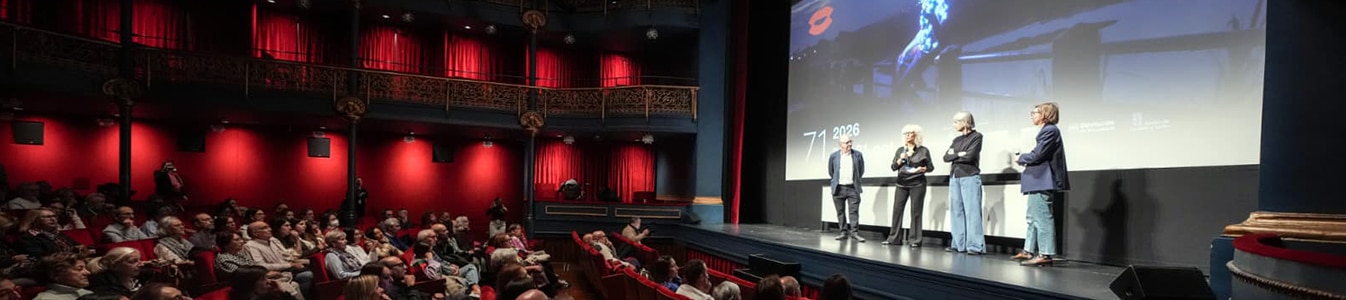
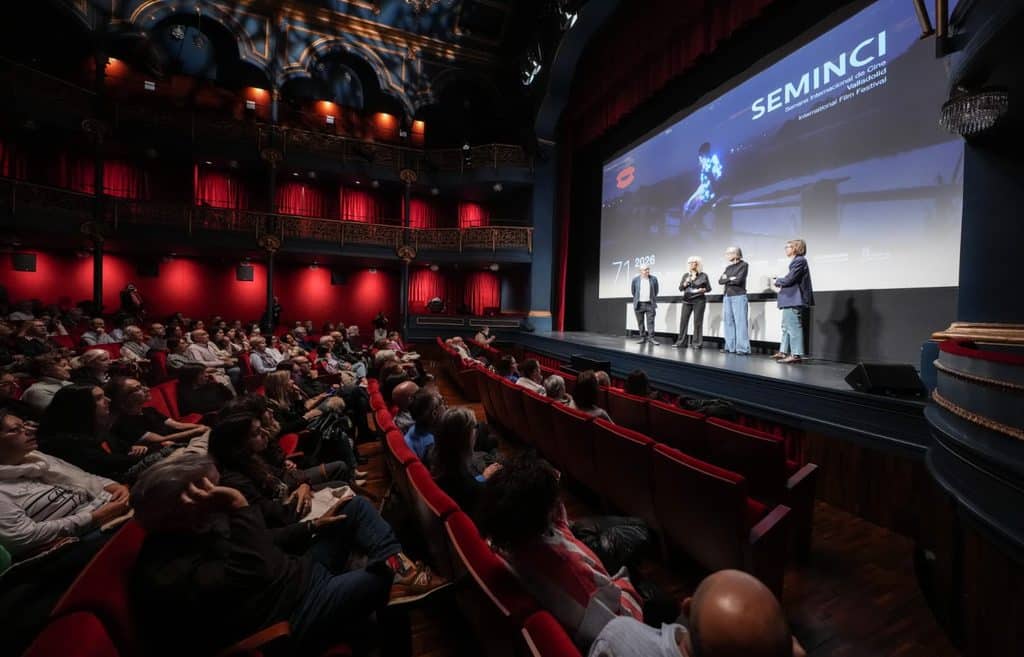
- Seminci hosts the presentation of the new book by the festival’s former director, published by Saco Roto, in a special session of «Memory and Utopia»
Hijos del 27 (Children of ’27): The Cinematic Writers of the Republican Generation, the new book by Fernando Lara, director of SEMINCI between 1984 and 2004, took centre stage at a special edition of the festival’s section: Memory & Utopia, dedicated to the connections between cinema, literature and the avant-garde in Spanish culture of the 1930s. The presentation was led by Valeria Camporesi, director of the Spanish Film Archive; Maite Conesa, director of the Castile and León Film Archive; Raúl García Bravo, editor at Saco Roto; and Mariona Viader, co-director of SEMINCI.
Published by Saco Roto, the volume highlights the contribution of writers, critics and journalists to the development of Spanish film culture between 1925 and 1939. Through 25 feature articles, Lara reconstructs the careers of figures such as Juan Piqueras, María Luz Morales, Mateo Santos, Florentino Hernández Girbal and César M. Arconada, amongst others, and examines the publications that helped to consolidate film criticism in Spain. Contemporaries of the ‘Poets of ’27’ and the ‘Sinsombrero’ group, these authors found in cinema an expression of modernity and a space to bring Spanish culture closer to European avant-garde movements. The Civil War, repression, exile and oblivion subsequently shaped their lives.
Cinema, literature and the avant-garde
The session featured two films from 1930 by Ernesto Giménez Caballero, Esencia de verbena and Noticiario del Cineclub, preserved by the Spanish Film Archive, which offer a glimpse into the popular culture, urban life and cinematic experimentation of the period.
The programme was rounded off by Un chien andalou (1929), by Luis Buñuel and Salvador Dalí, and L’Age d’Or (1930), two seminal works that provide an insight into the Surrealist movement and the break with the social and moral conventions of those years. Both were screened in 4K restorations carried out by the Cinémathèque française, the Spanish Film Archive and the Centre Pompidou.