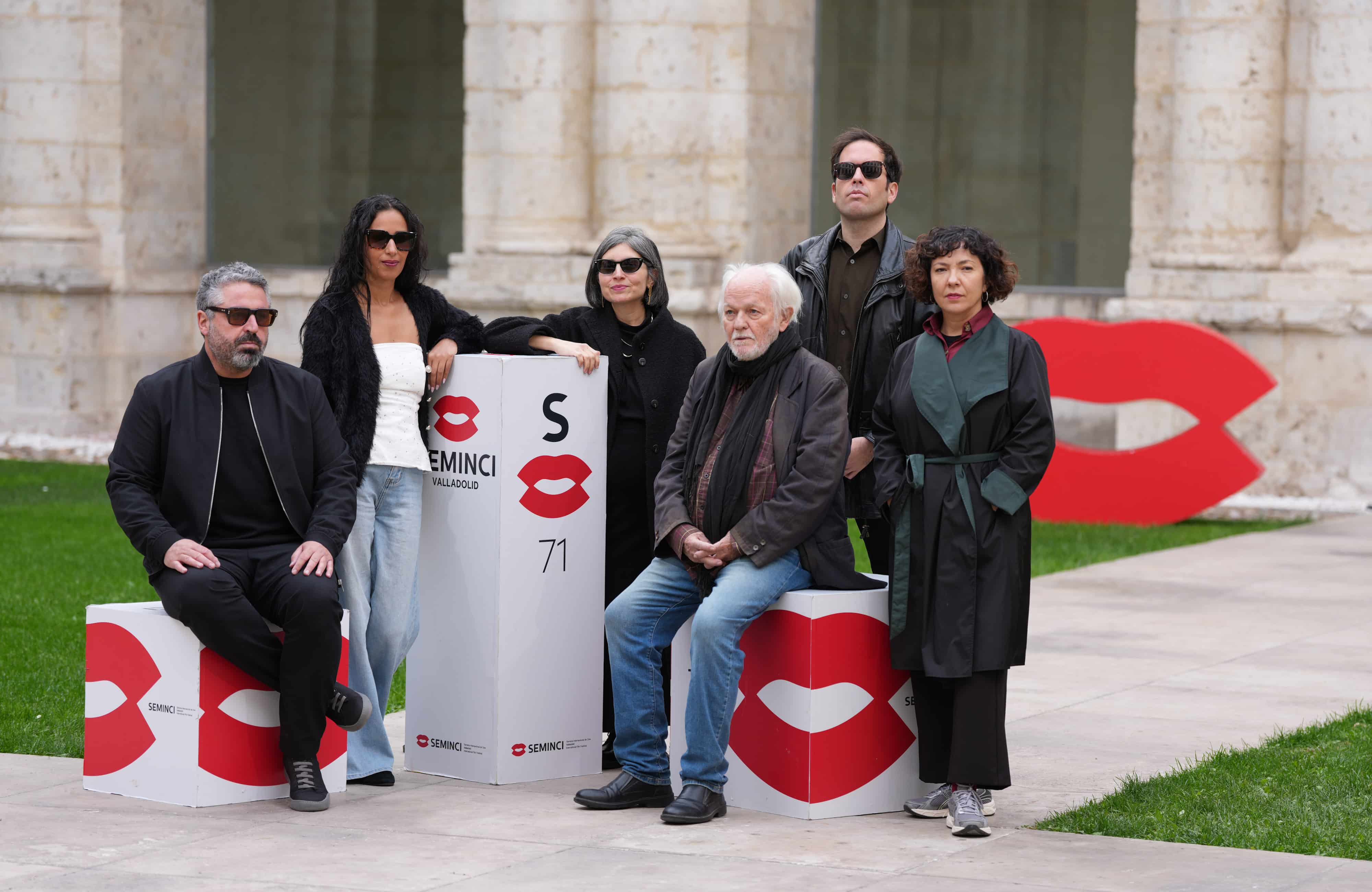
- The filmmakers presented their new film, which is competing in the Official Selection, alongside actors Lou Castel and Luisa Ahl Laabiad and producers José Alayón and Marina Alberti
The Official Section of the 71st edition of SEMINCI hosted the Spanish premiere of The Fortunate Isles, the new film by Helena Girón and Samuel Delgado, which tells the story of Fátima, a woman who serves a decadent marquis who controls the only source of drinking water on the island of La Graciosa. The filmmakers return to a familiar setting in their filmography—the Canary Islands—this time transporting the story to the 15th century and the era of colonial repopulation.
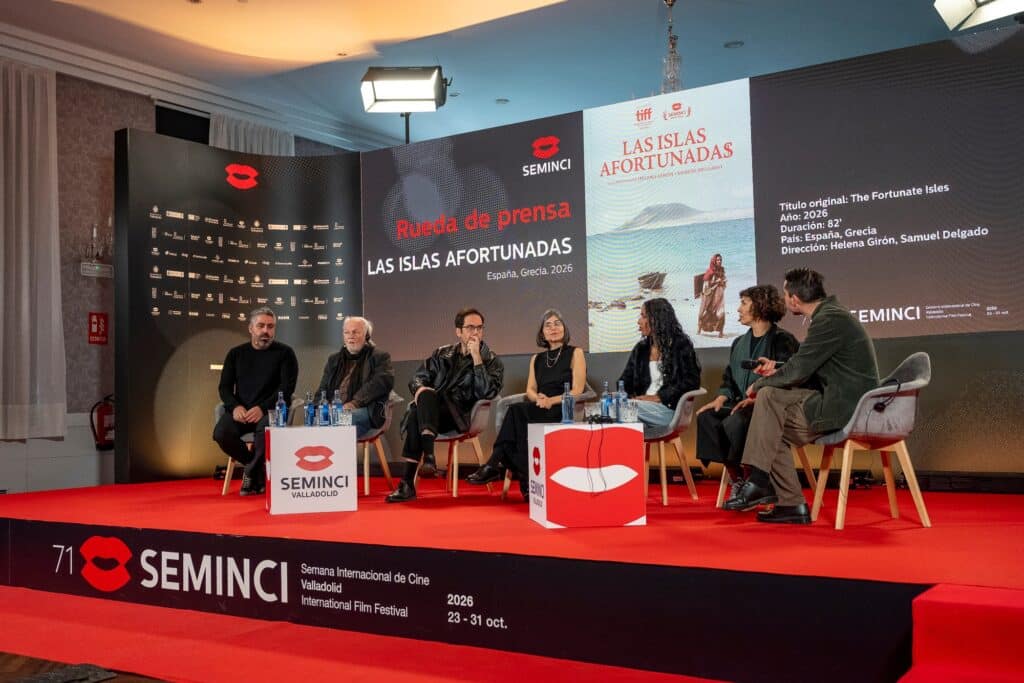
Girón and Delgado, who have worked in experimental film and documentary, now venture back into the realm of fiction with a film that required extensive research and documentation. “We wanted to create new narratives that challenge the colonial narratives,” explained Delgado, reflecting on the time they have devoted to reviewing a wide variety of sources, from notarial records to the book ‘Le Canarien’ by Jean de Béthencourt, the first conqueror of the islands. All of this has allowed them to explore moments of coexistence among the local people that are obscured by the grand narratives of conquest.
“We’ve approached the Canary Islands from anthropological perspectives in the past. This time, we wanted to adopt the tone of adventure films, to take the stories to other places and feature protagonists who aren’t the usual ones,” said Helena Girón. Both emphasized the need to build new points of reference and set aside imposed narratives.
A Past That Looks to the Present
Although the film undoubtedly focuses on the 15th and 16th centuries, the filmmakers discussed the connections to our own present and even the possibility of imagining the future. “There’s a bit of retrofuturism, since it’s set in the past, but with a few changes, it could be a dystopia driven by the control of resources,” Delgado noted. Both have discussed migration narratives and the Atlantic route, which historically countless people have traveled: “The image of a pregnant woman in the middle of the sea directly evokes the situations people are facing today,” the filmmaker concluded.
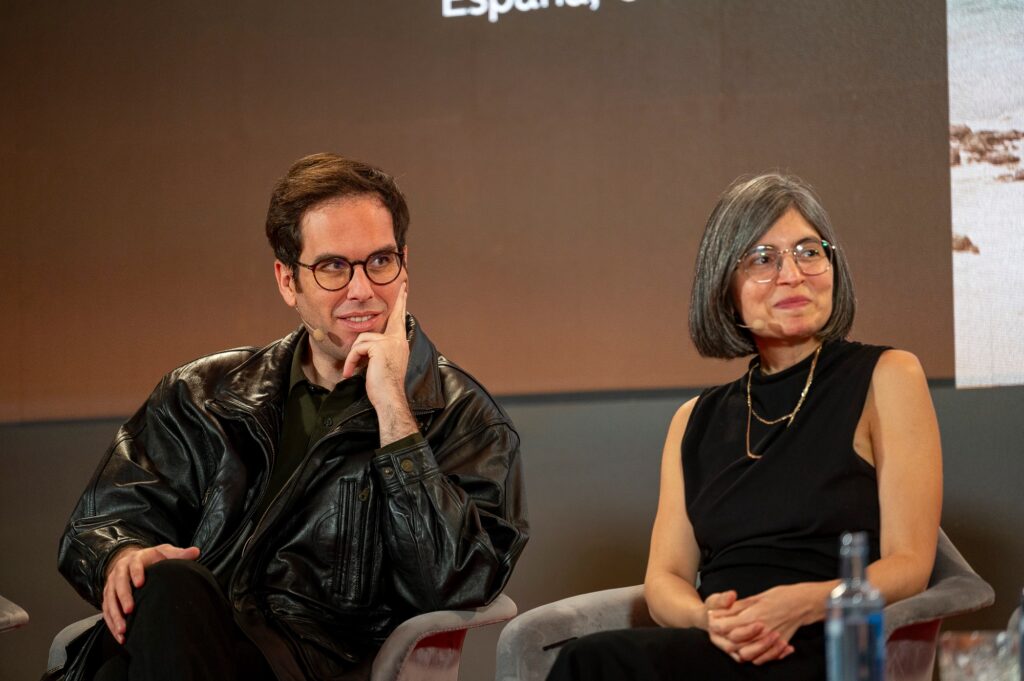
Many of the themes explored in the film, such as resource management and land exploitation, also address current issues in the Canary Islands. “In those years, colonial capitalism emerged, succeeding feudalism and establishing a cultural and economic system that we have inherited today,” added Girón, and explained that the title itself refers to the irony with which the islands were marketed to settlers back then—just as they are marketed to tourists today.
A lengthy casting process
José Alayón, who is not only the film’s producer but also its director of photography, has spoken of the reluctance people sometimes feel when portraying the past – something the filmmakers had already explored in their first feature film, Eles transportan a morte (2021). “We’d already got past the fear of portraying the past. Now the challenge was to make a film with many characters,” he said, also referring to the abundance of interior scenes in the film and the need to pay close attention to the setting. “Exteriors remain the same at any point in history, but interiors change completely,” added Alayón.
In addition, producer Marina Alberti (El Viaje Films) spoke about working alongside casting director Cendrine Lapuyade: “The process took us a year. We had to delve deeply into the characters and find the right actors,” she explained.
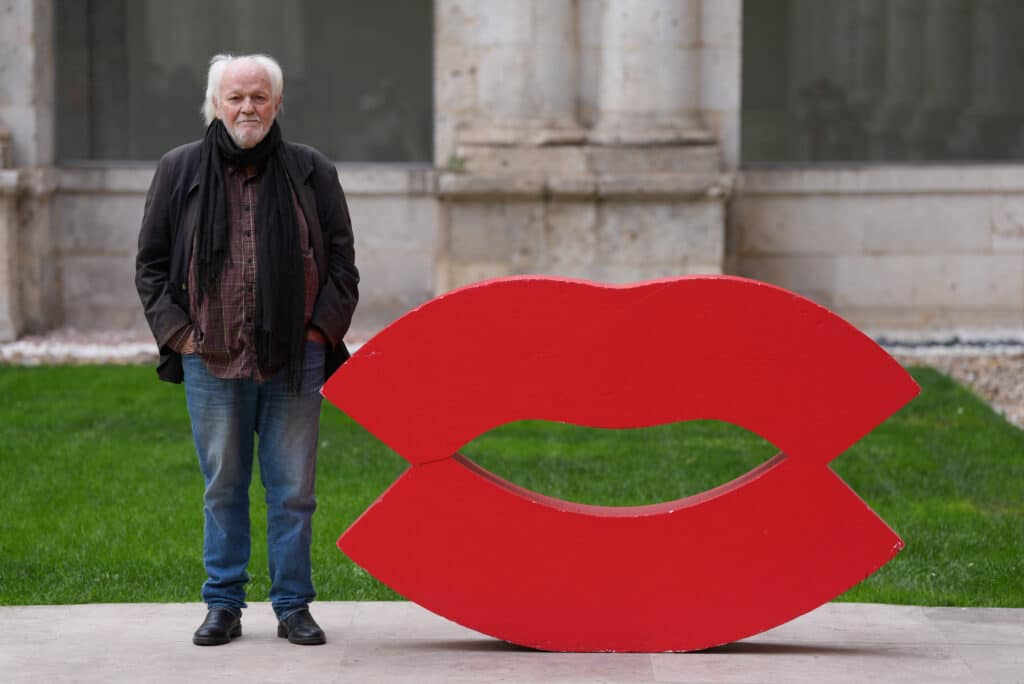
In this regard, Lou Castel and Luisa Ahl Laabiad, who accompanied the directors at the press conference, spoke about their experiences during the casting process and the shoot. Castel expressed her interest in the sound of the Spanish language, whilst Ahl Laabiad revealed that she initially had reservations about the project: “When I realised the story was about my own origins, I didn’t hesitate to accept the role,” she said.
A film built around sound
The piece Hespérides by Girón and Delgado was also featured at the 71st edition of SEMINCI as part of the exhibition entitled Human Roar, Cry of the Earth. ‘Inhabiting Sound’ is conceived as an extension of the retrospective ‘A History of Sound (in Cinema)’ and brings together filmmakers and audiovisual artists to explore sound as memory, an instrument of power and a means of approaching a nature that transcends human perception.
In this regard, The Fortunate Isles approaches the landscape from a sensory perspective, featuring a remarkable soundscape which the filmmakers sought to explore in depth: “We had a very limited palette of sounds. We were aiming to convey the sensation of a landscape that is gradually drying up,” explained Girón. In a film so closely linked to the landscape, the filmmakers explained their desire to create an interplay between the sounds of sand, water and wind and the characters’ voices. “The entire sound team, both on set and in post-production, were Greek, so they didn’t understand Spanish. That allowed them to focus solely on the musicality and intonation of the actors’ voices,” shared Delgado, highlighting in particular the timbre of Castel’s voice as one of the cornerstones upon which they built the film.