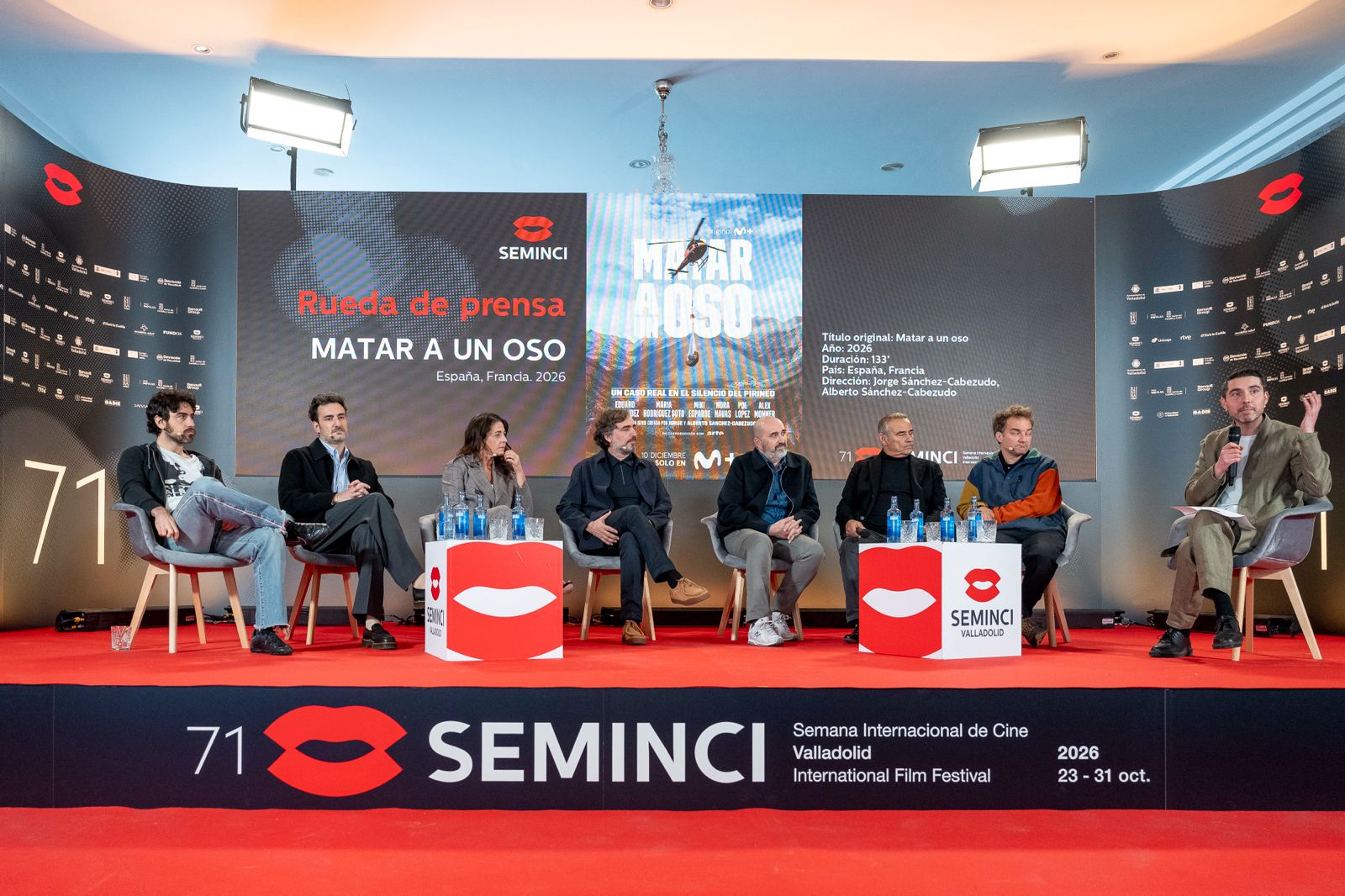
- The 71st edition of SEMINCI hosts the world premiere of the Movistar Plus+ original series, screening its first three episodes
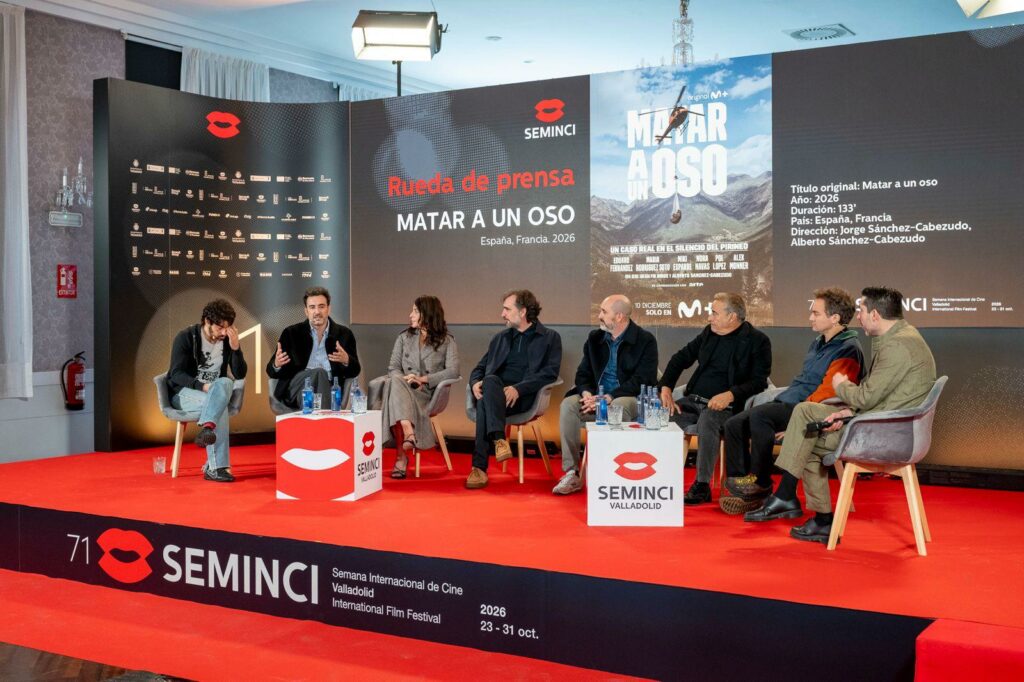
- Eduard Fernández, Miki Esparbé, Pol López, Nora Navas, and Àlex Monner, who make up the series’ cast, joined the creators at the press conference
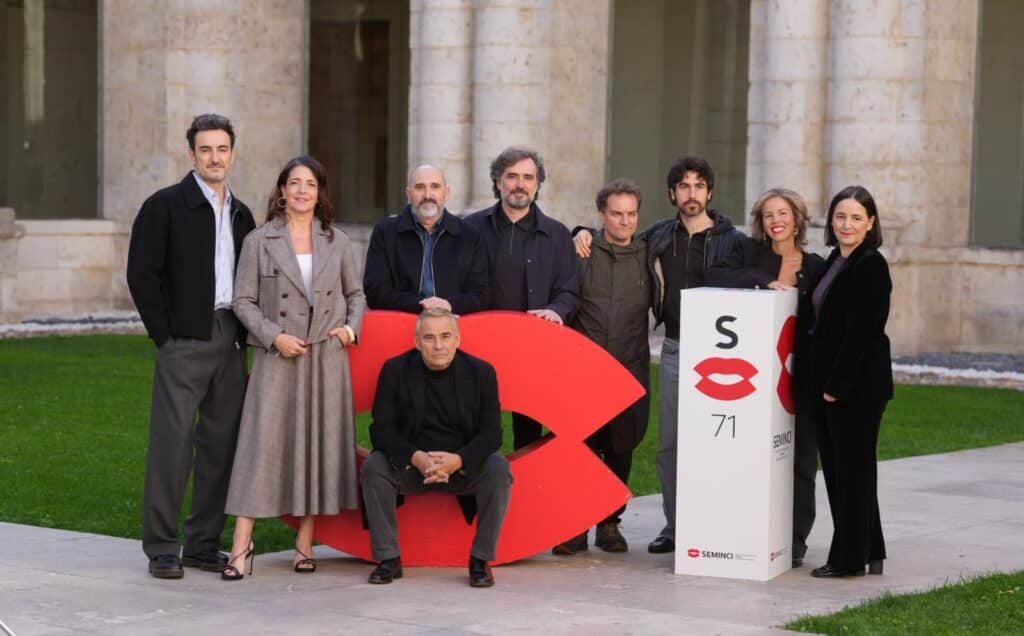
The 71st edition of the Valladolid International Film Festival (SEMINCI) is hosting, as part of its Special Screenings program, the world premiere of Matar a un oso, the new Movistar Plus+ original series created by Jorge Sánchez-Cabezudo and Alberto Sánchez-Cabezudo, produced by ARTE France and Kubik Films. Once again, the festival reinforces its commitment to auteur series with this title, which joins other major works presented in Valladolid such as Yakarta (2025) by Diego San José and Los años nuevos (2024) by Rodrigo Sorogoyen.
Jorge and Alberto Sánchez-Cabezudo, winners of the Feroz Award for Best Drama Series for La Zona (2017) and creators of Nos vemos en otra vida (2024), have detailed the creative process behind Matar a un oso, which adapts a true story that took place in the Aran Valley, where the death of a bear triggered an investigation and a legal proceeding unprecedented in Spain.
Different Perspectives
In the wake of the unexpected event, not everyone in the valley sees the case the same way. The creators have highlighted the crucial importance of the various perspectives that unfold throughout the episodes, emphasizing the research work conducted prior to filming: “We interviewed many people involved, trying to identify which characters best embodied those perspectives. We realized that the series had to feature a different protagonist in each episode,” stated Jorge Sánchez-Cabezudo. Furthermore, both have emphasized the differences between the characters who came from outside the town and the locals, and how that diversity allowed them to access a wide range of perspectives. “We wanted the viewer to take the same journey as we did,” added the filmmaker.
In this regard, Eduard Fernández, who plays one of the protagonists, highlighted the importance of the direction and the writing of the dialogue, which allowed the cast to develop their respective characters: “I think we’re all perfectly in sync; it’s a very ensemble-driven series that was built on the strength of excellent writing.” Actress Nora Navas added: “Many of the characters required special treatment; we needed a bit of comedy and a touch of strangeness.”
Other cast members, such as Àlex Monner and Pol López, have also pointed to their meetings and conversations with the real-life figures involved as one of the key factors in bringing their roles to life from rehearsals to the set: “The great willingness of the protagonists of the real-life story allowed us to get into our roles, trying not so much to imitate their lives but rather their working dynamics during the case,” noted actor Miki Esparbé, who plays the forest ranger—the character closest to the animal.
Filming the Animals
One of the major challenges the series faces is the inclusion of the bear Cachou as one of the main characters, for which the creators combined filming sequences with a real bear with the use of visual effects. “We realized that thrillers also tell the story of the victims, and here the bear’s story had to carry weight,” shared Alberto Sánchez-Cabezudo. Both creators have highlighted the complexity and respect required when filming with animals, emphasizing their intention to film the bear using the same type of lenses they used to capture the other characters. “A complex storyboard was drawn up to precisely define its movements, which could then be supplemented with digital design,” added Jorge.
The Danger of Censorship
Finally, the show’s team has spoken out about the Castile and León government’s recent ban on subsidies for the production and distribution of films that involve “ideological indoctrination.” “If someone publicly states that ideological factors will play a role in their decision, that’s called censorship—something we know all too well in this country,” declared Eduard Fernández, highlighting the danger posed by such statements today. For his part, Jorge Sánchez-Cabezudo stated that these types of cultural policies are already affecting countries like Argentina, concluding: “It’s a way of sending a warning to everyone on the eve of an election; it’s good to know ahead of time what’s in the works.”