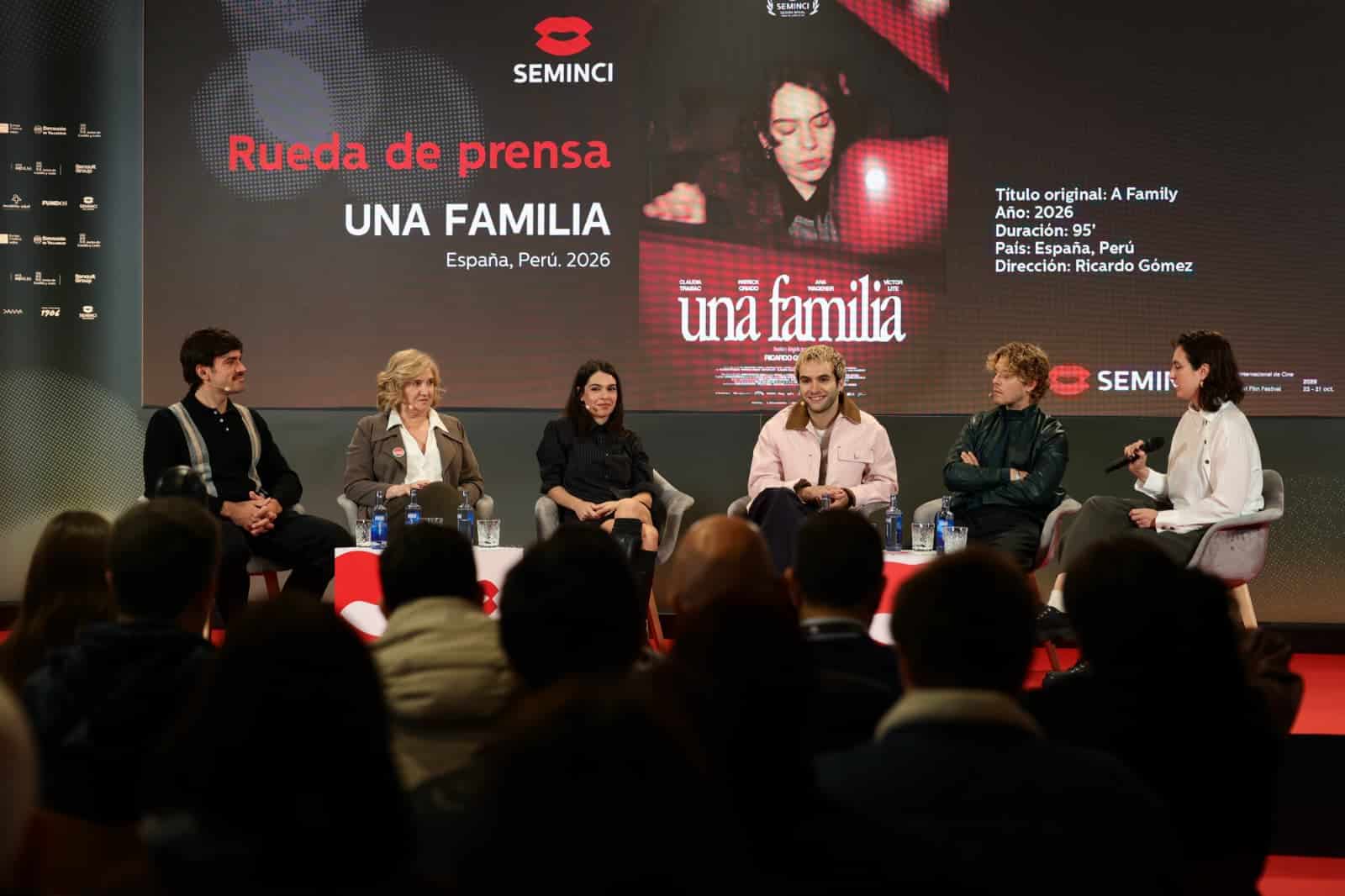
- The 71st edition of SEMINCI hosted the world premiere of the film, which is being presented in the Official Selection out of competition.
- The filmmaker was accompanied by Claudia Traisac, Patrick Criado, and Ana Wagener, members of the cast, and Diego Betancor, the film’s producer.
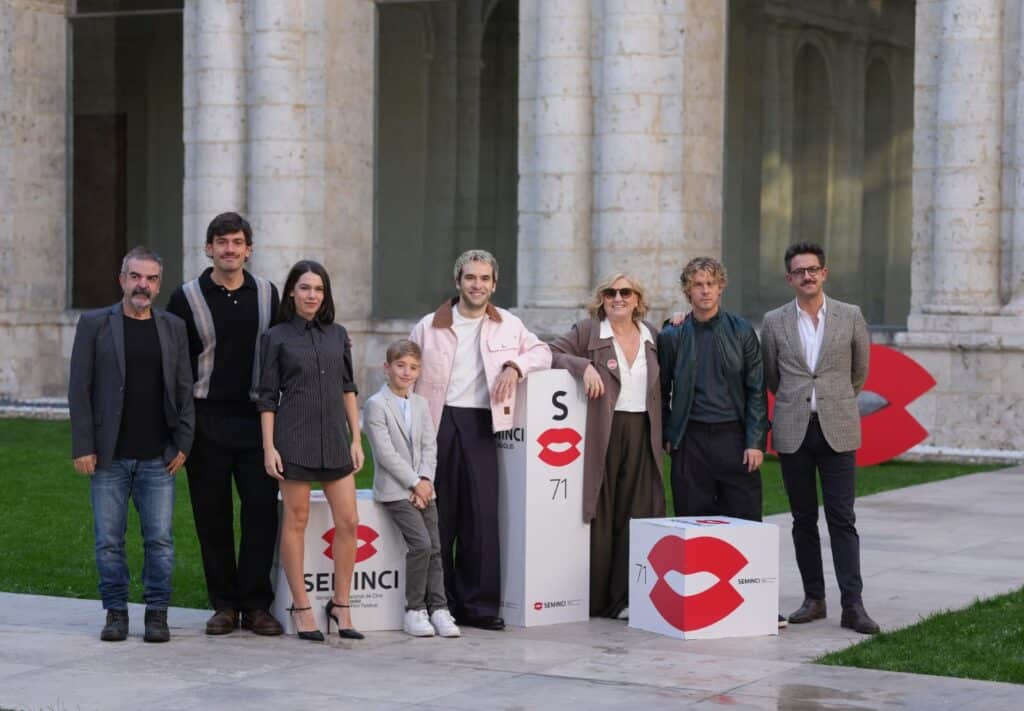
The 71st edition of the Valladolid International Film Festival (SEMINCIi) hosted the world premiere of Una familia, the debut feature film by actor and director Ricardo Gómez, which tells the story of a father, a mother, and a son, marked by a shared trauma and a night that changed their lives forever. The film will be screened at the RTVE Gala and stars Claudia Traisac, Patrick Criado, and Ana Wagener.
The filmmaker has delved into the film’s writing process, revealing that ever since his teenage years, he had always envisioned taking on the role of director to tell his own stories. “At age 15, on the set of the series, I began to notice where the directors placed the camera and became interested in their work,” he said. However, he emphasized how important it was to him that the events he wanted to tell stemmed from his own personal experience. “The kind of film I like best is the one that has a connection to the person making it. I knew that if I took this leap into directing, I had to be personally invested in the story,” he shared.
Diego Betancor, the film’s producer, spoke about the lengthy process of securing funding for the film and expressed his gratitude for the collaboration with Carlos Montero of El Desorden Crea and Félix Tusell of Estela Films: “They brought us experience and expertise that had a major impact.”
A Fragmented Film
This journey into the heart of 1990s Madrid is structured around three timelines, following a day in the life of each family member at various points in time. “The first thing I was clear about was the structure. I wanted to make it possible to understand the evolution of a family’s bonds through these brief fragments,” explained the director, highlighting the difficulty he faced in having to subordinate the entire writing process to this initial decision.
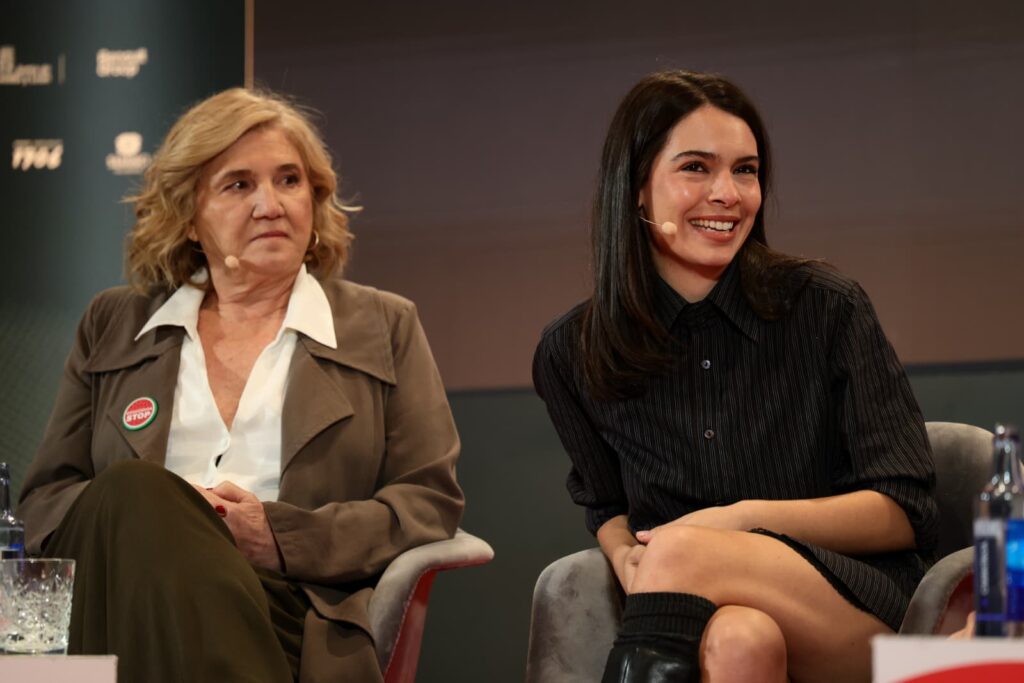
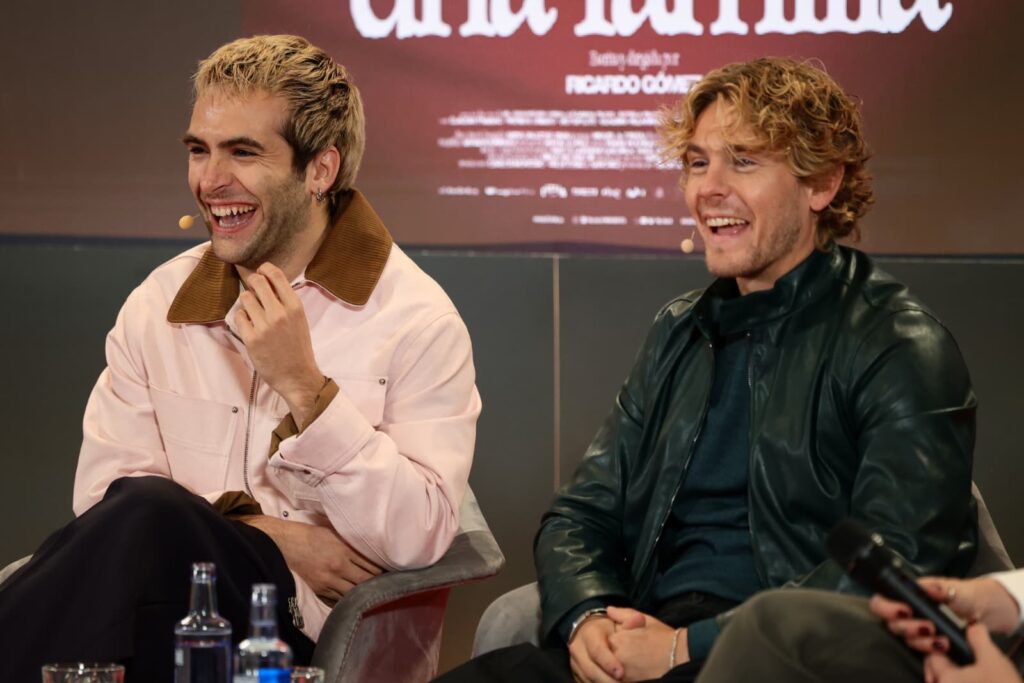
For their part, the film’s cast has described how the film’s structure influenced their performances. Claudia Traisac (La llamada, Cuéntame cómo pasó), who plays the mother, spoke specifically about the rehearsals leading up to filming and the transformation she has undergone as a result of the film: “The pre-production process allowed us to explore those gaps and flesh out the characters’ lives, which would then come to the surface in the film.” She added: “Even though Clara’s journey is so difficult, the warmth of the film crew has made it a truly enriching process for me.” Anna Wagener (Goya Award for Best Supporting Actress for La voz dormida) spoke about developing her character, the grandmother—a woman of few words who stands in contrast to the other main characters: “The film was very demanding. It was a script that only touched briefly on the events, and there were many things left implied; it felt like a Swedish film,” she shared.
Patrick Criado (Amarga Navidad, Antidisturbios) recalled a visit to the Soto del Real prison he made with the director to prepare for the role of Enrique, the father, during which they spoke with the inmates and toured the facility. “The sadness and loneliness you feel there, as well as the mistakes that were made, had to be embodied in Enrique’s physical presence. Before the director called ‘action,’ I would try to recall that place and use that as a starting point for my performance,” the actor explained.
Shooting on Film
One of the film’s major challenges was shooting on 16 mm, handled by cinematographer Sara Gallego (El año del descubrimiento, Yo no moriré de amor), which was the crucial element in capturing the essence of the 1990s, as the director explained. “It’s a relatively small film in industrial terms, and decisions were made based on what we had shot that day—with the risk that the footage might come back foggy or out of focus,” the director explained. Betancor also acknowledged the importance of the analog format, which enhances the work of the costume and makeup teams and proved to be a crucial decision for the film’s final look: “Although it may not seem like it, sometimes you can make a movie more cheaply on 16mm than in digital,” he concluded.