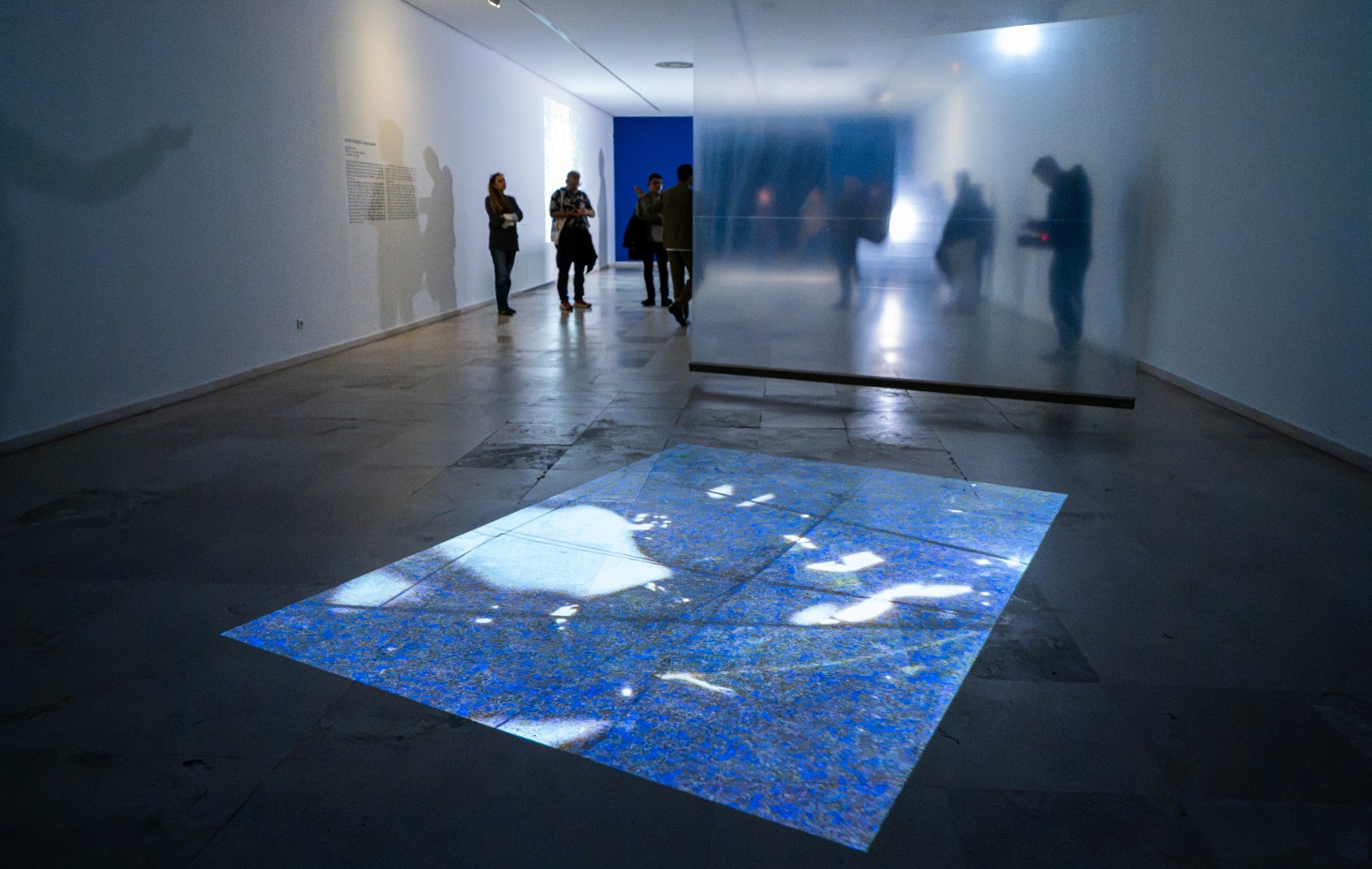
- Rugido humano, clamor de la tierra. Habitando el sonido extends the reflection of the festival’s 71st edition on the narrative role of sound in cinema and the audiovisual arts. The exhibition will be open to visitors until 6 December.
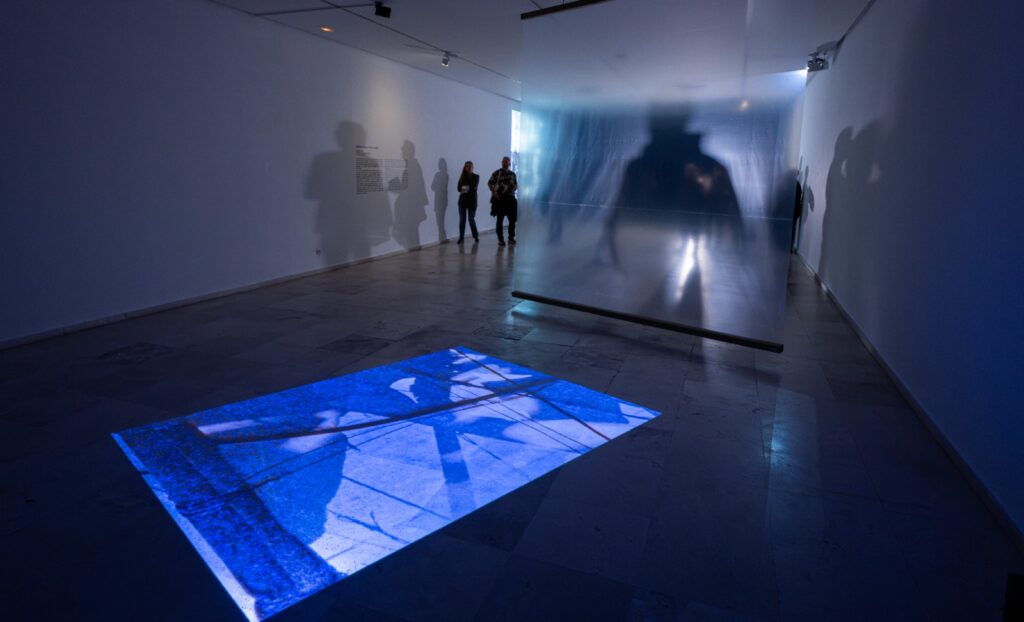
The Museo Patio Herreriano is hosting Rugido humano, clamor de la tierra. Habitando el sonido from Friday 23 October until 6 December. The exhibition brings together filmmakers and audiovisual artists to explore sound as memory, an instrument of power and a way of approaching a natural world that exceeds the limits of human perception.
Organised and curated by the Valladolid International Film Festival (Seminci), the exhibition is conceived as an extension of the retrospective Una historia del sonido (en el cine), which examines cinema through an element that for decades remained in the background: what we hear. Rather than treating sound as a technical complement, the retrospective explores its decisive role in cinematic storytelling, focusing on films in which sound creates meaning, guides perception and redefines the viewer’s relationship with the image.
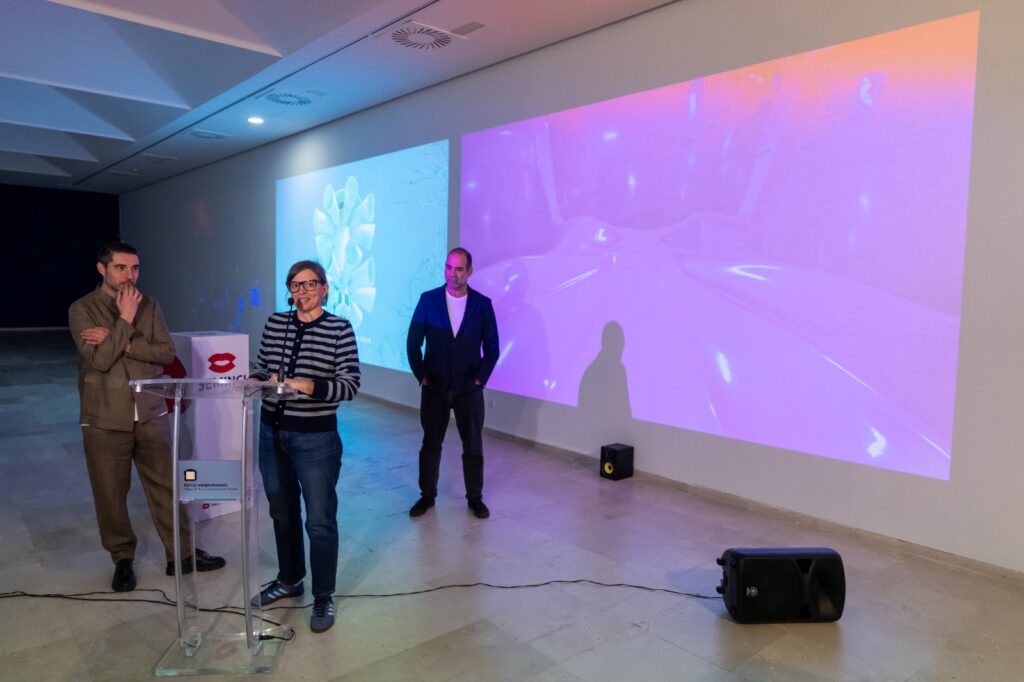
Mariona Viader and Javier H. Estrada, co-directors of Seminci, and Javier Hontoria, director of the Museo Patio Herreriano, presented the exhibition, which is divided into two sections installed in galleries 6 and 7 of the museum. These explore two complementary dimensions: sound created by human beings and the evocation of a natural world that exceeds the limits of perception.
Javier Hontoria, director of the Museo Patio Herreriano, highlighted the importance of a collaboration he considers beneficial for both institutions and for Valladolid. The exhibition stems from an initiative originally developed by Seminci under the impetus of José Luis Cienfuegos and addresses a subject shared by cinema and contemporary art. Hontoria noted that the exhibition «reveals the different and boundless fields of collaboration that could be developed between our two institutions».
Mariona Viader, co-director of Seminci, explained that the exhibition completes the festival’s programme this year devoted to the narrative power of sound. The programme includes a retrospective of 16 films, the Pensar (y escuchar) el cine series, meetings with industry professionals and filmmakers, the Honorary Golden Spike awarded to sound engineer Willie D. Burton, and a specialist publication produced in collaboration with Caimán Cuadernos de Cine. The exhibition extends this reflection beyond cinema screens. «We want people to stop and listen, and to listen to one another», Viader summarised.
Javier H. Estrada, co-director of Seminci and curator of the exhibition, championed sound as an essential part of the cinematic experience and argued for the need to bring it to the forefront. «Cinema, particularly in terms of the emotions and sensations it conveys, is even more sound than image», he stated. Estrada also guided visitors through the exhibition’s different spaces, explaining the works on display.

Gallery 6 will host Rugido humano, a journey through different forms of sound expression and works that reflect on memory and structures of power. Among them is the work of Basilio Martín Patino, the filmmaker from Salamanca who released the cassette Concierto con tambor y metralla in 1980, an unusual exploration of «the songs, voices and authentic sounds of the Spanish Civil War». The work constructs an unconventional soundtrack of the conflict using sound recordings from the period. The exhibition will also feature artist Aura Satz, whose research identifies the mechanisms through which established power structures exert control through sound. Her work pays particular attention to sirens, which can serve as warning signals but, in certain circumstances, can also become instruments of coercion and restrictions on civil liberties.
Gallery 7 will be devoted to Clamor de la tierra, featuring works by artists who recreate and imagine sounds associated with a natural world that exceeds the limits of human perception. Japanese filmmaker Takashi Makino will present Still in Cosmos, a work that evokes the universe through a powerful soundtrack built around drones. The piece explores the passage from birth to death and eternity, embracing the chaos inherent in existence. Meanwhile, Helena Girón and Samuel M. Delgado explore the sonic history of the Canary Islands through forgotten traces that have become essential elements of the islands’ identity. The sea, local legends and volcanic phenomena inform their audiovisual works.
The exhibition also includes a work by José Val del Omar: a sound montage created for his experimental short film Fuego en Castilla, the second instalment of his Tríptico elemental de España. The soundtrack draws on the footwork of dancer Vicente Escudero, castanets, drums, sound effects associated with sacred music, drum rolls and the footsteps of religious processions. Fuego en Castilla received an award at the Cannes Film Festival in 1961 in recognition of its technical achievements.