- The programme features two feature films and five short films linked to the Autonomous Community, as well as the winning entry from SEMINCI Factory and a new edition of the Quercus programme
The 71st edition of SEMINCI will feature eight films linked to Castile and León through their filmmakers, stories, filming locations or production. The selection includes two feature-length films in the Full-Length Castile and León section, five short films in the competitive ‘Castile and León en Corto’ section, the winning project from the last edition of SEMINCI Factory-Valladolid Film Commission and a new edition of the Quercus programme.
Fiction, animation, documentary and visual experimentation come together in a programme featuring stories set within the local community and works filmed in various cities across Castile and León. Among the selected films are La conversación que nunca tuvimos (The Conversation We Never Had) by Cristina Urgel, nominated for a Goya Award for Best Documentary Short Film, and Under the Lake by Juan Carlos Mostaza, which had its world premiere at the Tribeca Film Festival in New York.
Full-Length Castile and León
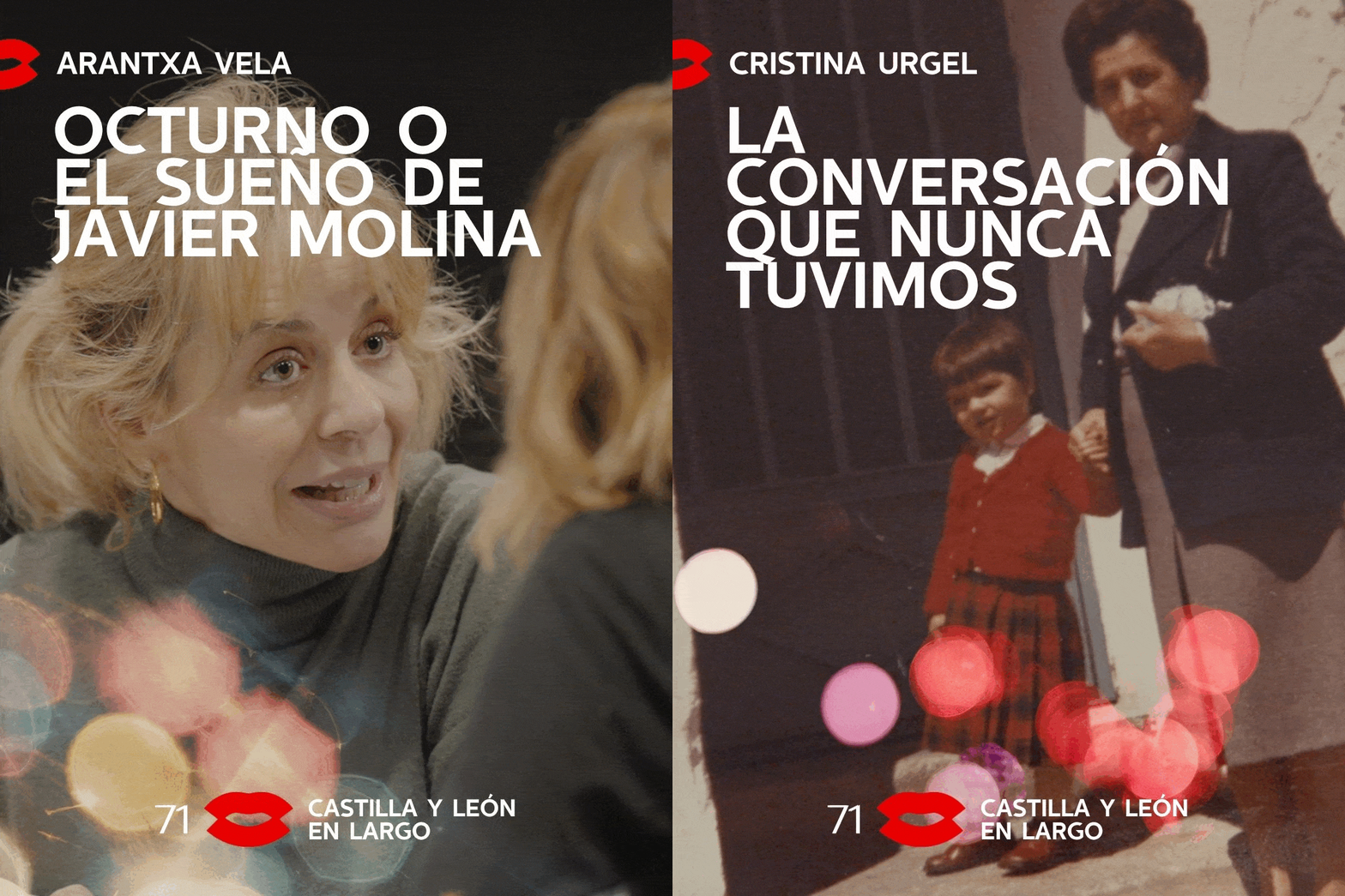
Octurno o el sueño de Javier Molina (Octurno or the Dream of Javier Molina), by Arantxa Vela Buendía, explores the figure of the Puerto Rican actor and director – co-director since 2023 of the legendary Actors Studio in New York – through the creative process behind Panorama desde el puente, an adaptation of Arthur Miller’s play directed by Molina and premiered at the Calderón Theatre in Valladolid in January 2026. The documentary follows the rehearsals and preparations for the play right up to its premiere and observes the work with the actors in the first theatre production that the prestigious actor and director has staged in Europe.
A family story forms the basis of La conversación que nunca tuvimos (The Conversation We Never Had) by Cristina Urgel, a documentary built around the voice of her grandmother, who recalls her life as a single mother in a small village in Soria and the conversation with her daughter that never took place. Urgel builds on her Goya-nominated short film of the same title to explore, in this feature-length film, the social stigma that surrounded that woman and the story of a girl whose arrival into the world was not celebrated.
Short Films from Castile and León
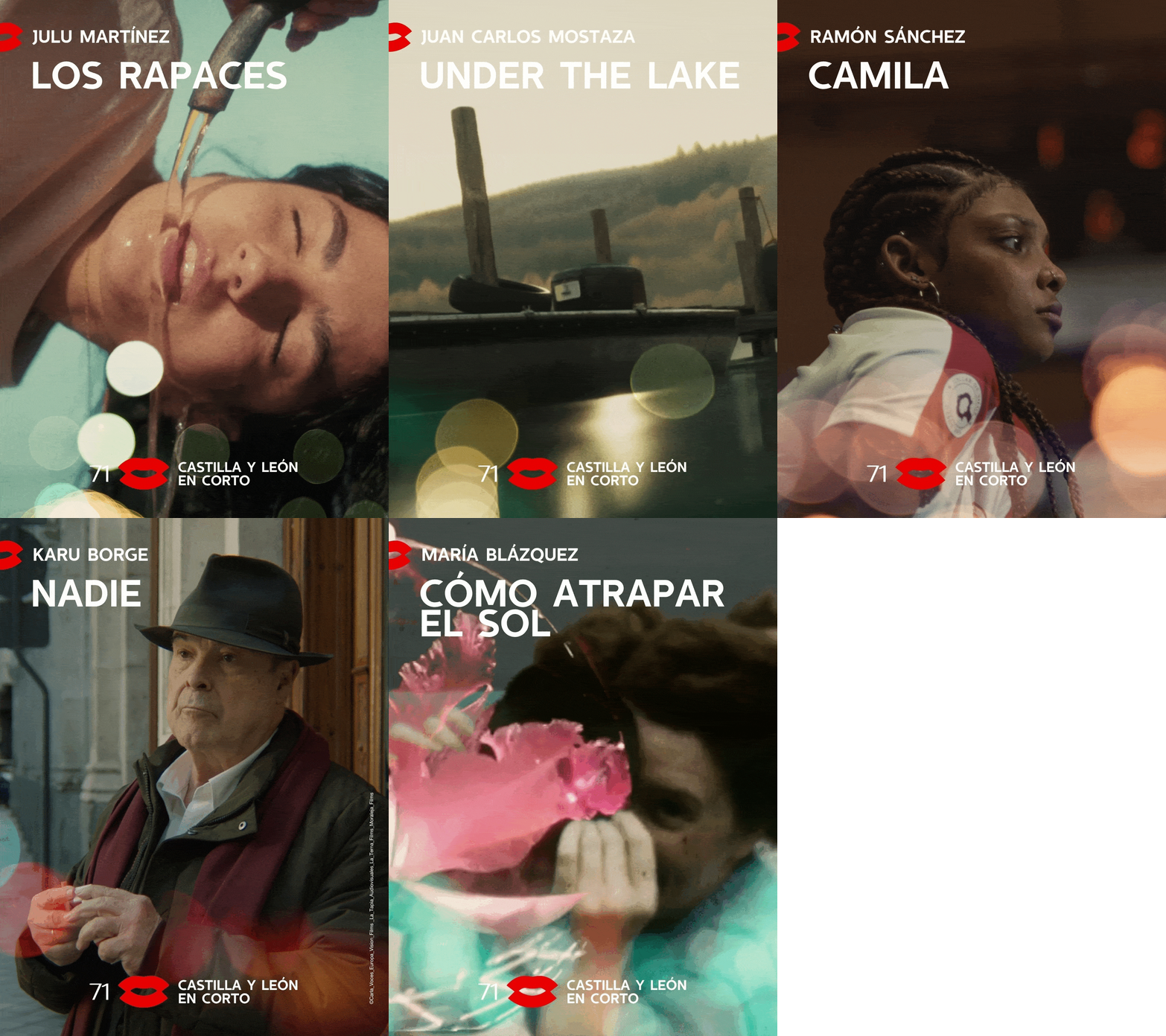
The competitive section features five films: Los rapaces, by Julu Martínez; Under the Lake, by Juan Carlos Mostaza; Camila, by Ramón Sánchez; Nadie, by Karu Borge; and Cómo atrapar el sol, by María Blázquez.
A summer spent between Torre del Bierzo and Sueros de Cepeda provides the backdrop for Los rapaces, by Julu Martínez, a fictional story about a young man who works in the family workshop and a girl who avoids spending her summers in her village; the two meet whilst swimming in a reservoir.
Juan Carlos Mostaza, from Valladolid – who was nominated for a Goya for Best Animated Short Film in 2007 for Broken Wire – returns to this genre with Under the Lake, featuring faceless wire-frame characters. A man living with his son by a lake and a stranger who washes up on the shore, seriously injured, are the protagonists of a story in which the boy decides to rescue him. The short film had its world premiere at Tribeca, as part of the animated shorts programme curated by Whoopi Goldberg.
Filmed in Burgos, Ramón Sánchez’s Camila draws on a true story to portray a 19-year-old girl, the daughter of Dominican immigrants, who works in a shoe shop and plays volleyball for a top-flight team. The short film explores identity, family, social pressure and the integration of second-generation immigrants.
Antonio Resines stars in Nadie, directed by Karu Borge, based on a story by the Valladolid-based writer Guillermo Delgado. Filmed in Valladolid, the short film offers a reflection on loneliness, the guilt associated with privilege and urban invisibility through a character who is convinced he must help others, even if he does not always find the right ways to do so.
Fiction and archive footage come together in Cómo atrapar el sol, by María Blázquez. Vivi, fascinated by everything that sparkles, meets Rayo, a photographer unable to turn off his camera’s flash. The collage of faces and bodies that Blázquez weaves into the fiction serves to construct a story about love, the intangible and the influence of others’ gazes.
Seminci Factory – Valladolid Film Commission
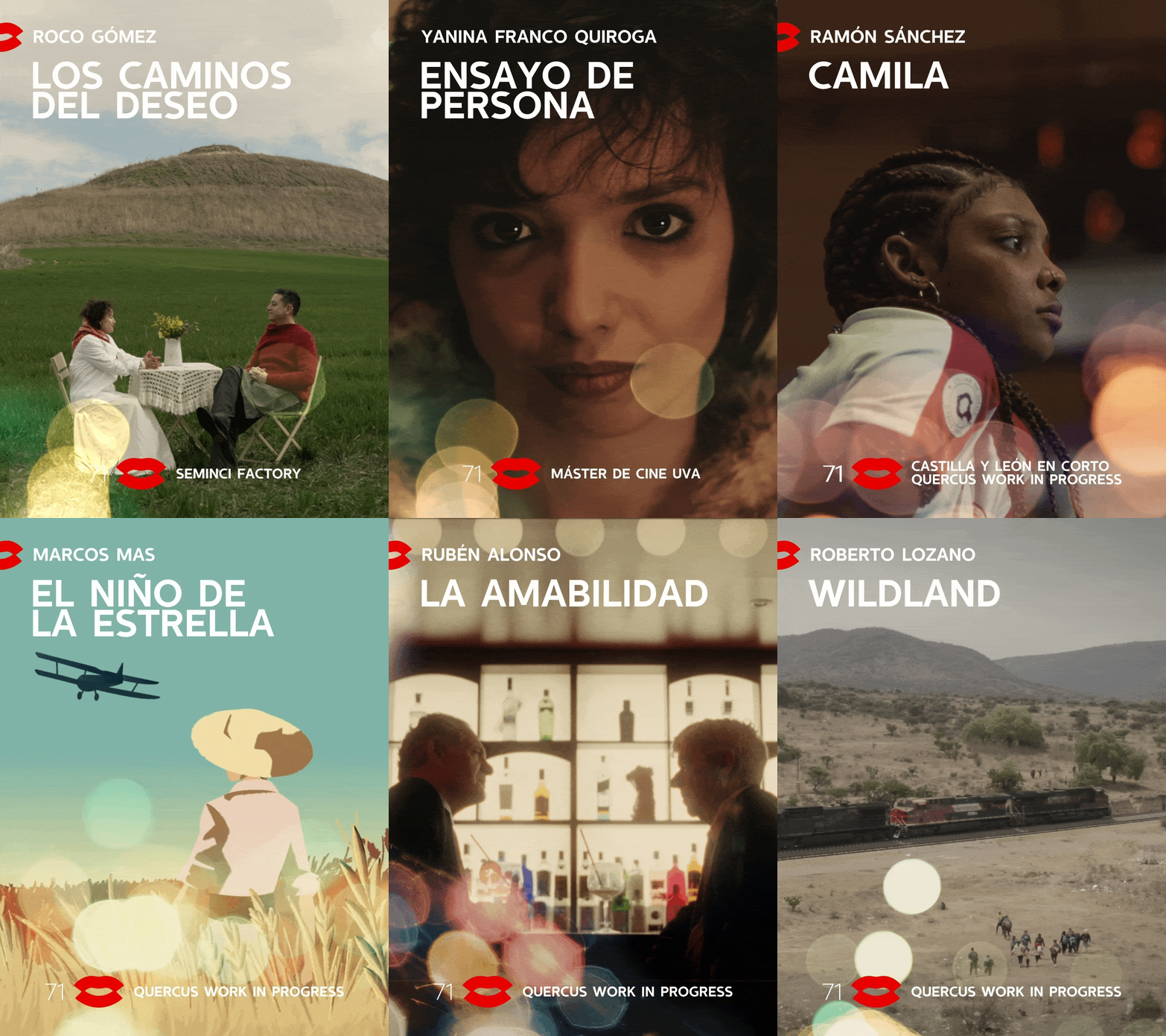
The winning project from the 2025 edition of Seminci Factory–Valladolid Film Commission is now being screened at the Festival as a finished film. It is Los caminos del deseo (The Paths of Desire), by Roco Gómez Magaña, a short film that combines visual and audiovisual arts using analogue animation techniques such as rotoscoping, cyanotype, film manipulation and stop motion.
The programme linked to Castile and León will be rounded off with the premiere of the short film Ensayo de persona, directed by Yanina Franco Quiroga, a student on the University of Valladolid’s Master’s in Film, and the Quercus Work in Progress session, an initiative of the Castile and León Film Festivals Co-ordinating Body (FECCYL), sponsored by the Regional Ministry of Culture, Tourism and Sport of the Castile and León Regional Government. The programme features the films Wildland, by Roberto Lozano; El niño de las estrellas, by Marcos Más; Camila, by Ramón Sánchez; and La amabilidad, by Rubén Alonso.