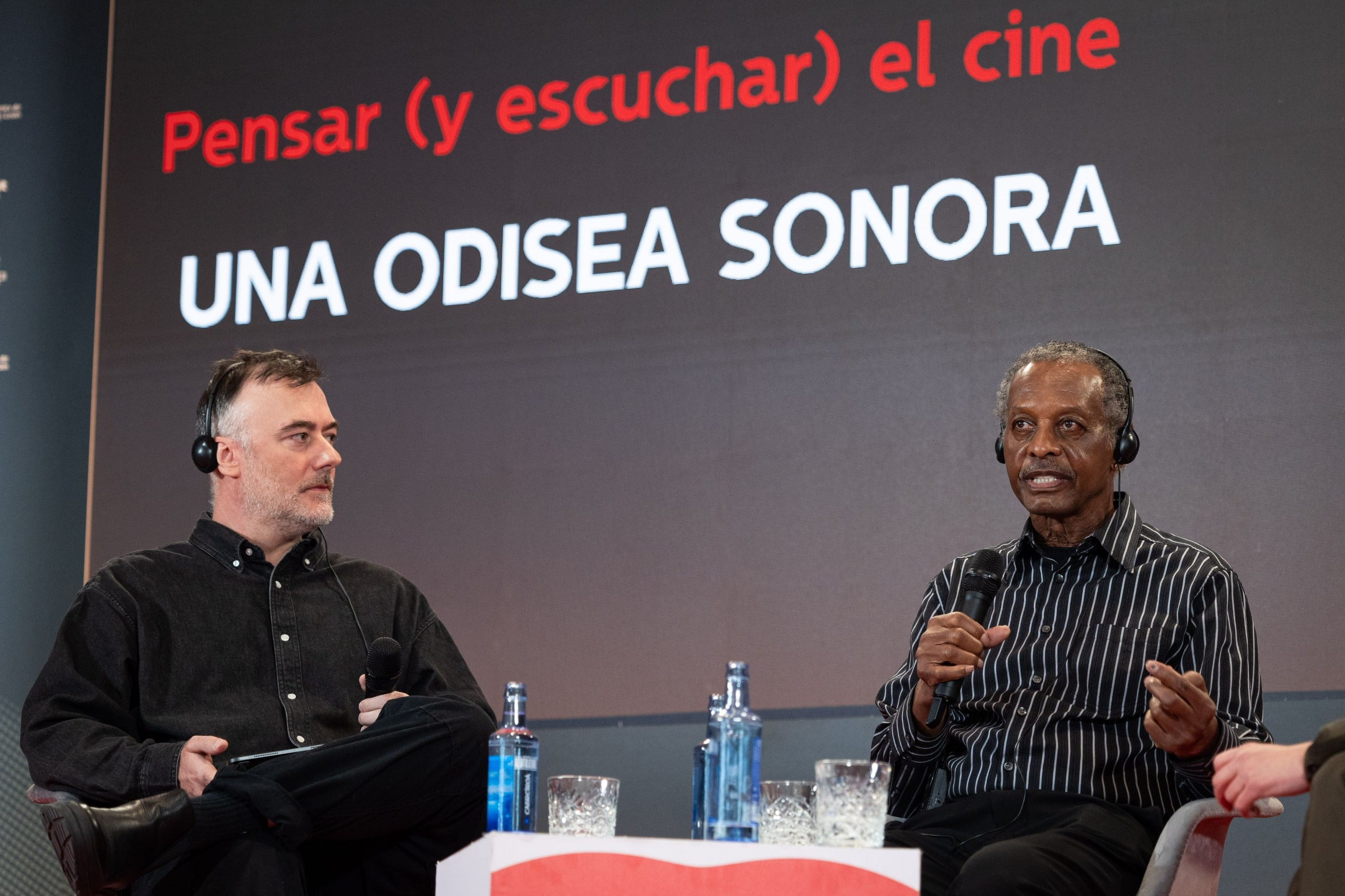
- “We have to make sound just as important as the image,” said Willie D. Burton, this year’s Honorary Spike recipient
- “I don’t think AI is going to replace people, but if used well, it can improve our work and speed up processes,” said Alejandro López
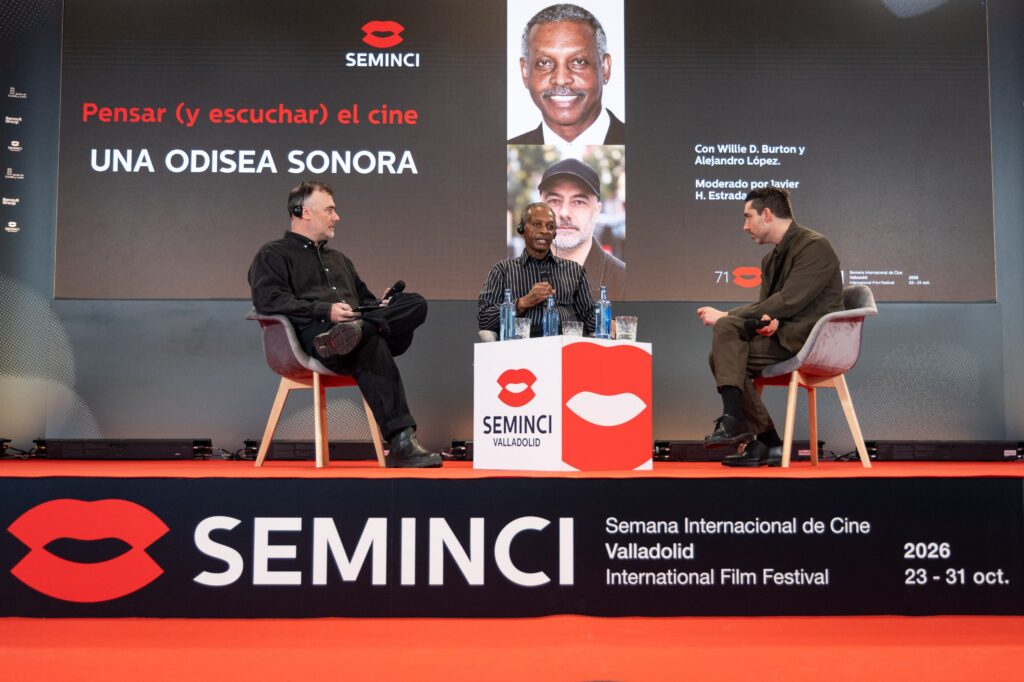
- SEMINCI inaugurates “Thinking (and Listening) About Cinema” with “A Sound Odyssey,” a conversation between the sound designers of two of this season’s films, moderated by Javier H. Estrada
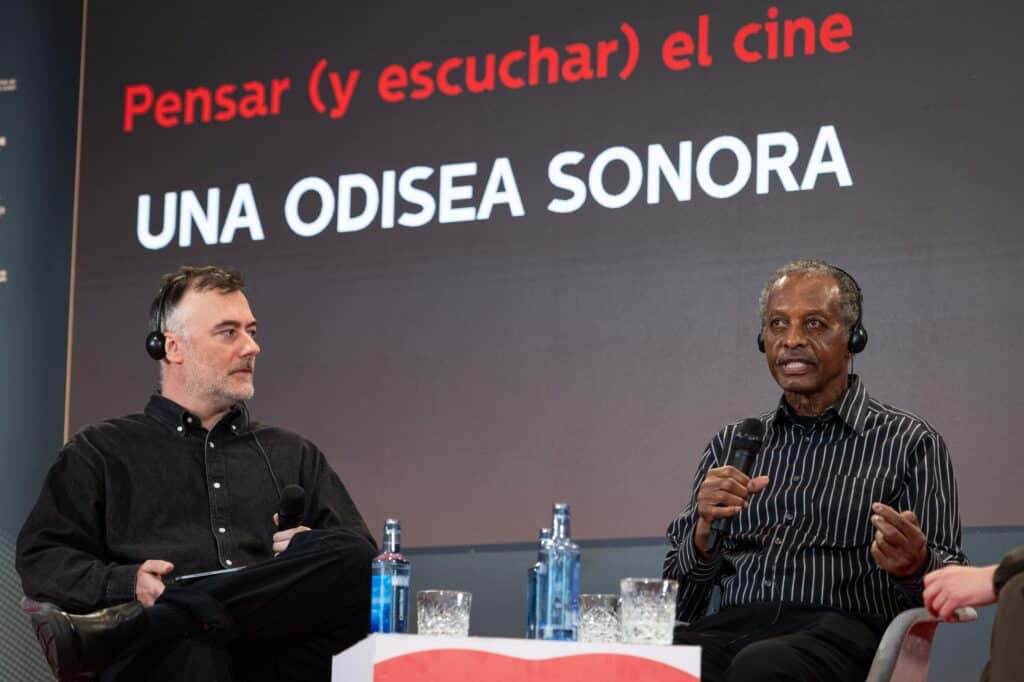
Valladolid, October 24, 2025.—Willie D. Burton and Alejandro López, the sound designers for The Odyssey and La bola negra, respectively, came together for a roundtable discussion in Valladolid dedicated to exploring the role of sound in contemporary cinema. Both reflected on technological advances in the sound department and the role it plays in today’s major productions, but they also emphasized their education and early careers.
“Sound found me living in Alabama, right next to a radio station. I loved dancing to the music and watching the DJs create their own songs,” Burton shared. With a career spanning more than five decades, he has become a regular collaborator with Christopher Nolan and is in charge of on-set sound recording for The Odyssey (2026). For his part, López, a native of Gijón, praised the work of José Luis Cienfuegos as director of the Asturian film festival, whose programming played a key role in his decision to pursue a career in film sound: “José Luis introduced me to Kaurismäki and Kiarostami; thanks to the films he programmed, I’m doing what I do today,” he confessed.
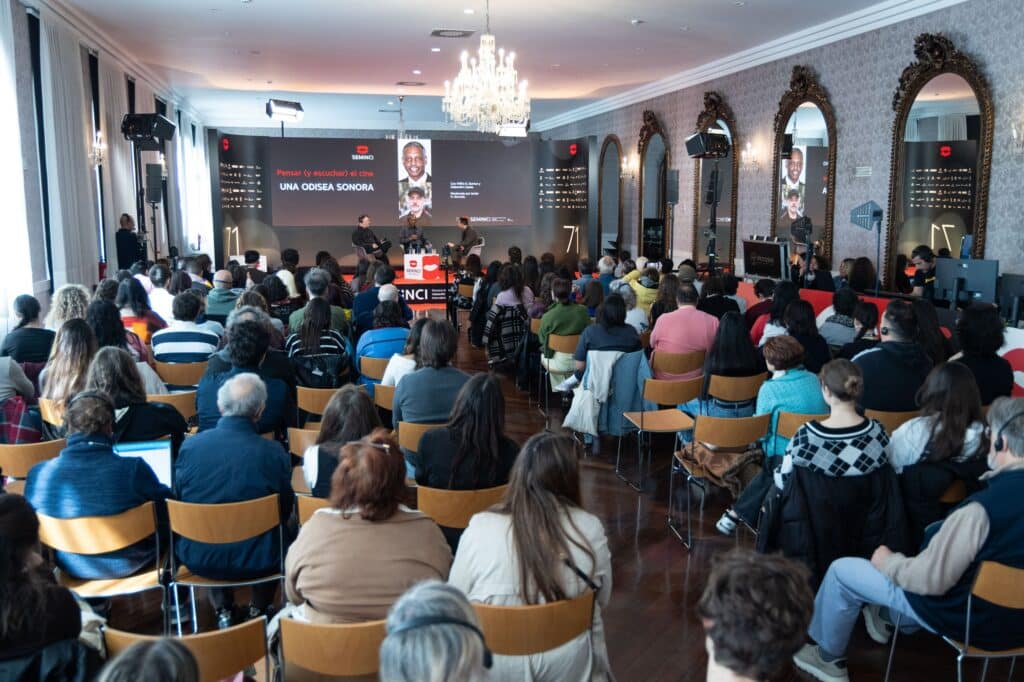
The festival’s co-director, Javier H. Estrada, who moderated the discussion, highlighted during the roundtable José Luis Cienfuegos’s fundamental role in making sound a central theme of the 71st edition. He also highlighted Seminci’s commitment to changing the perspectives through which cinema is viewed and to shining a light on areas that have sometimes been overlooked—one of the themes that ran through the conversation between the two sound engineers. Thus, “A Sonic Odyssey” kicked off the series of conferences and discussions designed to delve deeper into creative processes and bring the voices of filmmakers, professionals, and thinkers closer to the festival audience.
A Collaborative, Artistic Endeavor
Burton and López discussed how directors’ perspectives on the role of sound in their productions have evolved, noting that, although it is increasingly valued, it still remains secondary: “There are young filmmakers who don’t think about sound and don’t hire professionals to work on it. We need to make sound just as important as the image,” explained Burton, to which López responded by drawing on his personal experience: “Directors today are very interested in sound, but sometimes production schedules and timelines don’t allow you to play around with the structure you have in mind. That post-production process isn’t always accompanied by the time needed for mixing, and you have to make sacrifices.”
The difference between their two roles—Burton in live sound and López in the post-production suite—highlights the breadth of the sound departments in two of the year’s major productions: The Odyssey and La bola negra. The sound engineers discussed their respective experiences working with demanding directors such as Christopher Nolan, Javier Calvo, and Javier Ambrossi. “You have to be prepared for anything; he can’t ask you for something and have you not have a solution,” Burton shared, adding that Nolan “is an old-school director—he doesn’t want wireless connections; everything is much more artisanal, and the sound must always be recorded naturally, not in a studio.”
For his part, López spoke about the lengthy process of crafting the soundscape for La bola negra, which, since it unfolds in three very distinct acts, had to adapt to the narrative characteristics of each one. “The soundscape of one of the timelines is much more expressive; there are effects that create a certain feeling and stray completely from realism,” he explained, referring to the need to coordinate with other departments on certain scenes—such as the theater scene with Penélope Cruz—in which Raül Refree’s soundtrack played a particularly prominent role.
In this regard, both emphasized the collaborative nature of sound work in film, highlighting the importance of having a trusted team by their side. “I always work with the same three people, because I need to know they’re trustworthy and capable of solving problems, whether with a boom pole or a recorder. You can’t afford to hold back the other departments,” Burton noted. Both also explained the need to coordinate with the other production departments; in the case of The Odyssey, this took place during long daily meetings where Nolan outlined the next steps after a long day of shooting. “Being selected for the Cannes Film Festival meant we didn’t have as much time as we’d planned, and many of the issues we were going to work on beforehand had to be addressed directly in the studio,” López explained, highlighting the major challenge that La bola negra also posed for the entire team.
Looking Toward the Future of Cinema
Finally, they discussed the possibilities that remain to be explored in film sound, making it clear that it is a medium undergoing constant technological evolution and that their craft always requires continuous learning. They also made special mention of Artificial Intelligence and its recent emergence in the departments of major productions. “I don’t think AI is going to replace people, but if used well, it can help improve what you do and speed up processes,” López shared, noting that it will become increasingly important to ensure that AI does not replace the creative aspect of a film. “Recording sound is like playing a role—you always need a human element,” added Burton, who argues that we shouldn’t reject AI but rather integrate it into technical processes.