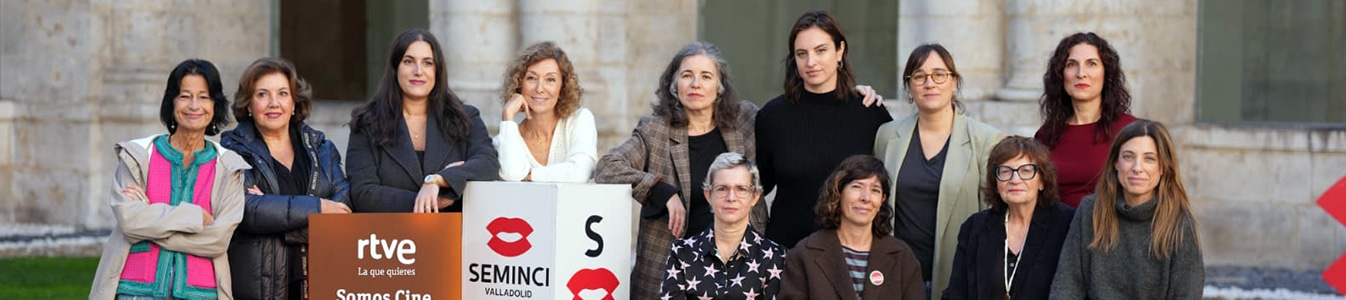
- Leading professionals from across the industry gathered at the Museo Patio Herreriano to discuss the current state of film journalism and reflect on the impact José Luis Cienfuegos made during his time at the helm of film festivals.
- Organised in collaboration with RTVE and CIMA, the event featured two round-table discussions and the presentation of two case studies, exploring the progress made by women journalists and the challenges they continue to face today.
The auditorium at the Museo Patio Herreriano hosted the Women Journalists’ Gathering, a forum for discussion organised by SEMINCI in collaboration with RTVE and CIMA. The public event introduced Valladolid audiences to the work of prominent women in film journalism, who reflected on working conditions in the press and its role at film festivals.
Mariona Viader, co-director of the festival, opened the event by thanking the invited professionals, familiar faces who, in her words, “have helped tell the story of SEMINCI”. Viader highlighted the gathering as an opportunity to reflect on statistics concerning women in the industry, from the RTVE Equality Observatory’s 2024 publication, which reported that in 2019 women held 33.5% of media management positions and accounted for 35.7% of opinion articles, to CIMA’s latest report, which continued to show a gender gap in 2025, with women occupying just 39% of senior decision-making roles in feature-film production.
“These figures need to be read in the context of the dates they refer to, but they point to structural inequality in positions of public authority within cinema,” Viader concluded, before handing over to the speakers and paying tribute to José Luis Cienfuegos’s pioneering role in promoting this kind of forum for reflection.
Festivals as communities: the legacy of José Luis Cienfuegos
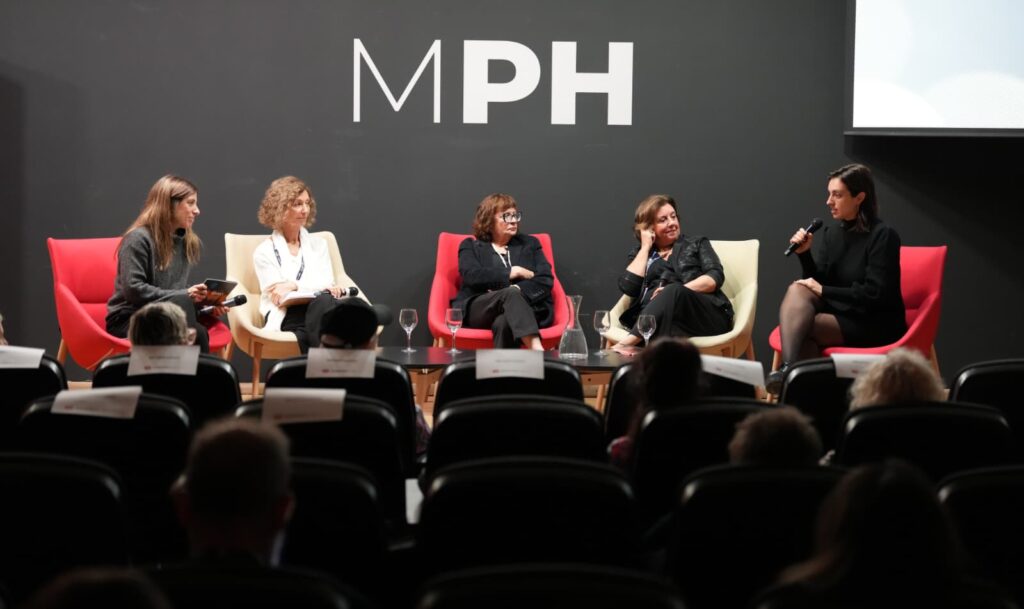
Ana Sánchez, SEMINCI’s Head of Communications, repeatedly emphasised José Luis Cienfuegos’s importance to the history of film festivals. “He devoted three uninterrupted decades to this work, with passion and courage. Wherever he went, he changed the way people understood film festivals, from Gijón and Seville to Valladolid, where he spent his final three years. For him, festivals were protected spaces for critical thinking, ideological pluralism and freedom,” Sánchez said. She also highlighted how Cienfuegos developed a distinctive language and identity for the festivals he led, transforming each of the cities in which he worked. “Festivals as places of discovery, encounter and succession; communities in which the story of cinema took shape. For him, the press was an indispensable storyteller within that protected ecosystem,” she added.
“With José Luis, I learnt about literature, music and, above all, cinema. For three decades, I followed him across three cities and watched him speak with passion. He gave everyone else the limelight, but he was always there, and he remains present in each of us,” said Yolanda Flores, presenter of De película on RNE. “For me, what mattered most was his warmth, the way he treated people and the sense of community he built. I remember someone who was very curious, who liked to listen and who made everyone he worked with feel special,” added Marta Medina, film critic at El Confidencial and a member of the SEMINCI team. Participants also highlighted Cienfuegos’s role in championing many of the filmmakers who are now considered major voices in international cinema, including Oliver Laxe, Alice Rohrwacher and Mia Hansen-Løve, recipient of the Honorary Spike at the 70th edition of SEMINCI.
Telling the story of cinema
Maruja Torres, Elisenda Nadal, Pepa Blanes, Elsa Fernández-Santos, María Guerra, Elena S. Sánchez and Desirée de Fez were among the journalists featured in the introductory video screened at the event. Their names serve as a reminder of the importance women journalists have played, and continue to play, in Spain, while also highlighting the persistent inequality in the senior positions they have historically held.
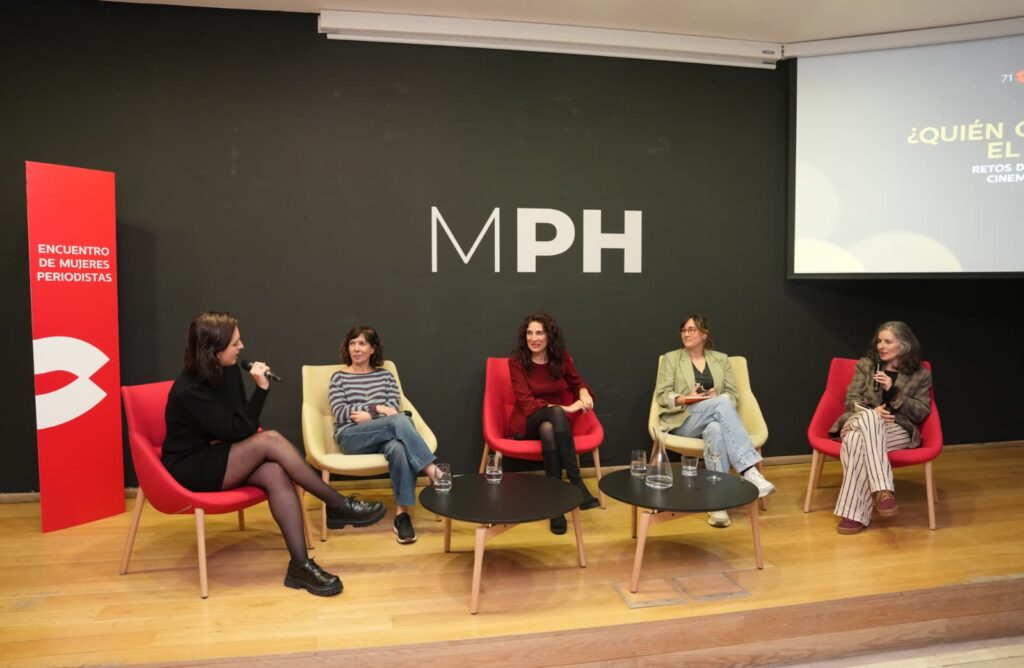
These issues formed the basis of the gathering’s round-table discussions. The Legacy of José Luis Cienfuegos: Festivals for Thinking about Cinema brought together Yolanda Flores and Marta Medina, alongside Chusa L. Monjas, Head of Communications at the Spanish Film Academy, and Conxita Casanovas, director of RNE’s Va de cine and the BCN Film Fest. The second discussion, Who Tells the Story of Cinema Today? Challenges Facing Film Journalism, featured Begoña Donat, a freelance journalist specialising in integrated communications for cultural organisations; Jara Yáñez, director of Caimán Cuadernos de Cine; Eulàlia Iglesias, journalist and lecturer at the Universitat Rovira i Virgili; and Begoña Piña, film critic and journalist at Público.
The participants engaged in lively discussions about film journalism, examining its past and present and addressing a range of issues, including journalistic rigour, editorial independence, precarious working conditions and gender parity. “Of all the women we saw in the video, only one held a senior management position. The situation is similar at major film festivals. It took us 70 years for a woman to take the helm of one of them. I wish gender parity were sufficiently established that we no longer had to keep talking about it,” Monjas observed.
Another widely discussed topic was the challenge facing the profession as social media and new communication channels continue to grow in prominence.“There is the question of how far we should embrace these new formats. We have to take them into account, and perhaps that is where the future lies. Whether print is in decline is an important question, but it is not a new one. I remember that when Caimán Cuadernos de Cine was launched in 2007, we were already asking ourselves the same thing,” Yáñez said.
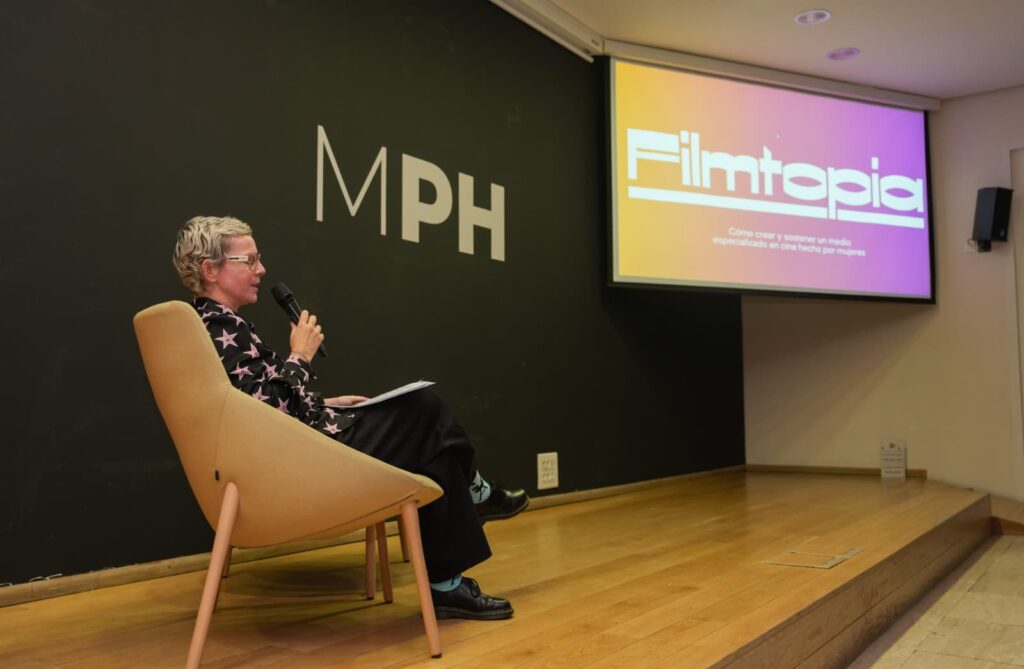
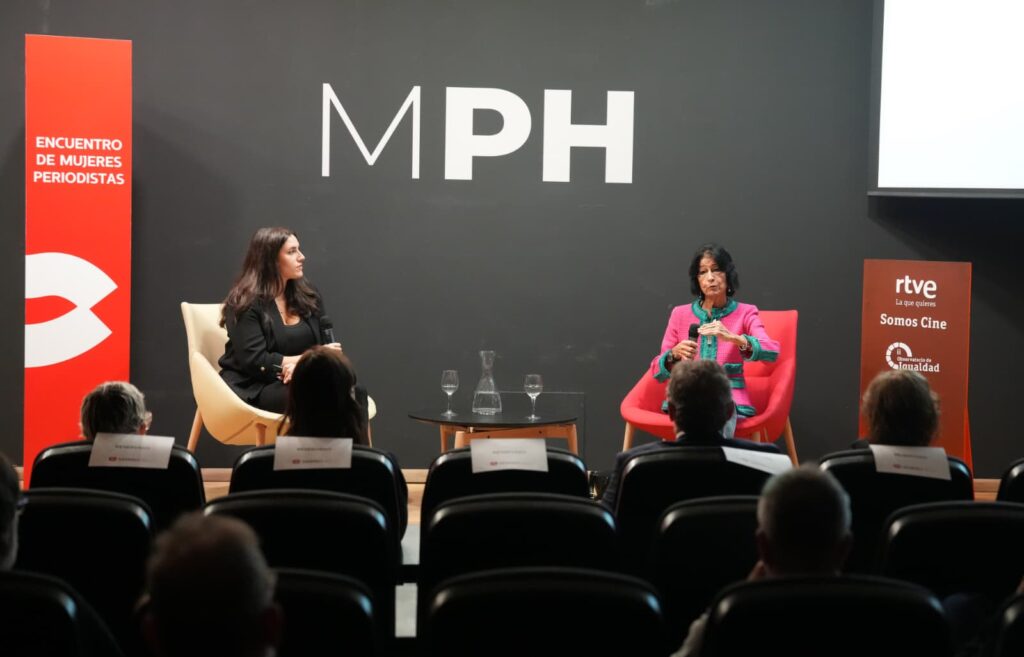
To put theory into practice, the event also included presentations of two case studies. The first focused on the RTVE Equality Observatory, where Beatriz Aparicio, its chair and head of unit, and Mercedes de Pablos outlined the tools used by Spain’s public broadcaster to incorporate equality into its editorial criteria and decision-making processes. The event concluded with a presentation of Filmtopia by its founder and director, Marta Armengou, who shared her experience of leading a publication with a clear mission: to highlight women’s work across the film industry, from directing to other professional fields. Armengou emphasised the continuing importance of the media in fostering a community of women writers and filmmakers, while also drawing attention to the challenges independent editorial projects face in securing long-term sustainability and funding.