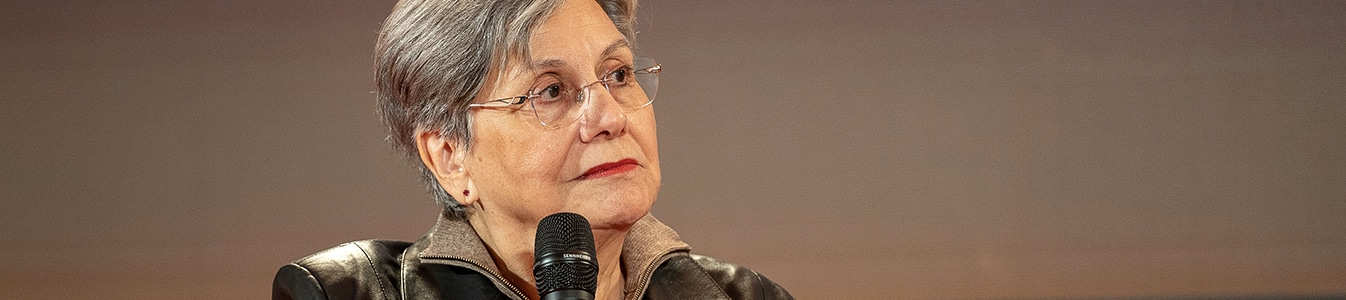
- The 71st edition of SEMINCI honours the career of one of Latin America’s most internationally renowned female directors and will host the premiere of her latest film, ‘Behind the Rain’
Chilean filmmaker, screenwriter and editor Valeria Sarmiento held a meeting with the Seminci audience, during which she looked back over much of her extensive and eclectic filmography, which has been featured at the festival. She recalled in particular the screening of her film A Man, When He Is a Man(1982) at the 27th edition of SEMINCI, one of her first feature films in which she explored gender roles – a theme she had already addressed in her documentary short A Dream as in Colours (1973), which focused on striptease dancers. “For A Man, When He Is a Man, I went to Costa Rica with the idea of making a film about machismo, but I told the men I interviewed that it was about romanticism,” she explained.
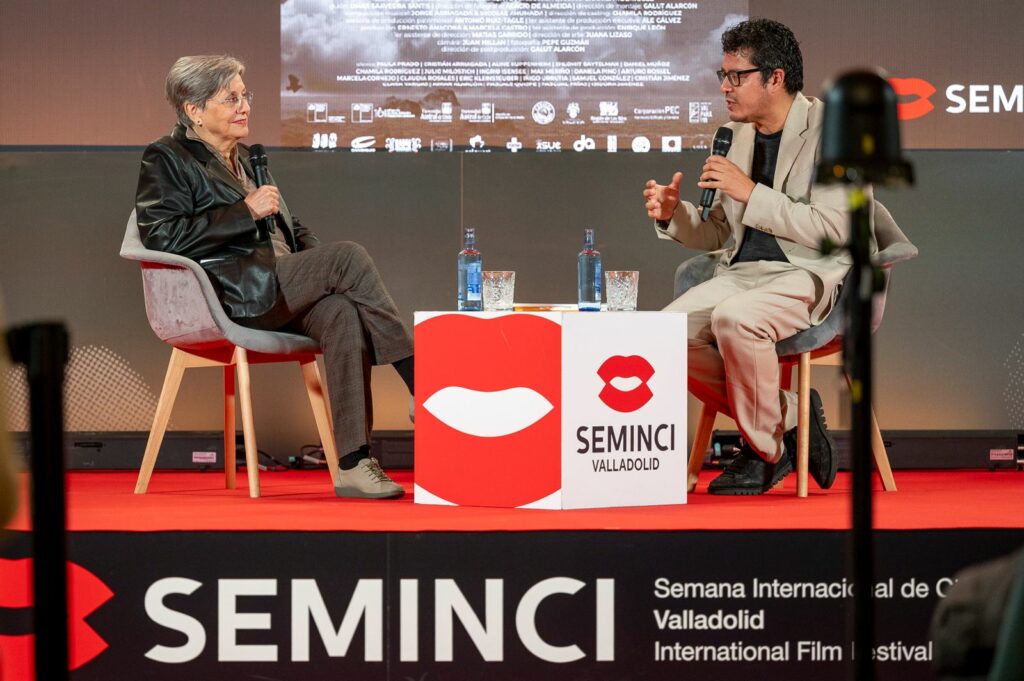
Her latest film
The filmmaker has also spoken about her most recent project, Behind the Rain, which will have its Spanish premiere this Wednesday at SEMINCI, as part of the Official Section, and for which she has returned to her hometown to shoot. “It’s a film I’ve wanted to make for many years. It was still in the pipeline; I tried to make it in Lisbon and in Brittany, but the final version of the script meant that the Chilean film fund gave us a bit of money,” explained the filmmaker, noting that the funding process had been very complicated. “In the end, the support came from people close to me. It’s a film about friends and a collective spirit,” she added.
The film’s title refers to a memory Sarmiento has linked to a video tape of the film The Red Shoes (Emeric Pressburger, Michael Powell, 1948), which was badly damaged and gave the impression that there was a sort of rain in front of the images. “My mother used to tell me I had to look behind the rain. To uncover the true mysteries of films, you have to look behind the rain,” he shared. “This has been my last film. I don’t think I’ll ever be able to make another one,” said Sarmiento, stating that he doesn’t feel there are any producers willing to back his films at present.
A defence of Latin American cinema
Sarmiento’s cinema, and indeed this latest film, has been built on a constant interplay with cinematic genres, ranging from the thriller to the melodrama and including the telenovela – a very common practice in Latin American art. ‘As Vargas Llosa said, we Latin Americans move very quickly from popular genres to highbrow genres. It’s important not to take ourselves too seriously and to work within that popular register,” the director stated.
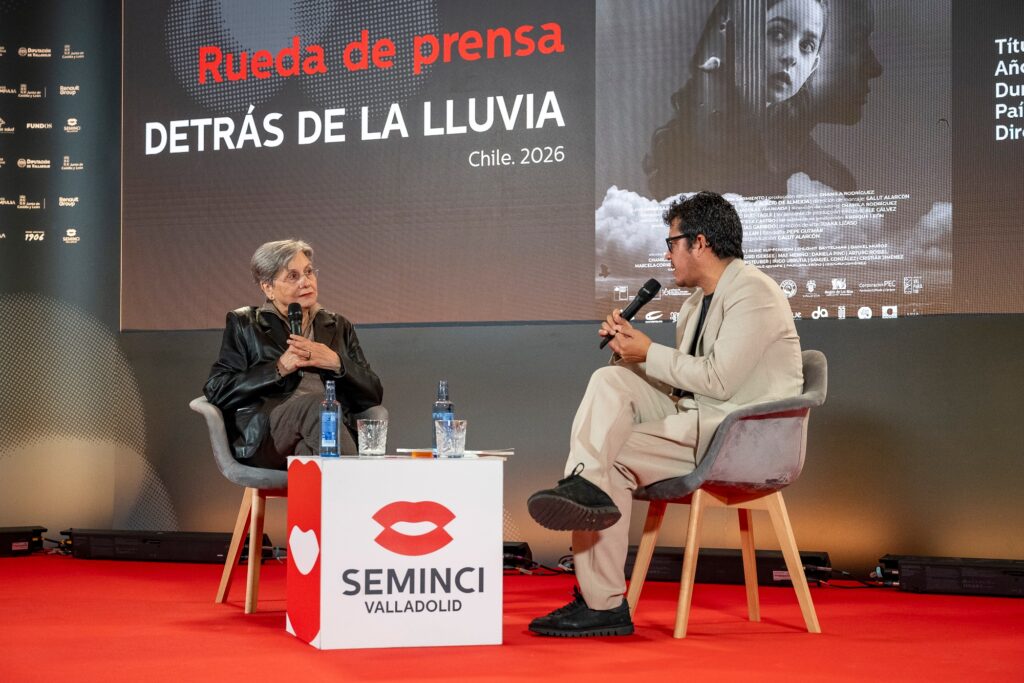
Sarmiento spoke about the history of Latin American cinema and the European perception of its legacy, highlighting the complete absence of Latin American films from the list published every ten years by Sight & Sound magazine, which seeks to establish a canon of the best films in history. “I’ve found it much easier to film in France than in Chile,” confessed the filmmaker, who went into exile following the coup d’état and has been living outside her native country for over 50 years.
Sarmiento also recalled the films of Raúl Ruiz, her husband and a leading figure in Latin American cinema, several of whose films she has recently managed to complete. “Raúl made 120 films and left four or five unfinished. I wanted to finish them because they are part of Chile’s cultural heritage,” she concluded, referring to both productions – the first of which was made against the backdrop of the 1973 coup, and the other following the return to democracy in 1990.