


- SEMINCI launches a new initiative featuring film cycles and screenings celebrating world cinema heritage in Valladolid, in collaboration with the Castilla y León Cinematheque
- The cycle ‘What was the future about?’; Spanish film classics ‘The Holy Innocents’ and ‘Poachers’; a tribute to Pere Portabella on his centenary; the restoration of an African film classic; and Ingmar Bergman as seen by Jaume Claret Muxart, are among the first activities planned
Valladolid, April 16, 2026. The Valladolid International Film Festival (SEMINCI) is launching Filmoteca SEMINCI, an initiative featuring film series and screenings in various venues across the city to bring the world’s cinematic heritage to the public in Valladolid throughout the year, in collaboration with the Castilla y León Cinematheque.
This initiative also responds to the vision of José Luis Cienfuegos, director of SEMINCI until 2025, to continue the activities launched for the festival’s 70th edition and to reinforce SEMINCI’s role as a cultural catalyst for the city throughout the year, not just during the festival dates.
According to festival directors Mariona Viader and Javier H. Estrada, “Filmoteca SEMINCI arose as a natural collaboration with Castilla y León Cinematheque, a key partner with whom we built this project that brings together and provides coherence to screenings held throughout the year, always fostering reflection through a programming approach that transcends traditional periods and territories. A place to continue learning and rediscovering the history of cinema, demonstrating that the SEMINCI community remains united and engaged beyond the festival dates.”
This initiative fulfills the aspirations of the Castilla y León Cinematheque to maintain a stable film program in Valladolid, the result of institutional collaboration, as part of the scope of audiovisual culture dissemination overseen by the Department of Cultural Policy.

Eleven screenings scheduled for 2026
The Filmoteca SEMINCI program currently includes eleven screenings that will begin in April and run through December: the feature film cycle “What was the future about?” at the Broadway Cinemas; the ‘Film Restorations’ series, featuring two masterpieces of Spanish cinema at the FUNDOS Forum Auditorium; and a classic of African cinema, a tribute to filmmaker Pere Portabella on his centenary, and a new session of the Inside Cinema program, featuring Jaume Claret Muxart, at the Casablanca Cinemas.
The screenings will be followed by a presentation or Q&A session that will enrich the viewing experience and foster discussion about the films, thereby reinforcing SEMINCI’s commitment to sharing the history of cinema through audience engagement and participation.
As part of these screenings, Espacio SEMINCI will host thematic showcases dedicated to actors or directors associated with the featured films. The first of these showcases brings together objects and memorabilia related to Francisco Rabal, star of The Holy Innocents, thereby reviving the “Display of the Month” initiative, launched in 2025 with the aim of highlighting and promoting the festival’s historical archive.
Two Masterpieces of Spanish Cinema
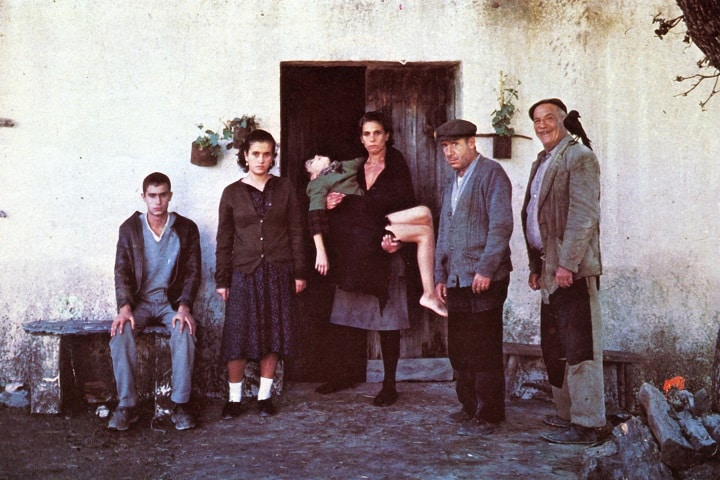
The activities will begin on April 28 with a screening of The Holy Innocents, by Mario Camus (1984), at the FUNDOS Forum Auditorium, to mark the centenary of actor Paco Rabal. The film, based on the book of the same name by Miguel Delibes, won the Best Actor Award (ex aequo) for Alfredo Landa and Paco Rabal, who managed to turn Azarías and his “milana bonita” into one of the most memorable characters in Spanish cinema. The event will be rounded out with the short film Paco, mi padre, directed by Benito Rabal, son of the late actor, who will present it in Valladolid.
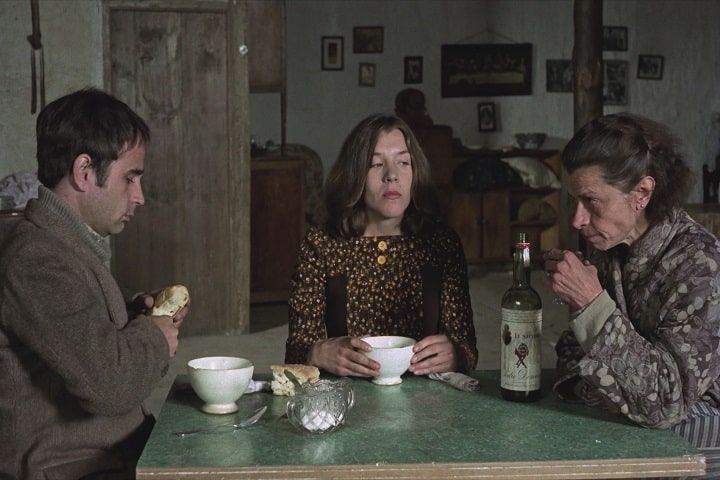
The 4K remastered version of Poachers, a 1975 film directed by José Luis Borau, will continue the series of essential titles from the history of Spanish cinema at FUNDOS Forum on April 29. Winner of the Golden Shell at the San Sebastián Film Festival, Poachers, weaves, in the form of a rural drama, an allegory about oppression, fear, and the need to break with an authoritarian past. Its value lies in the courage with which, even before the end of the Franco regime, it managed to formulate a symbolic critique of the system. It does so through the relationship of a young man emotionally and sexually repressed by an authoritarian mother, played by Ovidi Montllor and Lola Gaos, respectively.
With this collaboration and the series of restored films, FUNDOS revives the historic relationship between the Fuente Dorada theater and the film programming promoted alongside SEMINCI and the Cinematheque in the 1990s.

Cinematic Predictions Celebrating Their 25th Anniversary in 2026
The “What was the future about?” cycle at the Broadway Cinemas aims to show how cinema anticipated, around the year 2001, debates and human conflicts that remain relevant today. The selection of six films curated by the SEMINCI programming team brings together titles from diverse geographical origins, all directed by acclaimed filmmakers.
On May 7, Apocalypse Now Redux will open the film series. The extended version of Francis Ford Coppola’s anti-war classic premiered at the 2001 Cannes Film Festival, offering one of cinema’s most striking and complex portrayals of war. The film, inspired by Joseph Conrad’s novel Heart of Darkness, is not just another war story; it explores the darkness of the human soul, presenting war as a chaotic and profoundly dehumanizing experience.
On June 11, Divine Intervention, directed by and starring Elia Suleiman, will be screened. The film portrays in a unique, ironic, and symbolic way how the Palestinian-Israeli conflict seeps into everyday life, sketching an absurd, oppressive, and critical panorama of military checkpoints, restrictions on movement, and the routines of an occupied territory that invites the viewer to reflect on the Palestinian people’s quest for freedom. Filmed in 2001 and premiered at Cannes the following year (where it won the Jury Prize), the relevance of its theme aligns fully with the central theme of this film series.
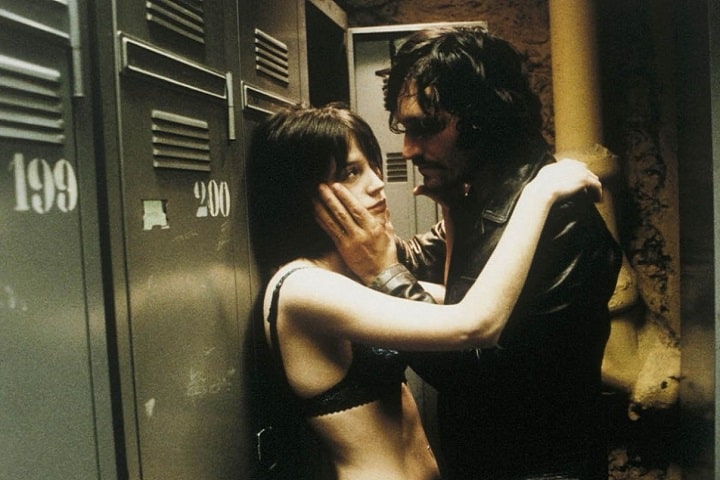
Claire Denis’s Trouble Every Day envisions a future in which science does not advance humanity, but rather unleashes the darkest aspects of human nature: desire turned into violence. Through genetic manipulation and the extreme performances of Vincent Gallo and Béatrice Dalle, Denis anticipated in 2001 a question that remains unanswered: what happens when scientific progress eliminates the last moral boundaries? The film is scheduled to screen on July 23.

On September 17, the film cycle will resume with Richard Linklater’s Waking Life. The director of Nouvelle Vague, Boyhood, and Before Sunrise delved into the more philosophical side of his filmography with this animated film, which offers an existential reflection on the fate of humanity through the lucid dreams of its protagonist, who converses about free will, identity, and the meaning of life with the characters he encounters along the way.
Once the 71st edition of SEMINCI has concluded, on November 12, the Broadway Cinemas will screen the Japanese film Pulse (Kairo). Director Kiyoshi Kurosawa turns to the horror genre to offer a disturbing reflection on loneliness through the story of a ghost that communicates via the internet. Twenty-five years ago, this film predicted that the greatest danger of the future is not technology itself, but how it can amplify human loneliness, how hyperconnectivity leads to emotional disconnection and the end of humanity.
The cycle will close on December 10 with a legendary dystopian science fiction film, Fritz Lang’s Metropolis (1927). A film that warned nearly 100 years ago that technological progress without ethics could lead to an unequal, dehumanized, and conflict-ridden society by 2026. The screening is part of the collaboration agreement that SEMINCI has maintained for years with the Goethe-Institut for the dissemination and promotion of German cinema, which has been renewed to expand its presence at the 71st edition.
Remembering Pere Portabella and Two Classics at Cines Casablanca
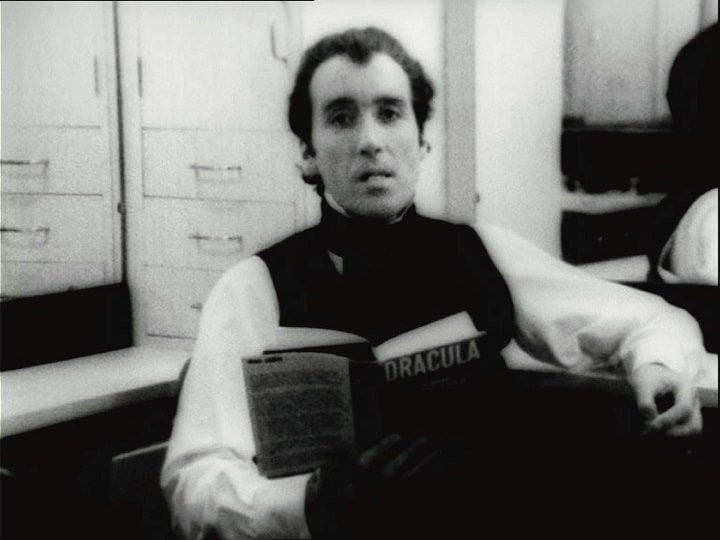
On June 18, Cines Casablanca will host a screening of the film Vampir-Cuadecuc (1970) by Pere Portabella (Figueres, 1927). As a producer of Spanish cinema masterpieces such as Viridiana, Los golfos, and El cochecito, and as a director, he is a leading figure in avant-garde culture who has influenced many contemporary filmmakers. Vampir-Cuadecuc, one of his best-known films, deconstructs the narrative mechanisms of the filming of Jesús Franco’s Count Dracula, starring Christopher Lee, to sketch his own version of the vampire myth and break with the mainstream cinema permitted under Franco’s regime.
Following the screening, filmmaker, theorist, and cultural educator Luis E. Parés—a specialist in Portabella’s filmography and current artistic director of Cineteca Madrid—will engage in a conversation at Espacio Seminci with the festival’s co-director, Javier H. Estrada, with the aim of establishing a transgenerational dialogue on the relevance and enduring impact of Portabella’s cinema, both in its aesthetic and political dimensions.
SEMINCI thus joins the international program “Acción Portabella,” launched by the Ministry of Culture and the Government of Catalonia to commemorate the filmmaker and activist’s centennial in 2026 and 2027. A tribute that Pere Portabella himself has accepted as recognition of his enduring relevance as a driving force behind artistic and political activism: “We have to do things that are relevant, that have vitality, that allow us to move forward. This is where I feel at home,” he noted.


Under the title “Ingmar Bergman as Seen by Jaume Claret Muxart,” Filmoteca SEMINCI will host a new session of the Inside Cinema cycle on Thursday, April 30. This initiative is part of the European Young4Film network, of which the festival has been a member since 2025. On this occasion, the guest will be filmmaker Jaume Claret Muxart, nominated for the Goya Award for Best New Director for Strange River and present at the 68th edition of SEMINCI with his short film Die Donau. Following the screening of Ingmar Bergman’s film Summer with Monika at Cines Casablanca, Claret will analyze the connections between this film and his own work at Espacio Seminci.
Considered a key work in the history of modern cinema, Summer with Monika tells the intense story of love and escape of two young people seeking to flee urban routine during a summer of freedom on a Swedish archipelago. The film stands out for its naturalism, its innovative treatment of intimacy, and, especially, for the famous gaze into the camera by its protagonist, played by Harriet Andersson—a gesture that left its mark on generations of filmmakers, including Jaume Claret Muxart himself.
On May 28, the Casablanca Cinemas will screen a classic of African cinema, Sambizanga (1972), directed by Sarah Maldoror. This event, organized in collaboration with the Arellano Alonso Museum of African Art at the University of Valladolid to mark Africa Day celebrations that week, will be followed by a discussion.
With this film, Maldoror became one of the first women to direct a feature film in Africa. In this film—a seminal work of African anti-colonial and feminist cinema—the director portrays Angola’s struggle for independence through the story of Maria, a woman searching for her husband, who has been detained by the Portuguese colonial police.