


- From 24 October to 1 November, the festival will explore current fractures and resistance, from the war in Gaza and Ukraine to the intimate conflicts of adolescence and family life
- The Dardenne brothers, Kelly Reichardt, Bi Gan, Kristen Stewart, Christian Petzold, Shu Qi, Ildikó Enyedi, László Nemes, Gianfranco Rosi and Pietro Marcello make up a powerful and revealing Official Section
- Spanish cinema shines with 13 world premieres and filmmakers such as Isabel Coixet, David Trueba, Fernando Franco, Judith Colell, and Rafael Cobos.
- French filmmaker Mia Hansen-Løve, the ECAM and ESCAC film schools, and actor Luis Callejo will receive the Honorary Spikes in 2025.
The Valladolid International Film Festival (SEMINCI) will celebrate its 70th edition from 24 October to 1 November 2025 with a programme that explores global conflicts from a humanistic perspective. Featuring 224 titles (including 29 world premieres and 103 national premieres), this edition will paint a powerful portrait of contemporary geopolitical tensions, from Palestinian suffering to Ukrainian resistance, through the dilemmas of adolescence and overcoming family traumas.
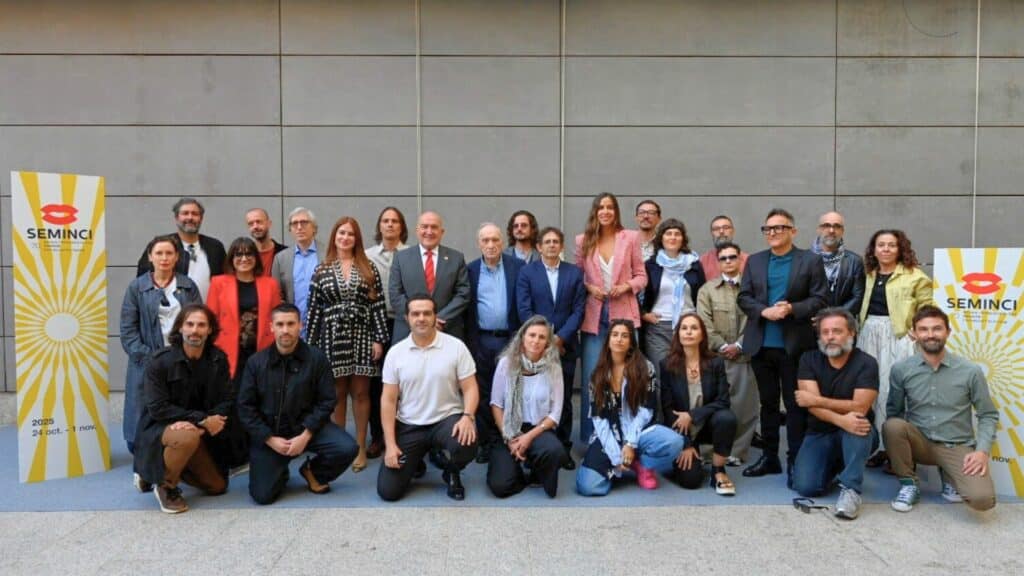
As its director, José Luis Cienfuegos, stated at the presentation of the 70th edition held today at the Spanish Academy of Motion Picture Arts and Sciences, SEMINCI confirms its vocation as a showcase for social cinema, reaffirming its commitment to stories that challenge the viewer’s conscience. Proof of this will be the retrospective series ‘Two shores, One eternal debate: The Valladolid Controversy’, which will screen 17 feature films from both sides of the Atlantic, coinciding with the 475th anniversary of the first moral debate on the human rights of indigenous people.
Official Section: established names and new voices
The Official Competition Section brings together some of the most respected filmmakers on the international scene. The Dardenne brothers (The Young Mother’s Home), Sergei Loznitsa (Two Prosecutors), Bi Gan (Resurrection, Special Jury Prize at Cannes), Lav Díaz (Magellan) and Gabriel Mascaro (The Blue Trail, Grand Jury Prize at Berlin) will compete for the Golden Spike. The selection includes the latest works by Kelly Reichardt (The Mastermind), Christian Petzold (Mirrors No. 3), Ildikó Enyédi (Silent Friend), László Nemes (Orphan), Huo Meng (Living the Land), Gianfranco Rosi (Below the Clouds, Special Jury Prize at Venice), Pietro Marcello (Duse) and Nadav Lapid (Yes).
Among the new cinematic voices participating in the Official Section are Shih-Ching Tsou (The Left-Handed Girl), producer of Sean Baker; Eva Victor (Sorry, Baby, winner at Sundance); Mascha Schilinski (Sound of Falling, Jury Prize at Cannes ex aequo), and actresses Kristen Stewart (The Chronology of Water) and Shu Qi (Girl, out of competition). Also making their debuts are Britain’s Harry Lighton (Pillion) and Argentina’s Ramiro Sonzini and Ezequiel Salinas (The Night is Fading Away).
In the short film section, the Official Section brings together 14 international titles, including the winners of the Palme d’Or at Cannes (I’m Glad You’re Dead Now, directed by and starring Tawfeek Barhom, a notable example of contemporary Palestinian cinema) and the Venice Lion in the Orizzonti section (Without Kelly, by Lovisa Sirén), consolidating the festival’s commitment to the short format as a laboratory for new proposals and filmmakers.
Meeting Point: the cinema of the future
The Meeting Point section has established itself as a space for discovering new talent, with a special focus on young filmmakers who explore the dilemmas of adolescence. This section will premiere 20 international titles in Spain, confirming its status as a breeding ground for emerging voices in world cinema. These films share a realistic and socially conscious approach with stories of young adults facing life-changing decisions, whilst marginalised identities and social tensions are recurring themes throughout this selection of contemporary auteur cinema.
The films on the programme are Palestine 36, by Annemarie Jacir; Rebulding, by Max Walker-Silverman, winner at Karlovy Vary; Little Trouble Girls (Fipresci Award at Berlin), by Urška Djukić; Wild Foxes (Europa Cinemas Award at Cannes), by Valéry Carnoy; Nino (Best New Actor Award at Cannes 2025) by Pauline Loqués; Kika by Alexe Poukine; Mad Bills to Pay (or Destiny, Tell Her I’m Not Bad), winner of the Special Jury Prize at Sundance 2025, by Joel Alfonso Vargas; I Only Rest in the Storm (Best Actress Award at Cannes) by Pedro Pinho; Heads or Tails?, by Alessio Rigo de Righi and Matteo Zoppis; Between Dreams and Hope, by Farnoosh Samadi; Phantoms of July, by Julian Radlmaier; The Luminous Life, by João Rosas; Growing Down, by Bálint Dániel Sós; A Sad and Beautiful World, by Cyril Aris; Gavagai, by Ulrich Köhler; Good Boy, by Jan Komasa; The Souffleur, by Gastón Solnicki; On the Road (Orizzonti Award for Best Film and Queer Lion in Venice), by David Pablos, Barrio triste, the debut of music video director Stillz, and the animated film Death Does Not Exist, by Félix Dufour-Laperrière.
Time of History: a mosaic of our times marked by armed conflict
The panorama of contemporary documentary cinema brought together in the Time of History section reflects a society marked by deep divisions. From the ruined cities of Gaza and Lebanon to the lonely small apartments of Tokyo, the selected recent non-fiction works create a disturbing mosaic of our times. War conflicts occupy a central place in the programme. Documentary audiovisual material lays bare the harsh reality of the conflicts in Gaza, Lebanon and Ukraine through the works of Palestinian Kamal Aljafari (With Hasan in Gaza) and Abbas Fahdel (Tales of the Wounded Land), winner of the Best Director Award at the Locarno Festival. Other non-fiction screenings include Notes of a True Criminal by Alexander Rodnyansky, Director’s Diary by Aleksandr Sokurov, and Face to Face by Federico Veiroj.
Thirteen world premieres of Spanish films
The latest works by Isabel Coixet (Three Goodbyes) and David Trueba (Always Winter) will open and close the 70th edition, which will feature a prominent presence of contemporary Spanish cinema, consisting of 19 feature films, animations and non-fiction films, 13 of which are world premieres, and 13 short films in the Official Section. This commitment to Spanish cinema reinforces the festival’s role as a launch pad for national productions.
In addition to Coixet and Trueba (out of competition), the Official Section will feature Rafael Cobos, who makes his directorial debut with Golpes; Fernando Franco (Subsuelo), and Pere Vilà Barceló (When a River Becomes the Sea, winner at Karlovy Vary). Also out of competition, Judith Colell will present Frontera.
In the Meeting Point section, Irene Iborra will premiere Olivia and the Invisible Earthquake, the first Spanish stop-motion animated feature film directed by a woman and awarded at Annecy. Lucía Aleñar will arrive in Valladolid with Forastera, winner of the Fipresci award in Toronto; Gabriel Azorín will participate with Last Night I Conquered the City of Thebes, and Carlos Saiz will make his debut with Lionel.
In Time of History, Carolina Yuste and Afioco Gnecco present This Body of Mine, alongside Candela Sotos, who presents Yrupê. In Alchemies, Ana Serret proposes Notes for Consensual Fiction and María Ruido presents The Factory and Sex.
Special screenings will include the documentaries David Delfín. Muestra tu herida, directed by César Vallejo, Ángela Gallardo and Rafael Muñoz; Pendaripen, the Untold Story of the Roma People, by Alfonso Sánchez; Las gafas de Isabel Coixet, by Santiago Tabernero, and The Last Rapture, by Marta Medina and Enrique López Lavigne.
Also special are the recovered titles that will be screened in this edition, from El noveno, by Basilio Martín Patino, to El canal de Castilla, by Leopoldo Alonso Hernández, one of the few filmed testimonies preserved from before 1940, or Sleepless City, by Guillermo Galoe, a work of fiction shot in the 1990s in the shanty town of La Cañada Real. In the realm of fiction, Manuel H. Martín and Amparo Martínez Barco direct the animated film Awakening Beauty, and Carlos Solano makes his debut with Leo & Lou.
In addition, SEMINCI will premiere Yakarta, a new collaboration between Diego San José and Javier Cámara following Vote for Juan. The series, created by the screenwriter of Celeste and directed by Elena Trapé, Cámara and Fernando Delgado-Hierro, follows a former Olympic badminton player who discovers in a teenager (Carla Quílez) the opportunity to fulfil his dream of competing in Indonesia.
Short film makers David Fidalgo (Lucus), Greta Díaz Moreau (+10K) and Irene Moray (Plàncton) will participate in the International Official Section. The selection of national productions is completed with 13 more titles in the Spanish shorts section.
Alchemies: cinema with a vocation for risk
The most daring section brings together eleven proposals that share the same quest. From different places and perspectives, they all break new ground in the language of cinema. At the same time, they offer intimate and emotional experiences for the audience, reaffirming cinema’s ability to reinvent itself and move us with truth.
Those based on personal experiences transcend the intimate to offer bold perspectives on how to look at and describe the world. For example, Ancestral Visions of the Future, by Lemohang Mosese (This is Not a Burial, It’s a Resurrection), is a personal journey back to his childhood, delving into the heart of his country, Lesotho, addressing complex experiences through a highly risky aesthetic approach. An ode to cinema and to his mother.
In Forensics, Federico Atehortúa Arteaga addresses Colombia’s traumatic recent past, marked by the FARC guerrillas, and the search for missing persons as essential to the reconstruction of the country’s identity. The film intertwines three stories, between the personal and the political, to speak of damaged realities and a past that still keeps wounds open in Colombian society.
Bulakna, by Portuguese filmmaker Leonor Noivo, takes as its starting point the reality of Filipino women working in Portugal to reflect on labour exploitation and historical colonial connections. The film plays with temporal leaps between past and present to give voice to these domestic workers and their personal journey towards emancipation.
Set in contemporary Serbia, Desire Lines, by Dane Komljen, presents an environmentalist perspective through the escape from military service of a man who finds refuge in a community living in contact with nature. The need to reinvent the human-nature bond also leads him on a search for sexual identity.
Memory of Princess Mumbi, by Swiss-Kenyan Damien Hauser, presents an inventive dystopia, a mixture of science fiction, romance and mockumentary, which reflects on current dilemmas in the film industry, such as the use of AI in cinema, in the context of a futuristic Africa.
Trương Minh Quý returns to SEMINCI alongside Nicolas Graux after Việt and Nam. In Hair, Paper, Water… he presents the struggle to keep alive the language of a remote region of his country. Through the intergenerational relationship between an elderly woman and a young man, he exposes the need to preserve and protect one’s own identity when it is at risk.
The Visitor, by Lithuanian filmmaker Vytautas Katkus, shows a young man returning to his hometown after the death of his father, where he discovers, as he tries to rebuild ties with his friends, that nothing is as he remembered it. An exploration of the loss of roots and life transformation, this is his directorial debut.
Bouchra, co-directed by Moroccan artist Meriem Bennani (whose works have been exhibited at MOMA) and Orian Barki, mixes animation with live action to tell the story of an artist who comes out to her mother, incorporating the dimension of geographical distance from her origins as another disturbing element. An animated and surreal autobiographical fiction that reflects on queer identity, creativity and the North African diaspora.
Pin de Fartie is the latest production from independent film studio El Pampero Cine, founded by Argentine filmmaker Alejo Moguillansky (Castro) alongside Mariano Llinás, Laura Citarella and Agustín Mendilaharzu. It is a playful take on Samuel Beckett’s play Endgame. The film, which is meta-theatrical in nature, reflects on existence by reimagining the characters from the original play in different locations in Argentina and Europe. It is an entertaining work that blends multiple genres to offer a disenchanted view of Argentina’s present, human relationships and the arts. A celebration of cinema, theatre and music, it is a tribute to cultural work that is despised by the government of its country.
Special Screenings
The Special Screenings section will feature Giant, a sports drama about British-Yemeni boxer Naseem Hamed, with Pierce Brosnan in the cast as his trainer, written and directed by Rowan Athale.
In addition to the Spanish films already announced, this section will feature three animated productions: Space Cadet, by Kid Koala, based on his own graphic novel; Maya, Give Me a Title, by Michel Gondry, director of Eternal Sunshine of the Spotless Mind; and Super Charlie, by Jon Holmberg, an adaptation of the adventures of the baby with superpowers created by mystery writer Camilla Läckberg.
Honorary Spikes 2025
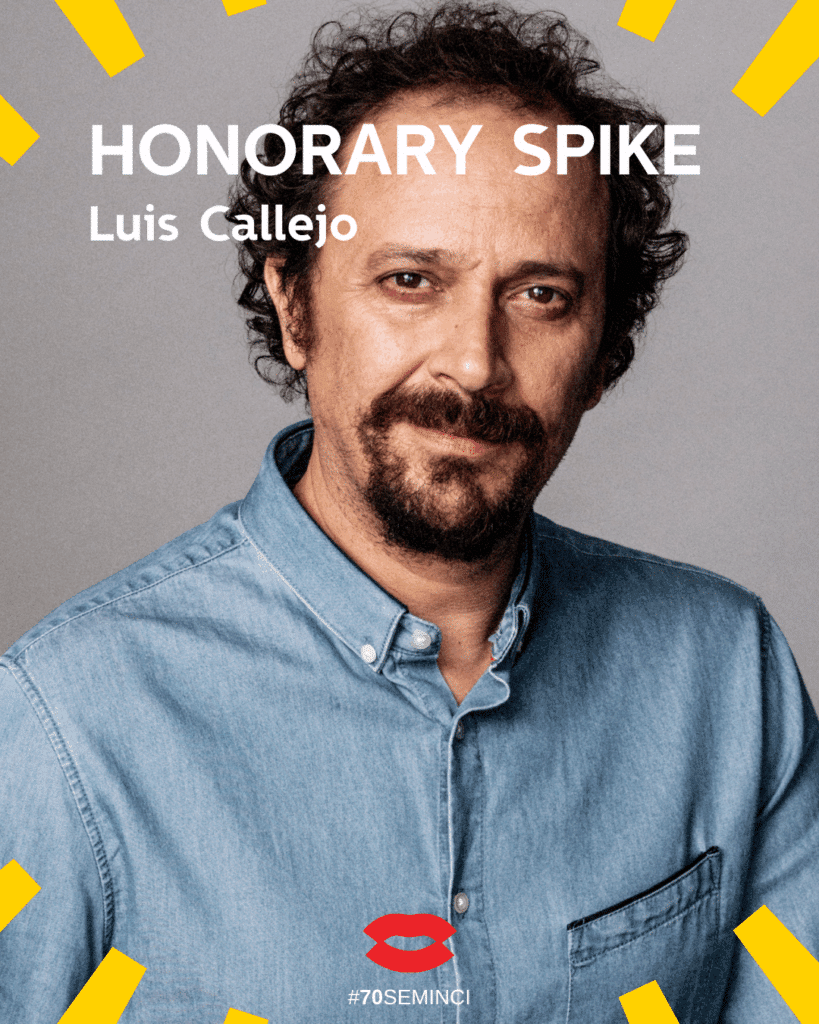
The 70th edition of SEMINCI will award three Honorary Spikes to French actress and director Mia Hansen-Løve, actor Luis Callejo and the ECAM and ESCAC film schools. Hansen-Løve is one of the most prominent filmmakers in contemporary French cinema, known for her intimate style and her ability to delicately portray human relationships and the passage of time. She worked as an actress in her teens in Late August, Early September (1998) and Sentimental Destinies
(2000), both by Olivier Assayas, and as a critic for Cahiers du Cinéma magazine before devoting herself fully to directing. Her career highlights include her debut All Is Forgiven (2007), Goodbye First Love (2011), Things to Come (2016), Silver Bear for Best Director in Berlin, Bergman Island (2021) and One Fine Morning (2022).
Segovian actor Luis Callejo is known for his versatility and has worked in theatre, film and television.Throughout his career, in which he has been nominated for the Goya Award on three occasions (Princesas, Tarde para la ira, and Intemperie), he has demonstrated his ability to portray very diverse characters, from dramatic roles to parts in comedies and thrillers. In film, he has worked with Rodrigo Sorogoyen, Alejandro Amenábar, David Pérez Sañudo, Raúl Arévalo, Fernando Franco, and Fernando León de Aranoa. His television work includes Apagón, La chica de nieve, Asuntos internos, Vestidas de azul, La noche más larga, La peste, and Libertad.

The award to the Madrid Film and Audiovisual School (ECAM) and the Catalonia Film and Audiovisual School (ESCAC) aims to recognise the work of both educational institutions in training current and future generations in the audiovisual sector and promoting cultural activities associated with the film industry. The distinction takes on special significance as it coincides with the 30th anniversary of both schools, two institutions that have been fundamental pillars of Spanish film education over the last three decades.
This Honorary Spike marks the beginning of a new line of awards at SEMINCI dedicated to academic and educational excellence in the audiovisual field. In the spring of 2026, SEMINCI will announce the next winner with the aim of working on a joint initiative that will take the form of a workshop, round table, series of activities or specific training proposal during the 71st edition.
Activities
The programme for the 70th SEMINCI will be accompanied by spaces for reflection on cinema and meetings with professionals (Thinking about Cinema at SEMINCI), as well as musical proposals, such as theFantasma Sur concert, a project where music, cinema and words intersect, featuring singer Alondra Bentley, DJ and producer Ylia (Susana Hernández), filmmaker Isaki Lacuesta and visual artist Albert Coma as creators.