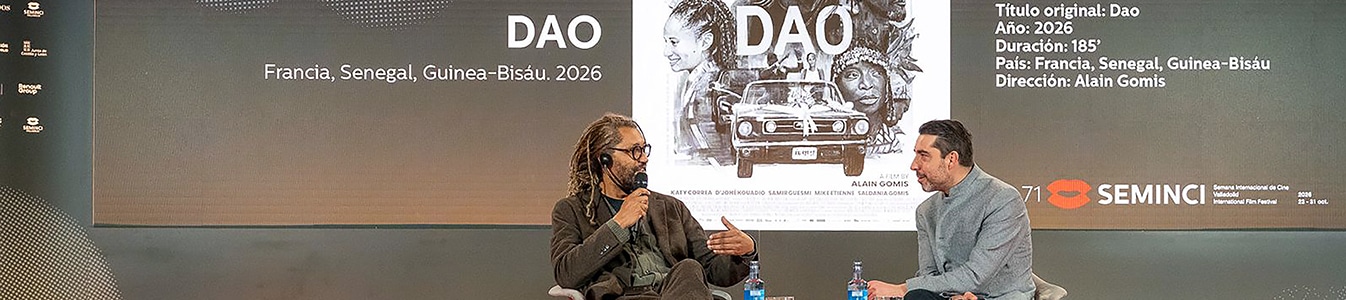
- The French-Senegalese director is competing in the Official Section with a free-spirited film about family, life and death, straddling two continents.
French-Senegalese filmmaker Alain Gomis has visited Valladolid to present his latest film, Dao, at the 71st SEMINCI. One of the 22 titles competing for the Golden Spike, it is one of the year’s most remarkable cinematic experiences, capturing a life cycle that feels both uplifting and deeply relevant to our times.
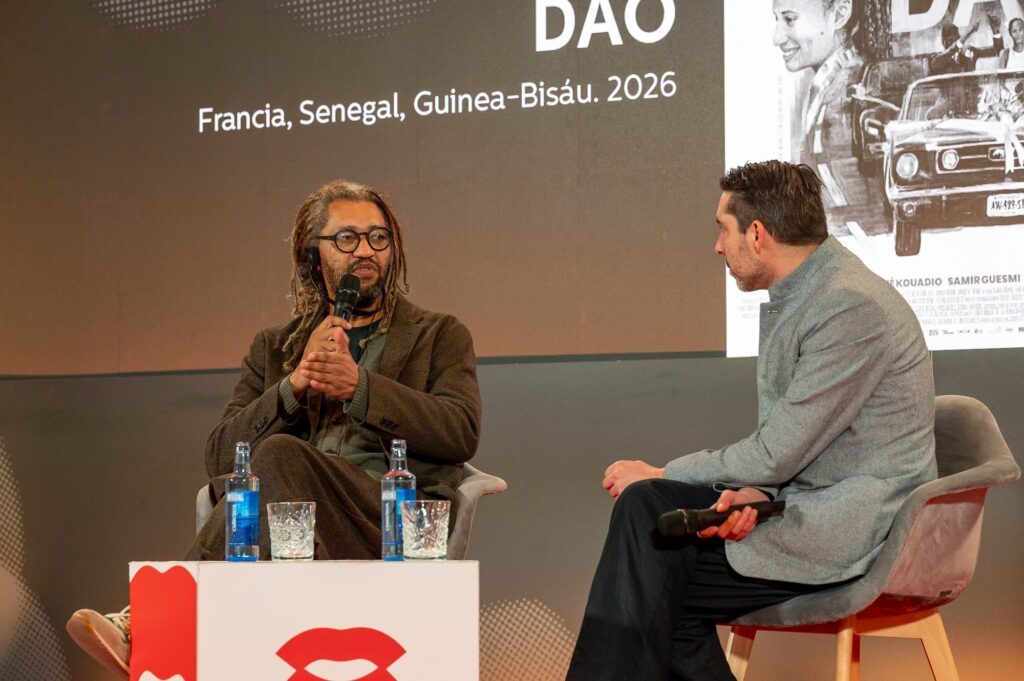
Twenty-five years ago, Gomis made his fiction feature debut with L’Afrance, already demonstrating an anti-colonial perspective on African identity and diaspora. With Dao, he continues to explore these themes. “In France, migration policy boils down to asking migrants to leave everything behind and become ‘true French people’. This is absurd, and it is a challenge Europe is currently facing. The continent is made up of many different kinds of people, each bringing their own culture and history. Europe still has a great deal to learn from African people and needs to understand that this is not about domination, but about learning to live together and build a community.”
A Family on Set
Dao follows two celebrations involving the same family in parallel: a wedding in France and a ceremony commemorating the ancestors in Guinea-Bissau. The film moves between the two countries, following its characters with a freedom and intimacy that are reflected in the way it was shot. “I was very surprised to see how open people were and how happy they were to share their lives. It was all thanks to the trust we built among ourselves. Everyone was equal on set, and we had the opportunity to explore questions that people would not normally ask in real life,” Gomis explained.
This imbues the film with an observational perspective that never feels intrusive or detached. On the contrary, the filmmaker explained that he had conceived the project as a collaborative endeavour from the very beginning. “We are dealing with a community that has been affected by the images historically made of them. So, for me, it was essential that they be part of the process and that we develop this kind of collective awareness. We spent a great deal of time together before filming because it was important to build that family. In the end, it was almost like a documentary, where everyone felt free to be themselves.”
A Question of Rhythm
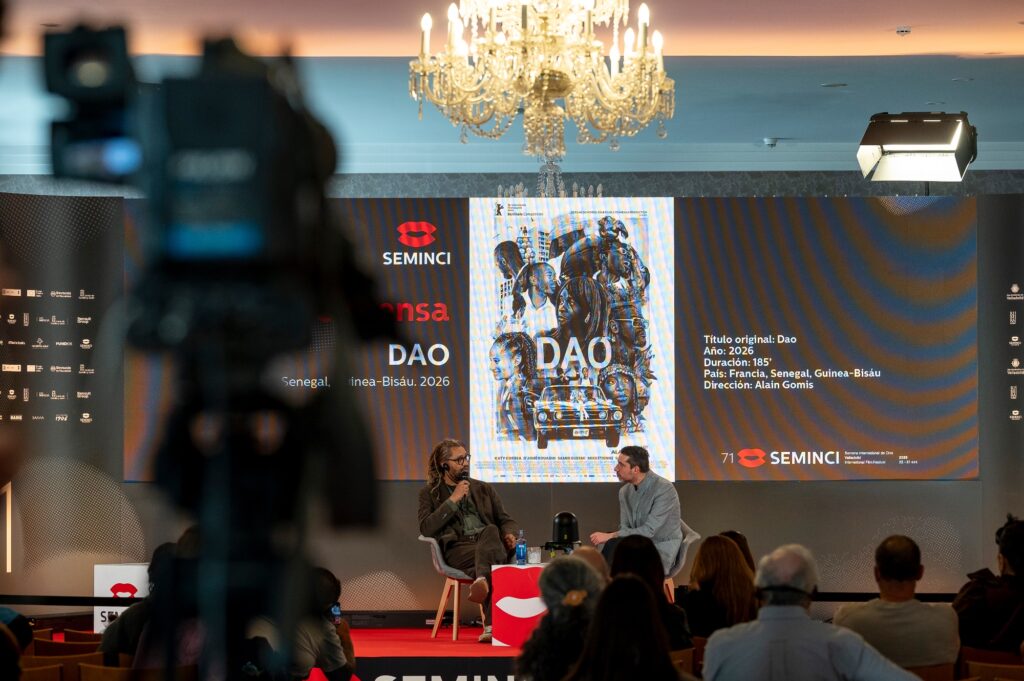
Finding a middle ground between reality and fiction, moving from one place to another, called for a very specific approach to planning the scenes. “Some things were in the script, but many others emerged during filming. We shot very long takes, and often, after five minutes, everything that had been written had already happened. That was where the film became interesting to me, when I could observe how the characters continued interacting freely,” Gomis admitted. “It was as though I were watching the film unfold from the set itself. It was an amazing, and wonderful experience as a director,” he added.
This narrative and formal freedom is one of the defining characteristics of Dao, allowing the story to come to life before our eyes. “When we finished shooting in France, some of the actors told me it was the best wedding they had ever attended. It was as if, after two or three days, everything had become real,” the filmmaker observed, emphasising that the editing process was above all “a question of rhythm”. “The film is made up of small details from which we build a kind of movement, almost like music. For me, the film is like a blues song, where what matters is sharing a moment and feeling that we are part of something greater than ourselves. That is what cinema means to me: being together, embarking on a journey and feeling good,” he concluded.