- A family marked by a single night, a documentary filmed during leukemia treatment, an Athens teenager who hears someone singing, Algiers’ jacaranda trees, and the ruins of Beirut: a day that was also devoted to listening to cinema.
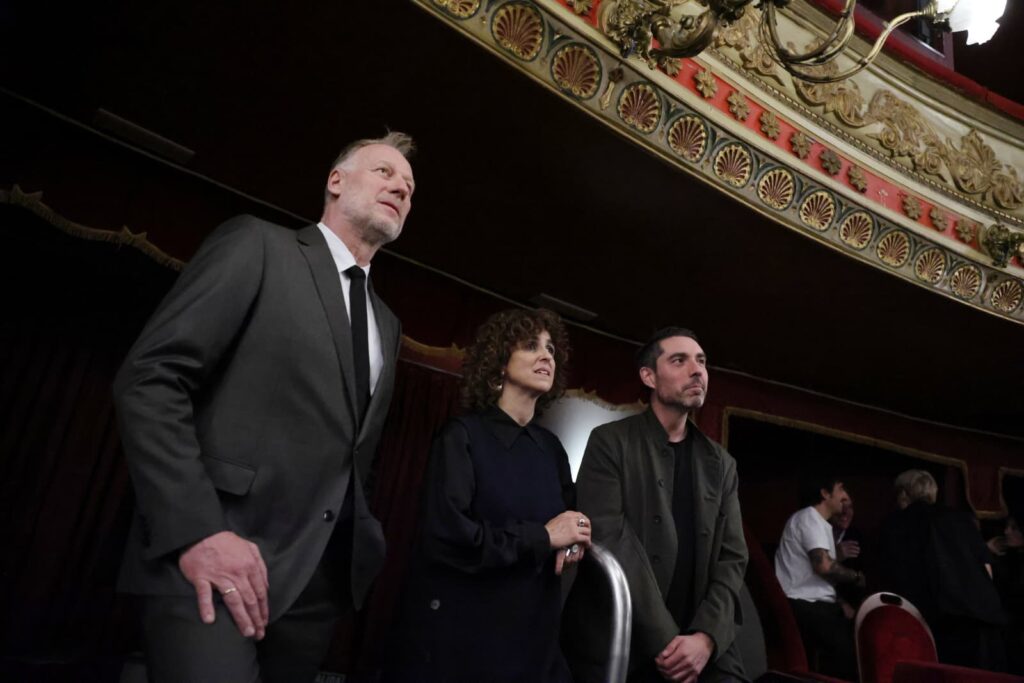
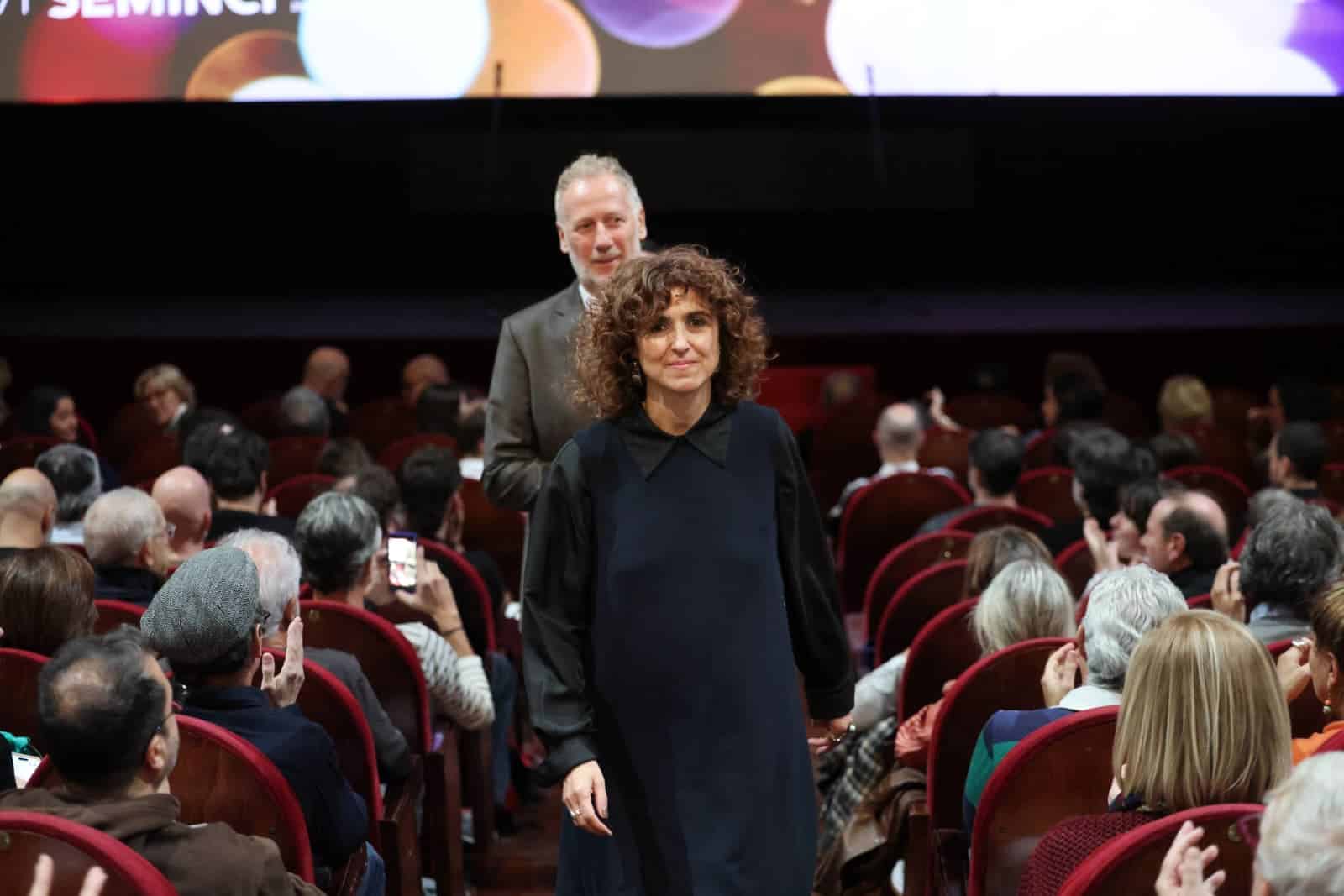
The second day of the 71st SEMINCI continued to fill the festival’s screening rooms with voices from the world of cinema: actor Ricardo Gómez making his directorial debut; Danish filmmaker May el-Toukhy arriving with Venice’s Golden Lion under her belt; Italian director Andrea Pallaoro presenting the final screenplay by Bernardo Bertolucci; Sergio Peris-Mencheta discussing a film that, by his own account, saved his life; and Willie D. Burton, already the recipient of the festival’s Honorary Golden Spike, talking about sound. They were joined by a roster of filmmakers from Thailand, Greece, and Algeria, as well as a Spanish filmmaker’s perspective on Beirut. Together, they filled the Meeting Point, Time of History, and Alchemies sections with journeys, dreams, and cities in ruins.
Official Competition: families, memory, and a final screenplay
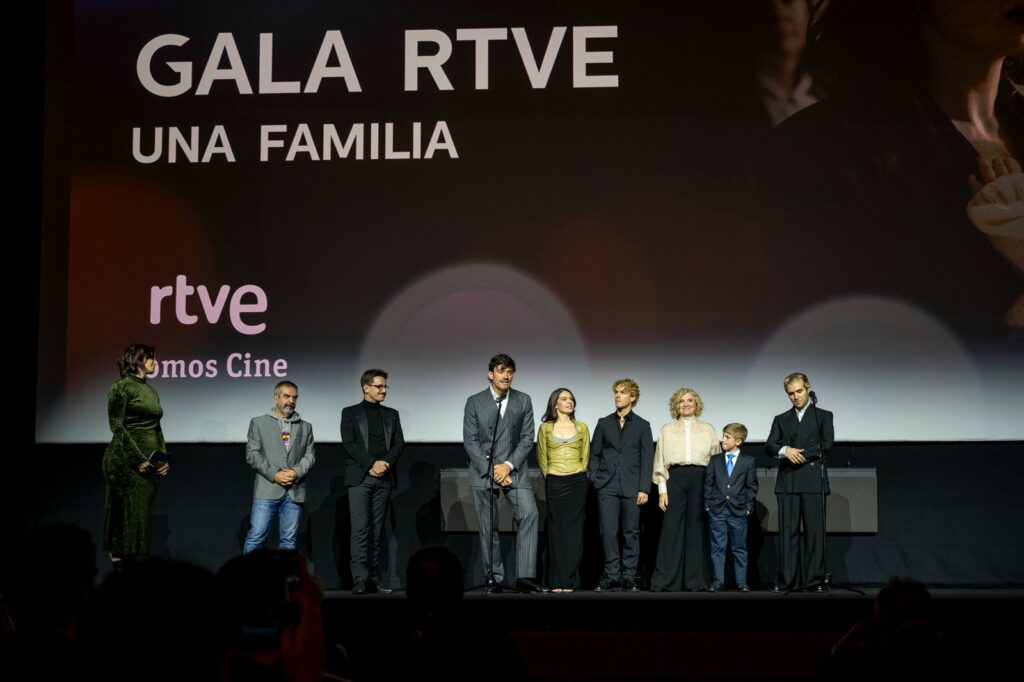
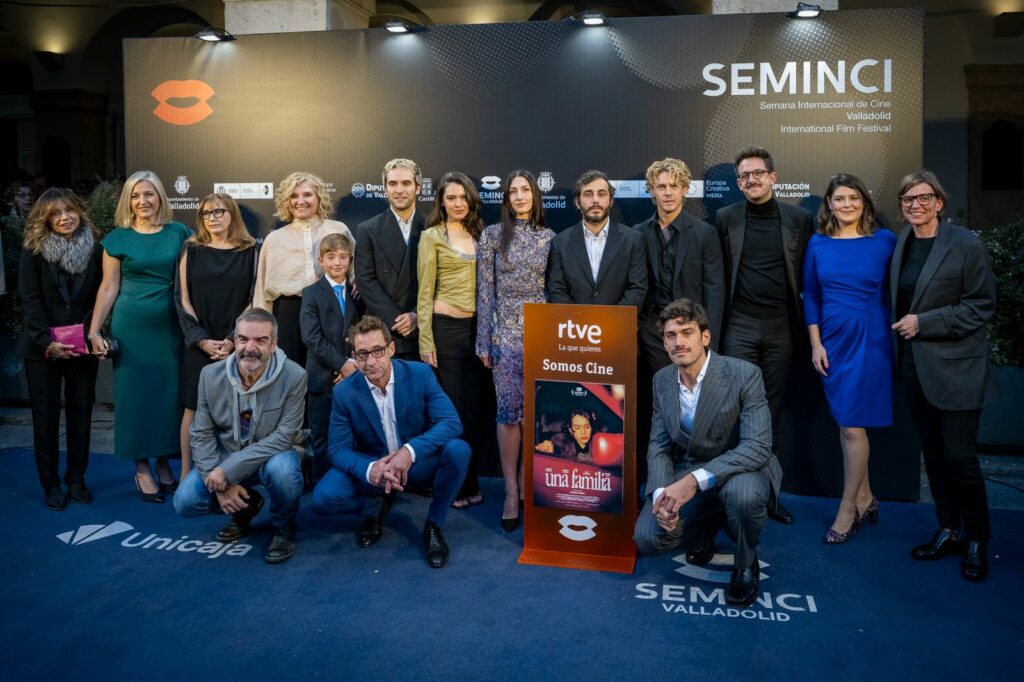
Ricardo Gómez premiered his debut feature, Una familia, in a world premiere out of competition, alongside Claudia Traisac, Patrick Criado, Ana Wagener, and producer Diego Betancor. His story, about a father, a mother, and a son whose lives are marked by a single night, stems from the conviction that, as he put it, “the cinema I like most is cinema that has a connection to the person who makes it.” Shot on 16 mm film, the movie explores 1990s Madrid through three timelines. Wagener, who won a Goya Award for La voz dormida (The Sleeping Voice), joked about the demands of the screenplay: “It felt like a Swedish film.”
Danish director May el-Toukhy presented Woman Unknown, winner of the Golden Lion in Venice and a contender for the Golden Spike. The film portrays women in postwar Denmark who were punished for having relationships with German soldiers. “In a way, we rewrite history to adapt it to our collective identity and regain our self-respect,” she said. In her view, the issue remains relevant today: “Women’s bodies are still a battlefield.” Speaking humorously about the award, she warned: “Winning one of the major European prizes can be the fastest route to bankruptcy.”
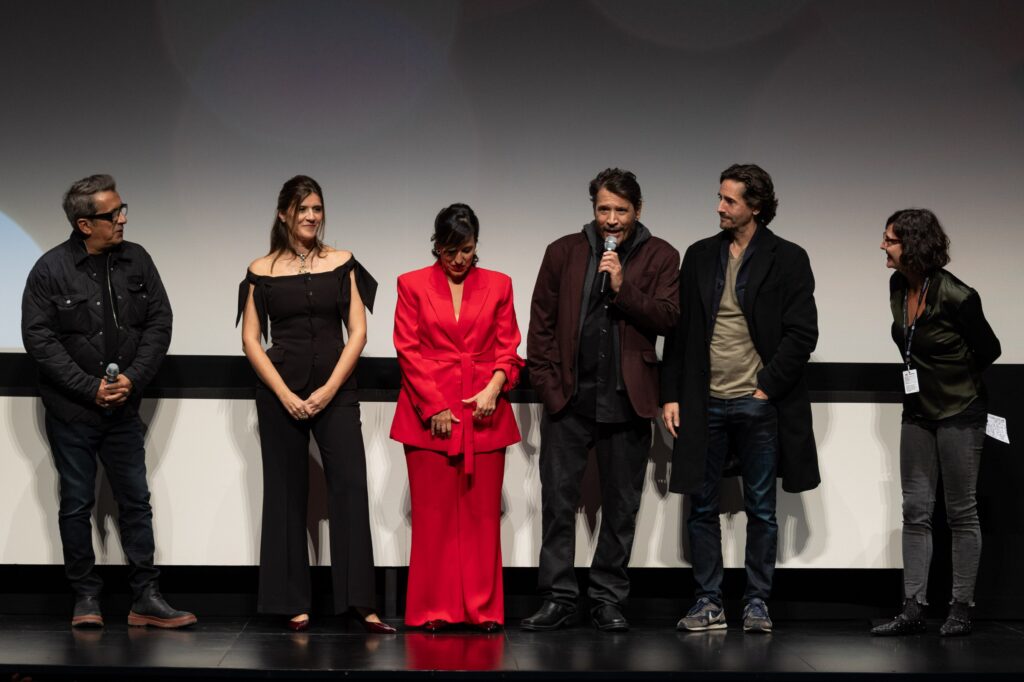
Andrea Pallaoro is competing with The Echo Chamber, based on Bertolucci’s final screenplay and starring Luca Marinelli, Alicia Vikander, and Susan Sarandon. “I knew I had to be as honest as possible, and that meant bringing my own sensibility and vision to Bertolucci’s screenplay,” he explained. Of Sarandon, he said: “Working with her has been the greatest honour of my life.”
SerYo: the film Sergio Peris-Mencheta calls his salvation
The documentary, co-directed by Peris-Mencheta, his wife Marta Solaz, and Verónica Díaz Pérez, received its world premiere in the Special Screenings section. It follows Peris-Mencheta during his cancer treatment as he remotely directed rehearsals from Los Angeles for 14.4, the play he shares with Juan Diego Botto. “When you see the wolf’s ears, you have little to lose and a lot to gain,” the actor and director said. “This film has been my salvation.” Producer Andreu Buenafuente described it as a love song to theater and, in his words, “a documentary that should be shown in drama schools to demonstrate what it means to love art.”
Listening to cinema: Willie D. Burton and Alejandro López
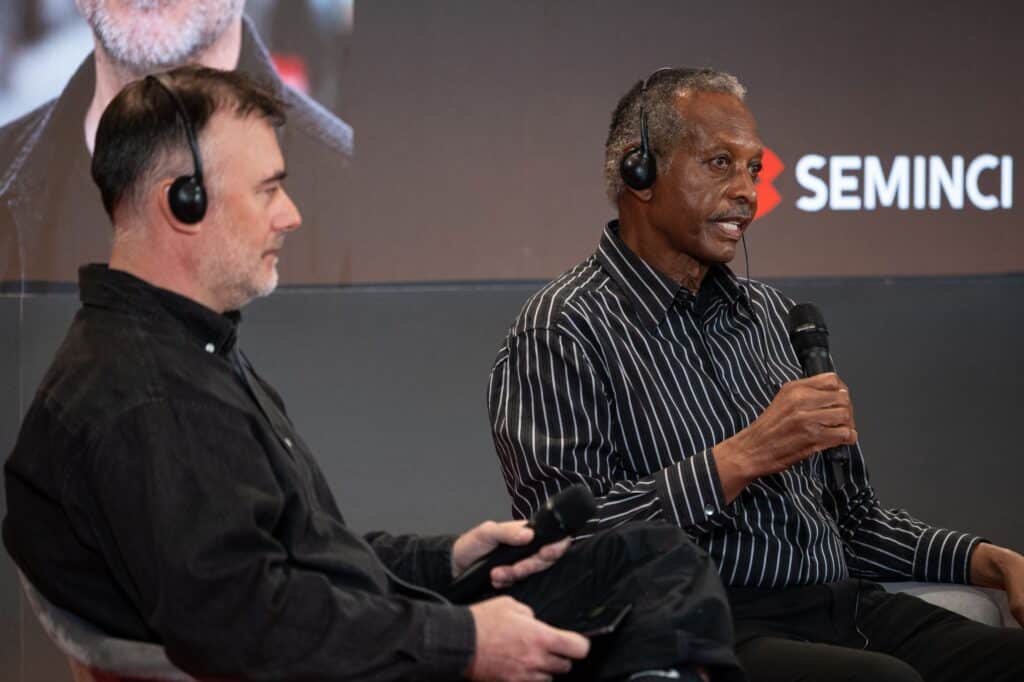
The ‘Thinking About (and Listening to) Cinema’ series opened with a conversation moderated by Javier H. Estrada between Burton, sound engineer on The Odyssey, and Alejandro López, from La bola negra. López recalled that José Luis Cienfuegos, through his programming in Gijón, was the person who introduced him to Kaurismäki and Kiarostami. Burton, meanwhile, called for greater recognition of his profession: “We need to make sound as important as the image.” On artificial intelligence, both agreed that the human element would remain indispensable. “Recording sound is like performing a role; you always need a human component.”
Dreams, temples, jacarandas, and ruins: Meeting Point, Time of History, and Alchemies
In section Meeting Point, the Greek filmmaker Jacqueline Lentzou presented her second feature, A Day in the Life of Jo: Chapter Phaedra, winner of the Best Director award in the Orizzonti section at Venice and a co-production between Greece, Germany, and France. For Lentzou, cinema begins long before a film reaches the screen. It emerges from an intuition, an image that persists, or a dream demanding to become a story. She admitted that she interpreted the award as a sign from the universe, confirming that the project needed to move forward. The film follows Jo, a 15-year-old girl going about an ordinary day in contemporary Athens amid family conflicts and indifference, until she hears Phaedra, a classmate, singing. That encounter opens the door to an experience that transcends everyday life, taking this intimate portrait of adolescence into poetic and surreal territory. Lentzou did not consider the lack of funding a reason to give up, summing up her philosophy in one sentence: “Money isn’t what makes films. We do.”
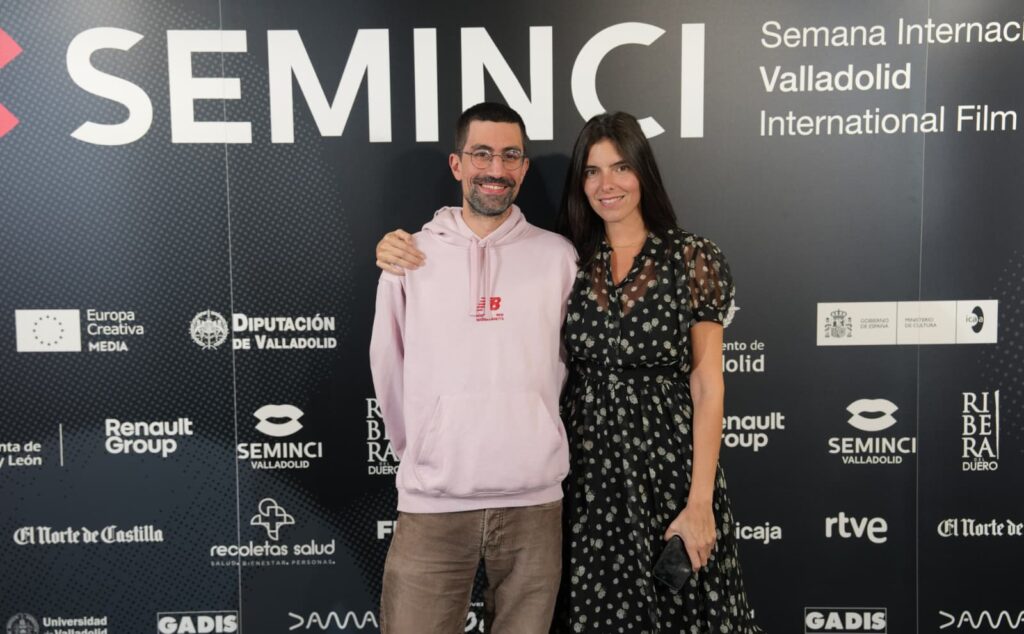
Thai filmmaker Sompot Chidgasornpong presented 9 Temples to Heaven, a film rooted in his own family.“The idea comes from our family’s experiences, specifically those of our grandmother, and from everything we have experienced together,” he explained. The nine temples in the title reflect a custom: “People visit nine because it’s a lucky number, practically sacred in Thailand.” What viewers see, he insisted, is real: “There is no idealization.” On the tension between faith and commerce, he was understanding: “The people who run the temples commercialize everything they have, objects and so on… but it’s a matter of survival, of keeping the temples going.” The film also enters the family home, where relatives discuss how to care for the elderly and a grandmother with dementia raises a fundamental question: “Even when she is ill, shouldn’t she also be given a voice?” His wish for audiences is simple: “Deep down, all human beings are alike, whether Western or Eastern, when it comes to family.”
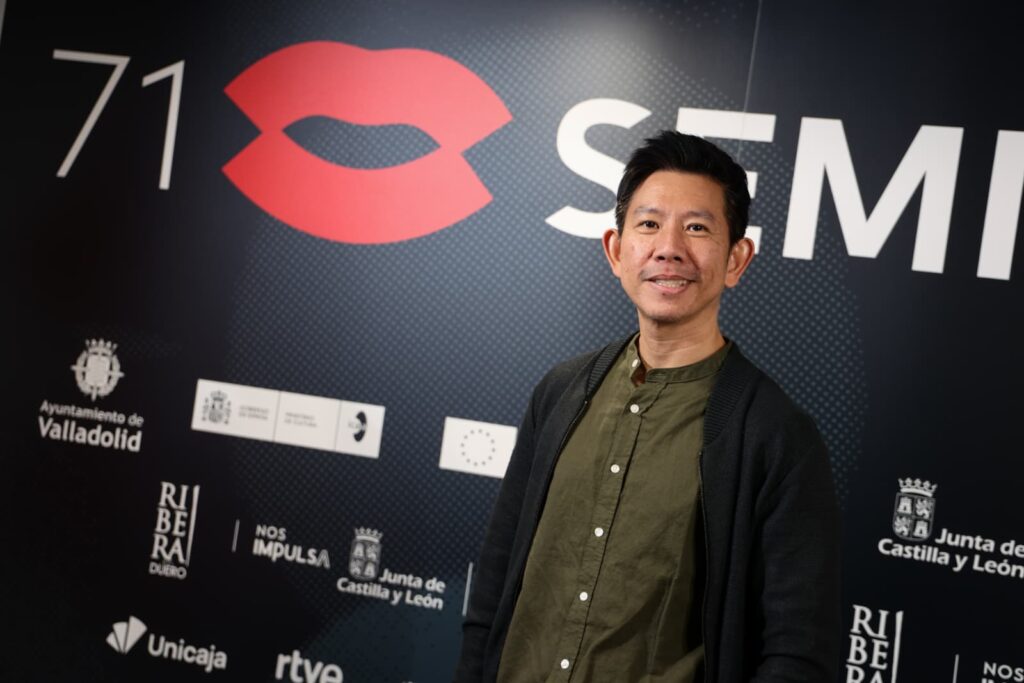
In Time of History, Algerian filmmaker Hassen Ferhani introduced Alea Jacarandas with a welcoming anecdote: “When I arrived, I found similarities between Algiers and Valladolid that may stem from Cervantes having passed through both cities.” The film grew out of a personal need. “The idea came from the need to talk about my life and my father’s passion for the lilac color of jacaranda trees,” he explained. It is a tribute to that passion: “When he passed away, I had to carry on his legacy. It was a shared project, and one of the things that united us was the jacarandas.” Through these trees, Ferhani explores resilience and hope, reflecting on conversations with his father about seeking a better life. He also seeks to offer a perspective that looks “upward, from a higher vantage point.” He hopes audiences will leave wanting to visit Algiers, “but in a way that differs from that of the usual tourist, the one who never stops to take a closer look.”
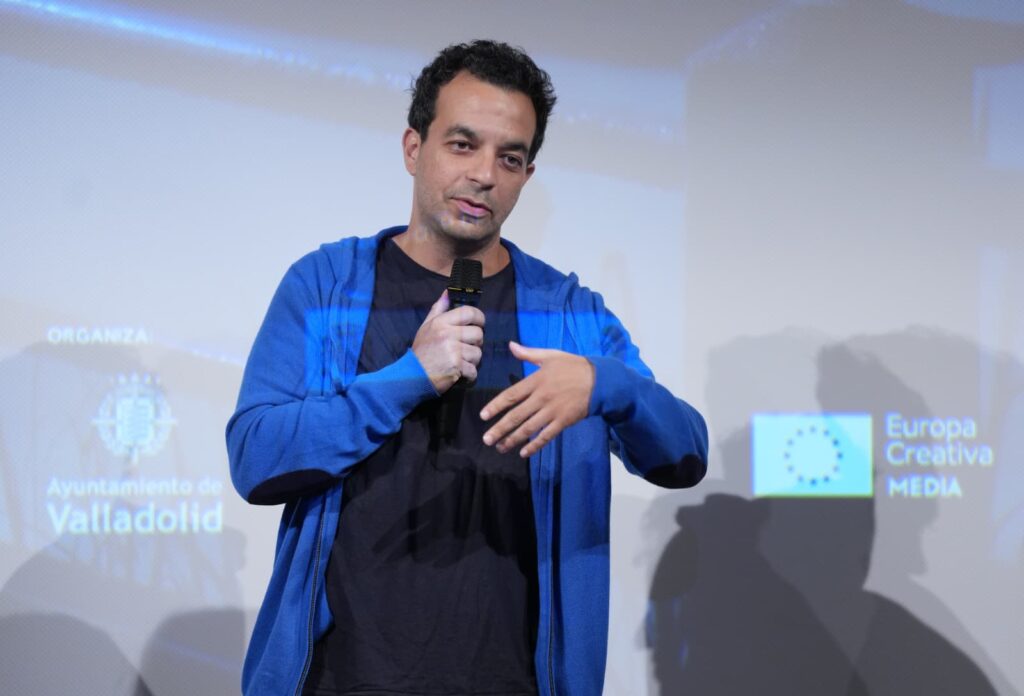
In the Alquimias section, Irene Bartolomé presented Dream of Another Summer, which she described as “cinematic archaeology.” “You can’t see it, but you can feel it,” she said. The film is an existential journey through Beirut, seen through Alicia, a fictional character who moves between the inner and outer worlds. Bartolomé chose a European foreigner as her protagonist for a practical reason: “She helps us look and pay attention to the details, something people who live there all the time don’t usually do.” She wanted to capture the year following the 2020 port explosion and the pandemic, portraying the population “as it is: Mediterranean.” Of the city, she said: “Beirut endures because its citizens accept that this is what their Beirut is like. It has been built on ruins, and those ruins on top of other ruins. It brings to mind the idea of ‘Rome, the Eternal City’—but eternal because it is built, destroyed, and built again.” The greatest challenge was securing funding. “In Spain, I’m a Spanish woman asking institutions for money to talk about Beirut, and in Beirut, I’m a Spanish woman who wants to talk about Beirut. It felt a little strange.”
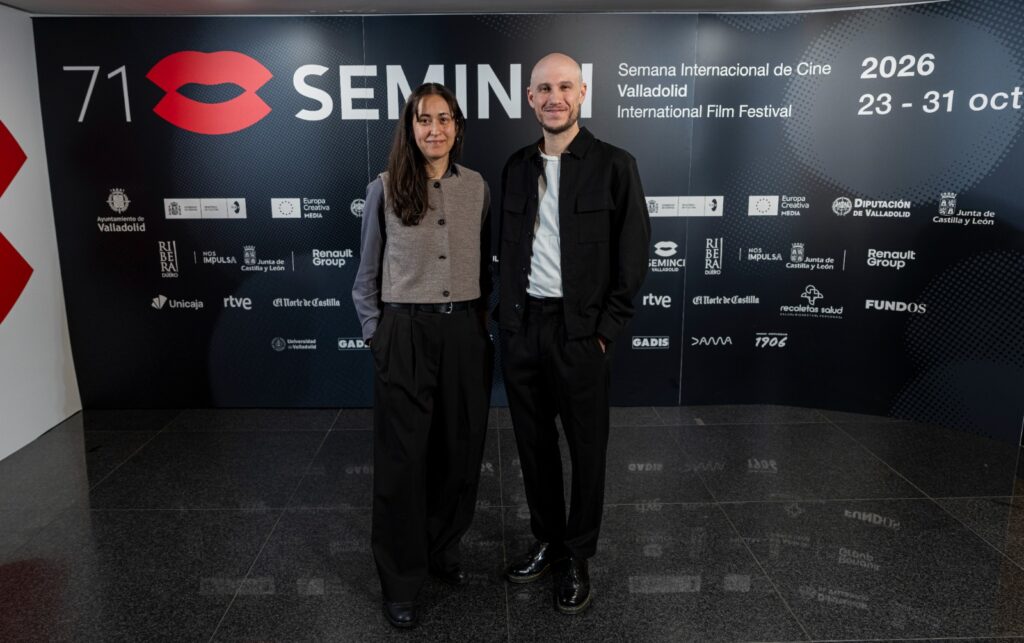
Filmmaker Marc Ferrer presented Cinemanía, a surrealist ensemble comedy with satirical humour that weaves together stories of love, obsessions and personal conflicts, with cinema as its common thread. The film reflects on human relationships, the pursuit of happiness and the contradictions of everyday life. Ferrer acknowledged that the film is highly autobiographical and explained that he wanted to look back on his recent years as a filmmaker while also parodying the difficulties and peculiarities of making films outside the conventional industry, within the underground scene. He also admitted that he finds it difficult to imagine a film with a single protagonist, as he might get bored. One of his main motivations, he said, is to have fun, and he enjoys introducing fictional elements into everyday settings, blending reality and imagination. The black-and-white cinematography reflects the protagonist’s depressed state of mind, with Woody Allen’s Manhattan among its key references. Ferrer described the film as a work capable of making audiences both laugh and cry, «a love letter to cinema».
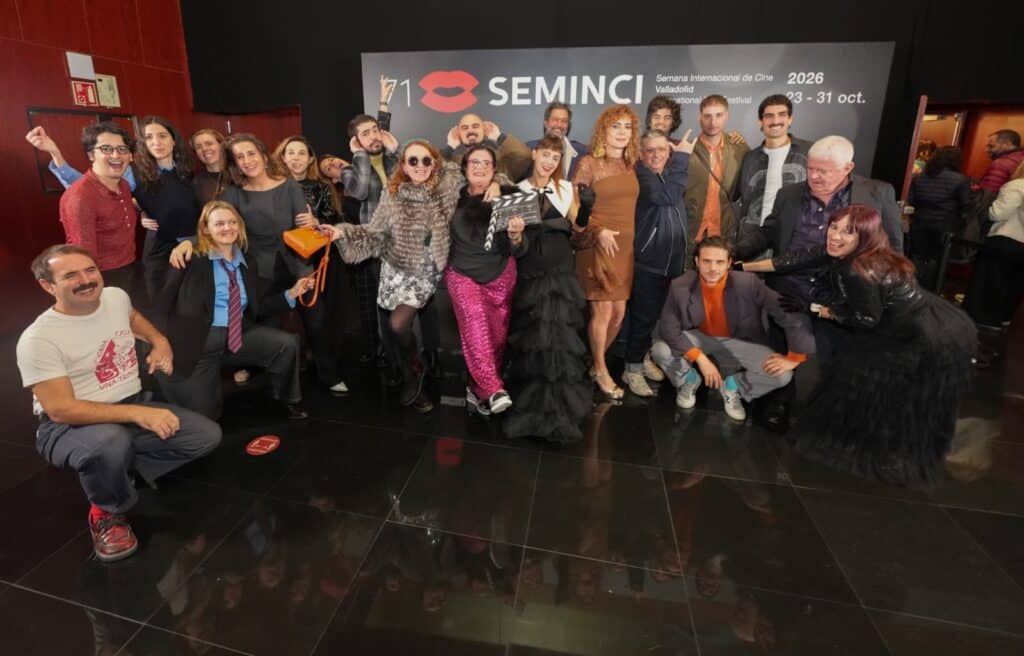
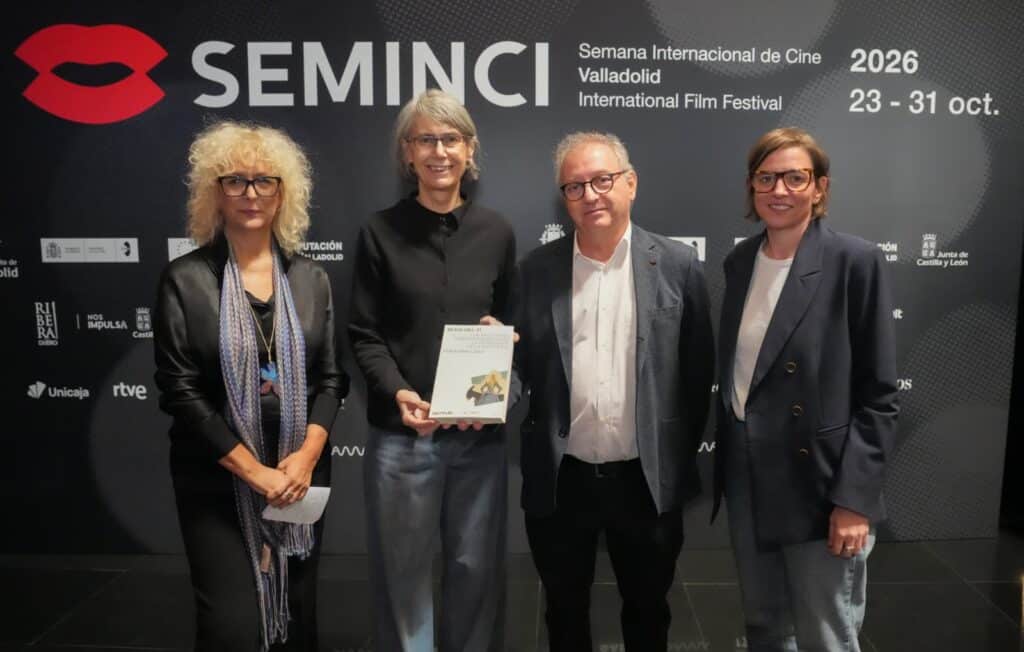
Saturday’s programme also included the presentation of Hijos del 27. Los escritores cinematográficos de la generación de la República, the latest book by Fernando Lara, who directed Seminci from 1984 to 2004. The event formed part of a special session of «Memory and Utopia», dedicated to the connections between cinema, literature and the avant-garde in Spanish culture during the 1930s. The book was presented by Valeria Camporesi, director of Filmoteca Española; Maite Conesa, director of Filmoteca de Castilla y León; Raúl García Bravo, publisher at Saco Roto; and Mariona Viader, co-director of Seminci.