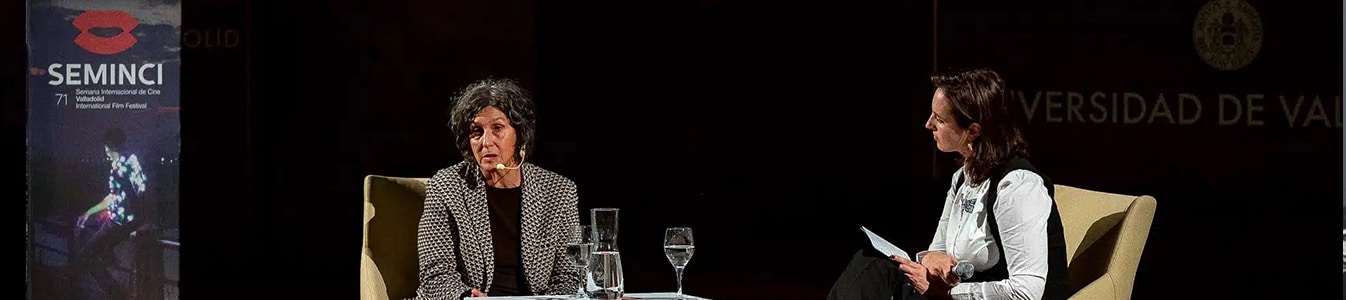
- An essential and multifaceted figure, Mínguez has shared her experiences as an actress, director, screenwriter, producer and novelist with audiences in Valladolid.
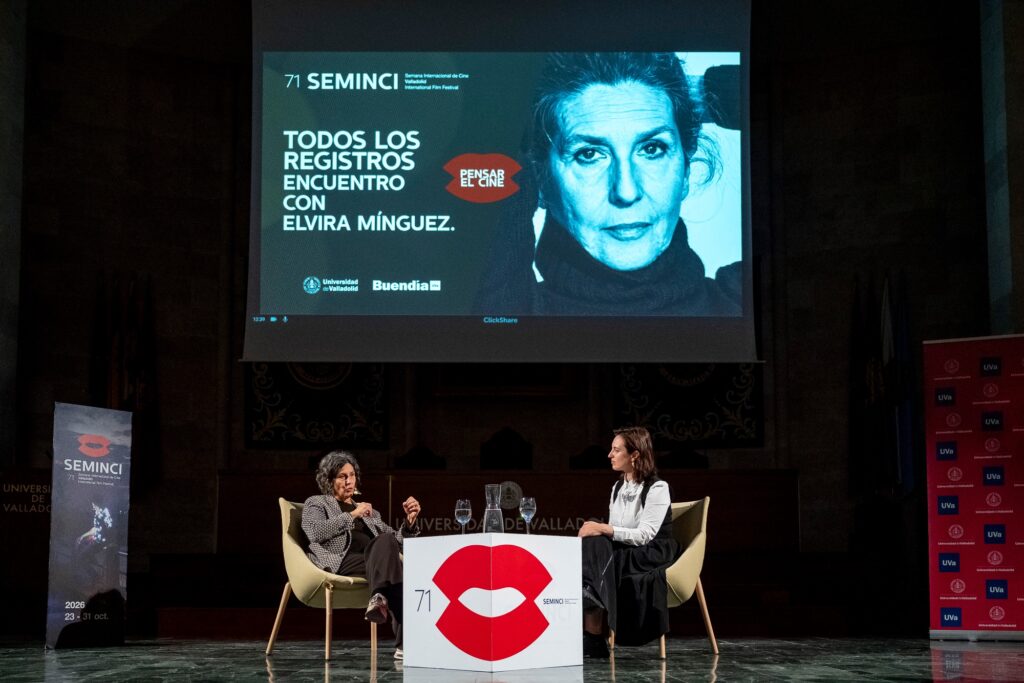
The Paraninfo at the University of Valladolid hosted a new event in the Thinking (and Listening to) Cinema programme. Elvira Mínguez was the guest of honour at this session, entitled All the Roles, which offered audiences an insight into the career of a key figure in Valladolid’s cultural life. Mínguez, who has received the Honorary Spike Award at the 71st edition of SEMINCI, shared her personal and professional journey from theatre and cinema to literature. “It’s an emotional day, full of nerves and surprises. Although I left for Madrid many years ago, this will always be my home,” she admitted.
A vibrant beginning
Mínguez studied acting at the Valladolid School of Dramatic Art before going on to perform in productions such as Romeo and Juliet (1989), La cacatúa verde (1990) and Carro de heno (1991). From there, she made the transition to cinema, earning a Goya Award nomination for Best New Actress in 1994 for her performance in Imanol Uribe’s Días contados. “It was like being thrown straight into the jungle. I joined a programme called ‘New Faces’ and started going to auditions. They sent me to audition for Días contados, where I went up for one role but ended up playing another.”
From that moment on, Mínguez’s acting career took off. She went on to win a Goya for Tapas (2005) and work with acclaimed filmmakers from Spain and abroad, including Enrique Urbizu, the Javis, Asghar Farhadi and Steven Soderbergh. It was an exciting time to be starting out, surrounded by a new wave of directors eager to reinvent Spanish cinema. “The way films are made now is completely different. HD hadn’t arrived yet; everything was shot on film. That changed the way we worked: there were a lot of rehearsals because the stock was very expensive. Only once everything had been rehearsed, both the performances and the technical aspects, did we start shooting. The whole process has changed enormously. It may sound a little old-fashioned, but I think things were done much better back then,” she reflected.
Looking back
Over more than three decades, Mínguez has explored a wide range of creative roles, working as a screenwriter, director and producer and, more recently, publishing two novels: La sombra de la tierra (2023) and La educación del monstruo (2026). “If someone had told me that doors would still be opening at nearly sixty, I wouldn’t have believed them, but it’s true. I apply what I’ve learnt in cinema to my writing; it has given me discipline. All my memories of myself are associated with books, and I realised that I was extremely happy when I was writing.”
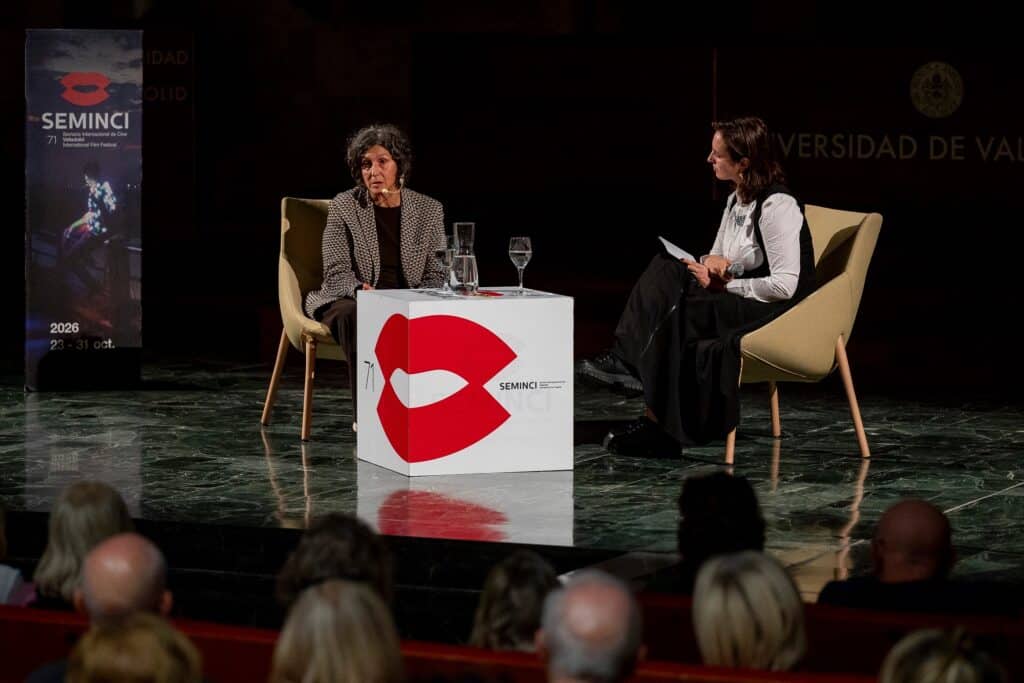
Her novels explore some of the major themes in contemporary Spanish literature: historical and personal memory. “It’s one of the most important subjects for me. Another is time, and another is fear. Revisiting the past is essential. To understand who we are, we have to look back. That’s why I find the research stage so beautiful: listening to people who lived through those times and creating a kind of ‘invented memories’, as the publishing house has called them,” the artist explained, discussing her creative process. She added: “Every character I write has something of me in them. All the stories are mine, even if they haven’t happened to me directly. I think that, deep down, what we are always doing is telling our own story.”
Mínguez continued to explore these ideas, defending the need to tell other stories that have been forgotten or overlooked by official historical narratives. This perspective runs through both her novels and her acting career, in which she has had the opportunity to portray a variety of historical figures. One role that stands out is that of Clara Campoamor in the television film La mujer olvidada (2011): “I realised that many people didn’t know who she was, beyond knowing that she was the woman who secured the right to vote for women. I found that quite astonishing. Campoamor is a fundamental figure and one of the great forgotten women of history. She was ahead of her time, a humanist and even a feminist. But she didn’t see feminism as a philosophy so much as an experience. I think we have a great deal to learn from her today.”
She concluded: “The fact that it was only in 2021 that we began to recognise the importance of female role models seems like a joke. It’s as though we take three steps forward and four steps back. That’s how they keep us where we are.”