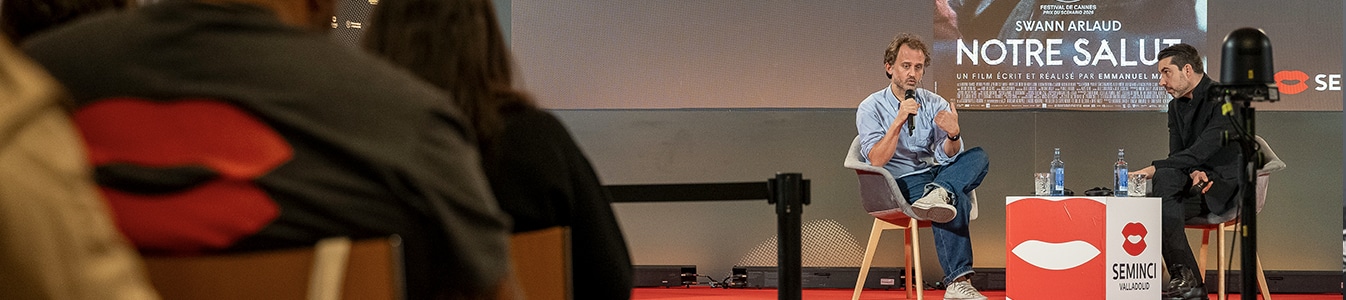
- The French filmmaker has presented his new film in the Official Section of the 71st edition of SEMINCI.
The 71st edition of SEMINCI has hosted the Spanish premiere of Emmanuel Marre‘s second feature film, A Man of His Time, which explores a subject rarely examined in French cinema: the Vichy government during the Nazi occupation. Against this backdrop, the film tells the story of Henri Marre, a man who finds an opportunity for social and economic advancement while having to deal with the circumstances facing his family.
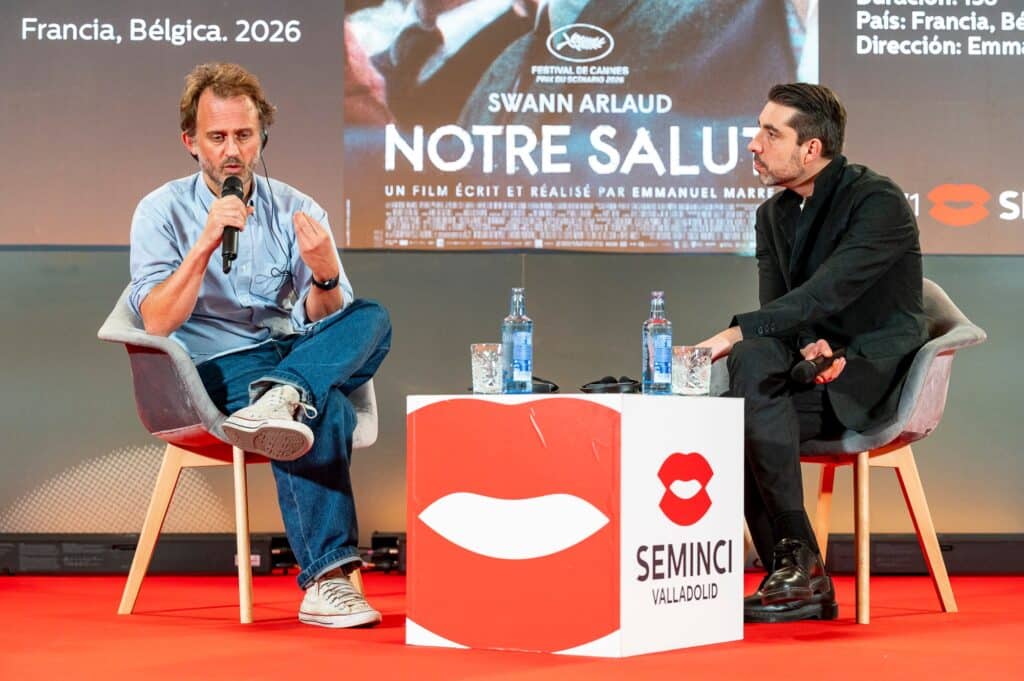
The film originated in correspondence between the director’s great-grandparents, which meticulously documented the family’s everyday life during that period. “The most interesting thing is that my great-grandfather never actually explained what his job at the unemployment office involved,” the filmmaker explained. This initial spark led Marre into an extensive process of historical research, which confronted him with two aspects of France’s past that he had previously been unaware of: “The Vichy regime was built on a system in which the economy always came before human beings. On the other hand, it was a real shock to discover that, without any pressure from the Germans, France had created a system of forced labour camps for foreigners.” He added that he could not understand how his great-grandfather could have been part of this state machinery of war crimes.
The scriptwriting process was deeply shaped by this research in national and local archives, particularly those in the city of Limoges. “We approached the writing as though we were putting together an archival file. The script contains a whole range of different documents, which are not necessarily connected to one another and which come from very different sources,” he explained.
A game between past and present
As Marre explained, the film does not seek to be a historical reconstruction. Instead, it uses a particular cinematic language to make the distance between the audience and the characters apparent. “It was essential for us that audiences should question whether they were in 1940 or in the present day,” Marre explained. To achieve this, he worked extensively on improvisation with the actors and encouraged them not to speak exactly as people would have done at the time, but to use language closer to that of today. “Another thing that struck me about the letters was discovering that the vocabulary and the way unemployment was discussed were sometimes literally identical to the language we use in France today,” he remarked.
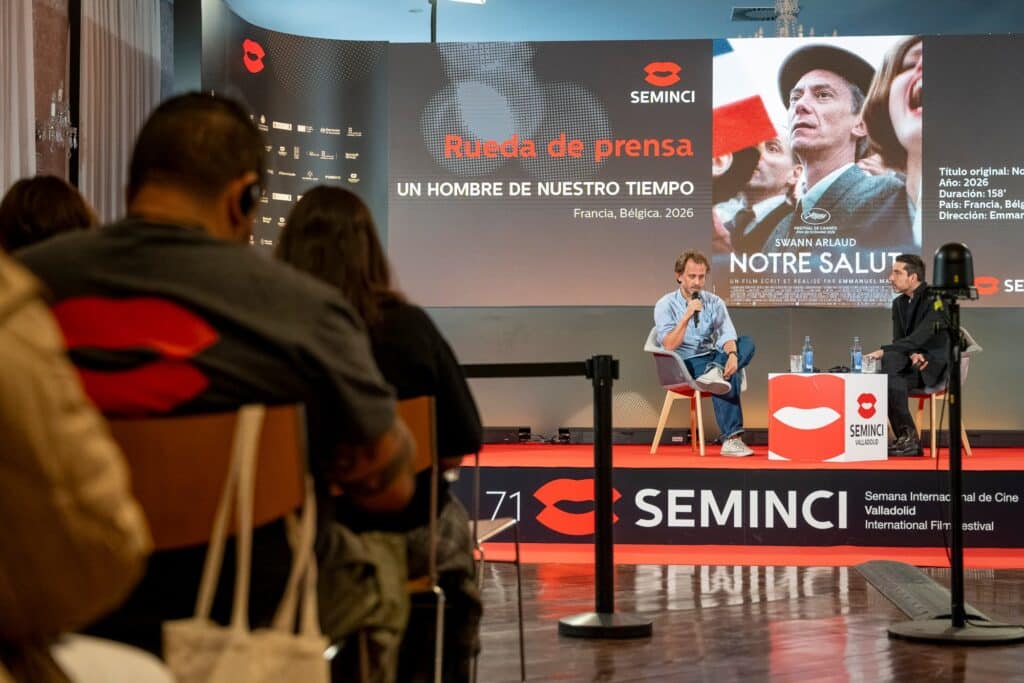
For the filmmaker, it was important to open up a discussion about what happened during those years, but he wanted to approach it through a character who was not driven by violence or hatred. “What is at stake in this film – the slide towards fascism, the slide towards fascist crimes – is fundamental. It was really important to point out that this did not happen exclusively in Vichy in 1940,” he stated.
Several cinematic influences converge in the film, including the French political cinema of Costa-Gavras and Peter Watkins’s projects, which exposed audiovisual artifice to construct their theatrical portrayals of the past. “It was very important that the film should not attempt to conceal the presence of the camera,” he admitted. He also cited Thomas Hatlan and his film Torre Bela (1975), explaining: “I also drew on documentary cinema, specifically the way Hatlan uses a lantern at night in this film.”
He also discussed the tendency of historical cinema to fall into either naturalism or elaborate staging, as though these were the only two options, emphasising that they did not want to pretend that what appears on screen is reality: “This film never claims that what the audience sees is historical truth,” he concluded.
The danger of fascism
Expanding on the film’s themes, the French filmmaker shared his desire to delve into the past in order to reveal many of the dynamics shaping our present, allowing the historical context of the rise of fascism to resonate with the political shifts we are experiencing today. “The character carries the question of political responsibility. Why do these people, who do not entirely believe in nationalism, prefer to throw themselves into the arms of an anti-democratic nationalism?” the filmmaker reflected.
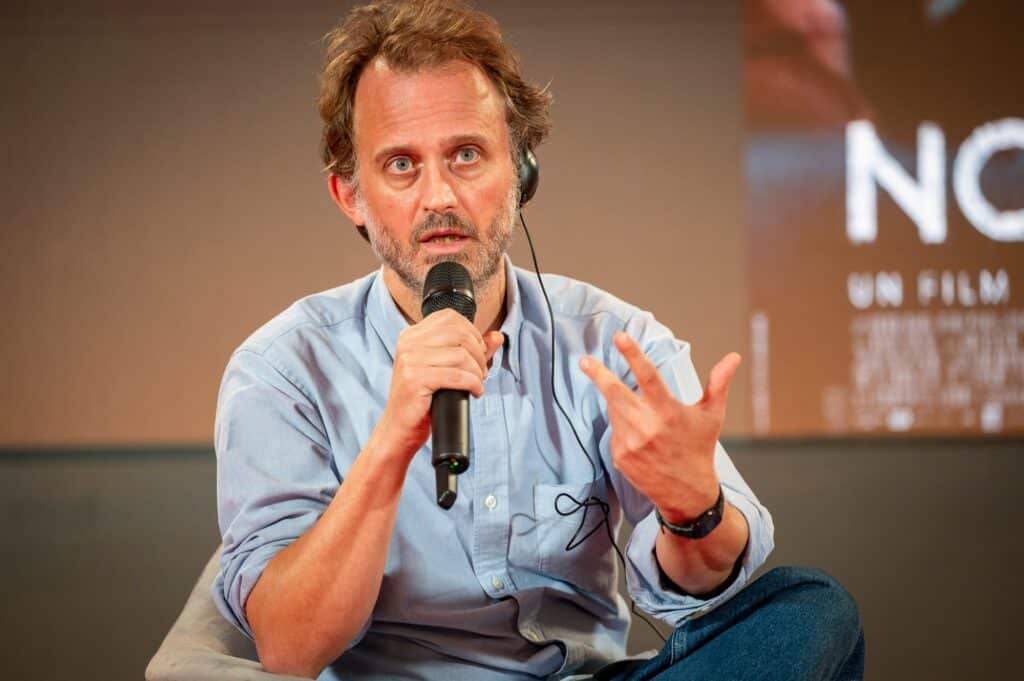
He also discussed the views advocated by his protagonist, who argues that democracy is a scientific mistake on the grounds that not every human being should have the right to vote. “I think that today Henri Marre would have a YouTube channel – the kind of channel run by many right-wing or nationalist influencers – where he would give his opinion on everything.” He added: “I think this is precisely the mechanism the film explores, showing what happens when this fundamental principle of equality is broken.”
He concluded by reflecting on the current situation in France and how he believes many aspects of today’s political climate resemble that earlier period, particularly in the context of the protests that have taken place in recent days. “The film also shows how fascism and authoritarianism do not emerge overnight, but advance step by step, through a series of small gains,” he concluded.