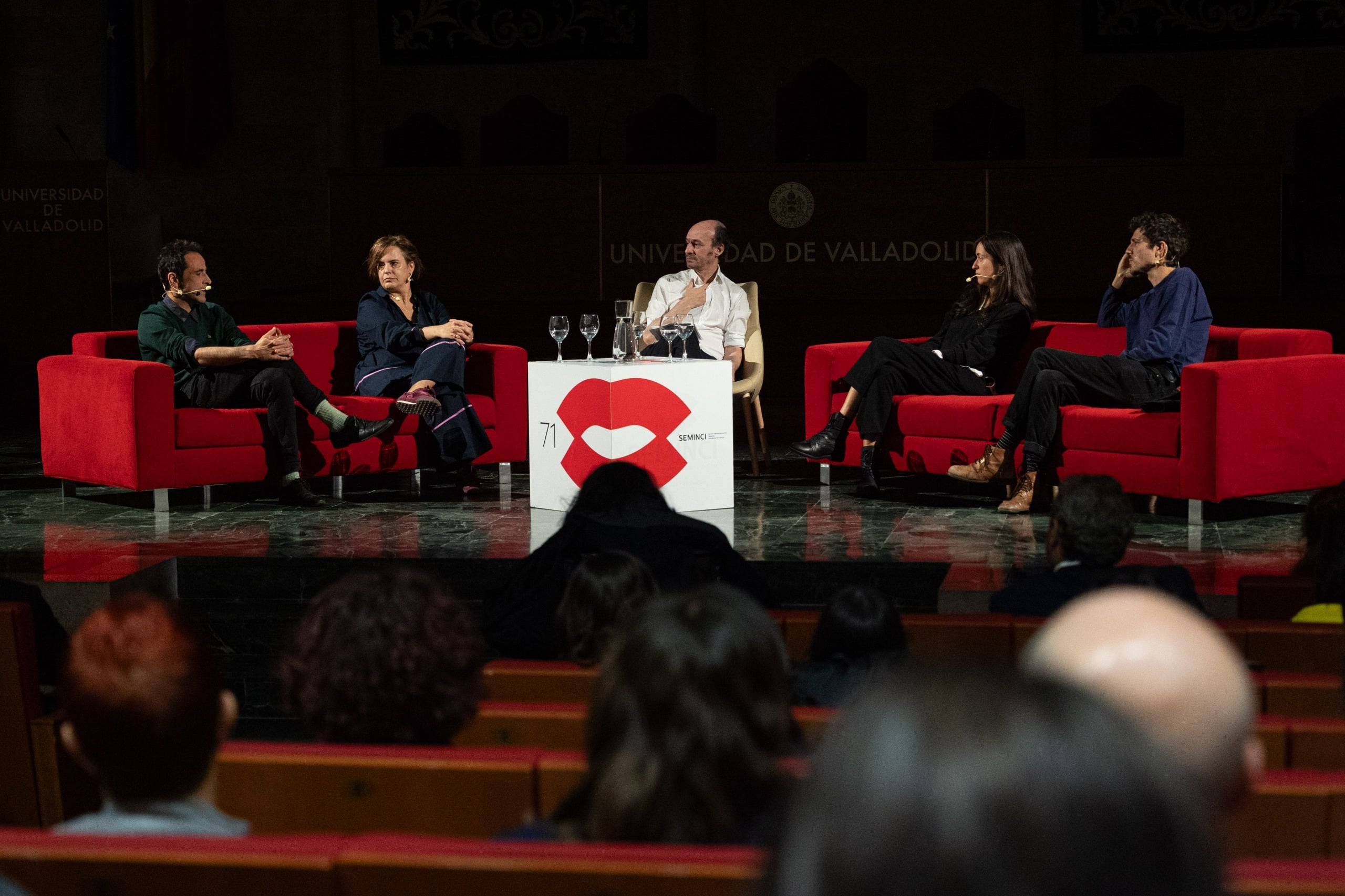
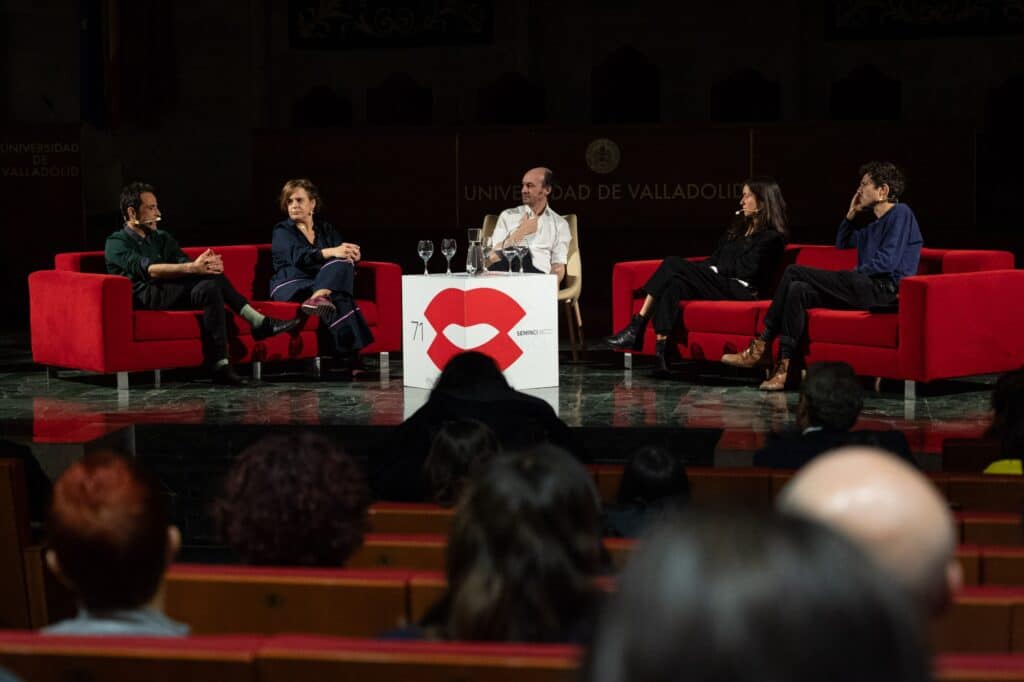
- The 71st edition of SEMINCI hosts a round-table discussion entitled Echoes of Reality: Sound in Non-Fiction, featuring filmmakers Eva Vila, Lois Patiño, Cristóbal Fernández and Irene Bartolomé.
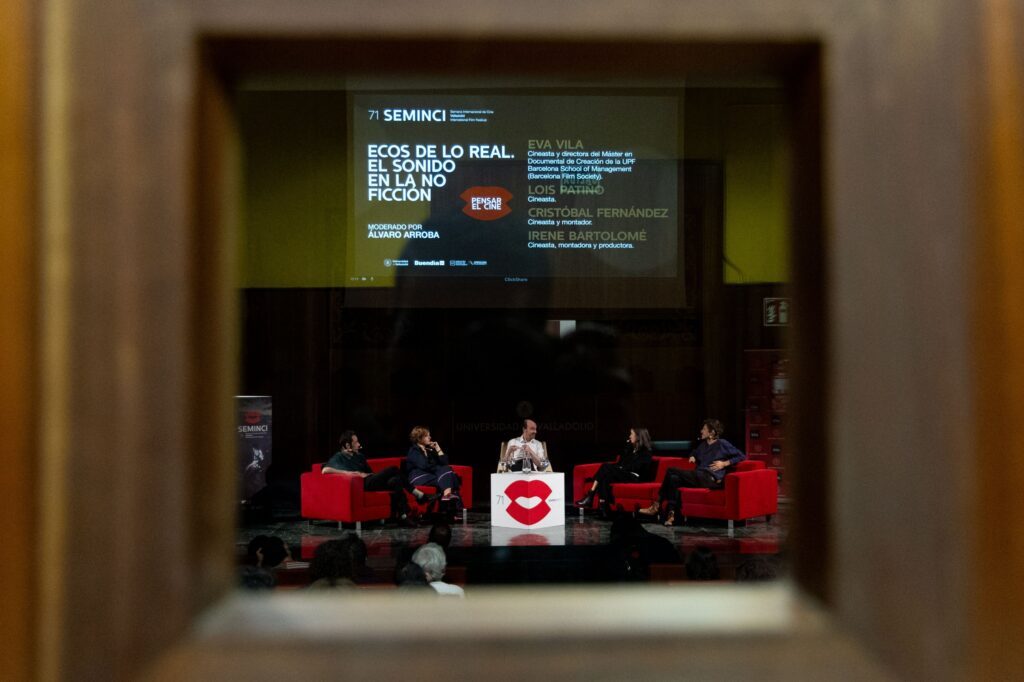
As part of the series of events organised under the title ‘Thinking (and Listening) to Cinema’ at SEMINCI, the festival has dedicated a special round-table discussion to non-fiction, bringing together several filmmakers to discuss the role of sound design in their work and in contemporary documentary filmmaking. The event has united different generations of filmmakers associated with the Master’s in Creative Documentary at the Universitat Pompeu Fabra Barcelona School of Management (Barcelona Film Society), which SEMINCI has honoured this year with the Academic Honorary Spike.
Moderated by Álvaro Arroba, the discussion brought together filmmakers Lois Patiño, Irene Bartolomé and Cristóbal Fernández, alongside Eva Vila, filmmaker and director of the Master’s in Creative Documentary at the UPF Barcelona School of Management (Barcelona Film Society), who will receive the Academic Honorary Spike on Monday.
The conversation explored the participants’ approaches to sound in non-fiction cinema, a field in which the sonic dimension plays a fundamental role in each of their artistic practices. Filmmaker Cristóbal Fernández opened by addressing the preconceptions surrounding sound in non-fiction, which is often understood as something that should be naturalistic and closely tied to the image. “Image and sound always follow different paths. The idea that image and sound should be synchronised in documentary filmmaking is very naïve. They are both recorded and edited independently,” he said.
Training rooted in sound
Irene Bartolomé, who is presenting Dream of Another Summer in the Alchemies section, recalled her time as a student on the Master’s programme and the importance it places on sound in filmmakers’ training. “When I was studying, we were encouraged to think about the final sound design before shooting. I realised that this could completely change the film.” Vila added: “A sound score isn’t like a book; it always contains layers that overlap. In the Master’s sound classes, we say that making a film is about composing, which has a great deal to do with music,” she explained.
Lois Patiño, a former student on the programme and director of films such as Costa da Morte (2013) and Samsara, which premiered at the 68th edition of SEMINCI, discussed his desire to create a meditative experience for audiences through the soundtrack. “In Samsara, I wanted to explore the idea of the invisible, so I came up with the idea of making part of the film something that had to be experienced with your eyes closed,” the filmmaker explained. He recalled the sound-design process undertaken with Xabier Erkizia, during which they explored the Buddhist concept of reincarnation through sounds that translated descriptions from the Tibetan Book of the Dead.
From the shoot to the editing room
The filmmakers discussed the differences between fiction and non-fiction cinema in their approaches to sound, highlighting the potential of a soundtrack to construct an interpretation of reality. “In fiction films, ambient sound is often left very much in the background and not really worked on. When I recorded the voices for the film, what mattered to me wasn’t just the content, but the character of each person’s voice,” Bartolomé explained. She used audio recordings sent to her by various people to build the soundscape of Dream of Another Summer.
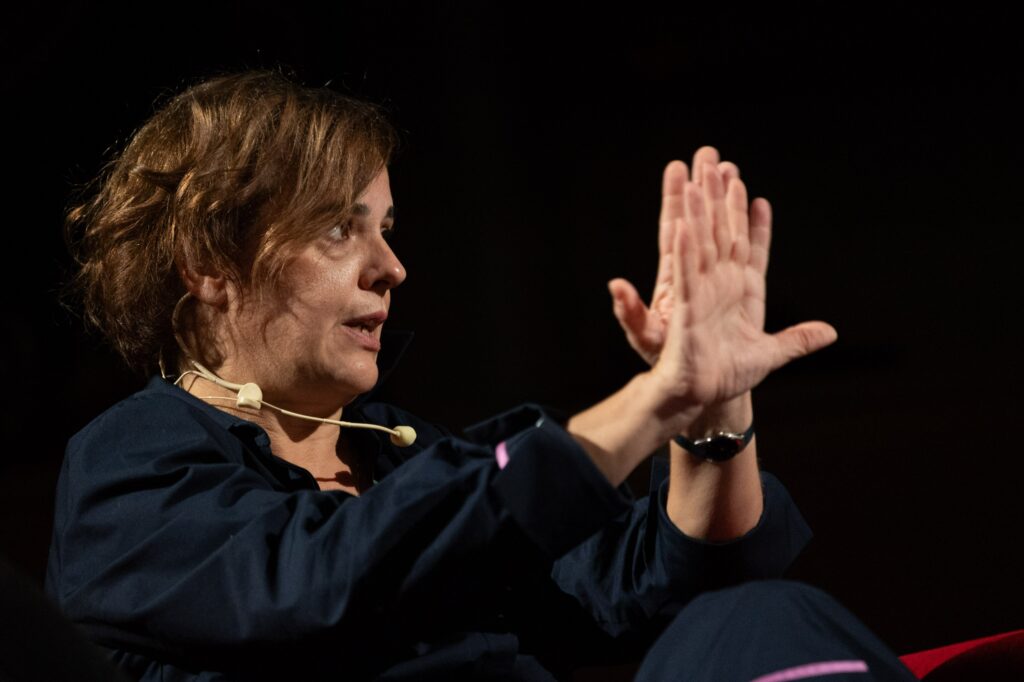
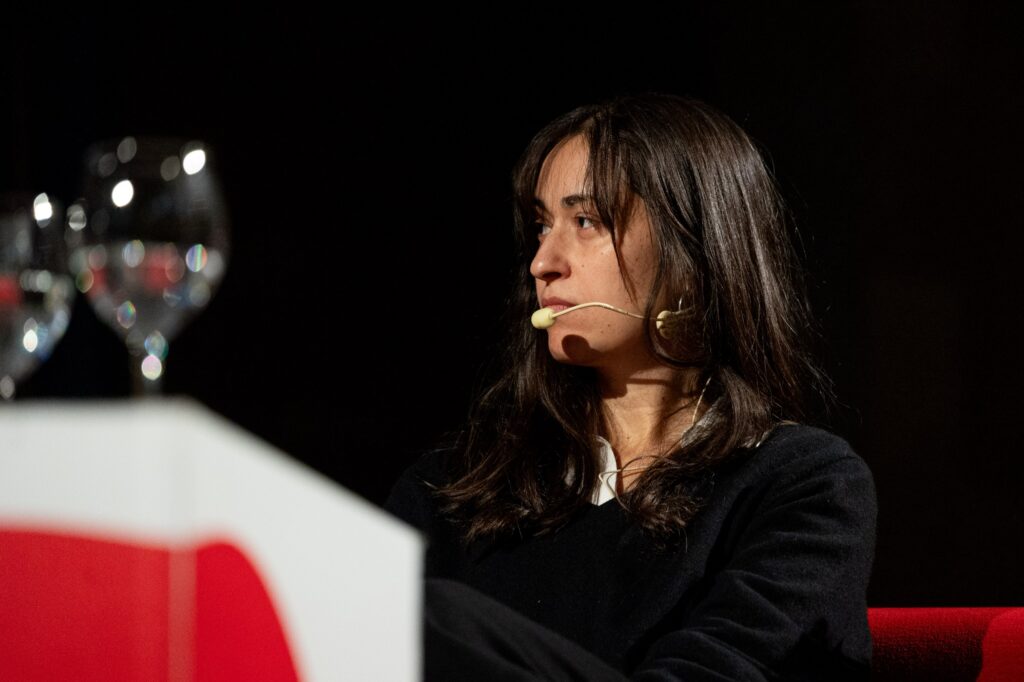
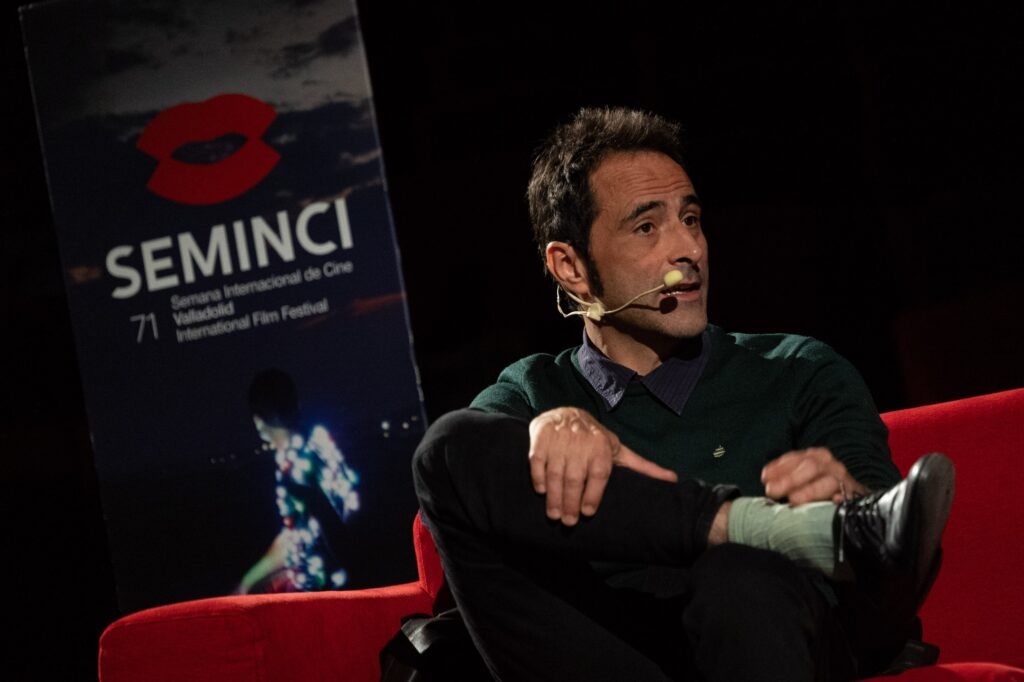
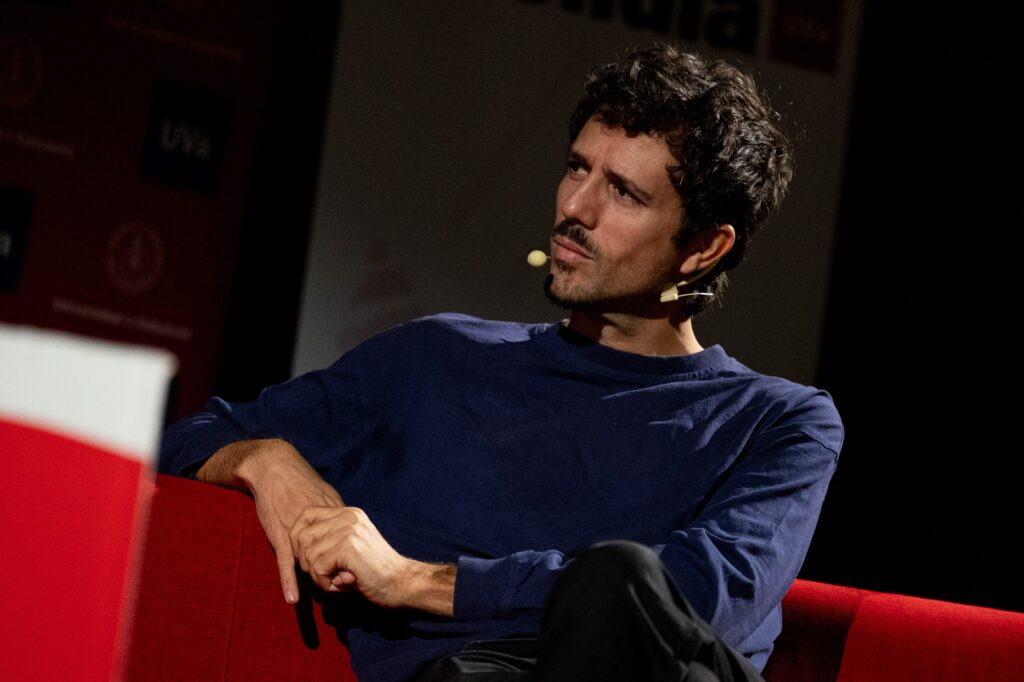
Eva Vila, who has a long career in feature filmmaking in addition to directing the documentary Master’s programme, outlined her approach to sound on set. “You have to arrange the set around the sound. Often, you position the camera first, and that affects the quality of the sound recording,” she said. Cristóbal Fernández, who is also an experienced film editor, having worked on films such as O que arde (2019) and Sirāt (2025), explained the particularities of sound editing on Oliver Laxe’s latest film. “We spent three weeks editing the film in parallel while Kanding Ray brought us sound proposals. Oliver and I have always worked with the idea of escape, because sound allows us to enter images in a different way — in his case, into spiritual worlds,” he concluded.
Patiño also addressed the ethics of using music in documentary filmmaking, explaining how much of his approach to reality is complemented by musical composition. “I use music as a structural element. In Costa da Morte, for example, the musical interludes between acts allowed me to momentarily pull the audience away from reality,” he said. Fernández added: “I used to be more dogmatic. Now I’d love to be able to afford the rights to 20 songs and make a film by mixing tracks like Leos Carax. That’s an approach to editing that I really like.”
Sonic influences
All the participants shared the influences that have shaped their approach to sound in film, identifying the importance of silence as a common theme. “We should all be looking for silence in films, those moments when we can reveal something to the audience. Rohmer spoke about creating spaces that people could inhabit and breathe in, and breathing is something you can hear,” Vila observed. In this regard, Patiño revealed his affinity with the cinema of Nathaniel Dorsky and his ideas about silence as an expressive tool. “Everything that is removed involves a lengthy process of abstraction and ambiguity; empty spaces always create distance from the world. When editing sound, lowering the volume takes you to much more intimate places,” he explained.
Fernández discussed Jean-Luc Godard and the evolution of his hands-on approach to sound during the 1980s and 1990s. “He said he wanted to be able to edit sound with his hands, which is why he used four-track recorders. Johan van der Keuken also worked extensively within the limitations of the sound track,” he noted. Speaking about the making of her film, Bartolomé discussed influences beyond cinema that proved essential in shaping the soundscape of Beirut’s streets. “There is a thriving experimental electronic music scene there. After spending several months confined during the pandemic, artists decided to put on free concerts in the streets, which I was able to attend,” she revealed.
SEMINCI brought together four leading figures in Spanish non-fiction cinema, whose filmographies, as they themselves explained, are shaped by a long historical tradition of documentary filmmakers interested in sound. This lineage stretches from José Val del Omar to Víctor Erice and José Luis Guerín, whose legacy also informs the retrospective dedicated by the 71st edition of SEMINCI to the history of sound in cinema.