
- From the world premiere of Matar a un oso to Willie D. Burton’s Honorary Golden Spike, a day marked by a celebration of José Luis Cienfuegos’s legacy brought to SEMINCI films exploring fear and hatred in a mountain village, solidarity in the Sahara and displacement in two versions of Paris.
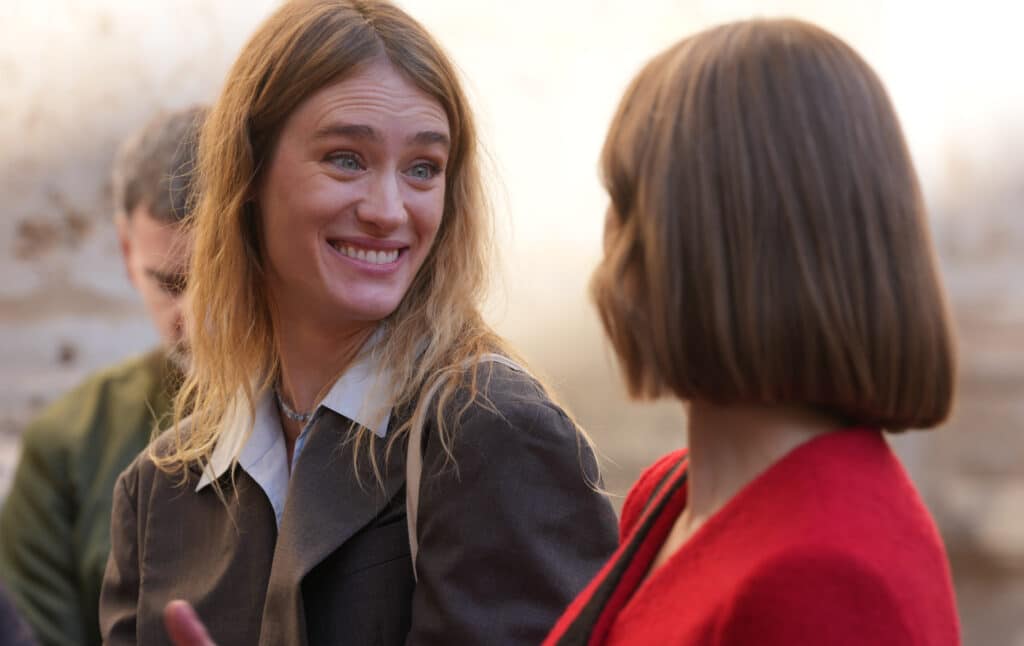
The 71st SEMINCI officially started on Friday with the Teatro Calderón packed, 208 films ahead and filmmakers arriving from across the world: Turkish director Emin Alper, French-Algerian filmmaker Rabah Ameur-Zaïmeche, French-Irish director Alexander Murphy, Belgian filmmaker Isabelle Tollenaere and the entire cast of Matar a un oso. The festival opened with a gala celebrating the legacy of José Luis Cienfuegos, director of the festival from 2023 to 2025, and the Spanish premiere of My Notes on Mars, by Hungarian filmmaker Lili Horvát.
Horvát and Davis, or the vertigo of getting to know the person you love
Horvát is already a familiar face in Valladolid. She won the Golden Spike and the Pilar Miró Award here in 2020 with Preparations to Be Together for an Unknown Period of Time, and this is her fourth visit. She arrives with Mackenzie Davis, known to audiences for Black Mirror, The Martian and Blade Runner 2049, in a film that opens with a scene that is hard to forget: Margot, a scientist, reappears at her own funeral with no memory of anything, not even her husband, Sam (Rupert Friend).
That was where it all began, the director explained. ‘The first idea I had was the scene in which Margot appears at her funeral and does not recognise her husband. From there, I began building a story that is essentially about getting to know the person we love.’ Science fiction, she insisted, was not added later as a decorative element: ‘Being with the same person for a long time has something supernatural about it in itself. The two layers developed together.’ To keep that metaphor from losing its warmth, she shot on 35 mm film. ‘We wanted it to be an intimate story that was emotionally accessible, and for that we needed cinematography that could capture moments of intimacy and pure honesty.’
Davis, in fact, had to play two women. ‘I always treated Margot as two characters: the one who comes back and the one who is no longer there. The first is imbued with history and with the interactions of her relationship in the past, while the second lives in the absolute present and expresses everything without any filter.’ Horvát did not cast her because of her track record in the genre, but because she wanted an actress she admired: ‘She has an almost celestial appearance, which reminds me of David Bowie, and that was one of the film’s great inspirations.’ For her part, the actress admitted that science fiction seems to follow her more than she seeks it out: ‘It is a coincidence, but the filmmakers I am most interested in are exploring the genre a great deal, so I always end up coming back to it.’
The conversation ended where the film ends: with questions that have no answers. ‘There are questions to which you have no answer, aspects of human life that we will never be able to understand completely,’ Horvát said. Davis brought it home with an idea that lingered in the room: ‘It is painful never to get to know someone fully, but there is also pleasure in accepting that reality and in not possessing the things we love, simply being able to love them in this liminal space.’
From the margins: Meeting Point, Time of History and Alchemies
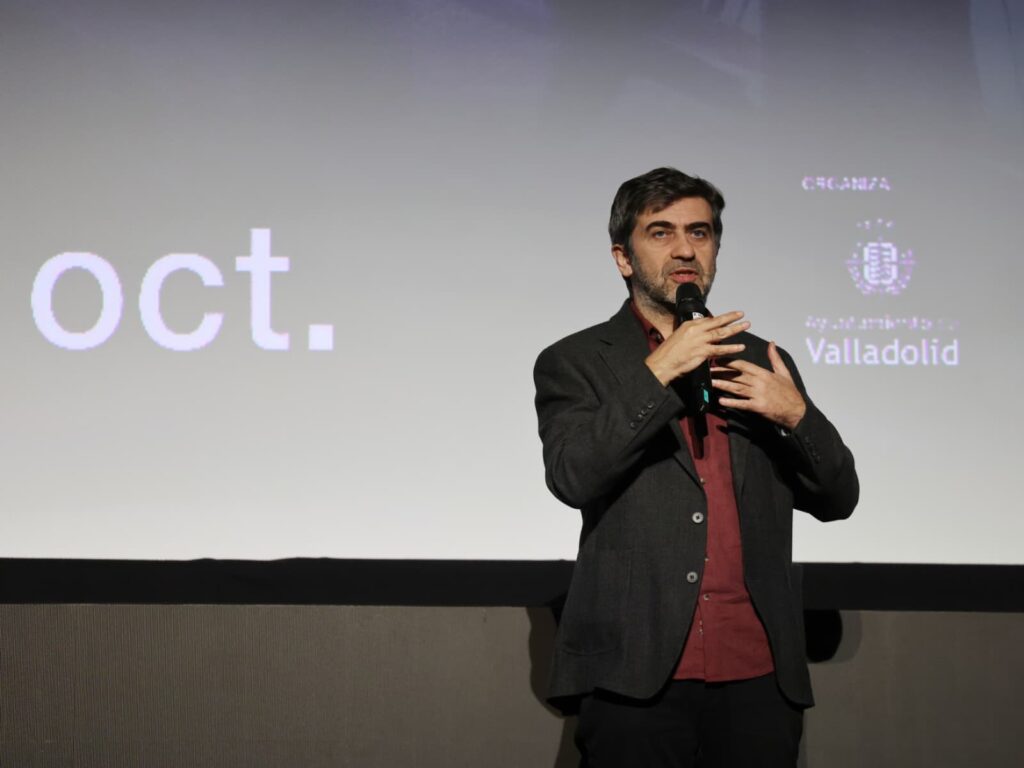
Meeting Point got off to a strong start, with two established filmmakers. Turkish director Emin Alper arrived with Salvation, winner of the Silver Bear Grand Jury Prize at the most recent Berlinale, a film set in a mountain village where fear and hatred dangerously converge. Its starting point is a real event from 2009, when twelve rural guards stormed a wedding and killed 44 people. Alper admitted that he had not intended to make the film: ‘I wasn’t planning to make this film, but in recent years the world has become increasingly genocidal. A great deal has happened in my country, and this event comes back to me as a microcosm of the dangers facing the world today.’
French-Algerian filmmaker Rabah Ameur-Zaïmeche presented Route Algéricaine, a film blending realism and the road movie in a journey across the Sahara, and above all a portrait of the solidarity between two characters. He spoke from his roots: ‘I come from a people who have suffered a great deal but continue to resist in the vastness of that desert. It all stems from the question of how we can find one another through the other person, the person standing before us.’ He also made a point of expressing his gratitude: ‘It is a privilege to present the film here in Spain, which has shown strong support for the Palestinian people.’
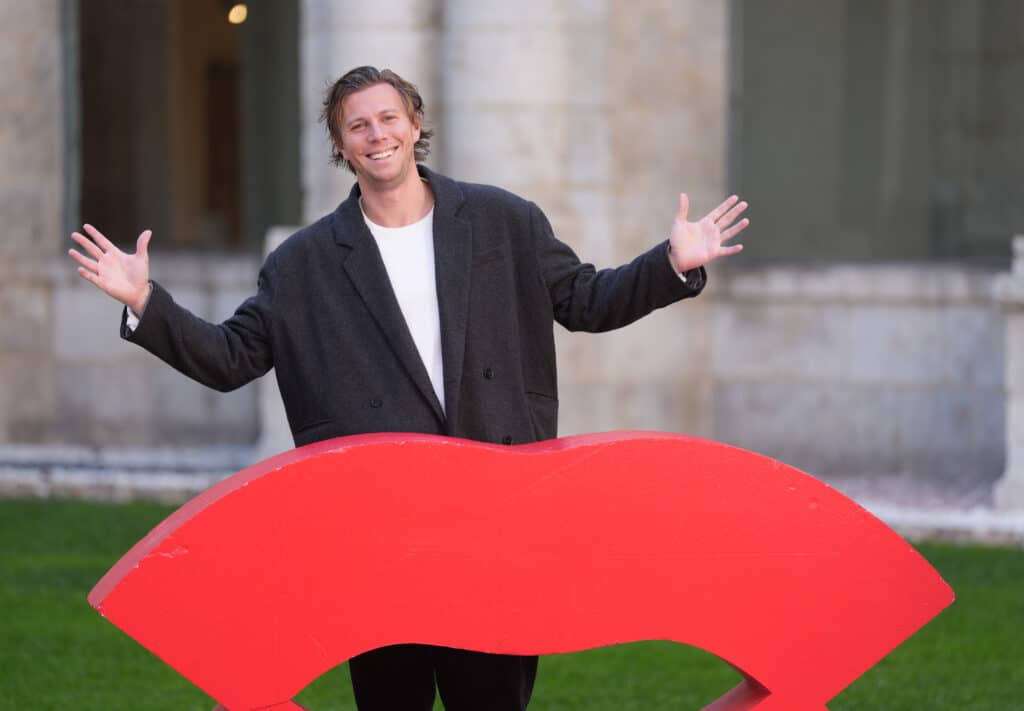
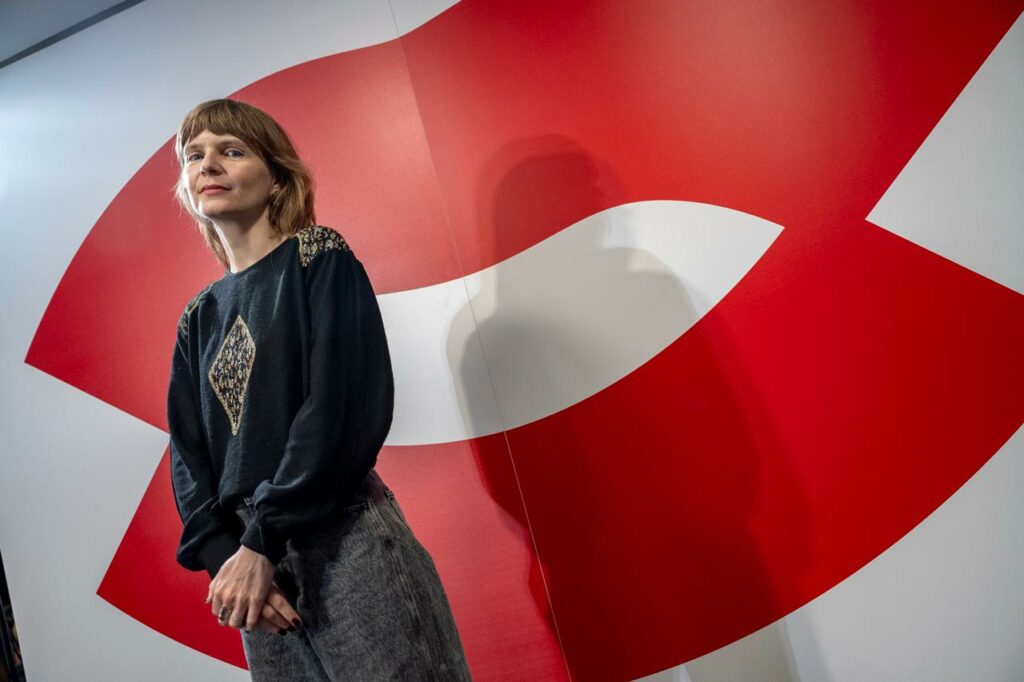
In Time of History, French-Irish filmmaker Alexander Murphy explained how Tin Castle came about, a portrait of the O’Reillys, a family living in a caravan beside a country road. It all goes back to his childhood and the trips he took to Ireland with his mother, when he would ask about these communities and was always told to keep his distance. When he finally approached them, he discovered something different: ‘A community that was afraid and, at times, ashamed of its own identity.’ He filmed over an extended period so that, by the end, the viewer would feel part of their private world.
In Alchemies, Belgian filmmaker Isabelle Tollenaere revealed the almost fairy-tale-like origins of Paris: ‘I discovered that there is a replica of Paris in China where a genuine industrial boom is taking place, and I wondered what would happen if I could weave both cities together in a single film.’ The result looks at the margins of the French capital, its artificial landscapes and three men far from home who are trying to start over.
A bear in Valladolid
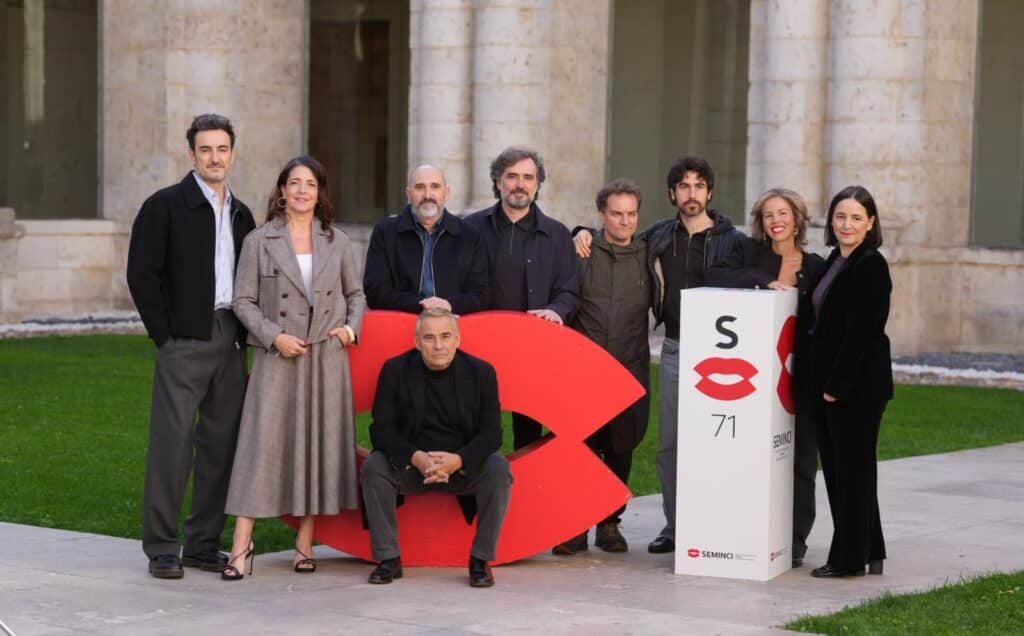
The world premiere of Matar a un oso the Movistar Plus+ series created by brothers Jorge and Alberto Sánchez-Cabezudo, brought half the cast to Valladolid: Eduard Fernández, Miki Esparbé, Pol López, Nora Navas and Àlex Monner. The first three episodes of the story, based on a real case in the Aran Valley, were screened, and the creators explained that their first step had been to talk to the people involved. ‘We interviewed many of those involved, trying to work out who best embodied those different points of view,’ Jorge explained. This led to a structure featuring a different protagonist in each episode, because what they wanted was ‘for the viewer to make the same journey we did’.
Eduard Fernández summed it up in a single sentence: ‘It is a very ensemble-driven series, built on a tremendous amount of writing.’ Nora Navas said that some characters demanded something more: ‘They required special treatment: we needed a little comedy and a touch of strangeness.’ Miki Esparbé, who plays the forest ranger, the character closest to the animal, praised the generosity of those who had experienced the events first-hand: ‘The real-life protagonists were incredibly willing to help, allowing us to get into their roles, not so much by imitating their lives as by capturing their working dynamics during the investigation.’
And then there is the bear, of course. Cachou is another protagonist, brought to the screen using a real bear and visual effects, guided by a meticulous storyboard. Alberto Sánchez-Cabezudo explained why they gave the animal such a prominent role: ‘We realised that thrillers also tell the stories of the victims, and here the bear’s story needed to carry weight.’

Red carpet and gala: a theatre for Cienfuegos
By mid-afternoon, the red carpet at the Calderón was filled with film crews, members of the international jury (Grégoire Hetzel, Federico Veiroj and Elena Manrique) and familiar faces from Spanish cinema, including Ricardo Gómez, Claudia Traisac and Patrick Criado from Una familia.
Inside, the gala began almost in darkness. The river, clouds and city lights could just be made out on the festival poster, and Power Boy, the character Apichatpong Weerasethakul created for the festival’s visual identity, crossed the stage wrapped in a string of lights before disappearing behind the screen. A dedication was read aloud: ‘To José Luis Cienfuegos. In memoriam.’ Abraham Boba, from León Benavente, played Nick Cave’s Joy on the piano, accompanied by the voices of Miren Iza, Elle Belga and Valladolid’s Escuela Coral de Voces Blancas. Pepa Blanes, the evening’s presenter, described Cienfuegos as ‘a wonderful auteur of auteur festivals’.
His predecessor, Javier Angulo, recalled how he had encouraged him to apply for the directorship: ‘And he did it in his own way, submitting his proposal on the very last day.’ Mariona Viader spoke of someone who discovered filmmakers: ‘A film festival is not built on films alone, but also on the people who meet and everything we discover together.’ She concluded: ‘José Luis, this edition belongs to you, too.’ Javier H. Estrada, who described the day as ‘very difficult’, recalled what he had learnt from him: ‘He taught us that we must never settle, that there is always another way to run festivals, another way to build a community, another way to showcase auteur cinema, always in freedom.’ A video then gave Cienfuegos himself the floor: ‘Auteur cinema is not a genre; it is a way of looking.’
The gala then shifted gear. The theme from À bout de souffle (Breathless) rang out, and a young woman dressed as Jean Seberg in the Herald Tribune scene walked through the auditorium, calling out ‘Valladolid / SEMINCI 71’ and handing out programmes. Blanes joked that missing something among 208 films was already an occupational hazard for SEMINCI regulars. The Official Competition brings together 22 titles, three of them Spanish, while the retrospective is devoted to sound, under the title A History of Sound (in Cinema). ADICINE presidents Enrique Costa and Lara Pérez Camiña announced that the Independent Film Market Award (MERCI) would be named after Cienfuegos and would recognise Otilio García Govea, co-founder of the Golem cinemas. Costa recalled how the idea had originated: ‘We should give an industry award to someone who has done a great deal for independent distribution.’

The Honorary Golden Spike, amid laughter and emotion
The first Honorary Golden Spike of this year’s festival went to Willie D. Burton, a two-time Oscar winner (Bird and Dreamgirls) and a regular collaborator of Christopher Nolan, with whom he has worked on Oppenheimer and The Odyssey. The award was presented by Alejandro López, from the La bola negra team, who highlighted Burton’s ability to adapt to technological change without losing sight of ‘the most important things, which are stories and emotions’.
Burton accepted the award with visible emotion and a sense of humour: ‘Now I really consider myself an international sound professional.’ He remembered Sidney Poitier, who gave him his first opportunity, as well as Nolan and his team, describing The Odyssey as ‘the most difficult film of my career, but also the most successful’. He left younger filmmakers with some advice: ‘We have to keep working on the things we love, keep trying and never give up.’
Horvát then took to the stage with Davis. She recalled that SEMINCI had been the first major festival she attended with her debut feature, eleven years ago, and that news of her Golden Spike win had reached her in the middle of the pandemic, offering ‘a moment of hope in dark times’. Davis praised her without reservation: ‘Everything she does is unique, and she is able to explore such human aspects in her stories, even when working with a more modest budget.’
The evening ended as Cienfuegos would have wanted, with a toast. As Groove Armada’s On the River played, members of the SEMINCI team took to the stage with their glasses raised, and Blanes invited everyone to carry on talking about cinema at SEMINCI Noche, at Bizarro and El Desierto Rojo, because that was something he loved doing in bars. She raised her glass to ‘our Power Boy’. The final words came from the team: ‘To José Luis, for everything we imagined, learnt and enjoyed by your side. To curiosity, high standards, humour and the desire to keep discovering.’