- The French director of photography, filmmaker and screenwriter is presenting her debut feature – winner of the Cannes Critics’ Week award – at the 71st SEMINCI
- Set against the backdrop of an end-of-year school trip to Naples and Pompeii, La Gradiva paints a generational portrait that highlights the hopes and doubts of today’s French youth
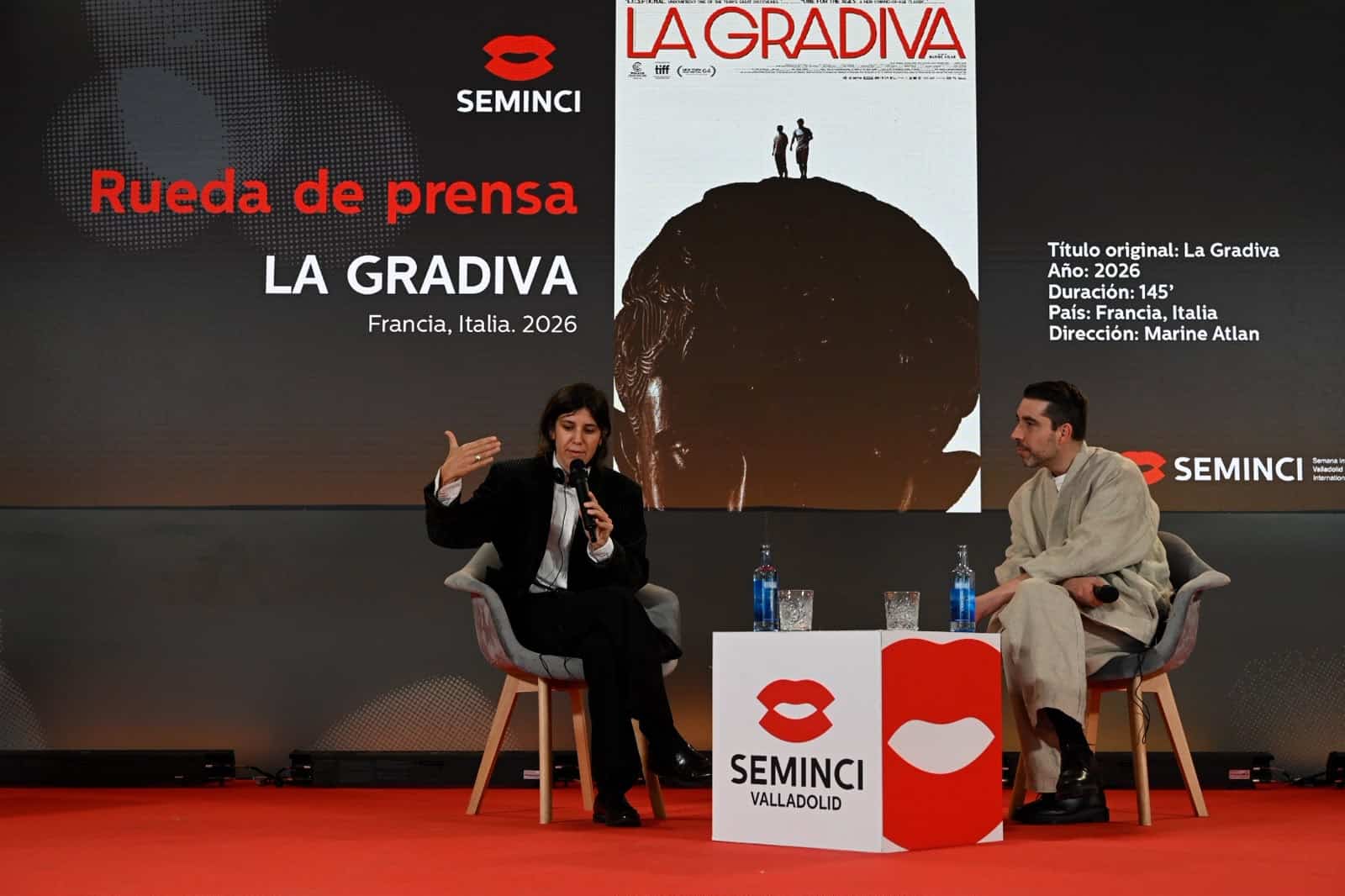
French filmmaker Marine Atlan has arrived in Valladolid to present the Spanish premiere of her first feature-length fiction film, which, after winning the Grand Prix at Cannes’ Critics’ Week, is competing for the Golden Spike at the 71st SEMINCI
In La Gradiva, we follow a group of French teenagers on a school trip to Naples and Pompeii. Atlan undertook a two-year casting process to find the actors and actresses for her film: “It was a wild casting process; we searched in secondary schools and at demonstrations. I didn’t want experienced actors, but rather presences, embodiments. Faces that were familiar and strange at the same time, capable of conveying different things depending on how we filmed them. And from this constellation, I began to see how they would act together, trying to highlight each one’s strengths.”
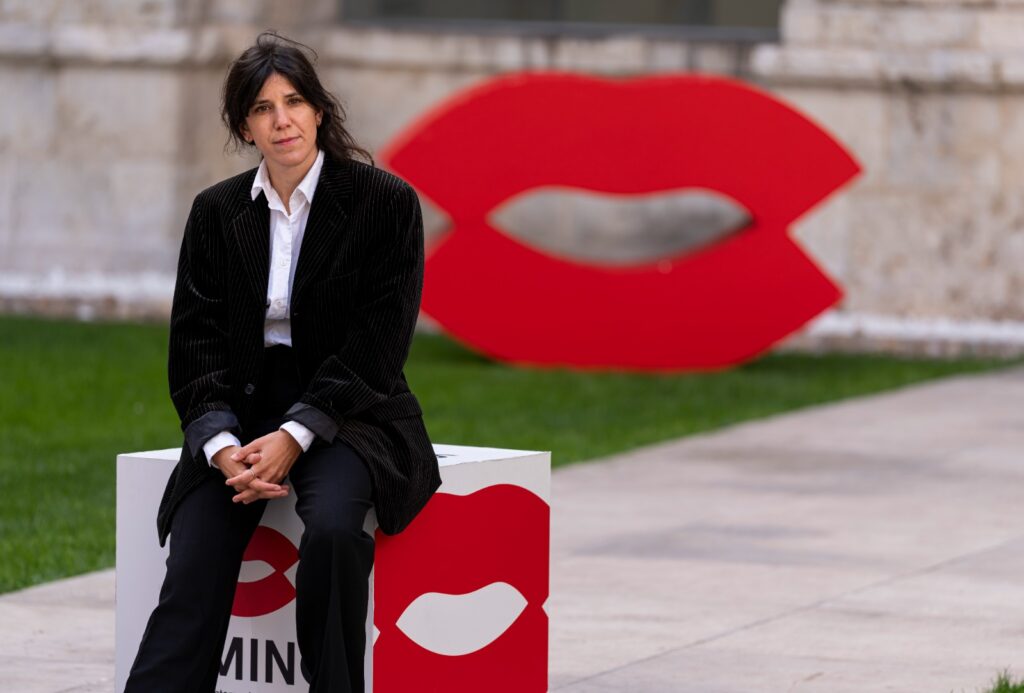
Another challenge posed by this ensemble film arose during the editing process, as the director explained: ‘We shot a huge amount of footage, including many long group scenes. The first cut ran to four hours. The challenge was how to tell this story collectively without losing sight of each character, whilst allowing the subtexts, silences and digressions to emerge.’ She also spoke of how the very form of the film evolved as the footage progressed: “The first hour and a half of the film was the most complicated because we had to find a balance that would allow us to stay close to the characters and observe the dynamics between them amidst the naturalism provided by the real-life settings. Once the dramatic structure emerges, the material changes: there are more sequence shots and everything gradually transforms into something tragic that allows us to take a certain distance.”
The Walking Woman
La Gradiva takes its title from a figure dating back to a Roman bas-relief, which was popularised in the early 20th century by Wilhelm Jensen’s novel and Sigmund Freud’s subsequent analysis. These elements come together in Atlan’s film, which is far from being a mere adaptation: ‘The story of that archaeologist obsessed with the bas-relief of Gradiva, the walking woman, makes me think about what we can crystallise around an image, about the ghosts and memories that elude us. All of this led me to Toni’s journey—the main character’s—and to observe how he moves forward despite everything. Thus, that mythological title clashes with a more realistic, documentary-style and sacred aspect.”
Atlan has a long career as a director of photography, having worked on notable contemporary independent films in France, such as Jessica Forever (Jonathan Vinel and Caroline Poggi, 2018) and Les Reines du drame (Alexis Langlois, 2024). This vision is something she brought with her when filming in a place as historic and cinematic as Pompeii: ‘It is a revealing landscape, one that speaks of time through its very nature. The presence of Vesuvius evokes death and reconstruction. I wanted to capture these contrasts from a documentary perspective, so I went there a month beforehand to study the location with an observer’s eye.’ She has also acknowledged the influence of Roberto Rossellini, who, in Journey to Italy, immortalised this place forever in the history of cinema: “Obviously, there was this enormous legacy of Rossellini’s cinema, even in the character of Toni, who possesses this romantic quality born of the mundane,” noted the director and screenwriter.

The youth of the future
Atlan has also highlighted the importance of portraying a politically engaged youth from a sociological perspective: ‘When we talk about French youth, we are starting from a very specific context. Just yesterday we saw 80,000 people demonstrating in the streets. During the school trip, we were able to witness all this first-hand: young people who have a very clear way of formulating political thought, with an intersectional perspective that takes into account racism, feminism and class differences, and who are making very direct demands.”
Driven by this spirit, La Gradiva presents itself as a luminous film which, despite depicting a youth in crisis, retains hope for the future. It is a ‘kind of sad passion’, as its director has described it: ‘We are living in a twilight era, constantly threatened by the end of the world. It is a time of great harshness and anxiety about the future. But amidst it all, we also see a revolutionary movement, a desire to live and a need among young people to look towards the future. What we see on the streets is a vital movement against this sad passion.”