- A musician brother exiled in New York, the luminous void of Sirat, the women journalists who have chronicled SEMINCI’s history, the soundscapes of nonfiction, and four short films from Castile and León in development.
The fourth day of the 71st SEMINCI Film Festival moved from animation to a Coetzee trilogy, then on to sound, nonfiction, and memories. In the Official Section, Raúl García presented his film The Violinist alongside producer Paloma Mora, while Tiago Guedes introduced Aquí, accompanied by producer Paulo Branco and actors Patricia López Arnaiz and Sergi López. Iranian filmmaker Mahsa Karampour and Italian director Uberto Rapisardi presented their work in the Time of History section. The festival also awarded an Academic Honourary Spike, brought women film journalists together at the Patio Herreriano Museum, and showcased four short films from Castile and León.
Official Selection: A Violinist in Occupied Singapore and an Eternal Present
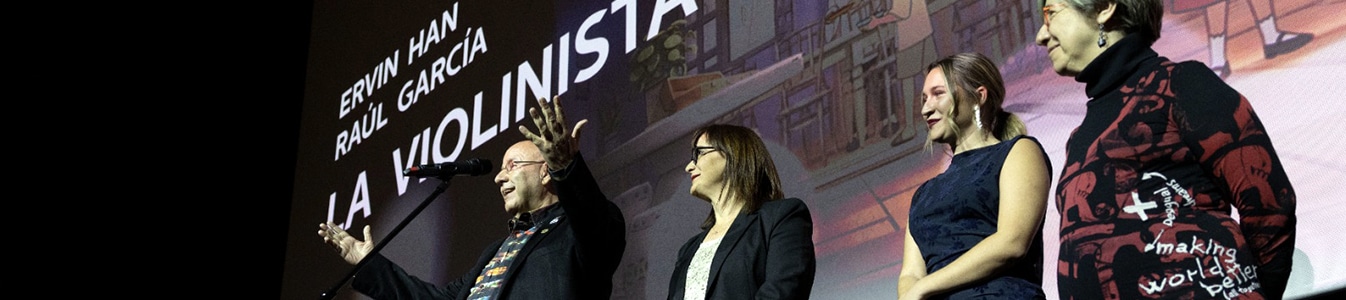
Raúl García, a Goya Award winner for The Missing Lynx and the first Spanish animation filmmaker to work at Disney, presented the Spanish premiere of The Violinist with producer Paloma Mora. Co-directed with Singaporean filmmaker Ervin Han, it was the first Spanish film to win the Cristal for Best Feature Film at Annecy. The film is a love story set during the Japanese invasion of Singapore in World War II, with music at its heart. García recalled meeting Han: “It was like finding my long-lost twin.” He explained the film’s approach: “We didn’t want to talk about Singapore’s history, but about the people who lived through those years.”To bring together the European tradition of graphic novels and Asian anime, the filmmakers opted for 2D animation with 3D backgrounds. Mora described the challenges of co-producing between two countries without an established precedent: “We had to pave the way from scratch.”
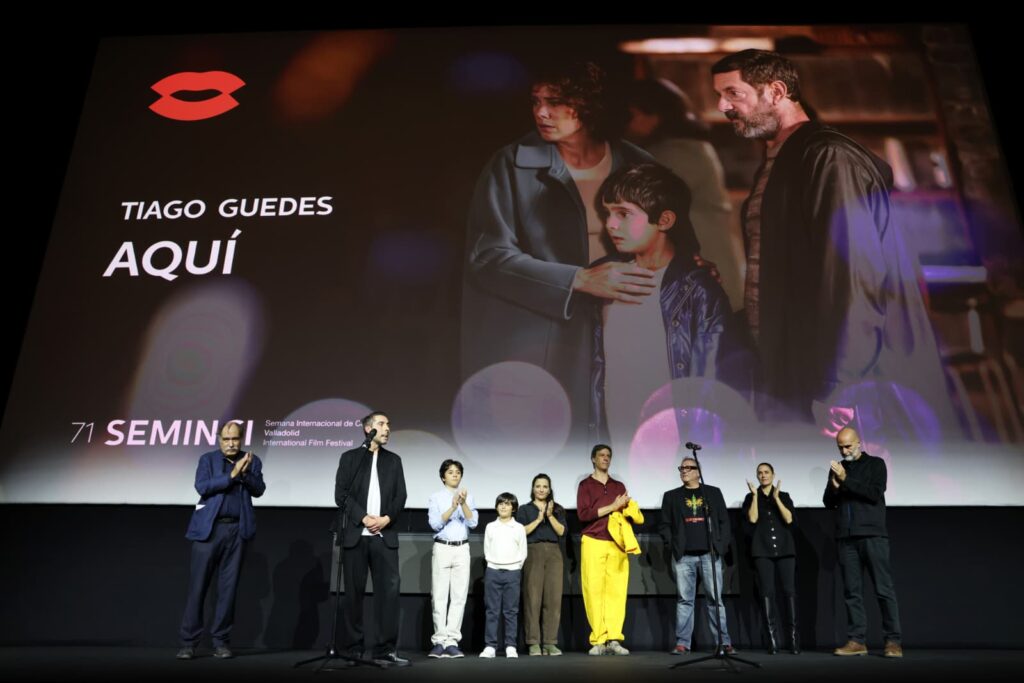
Tiago Guedes presented Aquí (Here), a Spanish-Portuguese co-production competing for the Golden Spike following its appearance at Cannes. The film adapts J. M. Coetzee’s trilogy of novels. The team dedicated the Spanish premiere to Manolo Solo, who co-starred in the film before his death in July. “I saw Manolo in Erice’s film and felt a sensitivity that resonated with what I was looking for in the character of Simón. He was someone of enormous generosity,” Guedes recalled. Condensing more than 900 pages into a feature-length film was a challenge, but the director stands by the result. “I think that today, more than ever, making a long film is an act of resistance,” he said. Sergi López joked: “The film is an abridged version; three hours is practically a short film.” Guedes explained that he had agreed on the title change with Coetzee: “The film speaks a great deal about the importance of living and being in the moment.” López summed it up: “It could be called Here and Now, but it’s really Forever. It’s the present, but an eternal present.”
Meeting Point: the construction of identity on the Costa da Morte
Filmmaker Sandra Sánchez has presented A nadadora, her debut fiction feature, which has celebrated its world premiere in the Punto de Encuentro section. Set on Galicia’s Costa da Morte in the 1990s, the film draws on the director’s personal knowledge of Galicia and the traditional seafaring trades, but moves away from social realism through the use of symbolic and fantastical elements. “I felt like breaking away from the conventions of social realism and going beyond them,” Sánchez explained, describing the story as a tale of adolescence and the construction of identity.
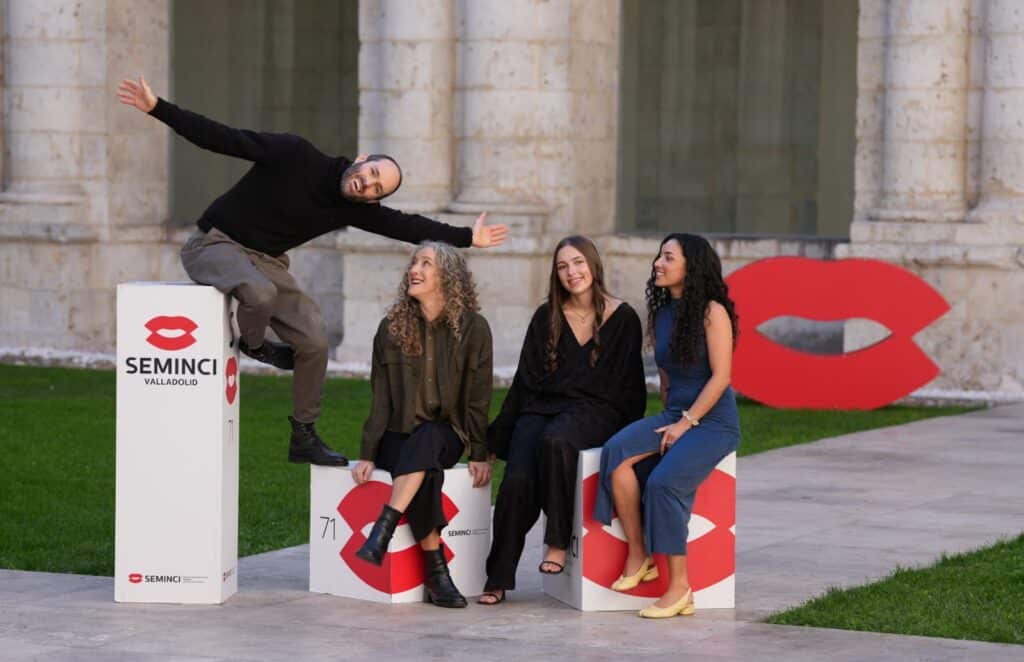
The director highlighted the casting process for the two lead actresses, Nuria López, who plays Nico, and María de Dina, who plays the swimmer. After auditioning more than 200 candidates, Sánchez found in López the performer capable of carrying the character’s intense emotional journey, while the connection between the two actresses ultimately helped shape the story: “They are like two sides of the same coin; they have to complement each other.” Shot entirely in Galician, the film also champions the linguistic and cultural identity of a community whose language, according to the filmmaker, was essential to preserving the story’s authenticity.
With previous experience in documentary filmmaking and editing, Sánchez has also edited her debut feature, conceived as a sensory journey into more ambiguous narrative territory. Filming took place in February in the cold waters of the Costa da Morte, posing both physical and production challenges for the crew. After several years of work, the filmmaker has welcomed the film’s arrival on the big screen with emotion: “The day has finally come to show it, and I’m very happy.”
Time of History: Exile and a Luminous Void
Iranian filmmaker Mahsa Karampour presented Into the Jaws of the Ogre, a film about exile, violence, and survival that grew out of a trip to the United States to reunite with her brother Siavash, a musician from Iran’s underground music scene who now lives in New York. The film’s structure is deliberately fragmented. “Because it’s made in my own image,” she explained, describing an approach that avoids definitive answers to a reality in which “we see challenges that never quite get resolved.” She recalled arriving in the city and telling her brother in a taxi, “I find myself in a state of melancholy,” while he was enjoying the life he had built there.
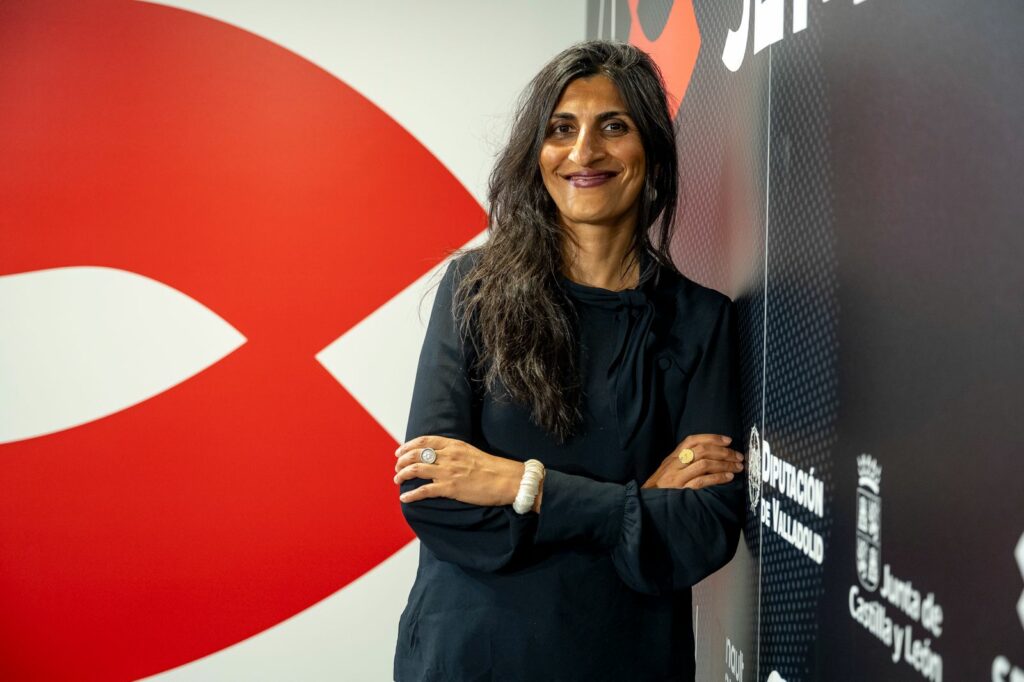
But the film explores more than displacement. “You don’t have to be an exiled person to see yourself reflected in it,” the director said. Her protagonists flee their country to make music, only to encounter new threats after arriving elsewhere. “It seems we escape one ogre only to find ourselves inside another,” she observed, referring to a country where access to guns and violence are celebrated. “The more dangerous the world becomes, the greater the desire to survive.”
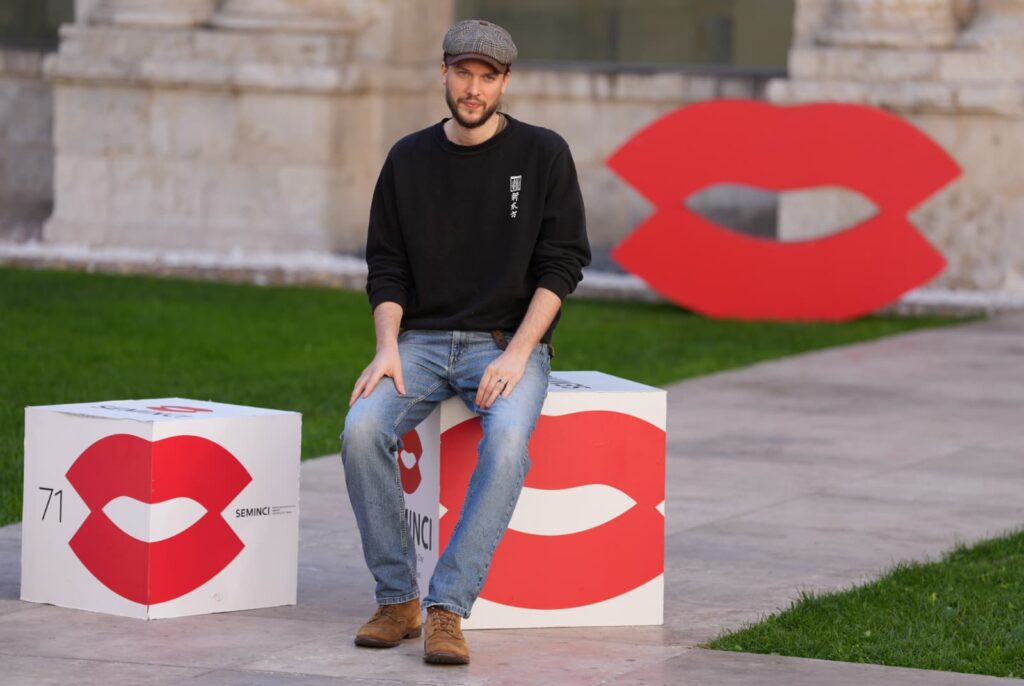
Italian filmmaker and musician Uberto Rapisardi presented the Spanish premiere of his first feature-length documentary, Vacío luminoso The film documents the making of Sirāt, following director Óliver Laxe and his crew from Galicia to the Moroccan desert. More than a behind-the-scenes account, it is a spiritual reflection on cinema itself. It all began with a letter. “I wrote to Oliver because I had seen two of his films, and we connected over two things: spirituality and the essence of cinema. We became quite good friends, and he offered me the opportunity to follow him during filming.” The experience changed his life. “It was an extremely intense journey in which we had nothing planned. Everything unfolded through our prior connection, intimacy, and trust. Oliver doesn’t separate his films from his life; his films are his life, and we all felt that way.”
Academic Honorary Spike of Honor and the Echoes of Reality
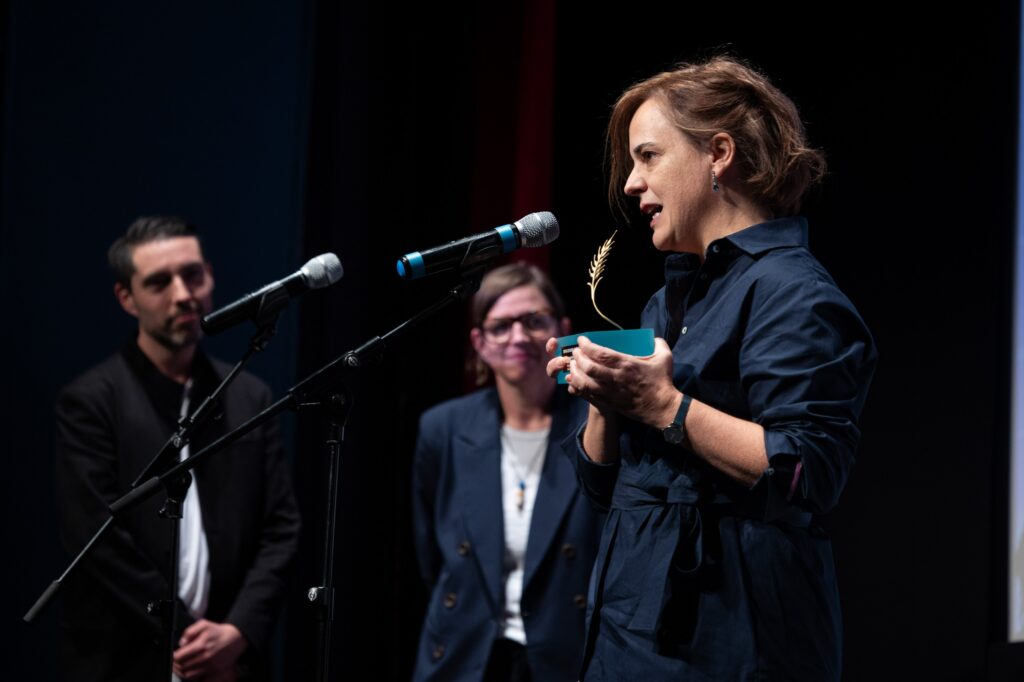
Co-directors Mariona Viader and Javier H. Estrada presented the Academic Honorary Spike of Honor to the Master’s in Creative Documentary at UPF-Barcelona School of Management (Barcelona Film Society). They made the decision alongside José Luis Cienfuegos. The programme has nurtured projects such as In En construcción, by José Luis Guerin; O que arde, by Oliver Laxe; Samsara, by Lois Patiño; and Sica, by Carla Subirana. SEMINCI has already screened ten of the 42 films produced through the master’s programme, including Irene Bartolomé’s Dream of Another Summer, featured in the Alchemies section. Programme director Eva Vila accepted the award and defended the importance of mentorship: “Developing your own perspective is extremely difficult and, above all, requires guidance and support. That is our mission.” Quoting Jonas Mekas, she added: “Cinema is life for all of us who dedicate ourselves to this art. Film schools cannot be factories producing identical films.” Together with Jordi Balló, who founded the programme in 1998, Vila brought two gifts: a fragment from the filming of Joaquim Jordà’s 20 años no es nada (2005), which competed in Time of History at the 49th edition, and a video of Cienfuegos’s final visit to students in June 2025. In the footage, he is visibly moved by the opportunity to engage with films while they are still being created.
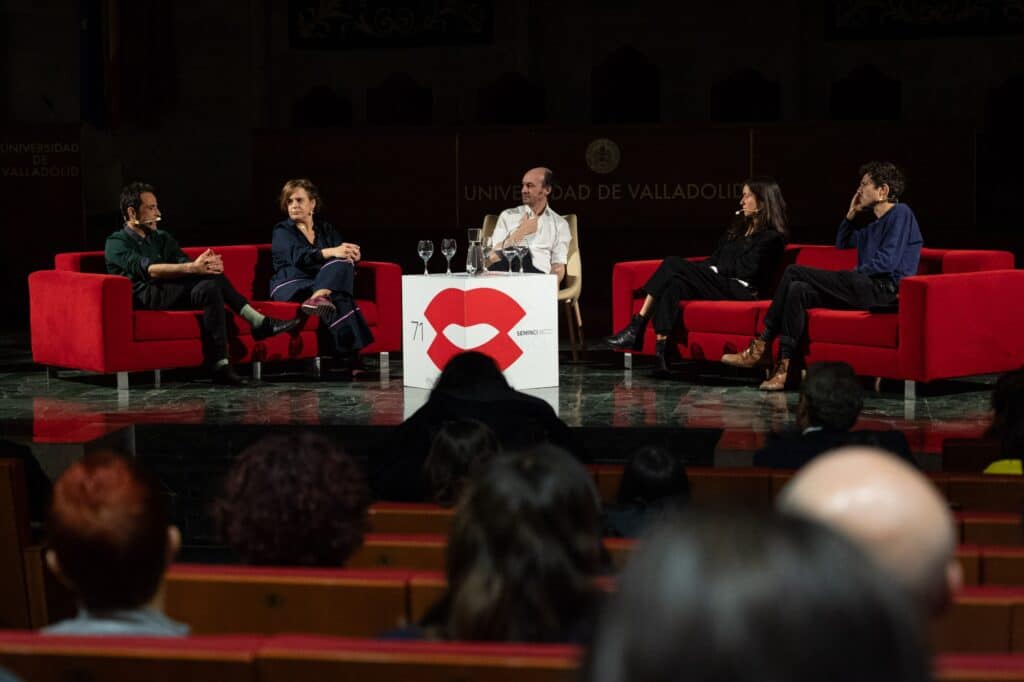
The master’s programme also provided the thread connecting the roundtable Echoes of Reality: Sound in Nonfiction, part of the Thinking (and Listening to) Cinema series. Participants included Eva Vila, Lois Patiño, Irene Bartolomé, and Cristóbal Fernández. Fernández challenged a widely held assumption: “The idea that image and sound are synchronized in documentaries is very naive. Everything is recorded and edited independently.” Bartolomé recalled how the programme encouraged students to think about sound before shooting: “It made me realize that the film could change completely that way.” Patiño explained that he wanted to explore the invisible in Samsara: “I came up with the idea of making part of the film something you had to experience with your eyes closed.” Vila defended the importance of silence, invoking Éric Rohmer’s idea of creating habitable spaces in which to breathe: “And breathing is something you hear.” Bartolomé also revealed that Beirut’s soundscape drew her toward the city’s experimental electronic music scene. After months of confinement during the pandemic, “the artists decided to hold free concerts in the street, which I was able to attend.”
Women Journalists Who Have Helped Tell SEMINCI’s Story
The auditorium of the Patio Herreriano Museum hosted the Women Journalists’ Gathering, organized by SEMINCI in collaboration with RTVE and CIMA. The event brought together film journalism professionals to reflect on their work and their role at festivals. Mariona Viader opened the event by thanking the guests, who, she said, “have helped tell the story of SEMINCI.” She framed the gathering as an opportunity to examine the representation of women in the industry. According to RTVE’s Equality Observatory, women held 33.5% of media management positions in 2019 and accounted for 35.7% of opinion articles. CIMA’s latest report continues to show a gender gap in 2025, with women occupying just 39% of the main positions of responsibility on feature films. “These figures should be read in the context of their respective dates, but they point to structural inequality in positions of public authority in cinema,” Viader concluded, before recalling José Luis Cienfuegos’s pioneering role in fostering such spaces. An introductory video revisited figures including Maruja Torres, Elisenda Nadal, Pepa Blanes, Elsa Fernández-Santos, María Guerra, Elena S. Sánchez, and Desirée de Fez.
The panel The Legacy of José Luis Cienfuegos: Festivals That Encourage Us to Think About Cinema prompted some of the day’s most personal recollections. Ana Sánchez, SEMINCI’s Communications Strategist, summed up his legacy: “Three uninterrupted decades of passionate and courageous work. Wherever he went, he changed the way people understood film festivals, from Gijón and Seville to Valladolid over the last three years.” For Cienfuegos, she added, “festivals were protected spaces for critical thinking, ideological pluralism, and freedom,” with the press serving as their indispensable storyteller. Yolanda Flores, director of RNE’s De película, reflected on what she had learned from him: “With José Luis, I learned about literature, music, and, above all, cinema. He gave everyone else the spotlight, but he was always there, and he remains present in each of us.” Marta Medina, a critic for El Confidencial and a member of the Seminci team, remembered him as a curious person who loved to listen and made everyone he worked with feel special. The panel also included Chusa L. Monjas, head of communications at the Spanish Film Academy, and Conxita Casanovas, director of RNE’s Va de cine and the BCN Film Fest. Reflecting on the introductory video, Monjas observed: “Of all the women we saw in the video, only one held a leadership position. The situation is similar at the major film festivals. It took us 70 years for a woman to take the helm of one of them. I wish gender parity mattered enough that we wouldn’t always have to keep talking about it.” The discussion also highlighted Cienfuegos’s commitment to championing filmmakers such as Oliver Laxe, Alice Rohrwacher, and Mia Hansen-Løve, who received the Honorary Golden Spike at the festival’s 70th edition.
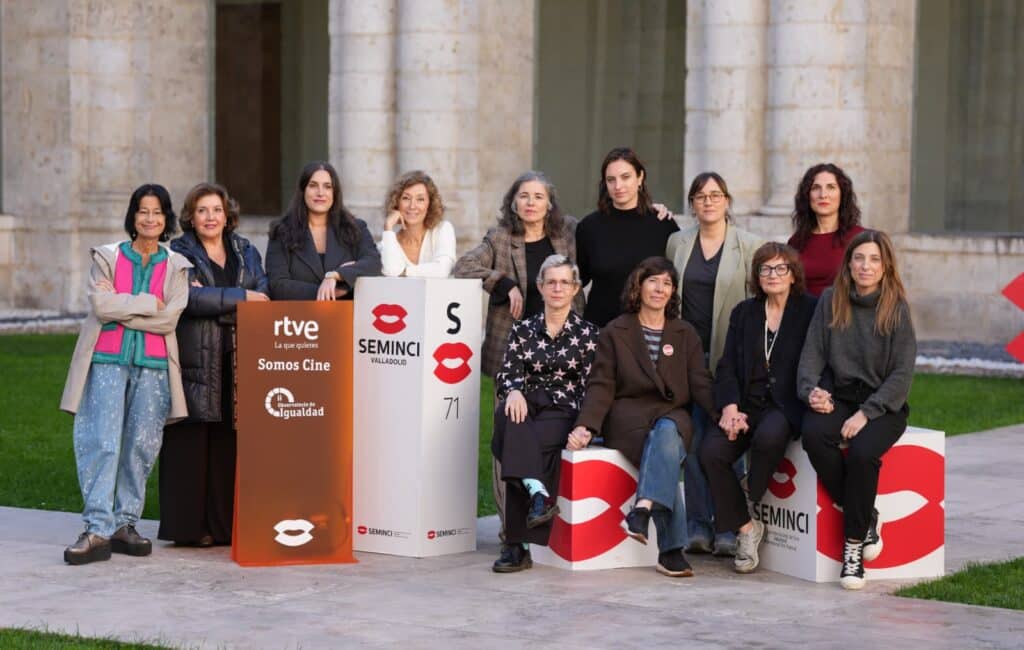
The second panel, Who Tells the Story of Cinema Today? Challenges Facing Film Journalism, brought together freelance journalist and cultural communications specialist Begoña Donat; Jara Yáñez, editor of Caimán Cuadernos de Cine; Eulàlia Iglesias, journalist and professor at Universitat Rovira i Virgili; and Begoña Piña, film critic and journalist at Público. Their discussion addressed journalistic rigour and editorial independence, precarious working conditions, gender parity, and the rise of social media. “If print is in decline, that is an important question, but it isn’t a new one. I remember that when Caimán Cuadernos de Cine was launched in 2007, we were already asking it,” Yáñez said. The day concluded with two case studies. Beatriz Aparicio, president and head of the Equality Observatory at RTVE, and Mercedes de Pablos presented the tools the public broadcaster uses to incorporate equality into its editorial criteria. Marta Armengou, founder and director of Filmtopia, a publication dedicated to highlighting women’s work in cinema, shared her experience of leading an independent editorial project.
Quercus Work in Progress: Four Shorts, Four Worlds
The Cines Broadway hosted the Quercus Work in Progress programme, presented by Maite Conesa, director of the Filmoteca de Castilla y León. She thanked Seminci and former festival director Javier Angulo, who was in attendance and had championed the initiative from the outset. “The festival’s prestigious umbrella is essential for us,” she said. Four short films in development are now being added to the film library’s catalogue, and the selection could hardly be more varied: a documentary about immigration, an animated film inspired by the art of flamenco singing, a portrait of Dominican social realities in Burgos, and a fiction comedy.
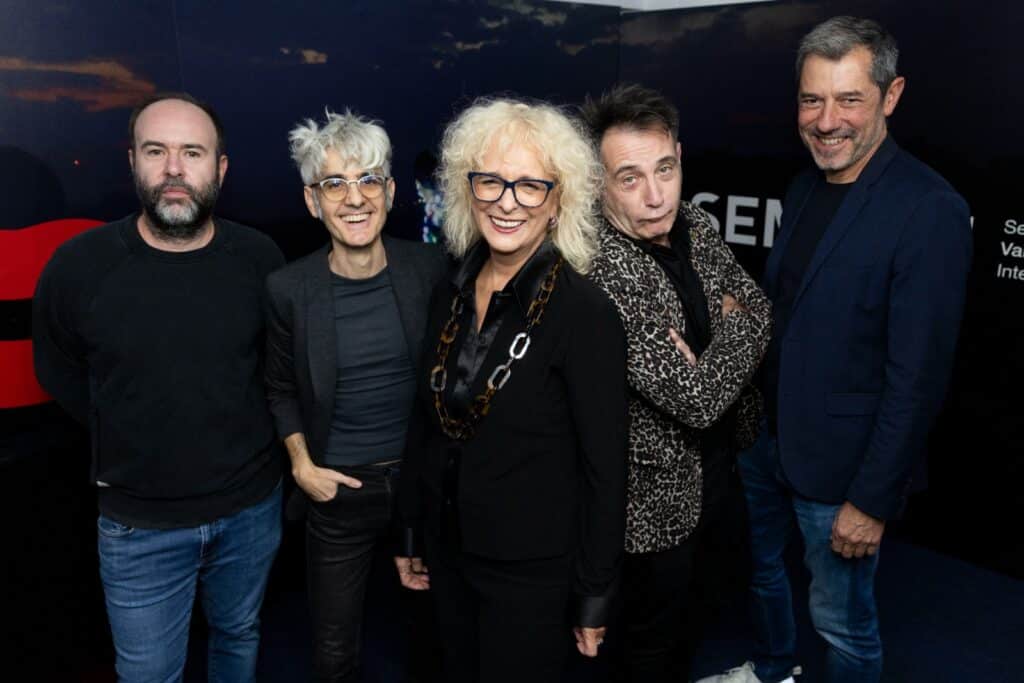
Roberto Lozano presented the documentary Wildland, defending the freedom of the genre: “It is necessary to give a voice to those who don’t have one. Nonfiction needs freedom.” With The Star Boy, Marcos Mas presented a true, family-based story set during the Battle of Jarama. He explained that the conflict itself was not his focus: “I wanted to talk about art, not conflict, which is why we never find out which side Paquillo, the protagonist, belongs to.” He summed up the film’s central idea: “To face imminent death and decide that the last thing you want to do is sing… that is what it means to be an artist.” Ramón Sánchez Orense and producer América Almodóvar passionately championed Camila. “We wanted to talk about the things that happen in Burgos, about the Dominican community in Burgos, and to make the short with a team from Burgos,” they explained. Valladolid-born filmmaker Rubén Alonso described Kindness as “pure fun and a duel between two great actors, Óscar Ladoire and Álvaro Roig.” One question hangs over the comedy: will “the kind man” give up his yoga classes or not? The programme also featured Ensayo de persona, a project from the University of Valladolid’s Master’s in Film, Communication and the Audiovisual Industry. Made by students from the previous academic year, it was presented by its director, Ana Cea.