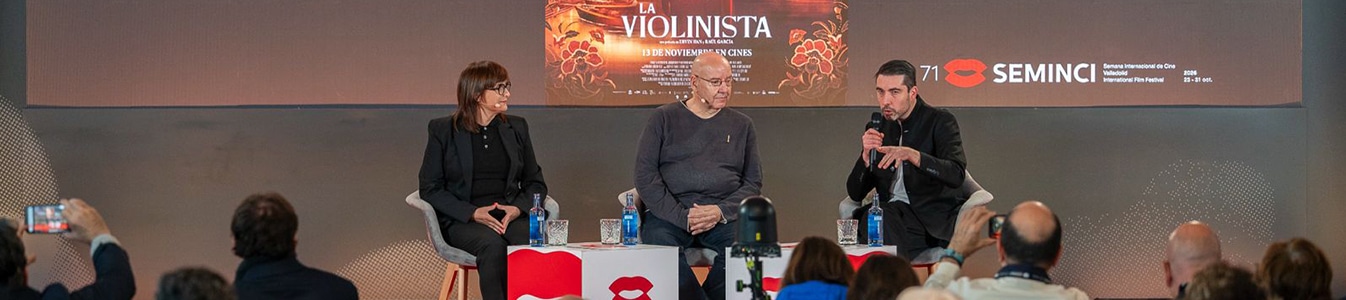
- The filmmaker and animator has presented his latest film alongside producer Paloma Mora. The film is competing in the Official Section of the 71st edition of SEMINCI.
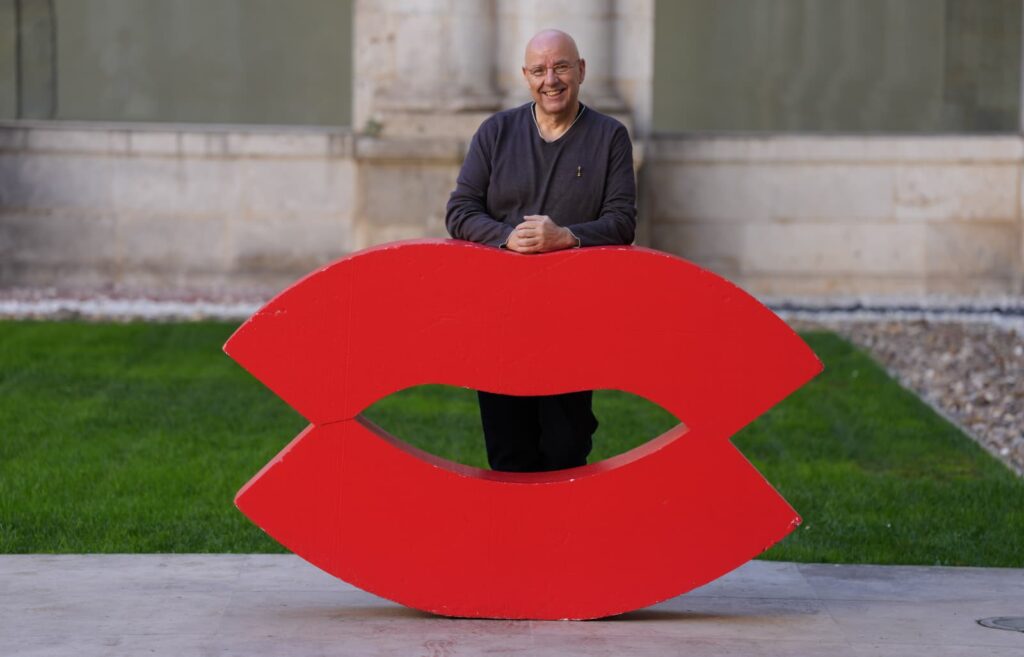
The 71st edition of SEMINCI has featured the Spanish premiere of The Violinist in its Official Section. It is only the second animated film in the festival’s history to compete for the Golden Spike, and the first Spanish film to win the Crystal Award for Best Feature Film at the Annecy International Animation Film Festival. Co-produced by Singapore and Spain and co-directed by Raúl García and Ervin Han, the film transports audiences back to the Second World War and the Japanese invasion of Singapore, through a love story in which music plays the leading role.
Raúl García, the first Spanish animator to work at Disney, winner of the Goya Award for The Missing Lynx (2008) and producer of The Lady and the Reaper (2009), has reflected on the lengthy process of bringing the film to life, from his arrival in Singapore to teach animation to the development of the idea that ultimately became the finished film. “When I met Ervin Han, it was like finding my long-lost twin. We had a very similar vision of animation, and we decided to work on a project together,” García recalled.
Starting from a short film by Singaporean filmmaker Han, who is also a producer and co-founder of the animation studio Robot Playground Media, the two artists developed a feature in which war would serve as the backdrop to a story told through a love story. “We didn’t want to talk about the history of Singapore, but about the people who lived through those years,” he said.
In this respect, García also emphasised the extensive research required for the film, which is reflected in the animation of every object. “The costumes are very faithful to the period; they are all typical garments from Peranakan culture. The blending of Chinese and Malay cultures represents Singapore’s largest ethnic community. All of this had to be drawn and animated in perspective,” he explained.
A fusion of styles
The film’s epic story, firmly rooted in Singapore and its social reality during the Second World War, was developed, as the filmmaker explained, by bringing together two very different approaches to animation: the European and the Asian traditions. “We wanted to find a middle ground between the approach here, which is much more closely associated with graphic novels, and the approach there, where anime and Japanese animation culture hold sway,” the director explained.
He also highlighted that, from the outset, they were determined to make a traditional 2D film, something relatively unusual in contemporary commercial feature animation, while using modern 3D techniques for the backgrounds. “Since computers arrived in animation, the way we work has changed considerably. They have allowed us to give the film much greater dynamism and create sweeping camera movements. We have achieved an epic story in which the characters are still drawn and animated in 2D,” García concluded.
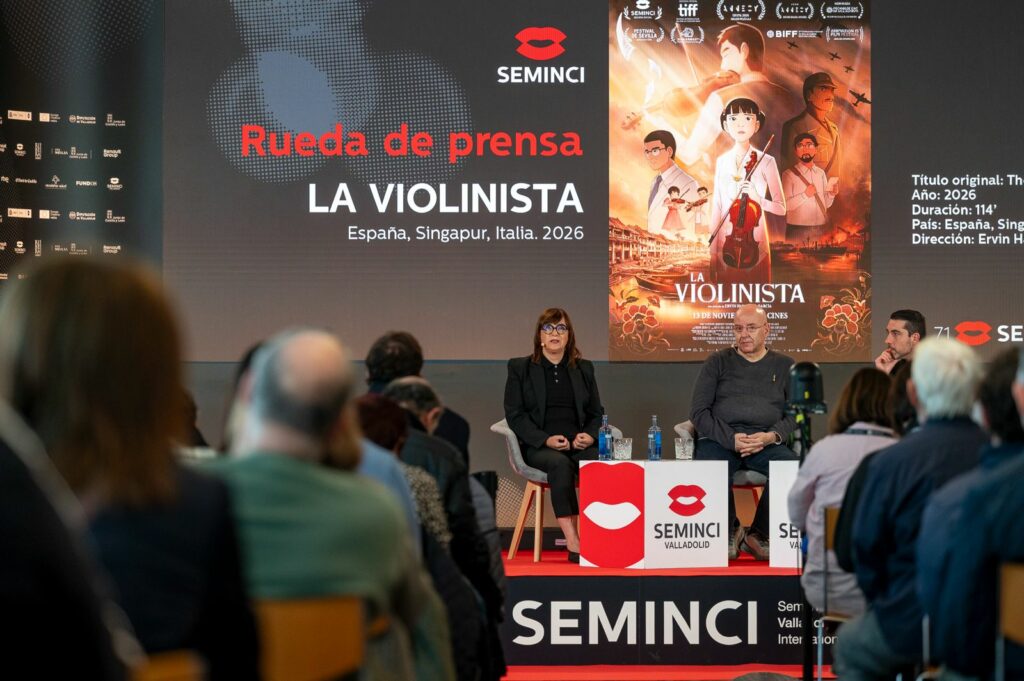
Producer Paloma Mora (TV ON Producciones), who accompanied the filmmaker at the press conference, spoke about the complex process of co-producing a film between two countries with such different systems and agreements. “We had to break new ground. There were no precedents for a co-production between Spain and Singapore, but the relationship developed very naturally and extended across every department of the film,” she explained. In this context, both also discussed the inclusion of the Valencian journalist character, who sets the story in motion and serves as a tribute to the workers from the Spanish city who took part in the film.
Music takes centre stage
Music, which guides the epic journey experienced by the protagonists, Fei and Kai, has been one of the film’s central pillars and a major challenge for composers Ricky Ho and Isabel Latorre, who collaborated from Singapore and Spain respectively. “We divided the music into three sections that had to intertwine throughout the film: the sonata, which is the leitmotif that connects the protagonists; the atmospheric music; and the pieces performed by the characters during the film,” the filmmaker explained. He also highlighted the particular challenge of animating the musical scores so that they matched what the characters perform on screen.