- The competition brings together 18 films from 16 countries, featuring works that address migration, social inequalities, identity and memory, alongside personal stories and visual experimentation.
- The filmmakers have shared the motivations and creative explorations behind their work in Valladolid.
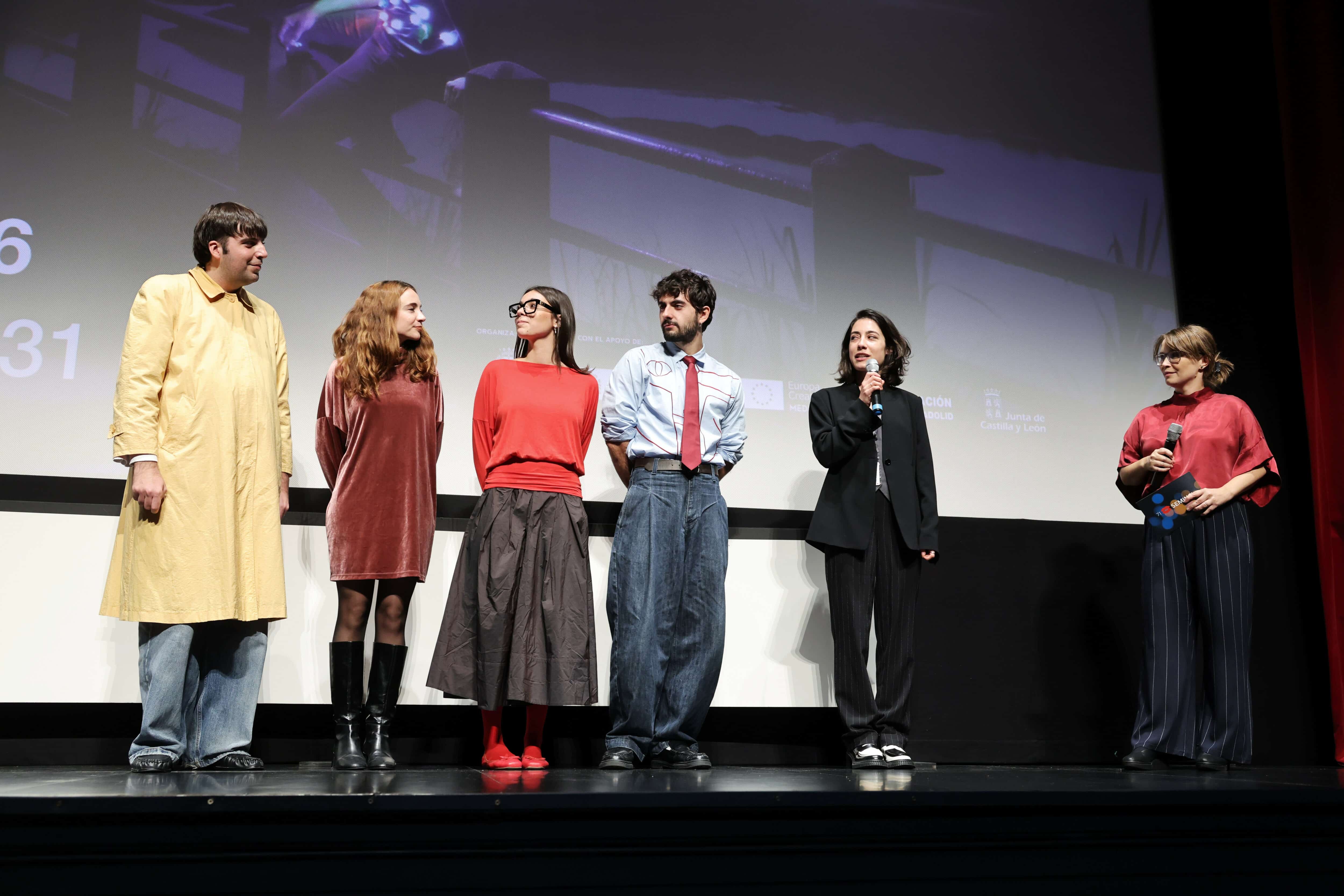
The Official International Short Film Section of the 71st SEMINCI has brought together 18 films from 16 countries, approaching contemporary reality from a range of perspectives and through diverse cinematic languages. Organised into four programmes — Luces nocturnas, And If Thuy Didn’t Exist, Oculto and Hogar, agridulce hogar — the selection combines stories about social inequalities and power relations with intimate narratives, explorations of memory and works that experiment with the possibilities of animation, sound and mise-en-scène. Presentations by the filmmaking teams in Valladolid have offered an insight into some of the concerns driving these works and the creative decisions through which their makers shape their stories.
Programme 1. Luces nocturnas (Night lights)
Mystery, fear and gender relations run through this programme, which brings together different approaches to women’s experiences and the spaces they inhabit. In Las Damas, French filmmaker Camille Zéhenne draws on her fascination with the Lady of Elche to combine documentary research, experimentation and fiction. She is interested in the questions that continue to surround the origins of this historical figure. “I thought it would be very interesting to explore the mysterious dimension of the Lady of Elche. Nobody agrees on her origins, which makes for a very appealing premise,” she explains. She adds a fictional dimension rooted in ancestral imagery and sensuality: “At the same time, I wanted to incorporate my own fictional take on the figure, exploring the question of ancestral sensuality.”
In TMWYH, Austrian filmmaker Helen Esther Aschauer turns a woman’s journey home at night into the starting point for a thriller about invisible violence and the insecurity that shapes women’s experiences in public spaces. Inspired by real events, the film explores a fear that, for the director, is shared by women collectively: “As women, we all know what we are talking about when it comes to fear.” One of her references was the case of Gisèle Pelicot, which enabled her to explore further the violence perpetrated by people close to us and those we trust. Her aim is to draw attention to “the safety of women returning home alone at night and the importance of anticipating threats”.
The animation The End, by Swedish filmmaker Niki Lindroth von Bahr, adopts a different register, setting a meditation on existence and catastrophe in a major airport. The film features the voices of Alexander Skarsgård, Denis Lavant and Noomi Rapace, who also serves as executive producer.
Fear is also the driving force behind But… You Weren’t Here, by Norwegian filmmaker Eric Dirnes, which receives its world premiere in Valladolid. The film follows a young woman who begins to feel invisible while staying in an isolated cabin with her partner and his friends. The tight framing reinforces the sense of suffocation as the protagonist finds herself in an increasingly uncomfortable situation. “The underlying idea is that the protagonist defends herself by counterattacking,” the director explains.
Premier feu, by Spanish filmmaker Blanca Camell Galí, explores the physical and emotional aftermath of a traumatic childbirth. Starring Bruna Cusí, the film follows a woman trying to come to terms with an experience that has transformed her relationship with her body and desire. “I wanted to portray the physical wound, but also the psychological one left by the trauma of a complicated tear while giving birth to a first child,” the filmmaker explains. She also wanted to address “the disconnection from desire that follows an experience like this”. The title, however, points towards recovery: “The first fire represents the optimistic side, the renewed zest for life that someone finds after such a transformative moment as becoming a mother. It is the reward your body gives you after the uncertainty and fear.”

Programme 2. And If Thuy Didn’t Exist
Memory, the contradictions inherent in personal narratives and unexpected human connections shape the films in this programme. In Class Photo, Lithuanian filmmaker Arnas Balčiūnas returns to an abandoned school to explore memory, trauma and friendship. The film, which premiered at Cannes Critics’ Week, stems from the director’s own experience: “Seeing my school abandoned, probably for the last time, gave me a strange feeling. I tried, as far as possible, to capture the atmosphere of a place that had been so important in our upbringing.” The narrative combines a realistic story with an allegorical dimension loosely inspired by the myth of Orpheus and Eurydice. Balčiūnas brings these two layers together “by ensuring that the dialogue subtly highlights this duality”.
In La verdad te rechaza, Cornelius, Spanish filmmakers Khris Cembe and Marc Torices combine mid-20th-century vintage cartoon aesthetics with stop-motion animation to depict the therapy sessions of Cornelius, a dog whose stories are not always reliable. The film draws on Torices’s graphic work and finds one of its main sources of humour in the protagonist’s contradictions. “The humour lies in the bias; what he says cannot be trusted, and she finds holes in his stories,” the creators explain. For them, the production process itself is also an essential part of the project: “Animation is a celebration of teamwork.”
Humour and unusual situations take centre stage in God Loves a Terrier, by American filmmaker Robert Arnett, which receives its world premiere at SEMINCI. The retro-styled comedy stars Elizabeth Olsen, C. S. Lee and Annie Hamilton. The story follows a woman struggling to make ends meet as a property manager in Hollywood Hills, until a crisis forces her to confront a moral dilemma.
In Pithead, Belgian filmmakers Wannes Vanspauwen and Pol De Plecker construct a dystopian universe shaped by strange human connections. The short film, which premiered at the Cannes Directors’ Fortnight, follows a woman who finds refuge in a black metal karaoke bar and develops an unexpected relationship with a lonely penguin. The directors explain that “strange human connections emerge in the story, while the visual style features camera movements that observe events in a mechanical and detached way”. They cite Kaurismäki, Andersson and Gilliam among their influences, while sound plays a fundamental role in establishing the film’s atmosphere: “We love that constant, storm-like noise.”
Programme 3. Oculto (Hidden)
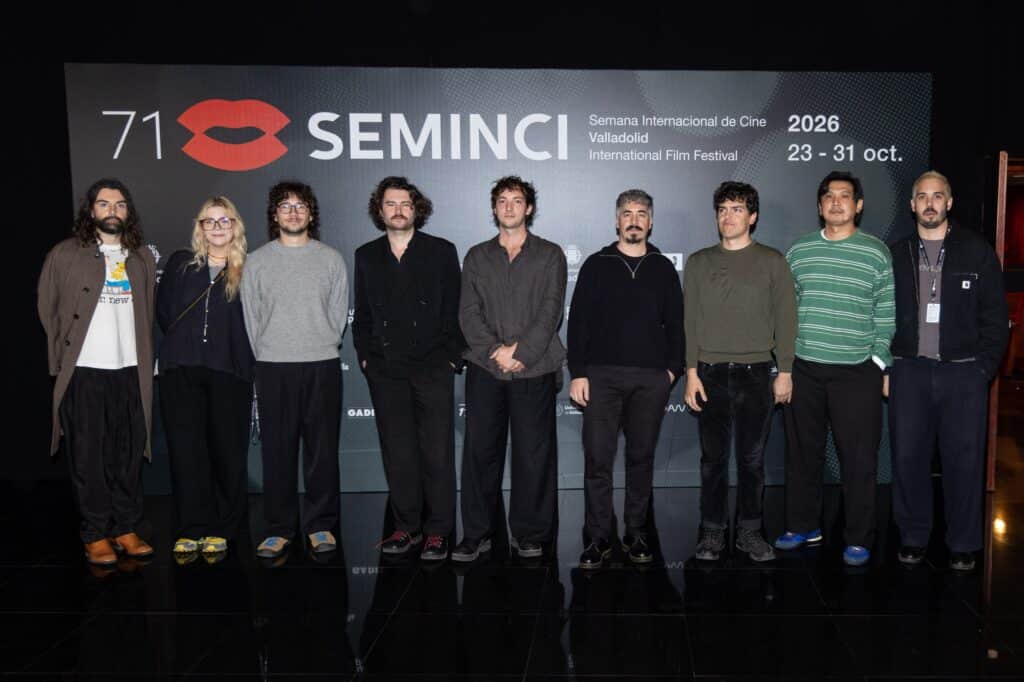
Fantasy, imagination and observations of social conflict coexist in this programme, which brings together three Spanish productions and one of the most acclaimed animated works in the selection.
In Aho Beltza, Spanish filmmaker Alba Loza sets the action during a wrap party in Zumaia, where Miren, increasingly isolated from the crew, discovers a legend about a secret tunnel connecting the town to the beaches. The film, which receives its world premiere in Valladolid, combines criticism of gender inequalities in the audiovisual industry with fantastical elements rooted in local folklore. “I’m alone at the party” is a line that encapsulates the protagonist’s experience. The director points out that women are “often sexualised” and adds: “We are seen as desserts.”
Childhood imagination and the possibility of creating with limited resources inspire El tamagochi escarlata, by Chilean filmmaker Francisco Visceral Rivera, who uses film noir conventions to tell the story of a missing toy in a school setting. A boy, a tortoise and a Tamagotchi that must be recovered drive a story through which the director hopes to awaken memories in adult audiences: “We, as adults, should be able to see our own memories of what our childhood was like.” The film’s handmade production methods reflect the same ethos. “You can create with what you have in your hands,” says Visceral, who hopes to “inspire people and democratise filmmaking”.
The exploitation of migrants and the social structures that perpetuate inequality are at the heart of Asphalt Reds, by Portuguese filmmaker João Niza Ribeiro, which won the Audience Award at Curtas Vila do Conde. The short film follows Omar, an undocumented young man from Benin working as a delivery rider in Porto, as images of violence against migrants in Melilla intrude into his everyday life. Shot with non-professional actors, the film also draws on conversations the filmmaker held in Guinea-Bissau with people who had embarked on the journey to Europe. “I would like the film to speak more about how we have built a society in which we enslave and instrumentalise others,” Ribeiro explains, hoping to encourage collective reflection: “I would like it to lead to a discussion about how we relate to one another.”
Paper Trail is the work of American filmmaker Don Hertzfeldt, one of the leading figures in contemporary independent animation and a two-time Oscar nominee. He reconstructs a life through fragments of paper and new animation techniques he has developed himself. Following its premiere at Sundance, where it won the Best Short Film award, the film also took the top prize at Annecy.
Programme 4. Hogar, agridulce hogar (Home, bittersweet home)
Return, belonging and the difficulty of finding a place of one’s own connect the stories in this final programme, which explores the relationship between individuals and their surroundings from different perspectives. In ‘Vaterland’ or a Bule Named Yanto, by Berthold Wahjudi, a young man travels to Yogyakarta to visit his sister and is confronted with his own status as a foreigner in different places. The short film, which won the Canal+ Award at Cannes Critics’ Week, explores the contradictions of identity and the sense of belonging.
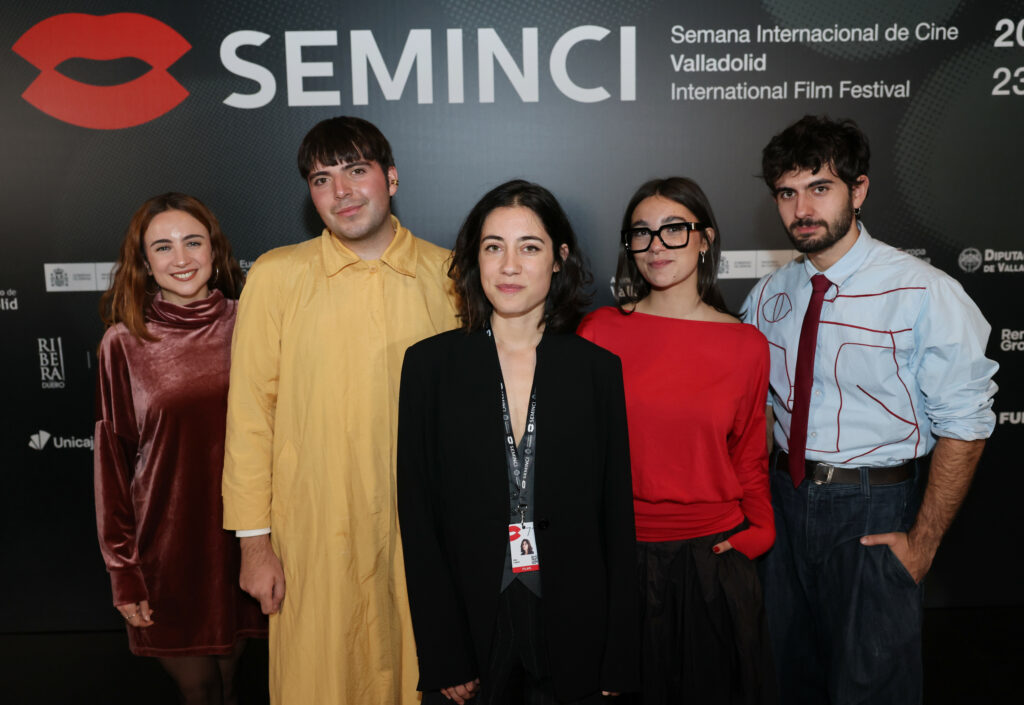
The housing crisis and power relations underpin Crónica del cansancio, by Spanish filmmaker Natalia Marín, which concludes her trilogy on space. The director connects the current situation with its historical roots, examining the links between work, exploitation and debt. “Addressing the issue of housing directly” was one of her objectives. Finding a visual form capable of expressing this journey proved decisive: “It was when I realised that our history moves from left to right.” Five long tracking shots structure the passage of time and the transformation of social inequalities.
In Terminal, Portuguese filmmaker Alexandre Siqueira, who directs a co-production between Portugal, France and Spain, follows a man returning to his mother’s home after more than thirty years of travelling. The film arrives at SEMINCI following its world premiere in Toronto.
Finally, Ride Your Horse, by Song Dongxu, is set in Inner Mongolia during an exceptionally harsh winter. Two young people, trapped in a room, plan to raise enough money to escape south. Their story places the need to flee and the search for a better future at its centre.