- A family that stays silent in the face of abuse, a queer couple in war-torn Ukraine, a woman who disguises herself as a man in the 17th century, a Galician village losing its population and a grandmother who can no longer remember: a day devoted to confronting the things that are so difficult to put into words.
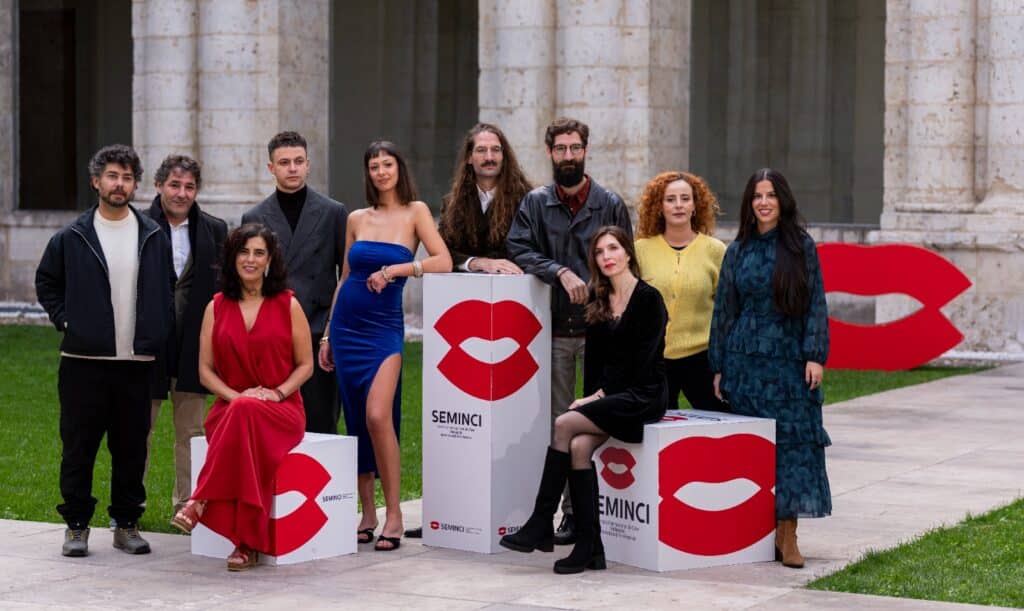
The third day of the 71st SEMINCI was marked by the competition. Four films from the Official Section took part in press conferences alongside their directors: Spain’s Ione Hernández, with Emma Suárez and Elena Anaya; Germany’s Isabelle Stever; France’s Marine Atlan; and Austria’s Markus Schleinzer. Joining them in other sections were French director Manon Coubia, Galician filmmaker Sebastián Uría, rapper Elio Toffana and producer Cayetana Guillén Cuervo, animation director Silvia Cortés, and film critic Santos Zunzunegui, who presented his book on Robert Bresson.
Official Section: silence, war and women who change their lives
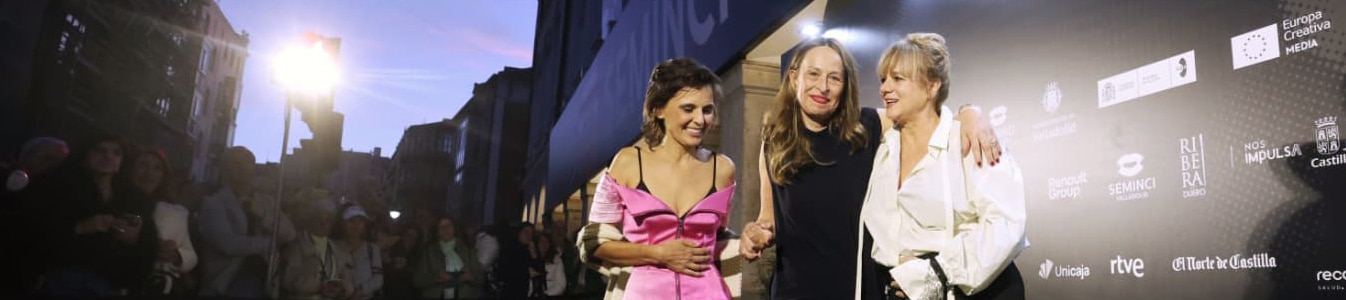
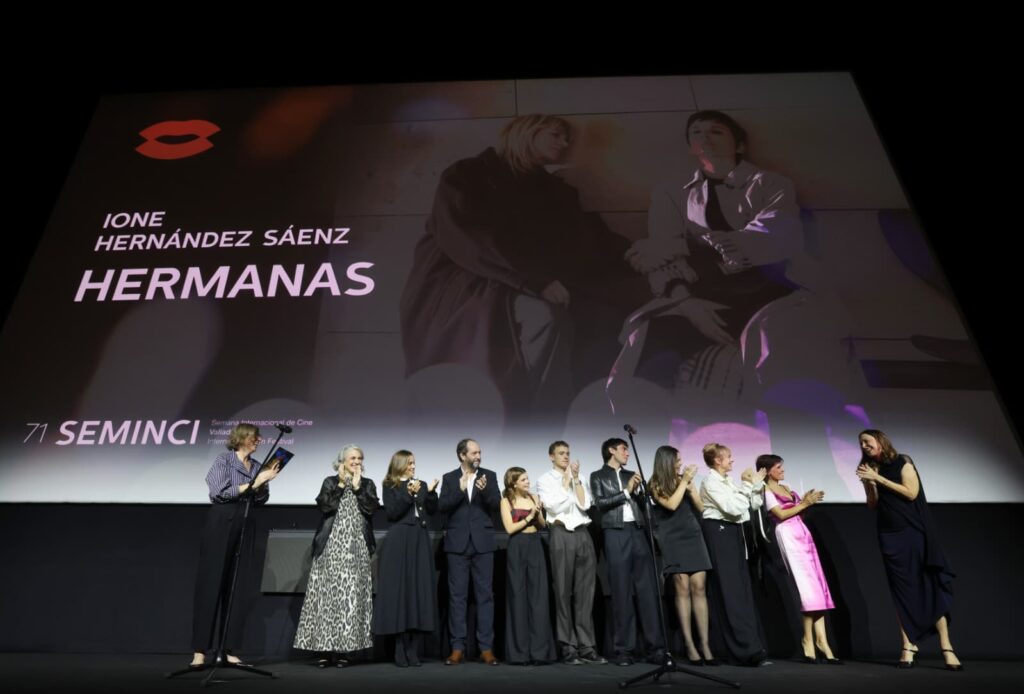
Ione Hernández made her feature-film debut with Hermanas, which had its European premiere at SEMINCI. One of three Spanish films competing for the Golden Spike, it stars Emma Suárez and Elena Anaya as two sisters whose bond is put to the test when a case of abuse within the family comes to light. The director wanted to explore more than the relationship between the sisters: “I wanted to ask myself what prevents these characters from reacting, what they feel within those family ties.” She chose Suárez because “she has had a significant presence throughout so much of the history of Spanish cinema”, while in Anaya she saw “a fragility, an extreme vulnerability”.
Suárez herself spoke about how difficult it had been to understand her character’s silence: “I kept asking myself: why so much silence? Why don’t they speak?” The story takes place in 2021, before the consent law, and the team emphasised how difficult it can be to react when abuse comes from within the family: “We all think we know what needs to be done, but when these cases arise within the family, it isn’t so easy.” Having already screened in Toronto, the film arrives in Valladolid, Hernández said, “all the better for it”.
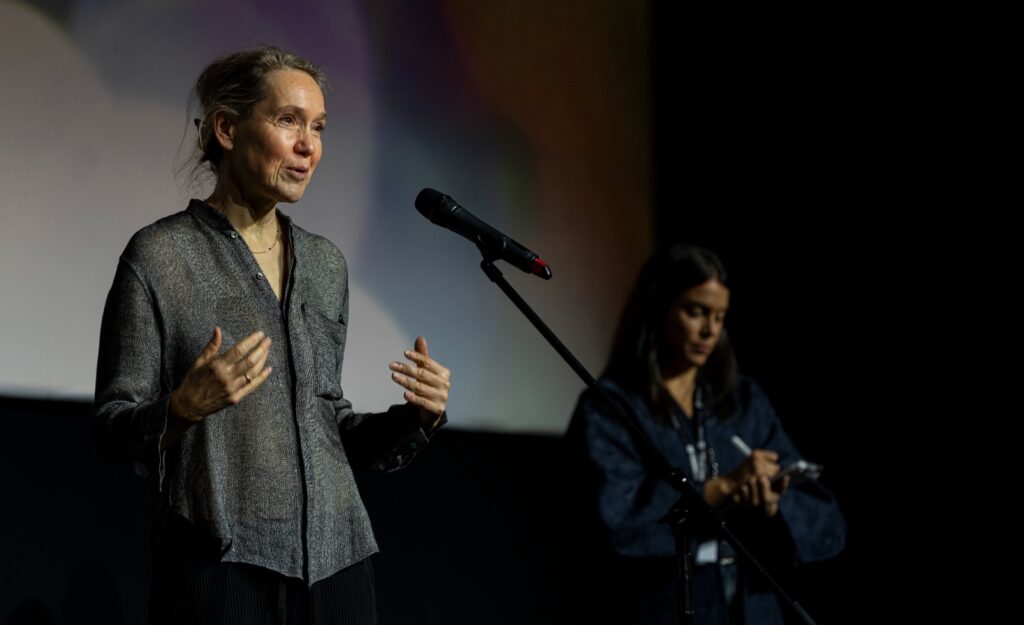
German director Isabelle Stever presented the Spanish premiere of I rarely wake up dreaming, a love story about a young queer couple in wartime Kyiv, written with Ukrainian screenwriter Anna Melikova and inspired by real experiences within their social circles. “We wanted to build a story that didn’t exploit the armed conflict, but could bear witness to what happens when war invades your life,” she explained. Filmed with an almost documentary eye, the film also offers a clear statement about what those who resist are fighting for: “People fight so that everyone else can breathe, so that they can continue to be queer, and to defend democratic values against authoritarian regimes.” She also placed her faith in the power of images: “What you experience in a war is inexplicable, but images can have enormous power to foster empathy.”
French cinematographer Marine Atlan, whose career spans numerous productions, arrived with her feature debut, La Gradiva, winner of the Grand Prize at Cannes Critics’ Week. The film follows a group of teenagers on a school trip to Naples and Pompeii. To find her cast, she held what she described as “a wild casting call” in schools and at demonstrations: “I didn’t want experienced actors, but presences, embodiments.” The first cut of the film ran to four hours. Her aim was to portray a politicised, vibrant generation, even at a twilight moment in history: “We are living through a twilight period, constantly threatened by the end of the world. But amid all this, we can also see a revolutionary movement, a desire to live and a need among young people to project themselves into the future.”
Markus Schleinzer, also known for his work as a casting director on films by Michael Haneke, presented Rose, a black-and-white drama inspired by real events and set in 17th-century Germany, starring Sandra Hüller as a woman who passes herself off as a man. Schleinzer explained that he had discovered another 300 women who had attempted to escape the restrictions imposed on them because of their sex, and that they all shared the same goal: “to gain greater freedom”. On the use of black and white, he explained: “It involves reducing the content, the information. This means that everything becomes more concentrated, and what remains takes on greater force.” Of Hüller’s role, he said: “I wrote the part for her. She is undoubtedly the best German-speaking actress working today.” And, speaking calmly about the film’s selection as Austria’s candidate for the Academy Award for Best International Feature Film, he added: “Whether you win an award or not, the work is already done: the most important thing is the act of making cinema.”
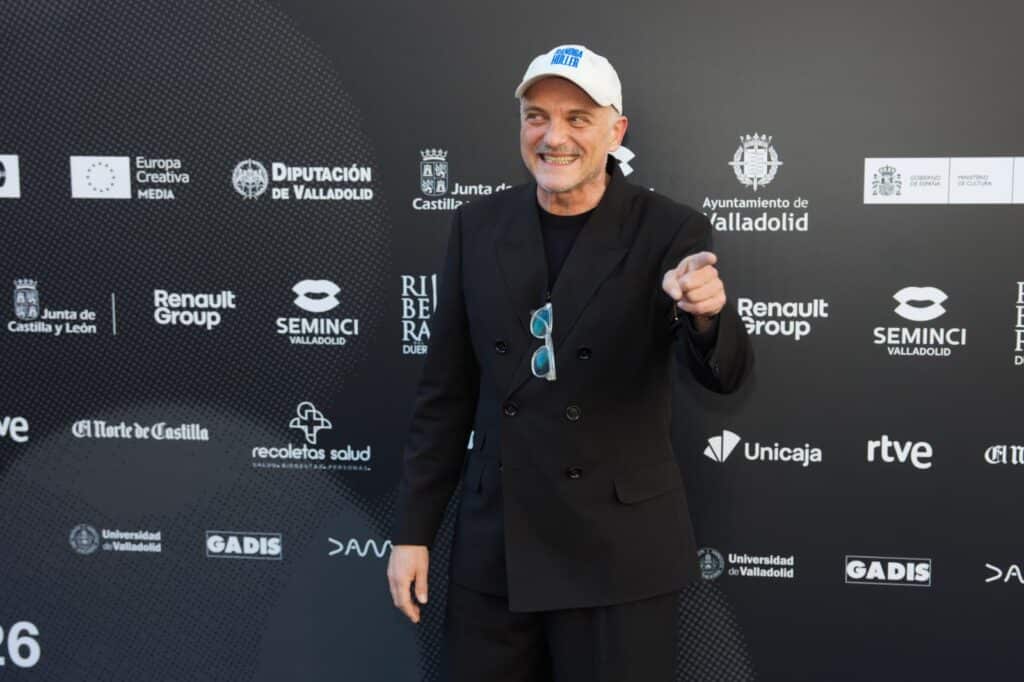
Meeting Point: a refuge in the Alps
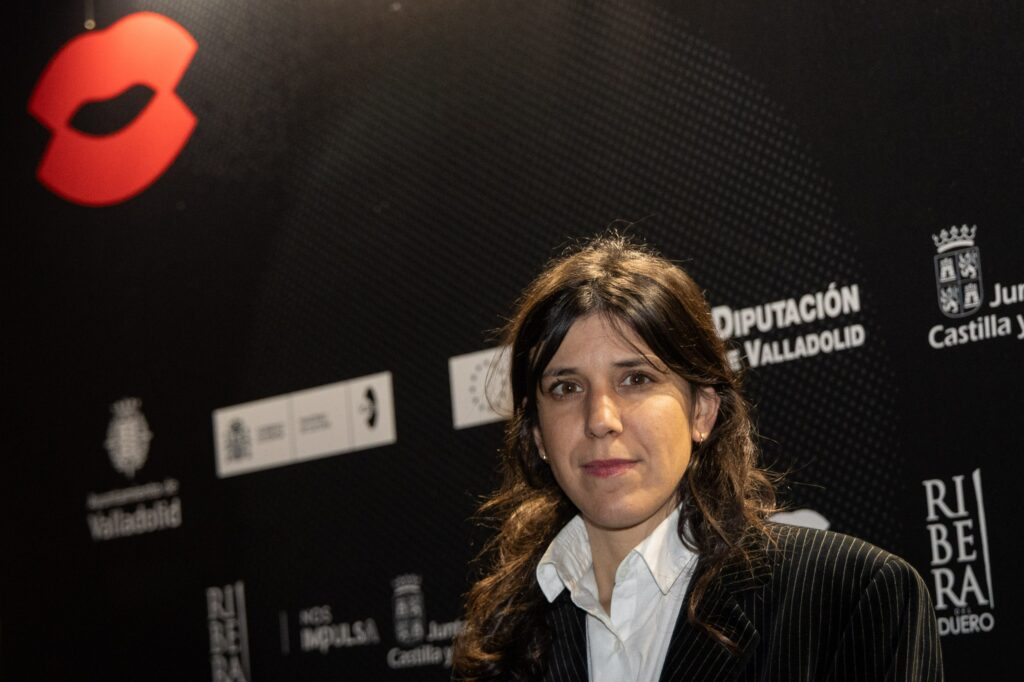
French director Manon Coubia arrived with Forest High, which received a Special Mention in the Perspectives section at the Berlinale. The film follows Anna, Hélène and Suzanne, three women who take turns looking after a remote mountain hut in the Alps. Shot over the course of a year on location, it observes the changing seasons and the stories that emerge amid the silence, the natural world and the comings and goings of visitors.
Coubia knows the subject first-hand: she spent ten years working in a mountain refuge. “I wanted to gather those experiences and turn them into a film, recreating real life and some of the anecdotes told by travellers,” she explained. Her characters are women who “choose solitude as an option”, although she clarified that their differences have more to do with social class than age. The appearance of a soldier towards the end also serves a purpose: “I wanted, in some way, to reflect the ghosts of the past and also present the refuge as a place of resistance, connected to what happened there before.”
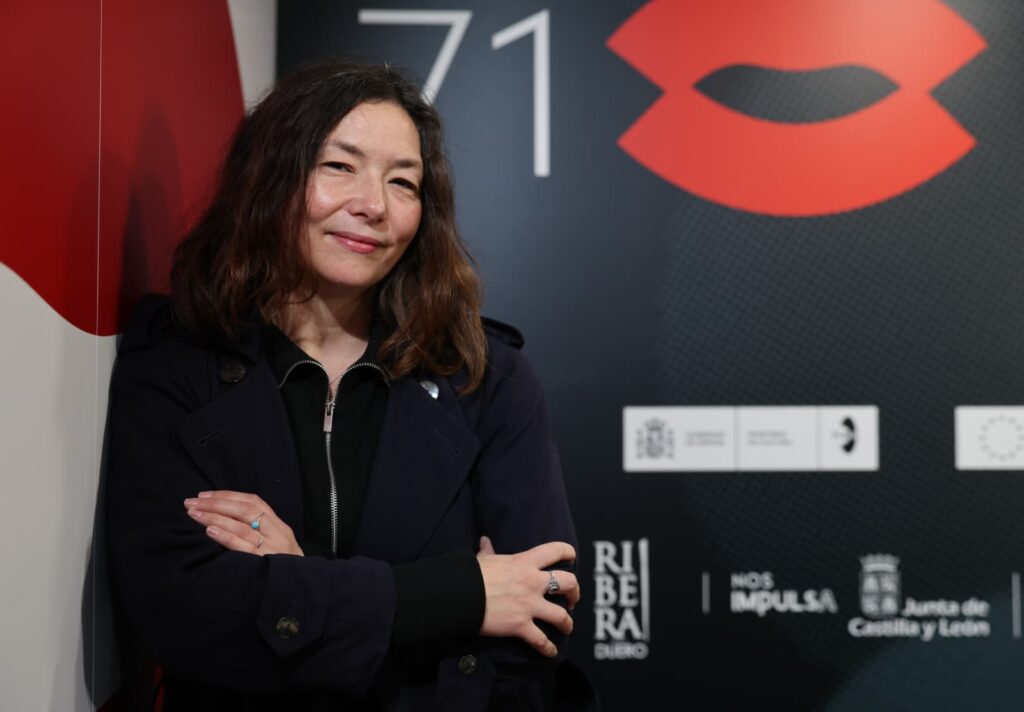
The reception has been mixed, and the director speaks about it openly. Some screenings left audiences cold, although, over time, she received messages from viewers who connected with the film only afterwards. “I would like the film to connect with audiences through the clues it offers them,” she said, highlighting the affection shown by younger viewers, perhaps because they are the ones who visit mountain refuges most often.
Wolf Grrrls!: two sisters tell a true story
Sisters Claudia and Valeria Estrada presented Wolf Grrrls!, a film based on a true story that focuses on girls placed in residential care facilities. The project began six years ago, drawing on Valeria’s experience of being admitted to one of these centres at the age of 14. “If it hadn’t happened to my sister, I wouldn’t know what goes on in these centres for minors,” admitted Claudia Estrada, the film’s director. Her research led her to discover a reality she had previously known nothing about: “They are prisons for minors.”
Over four years, she investigated what had happened, speaking to former fellow residents, judges, members of the Guardia Civil and her sister’s lawyer. Reconstructing the events was not easy, as the experience had happened at such a young age and some memories had been lost. “I start from memories of when I went to visit,” she explained. Valeria did not even know why she had been admitted and had to seek out information to understand how she had ended up there. Claudia questions the fact that girls are not always given the opportunity to explain their side of the story: “They don’t ask for your version because you’re a minor.” She also highlights the lack of information about these institutions and the circumstances of young people who, in many cases, have been victims of their own families or have not received the support they needed. “Nobody looks into what the girls need.”
Inside the centre, Claudia also discovered stories of friendship and mutual support among the young residents. Sisterhood became an essential part of the narrative and a way of challenging the prejudices surrounding them. For this reason, Claudia wanted a team made up of women who understood that reality. Alba Sotorra was among those who believed in the project, at a time when Claudia had not yet considered making a film. “Seeing young people’s reactions is incredible,” she said.
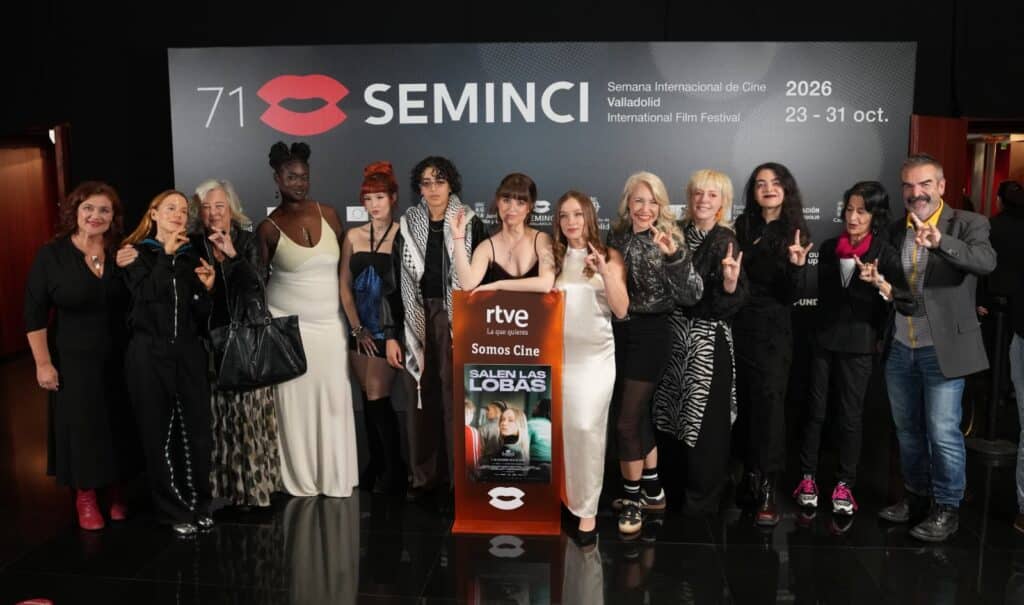
Music offered a refuge inside the centre: an MP3 player could be one of the few ways to escape. In the film, it becomes a bond between the protagonists: “Music brings them together.” The girls themselves created the song through their characters, incorporating their own experiences. Filming was also a revelation for Valeria, who had dreamed of becoming an actress as a child. “I had a fantastic time making this film. In front of a camera, I become someone else. I would love to keep working.” For Claudia, telling this story means accepting a responsibility. Her intention is for the film to reach beyond her sister’s experience and open up a conversation about the protection of minors, justice and institutional accountability. “I would like people to ask themselves whether this system works,” she concluded.
Tiempo de Historia: challenging stereotypes in Camioneros
Francisco Marise presented Camionero in Tiempo de Historia. Inspired by his family memories, the film explores the lives of people who spend much of their time on the road and the difficulties of maintaining emotional bonds. “I felt I wasn’t putting down roots anywhere, and I remembered those truck drivers I used to listen to when I was a child,” explains the director, whose interests include family relationships, waiting periods and the search for a sense of belonging.
The film adopts a narrative structure in which each scene introduces a different character, as if the story itself were travelling. Marise also delves into popular beliefs and the spirituality of truck drivers, seeking to challenge the stereotypes associated with their profession. “I wanted to deconstruct the prejudices that are commonly used to describe male and female truck drivers,” he says. Women play a prominent role, with stories such as those of Gabriela, a transgender truck driver, and Dolores, who balances her job with caring for her children from a distance.
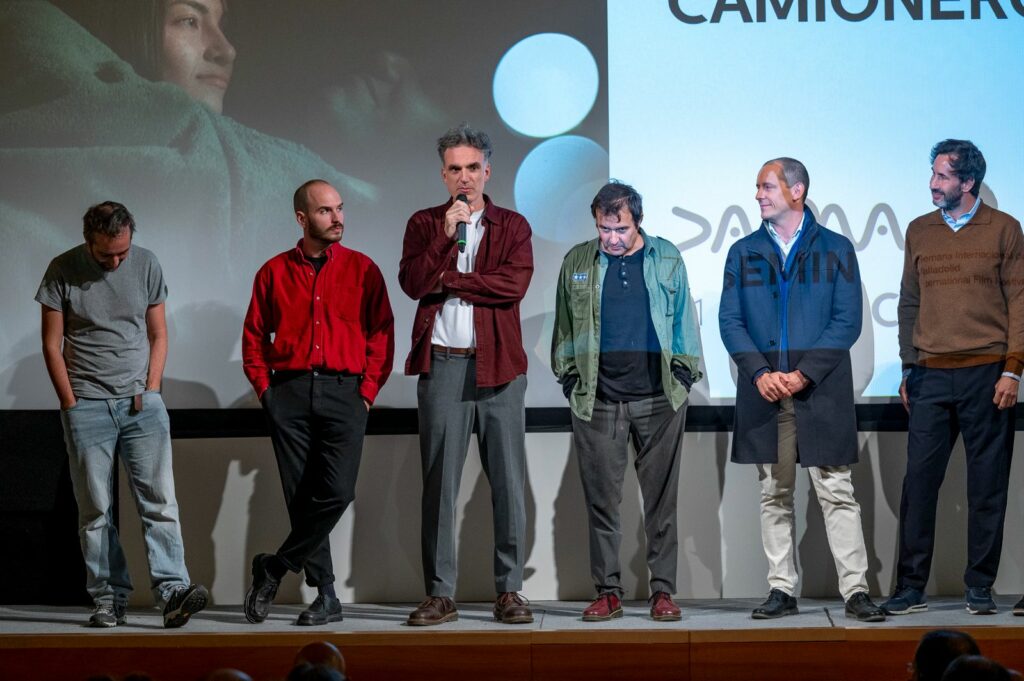
Co-produced by Argentina and Spain, with the participation of Amania Films and La Claqueta PC and support from the Spanish Film Institute, the film posed a major production challenge. “It was a miracle to put together the puzzle that was the shoot,” Marise acknowledges, pleased with the result of a work that reflects his country’s identity and diversity. “It is Argentina at heart and in spirit.”
Alchemies: Farewell, Rivers and the depopulation of Os Ancares
The disappearance of an elderly man in the forest sets Farewell, Rivers in motion, the feature debut of Galician filmmaker Sebastián Uría. Set in Os Ancares, where villages are emptying and making a living from the land is becoming increasingly difficult, the film portrays those who still inhabit these territories and resist abandonment. The cast is led by Amador Arias, the star of O que arde. The title refers to Rosalía de Castro’s poem “Adiós ríos, adiós fontes” (“Farewell, Rivers, Farewell, Springs”), associated with the first major wave of Galician emigration to the Americas. “Our intention was to portray the end of this process and bring the issue up to date,” the director explained.
Uría lives in the area himself, and this is reflected in his approach to the film. “The film is the result of five years of scriptwriting and a direct engagement with the territory. We lived there during the preparation process to understand what I wanted to film and how to translate the inhabitants’ experiences into images and sounds.”
The cinematography by Ion de Sosa and the sound work, involving Amanda Villavieja, give a presence to the voices, houses and sounds of the countryside. Gradually, these elements move from off-screen into the foreground, while ruins and wildlife become traces of what remains when human activity withdraws.
The director avoids idealising rural life: “Humour and retranca — that distinctly Galician blend of irony and dry wit — are part of everyday life and help to lighten the drama.” Solidarity among the few neighbours who remain becomes essential in the face of scarce resources and difficulties accessing healthcare. Music accompanies this transition as a narrative voice connecting Galician traditions with Mediterranean, Sephardic, Portuguese and Latin American sounds. “I wanted that final dance to take on an almost dreamlike quality.”
Elio Toffana and El ladrón de la noche: “It’s incredibly hard when the most important person in your life can no longer remember you”
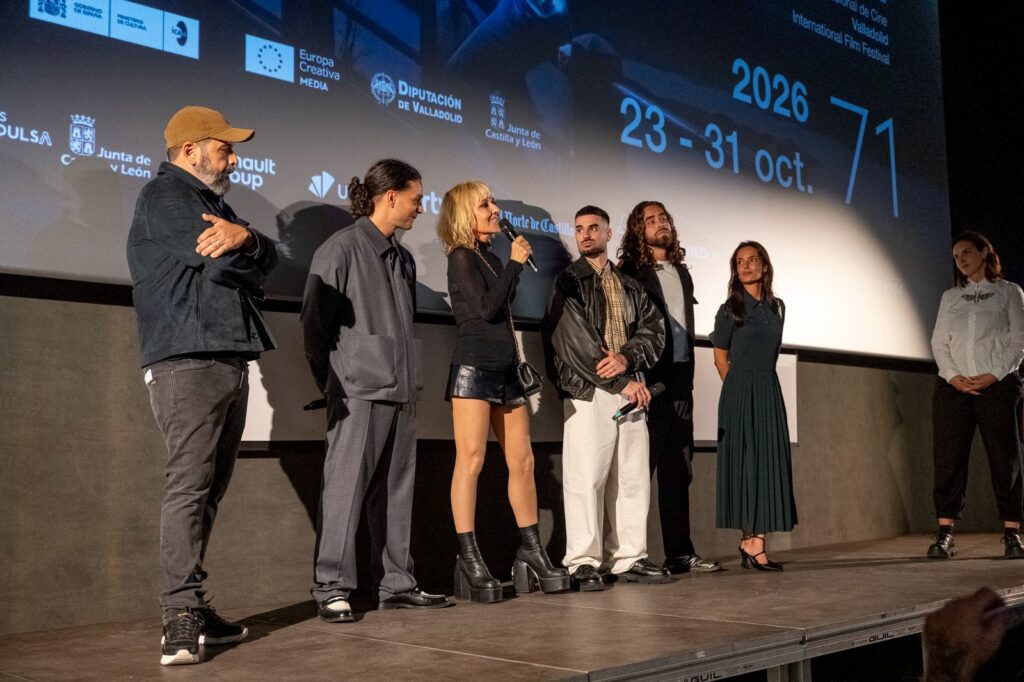
The Special Screenings programme hosted the world premiere of The El ladrón de la noche, a documentary by G. Hernández about Elio Toffana, “the prince of Aluche” and a key figure in Spanish rap, and the impact on his life of the dementia affecting his grandmother and adoptive mother. During the subsequent discussion at Cines Broadway, Toffana explained the title without beating around the bush: “The thief of the night is dementia.” He described the process as “bittersweet, complex and difficult”, although it also brought a sense of victory. “When I arrived at the care home and told my grandmother I was going to star in a film, I felt so happy.” Producer Cayetana Guillén Cuervo recalled how the idea first emerged during the tour of Pandataria: “I told him that one day his life had to be told as part of some kind of project.” Toffana, with his characteristic dry humour, summed up the effort involved: “Time will tell whether it was worth it. Personally, it’s the hardest thing I’ve ever brought into the world.”
SEMINCI for Families: Silvia Cortés and the world of Jasmine & Jambo
Director Silvia Cortés presented Jasmine & Jambo, an animated feature that places music and emotions at the heart of its story. She was delighted with the reception: “Being at SEMINCI is a privilege. We’ve felt so warmly welcomed, and the audience has embraced the film with the same affection.” Featuring the voices of Albert Pla and Anna Moliner, the film begins with the actors’ performances. “They bring everything to it; the characters are born from the actors’ voices,” Cortés explained, because “the animation adapts to the actor’s energy”.
Jasmine literally ventures into music and discovers Soundland, a universe where sounds become images. Cortés was not starting from scratch: “We had already practised that approach in the previous series.” Each setting has its own sonic identity because “every space has its own instruments”. The result is an experience in which “music comes in through sound and image”.
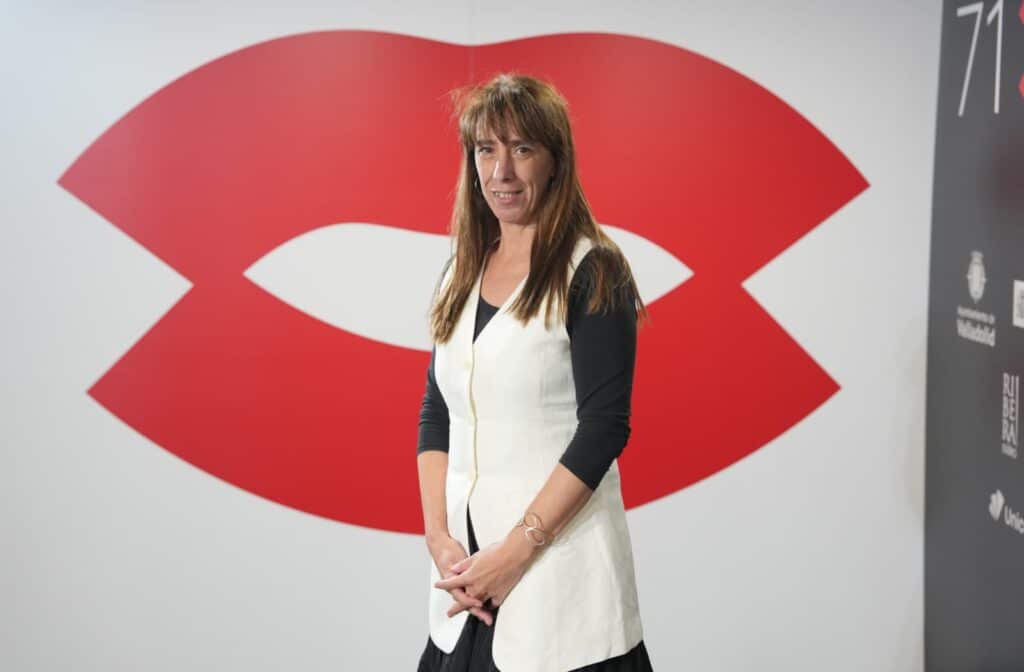
Moving from television to the big screen has allowed Cortés to explain how the protagonists first met and to explore their emotional journey, with layers of meaning that also appeal to adult audiences. The film retains a style that she describes as simple, avant-garde and modernist. At its heart, the film is about friendship and how to cope with loss: “You can start again and find new paths.” The protagonists share that experience, she said: “They recognise themselves in the pain of loss and in their love of music.”
Bresson, with precision: Santos Zunzunegui’s book
Teatro Zorrilla hosted the presentation of Robert Bresson: A Passion for Precision, by film scholar and critic Santos Zunzunegui. The new, revised edition of the texts originally published by Cátedra in 2001 has been published by Imprenta Dinámica in collaboration with Caimán Cuadernos de Cine and DAMA, and now includes more than 350 frames from the French filmmaker’s filmography.
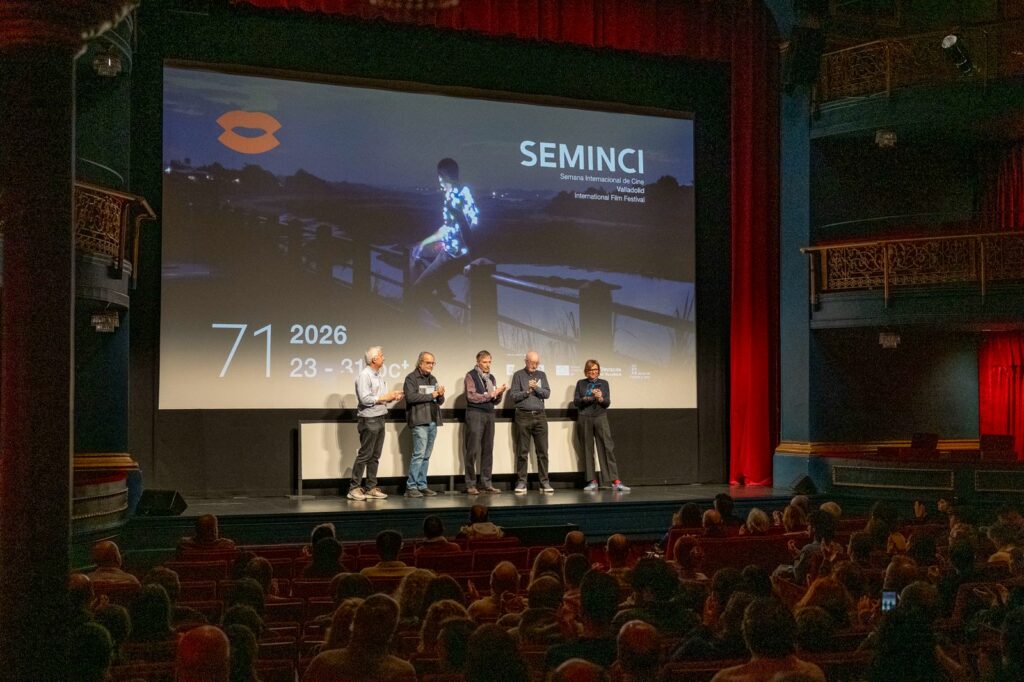
Joining the author were Carlos F. Heredero, editorial director of Caimán Cuadernos de Cine; Juan Zavala, representing DAMA; Ignacio Gutiérrez Solana, from ECAM; and SEMINCI co-director Mariona Viader. The presentation was followed by a screening of Lancelot of the Lake (1974), as part of the retrospective devoted to the history of sound in cinema.