
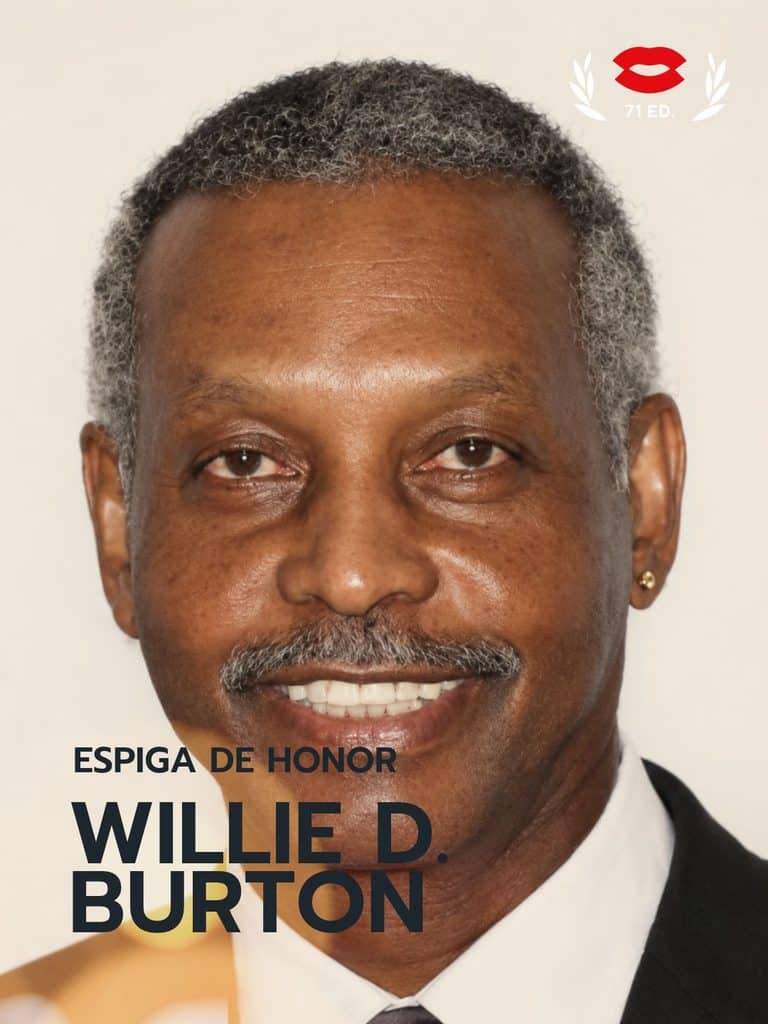
- Willie D. Burton, production sound mixer on The Odyssey, an eight-time Oscar nominee and winner of two Oscars for Bird and Dreamgirls, will receive an Honorary Spike at the festival’s opening ceremony
- The Patio Herreriano in Valladolid will host the exhibition ‘Human Roar, Clamour of the Earth. Inhabiting Sound’, featuring works by five filmmakers
- The ‘Thinking (and Listening to) Cinema’ programme will bring together filmmakers, sound engineers and international professionals
- This edition, dedicated to the narrative power of sound, will be rounded off with the publication of the book The Image-Sound. Sound Calligraphies and Epiphanies of Listening in the History of Cinema, coordinated by the critic and researcher Carlos F. Heredero
The 71st Valladolid International Film Festival (SEMINCI) is dedicating the spotlight to sound as a fundamental narrative and expressive tool in filmmaking. To this end, it is presenting a wide-ranging and diverse programme that includes the retrospective ‘A History of Sound (in Cinema)’, an exhibition at the Patio Herreriano, the publication of the book The Sound-Image: Sonic Calligraphies and Epiphanies of Listening in the History of Cinema coordinated by the critic and researcher Carlos F. Heredero, and meetings with filmmakers, sound engineers and other industry professionals.
Willie D. Burton, SEMINCI Honorary Spike
Sound will also play a prominent role amongst the awards at this 71st edition. Willie D. Burton, one of the most renowned professionals in the US film industry in this field, will receive an Honorary Spike during the festival’s opening ceremony, in recognition of a career spanning more than five decades. Born in Tuscaloosa (Alabama), Willie D. Burton has a career spanning more than five decades and a filmography of over a hundred films as a sound specialist. Throughout his career, he has worked with filmmakers such as Steven Spielberg, Clint Eastwood, David Fincher, Sam Mendes and Christopher Nolan, and has been involved in such iconic films as The Colour Purple, The Goonies, Indiana Jones and the Last Crusade, The Shawshank Redemption, Seven, The Bridges of Madison County, Tenet and Oppenheimer.
He has been nominated eight times for an Oscar for Best Sound or Sound Mixing, winning on two occasions: for Clint Eastwood’s Bird in 1989, becoming the first African American to receive this award, and for Bill Condon’sDreamgirlsin 2007. His accolades also include a BAFTA for WarGames (1983) and the Cinema Audio Society’s Lifetime Achievement Award in 2005. His career also includes two Emmy nominations for his work on the miniseries Roots. Having played a prominent role in the history of American film sound, Burton has contributed to films across a wide range of genres and styles and remains active, with Christopher Nolan’s The Odyssey among his most recent works. A leading figure in the field of film sound, Burton will also be the guest speaker at aThinking about Cinema session on Saturday 24 October.
‘Human Roar, Clamour of the Earth. Inhabiting Sound’, at the Patio Herreriano
On 21 October, Seminci will open the exhibition ‘Human Roar, Clamour of the Earth. Inhabiting Sound’ at the Patio Herreriano Museum, featuring works by the artists and filmmakers Basilio Martín Patino, Takashi Makino, Aura Satz, Helena Girón, Samuel M. Delgado and José Val del Omar. The exhibition is divided into two parts that explore human sound expression and the sounds of nature running wild.
‘Human Roar’ will offer a journey through the relationship between sound, memory and power. One highlight is Concierto con tambor y metralla (Concert with Drum and Shrapnel), the cassette released in 1980 by Basilio Martín Patino, which reconstructs the soundtrack of the Spanish Civil War using sound recordings from the period. Aura Satz analyses the use of sound as a mechanism of control, with particular attention to sirens, which can alert, but also coerce and restrict freedoms.
‘Clamour of the Earth’ brings together works that imagine nature running wild. In Still in Cosmos, Takashi Makino depicts the universe through a soundtrack of drones and explores birth, death, eternity and the chaos of existence. Helena Girón and Samuel M. Delgado explore the sonic history of the Canary Islands through the sea, local legends, volcanic activity and other vestiges that form part of the islands’ identity.
The exhibition is complemented by a work by José Val del Omar: a sound montage created for his experimental short film ‘Fuego en Castilla’ – the second part of his ‘Tríptico elemental de España’ – and which is based on the high-heeled footsteps of the dancer Vicente Escudero, castanets, drums, sound effects for sacred music, drum rolls and the footsteps of a procession. ‘Fuego en Castilla’ was honoured at the 1961 Cannes Film Festival for its technical achievements.
‘A History of Sound (in Cinema)’
The retrospective ‘A History of Sound (in Cinema)’ is one of the central themes of the 71st SEMINCI programme. The series offers a journey through the evolution of sound design in cinema, its expressive uses and its ability to transform the viewer’s experience. The retrospective ‘A History of Sound (in Cinema)’ is one of the cornerstones of the 71st SEMINCI and traces the evolution of sound as a narrative and expressive device that transforms the cinematic experience.
The programme begins with M (Fritz Lang, 1931), a pioneering film in the narrative use of sound through the murderer’s famous whistle, and Enthusiasm: Symphony of the Donbas (Dziga Vertov, 1931), where sound editing serves an ideological purpose. The experimentation continues with the urban soundscapes of Playtime (Jacques Tati, 1967), which satirise modernity, and the austere rhythm of Lancelot du Lac (Robert Bresson, 1974), constructed through the repetition of armour clanging, footsteps and clashes. In The Conversation (Francis Ford Coppola, 1974), listening drives the narrative; in The Shout (Jerzy Skolimowski, 1978), sound takes on a physical and unsettling dimension; and in Blow Out (Brian De Palma, 1981), the manipulation of audio propels the narrative. Lisbon Story (Wim Wenders, 1994) reflects on the relationship between image and sound through a recording of Lisbon’s soundscape.
The section dedicated to the 21st century brings together works that place sound at the heart of the experience. In The Tribe (Myroslav Slaboshpytskiy, 2014), which features deaf characters, their presence and absence determine expression and perception. Lawrence Abu Hamdan explores sound’s political and forensic dimensions in Rubber Coated Steel (2016), through the acoustic analysis of gunshots, and its capacity to document conflicts and construct memory in The Diary of a Sky (2024). In Atlantics (Mati Diop, 2019), the soundscape of the sea connects the visible and the invisible through emotion. In Memoria (Apichatpong Weerasethakul, 2021), sound acts as a lingering trace that the protagonist attempts to decipher. The Zone of Interest, (Jonathan Glazer, 2023) shifts the horror into the off-screen sound space, whilst Preemptive Listening (Aura Satz, 2024) explores the power of sirens to shape collective perception and function as instruments of warning and control.
Thinking (and Listening) to Cinema: Filmmakers and the World’s Leading Sound Designers
The programme is rounded off with several days of ‘Thinking (and Listening) to Cinema’, which will bring together filmmakers and sound professionals in Valladolid, including Honorary Spike recipient Willie D. Burton, a leading figure in the field of film sound, who will open the event with the session ‘A Sonic Odyssey’ on Saturday 24 October.
On Monday 26 October, the round-table discussion ‘Echoes of Reality. Sound in Non-Fiction, dedicated to the Master’s in Creative Documentary at Pompeu Fabra University – which was awarded the Academic Espiga de Honor at the 71st SEMINCI – will feature filmmakers Eva Vila, Irene Bartolomé, Lois Patiño and Cristóbal Fernández, who will discuss different approaches to filmmaking based on their respective experiences.
‘The Art of Listening: Great Sound Designers of European Cinema’, organised in collaboration with the European Film Academy, will take place on Tuesday 27 October. Participants will include Axel Arft, a member of the sound team for Wim Wenders’ Wings of Desire; Silvia Moraes, a regular collaborator with Paolo Sorrentino on films such as The Hand of God, Youth and Parthenope; Daniela Bassani, a leading sound professional in Italian cinema and winner of the David di Donatello for Me Captain; and Tarn Willers, winner of the Oscar and BAFTA for Best Sound for The Zone of Interest. The event will provide an opportunity to share different professional approaches to sound in European cinema and to highlight its role in the narrative and expressive construction of films.
On Wednesday 28 October, the programme will continue with the launch of The Image-Sound: Sonic Calligraphies and Epiphanies of Listening in the History of Cinema, a new book coordinated by Carlos F. Heredero. The journalist and film critic will be joined by sound designer Tarn Willers, writer Carlos Losilla, and writer and programmer José Antonio Hurtado.
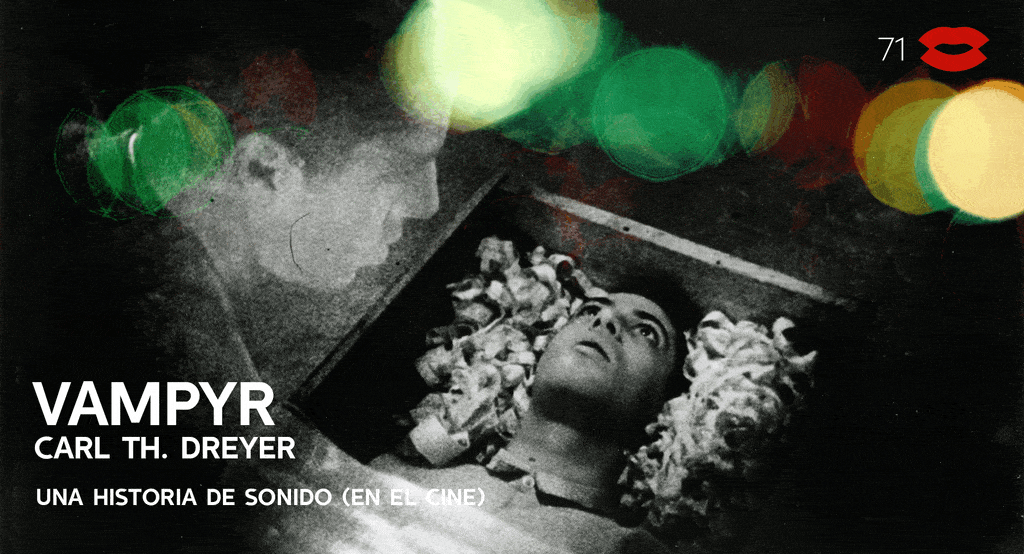
Dreyer’s Vampyr, with live music by the OSCyL
The 71st SEMINCI will screen Vampyr (1932), one of the masterpieces of fantasy cinema and Carl Th. Dreyer’s first sound film, with a screening accompanied live by the Castilla y León Symphony Orchestra (OSCyL) on 22 October in the Jesús López Cobos Symphony Hall at the Miguel Delibes Cultural Centre. The orchestra will perform the original score by Wolfgang Zeller, reconstructed by Timothy Brock from the original manuscript, under the baton of the British conductor Robert Ames. The screening will offer an opportunity to rediscover the unsettling and dreamlike atmosphere of this unique film, which is also included in the programme ‘A History of Sound (in Cinema)’, dedicated to one of the filmmakers most closely associated with the history of SEMINCI.