- A mining town in Palencia, a great-grandfather’s correspondence under the Vichy regime, two sisters in a tribe between Syria and Lebanon, a love story spanning fifty years, the miracle of Saint Anthony between Lisbon and Madrid, and a theatre director’s dream in New York.
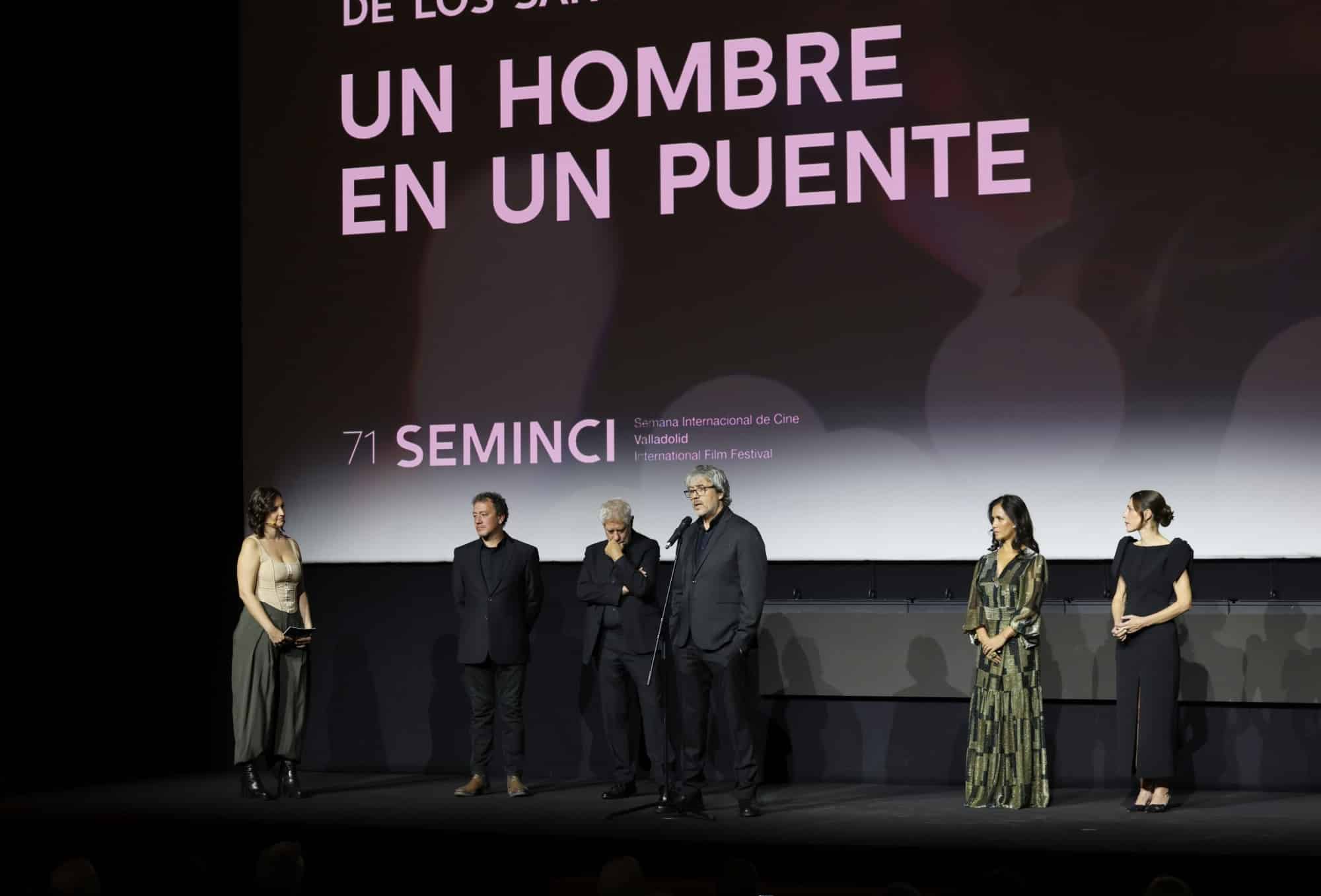
The seventh day of the 71st SEMINCI had a distinctly Castilla y León flavour. Castilla y León Cinema Day brought Valladolid-born actress Elvira Mínguez, recipient of the Honorary Golden Spike, together with the team behind Un hombre en un puente, a world premiere filmed in the province of Palencia, to the Teatro Calderón. Those attending included David Martín de los Santos, José Nolla, Roger Casamajor, Nidia Bermejo and Ruth Díaz. Arantxa Vela presented the other world premiere in the Castilla y León en Largo section, Octurno o el sueño de Javier Molina. They were joined by French filmmaker Emmanuel Marre, Rakan Mayasi, Omar Al Abdul Razzak, Brazilian director André Novais Oliveira, and Portuguese filmmakers João Pedro Rodrigues and João Rui Guerra da Mata. In the evening, MERCI presented its first José Luis Cienfuegos Award to Otilio García Gobeo at the Cines Broadway.
Official Section: a Vichy official and a man returning to his hometown
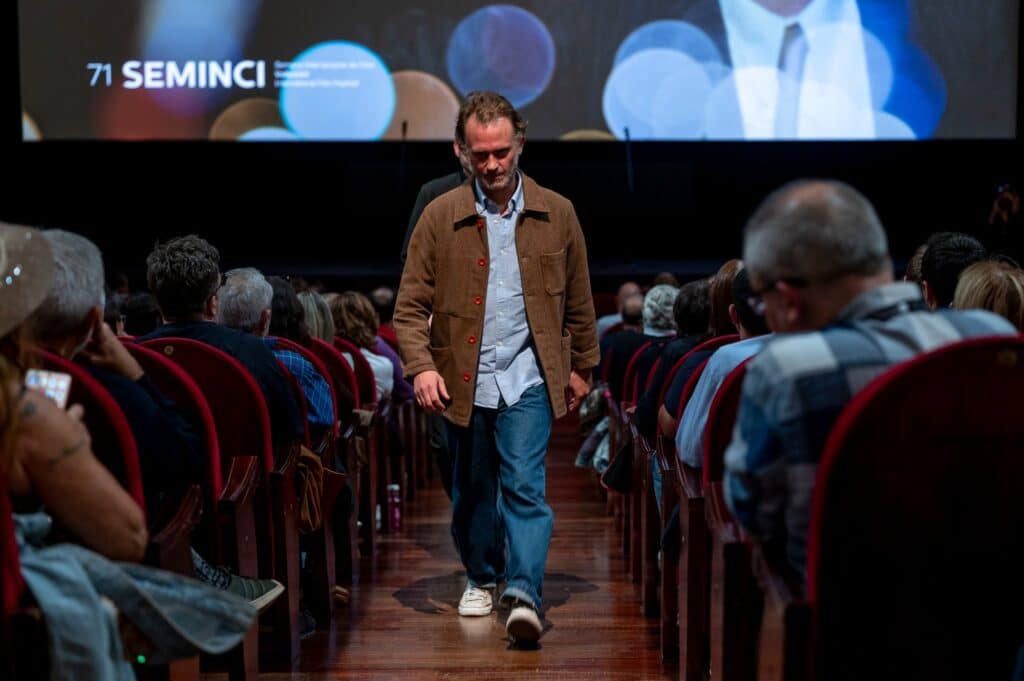
Emmanuel Marre presented the Spanish premiere of A Man of Our Time, his second feature film, which explores the Vichy government during the Nazi occupation through the story of Henri Marre, a man who sees an opportunity for career advancement while dealing with his family’s circumstances. The film grew out of his great-grandparents’ letters: “The most interesting thing is that my great-grandfather never explained exactly what he did in his job at the unemployment office”. His research led him to uncover a past he had known nothing about: “It was a shock to discover that, without any pressure whatsoever from the Germans, France created a system of forced labour camps for foreigners”. It was essential to him that audiences question the period in which the story takes place: “It was crucial for us that viewers should wonder whether they were watching events set in 1940 or in the present day”. He makes no secret of his perspective on the current situation: “Fascism and authoritarianism do not emerge overnight; they develop step by step, through small advances”.
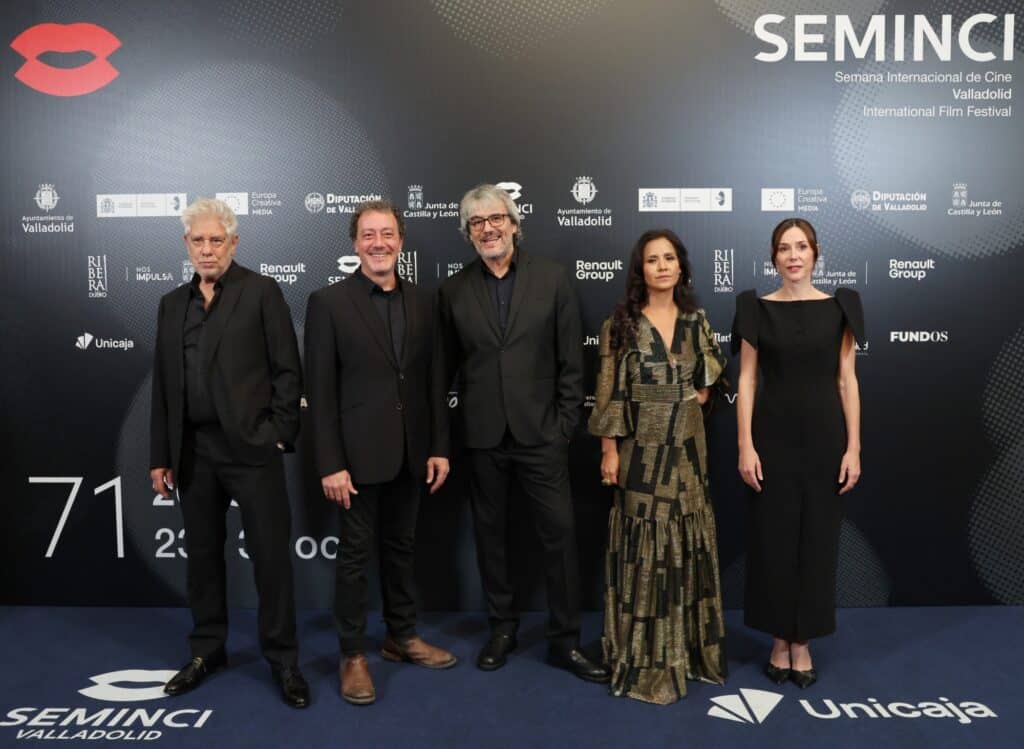
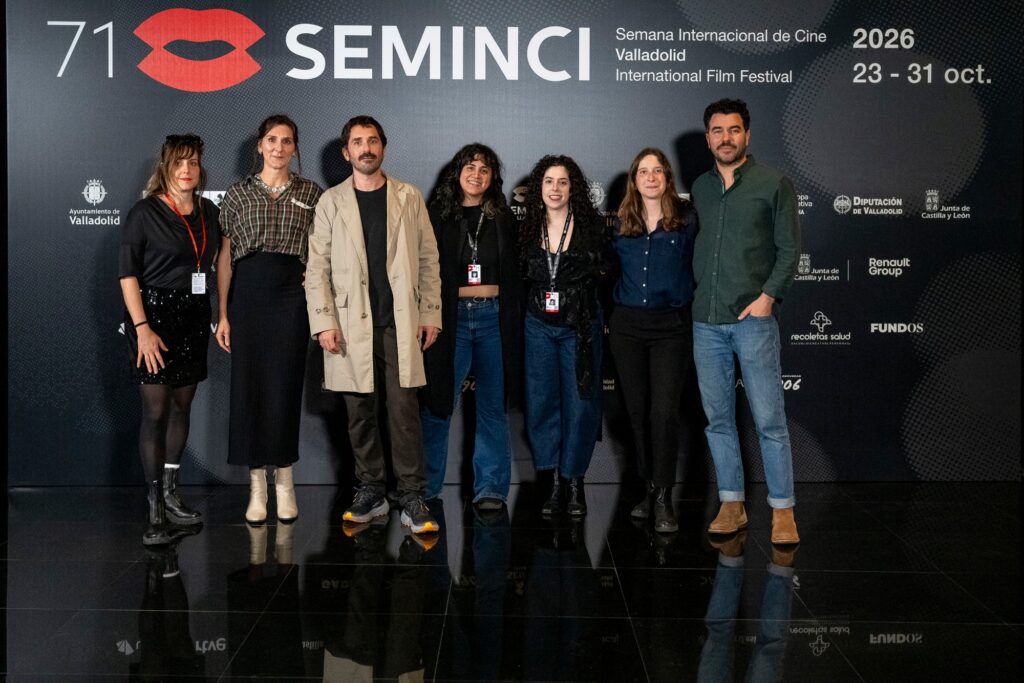
Out of competition, David Martín de los Santos presented the world premiere of Un hombre en un puente, alongside actors Roger Casamajor, Nidia Bermejo and Ruth Díaz, and producer José Nolla. The film tells the story of Andrés, a middle-aged man who, after a lifetime of questionable decisions, returns to his hometown of Cervera de Pisuerga in search of a second chance. The director approached the story through Bardem’s Calle Mayor: “Cervera is a town with a great deal of texture, bearing the marks of its mining past. Its landscapes evoked an intimacy and restraint that the story demanded”. Speaking about the protagonist, an uncomfortable character, he said: “I learned to love the character and look at him with humanity, without justifying him, but trying to understand everything that brought him to that point”. Casamajor approached his role through solitude, while Bermejo, who plays an immigrant woman, described the encounter between the two characters as “more than a crossing of paths, a collision of paths”.
Castilla y León Cinema Day: Elvira Mínguez receives the Honorary Spike
Valladolid-born actress, director, screenwriter and author Elvira Mínguez received the Honorary Golden Spike at a ceremony at the Teatro Calderón celebrating cinema from Castilla y León. José María Esbec, the theatre’s Artistic Director, presented the award with a speech entitled Elvira para el tiempo: “Elvira Mínguez has stopped time for us many times”. After reflecting on what she had done to deserve the honour, Mínguez came to a conclusion: “I like to think that I’m just an actress who has been luckier than others. This award belongs to all the people who have been behind me; it is a collective award”. She thanked Imanol Uribe for giving her her first opportunity with Días contados, and the technical crews for their patience with her questions: “I’m more of a hiking-boot actress than a high-heels-and-red-carpet one”. Addressing her friends in Valladolid, she said: “We’ve grown up, we’ve been educated and now we’re growing old together”. She ended with a promise and a joke: “Another 30 years in my career, at the very least. Let Chronos come along and give me a face”.
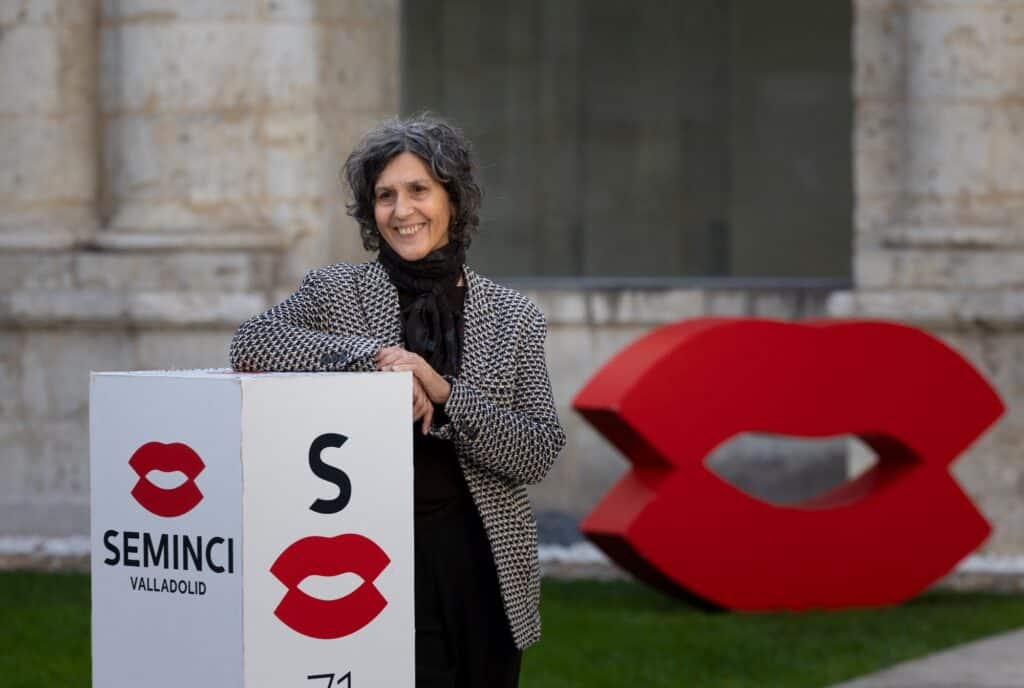
Earlier that day, at the University of Valladolid’s Paraninfo, she had looked back on her career during Todos los registros, part of the Thinking (and Listening to) Cinema series: “Although I left for Madrid many years ago, this will always be my home”. She spoke about her debut in 1994 with Días contados, which she described as «like being thrown straight into the jungle”, and her move into literature with two novels: “If someone had told me that doors would still be opening for me when I was nearly sixty, I wouldn’t have believed them, but it’s true”. On memory as a theme, she said: “To know who we are, we have to look back”. And speaking about Clara Campoamor, whom she portrayed in La mujer olvidada, she remarked: “She was a woman ahead of her time, a humanist and even a feminist”.
Meeting Point: two sisters between Syria and Lebanon and a love spanning half a century
Rakan Mayasi presented Yesterday the Eye Didn’t Sleep, a co-production between Belgium, Lebanon, Palestine, Qatar and Saudi Arabia. The film grew out of something deeply personal: the story of his grandmother, who married at the age of fourteen and often recounted her experiences, as well as a desire to explore an alternative form of filmmaking, without a script or professional actors. Shooting in an area of ongoing conflict was far from straightforward: “We filmed during a ceasefire and tried, as far as possible, to avoid getting close to the most dangerous areas, but there were constant Israeli air strikes and explosions”. The priority was to look after the crew, which carried a considerable psychological burden.
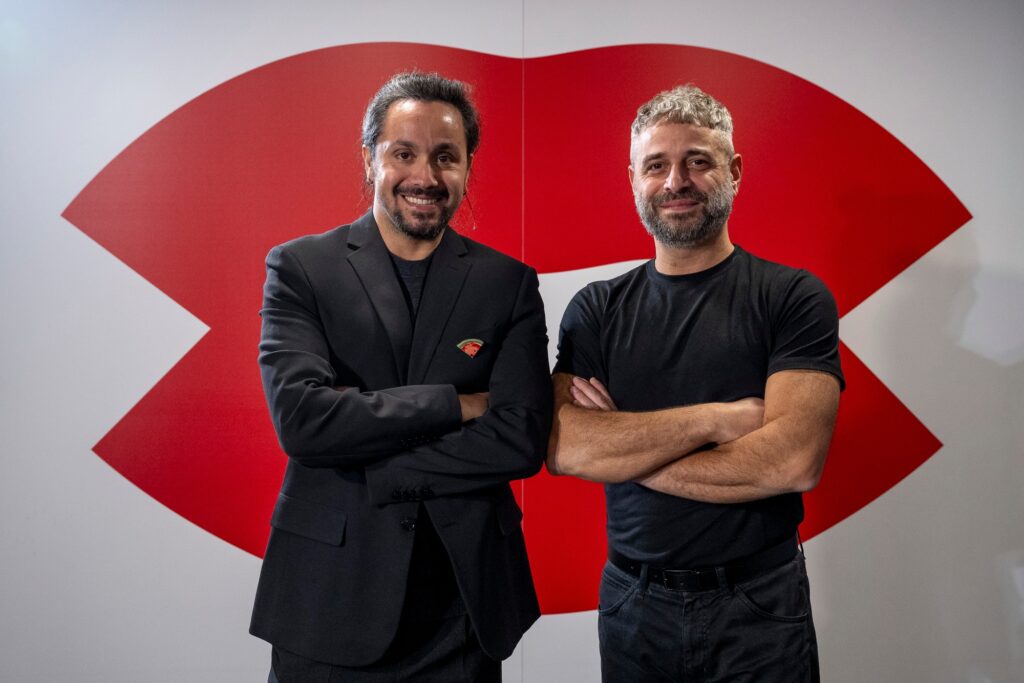
The landscape, he explained, is another character in the film: “The power of the place and the vast expanse of land where we were filming created a kind of duality between the mythical and the real. Its grandeur can sometimes make even people seem small”. Against this backdrop, two sisters clash within a tribal system in which the survival of the group takes precedence: the elder, a nurse, does not hesitate to sacrifice herself, while the younger refuses to be the solution to the conflict. In formal terms, Mayasi wanted to “fit or cage” the characters within a 4:3 aspect ratio, using off-screen space and continuous sound to suggest an invisible form of violence. The wedding, he added, is not a moment of narrative relief but an almost dreamlike state, a trance: “You’re watching it for a few minutes, but when it ends, it can even make you feel guilty about returning to reality”. He hopes audiences will come away with “intense emotions from the drama, but without the film itself being melodramatic”, prompting them to question things and reflect on cultural and human differences.
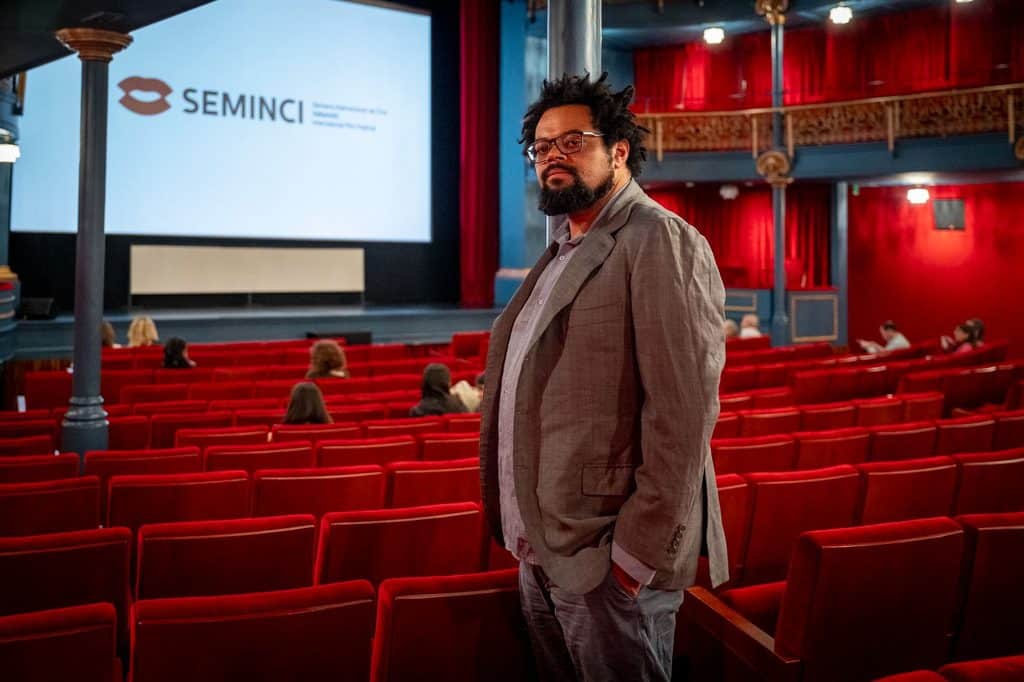
Brazilian director André Novais Oliveira presented the Spanish premiere of Se eu fosse vivo… vivia, his fourth feature film, which follows Gilberto and Jacira from their teenage romance until illness enters their lives fifty years later and threatens to separate them. The film is based on the story of his own parents: “It’s a film about grief, the grief my father and I experienced when my mother died in 2018”. His mother was an actress, and her loss was deeply felt by Brazilian cinema. His father, Norberto Novais Oliveira, plays Gilberto in the film. Shot on delicate 16mm film, it explores love and companionship through the warmth and closeness of the human body, as well as the stories hidden within everyday objects. “In all my films I’ve explored the idea of everyday life, and in this one especially so, because it’s the life I’ve experienced in my own home”, he concluded.
Time of History: Papagayo and an identity that is not so fixed
Omar Al Abdul Razzak presented Papagayo, a film that draws on his relationship with an Israeli Jewish woman to explore identity, coexistence and political conflict. One of his main concerns, shared with his partner, was to “challenge the idea of identity”, because, as he explained, “identity is not so fixed”. The contradiction between how people identify themselves and how others perceive them is captured in one line: “He tries to travel around as a Spaniard”. The director added: “If I leave out my surname, I have more opportunities”.
The relationship serves as a way of questioning the labels imposed on people from different backgrounds: “Everyone keeps putting labels on people”. It also raises questions that accompany any relationship: “What is a couple? As soon as there’s a couple or a pregnancy, you start wondering what will come of it”. For Al Abdul Razzak, love is a gateway to politics: “Audiences connect more readily with a love story”. Speaking about the territory in which part of the story unfolds, he said: “I found it a very confusing place. It seems like somewhere that welcomes all cultures, but it isn’t”. The parrots in the title, with their ability to repeat words, serve as a metaphor for inherited narratives and rhetoric: “We repeat things without questioning them”.
Alchemies: the miracle of Saint Anthony between Lisbon and Madrid
João Pedro Rodrigues and João Rui Guerra da Mata presented the Spanish premiere of 13 Pins, which weaves together two very different festivities, one in Lisbon and the other in Madrid, both sharing the same origins: the miracle of Saint Anthony. The film began with a commission from the BoCa Biennial, which asked them to create a work connecting the two cities. Rodrigues explained the anachronistic approach running through the film, similar to that adopted by Francisco de Goya in the frescoes at the Hermitage of Saint Anthony of La Florida: “The miracle took place in 13th-century Lisbon, but Goya chose to paint it as though it had happened in the 18th century”. This led to the question at the heart of the film: how would it be represented today?
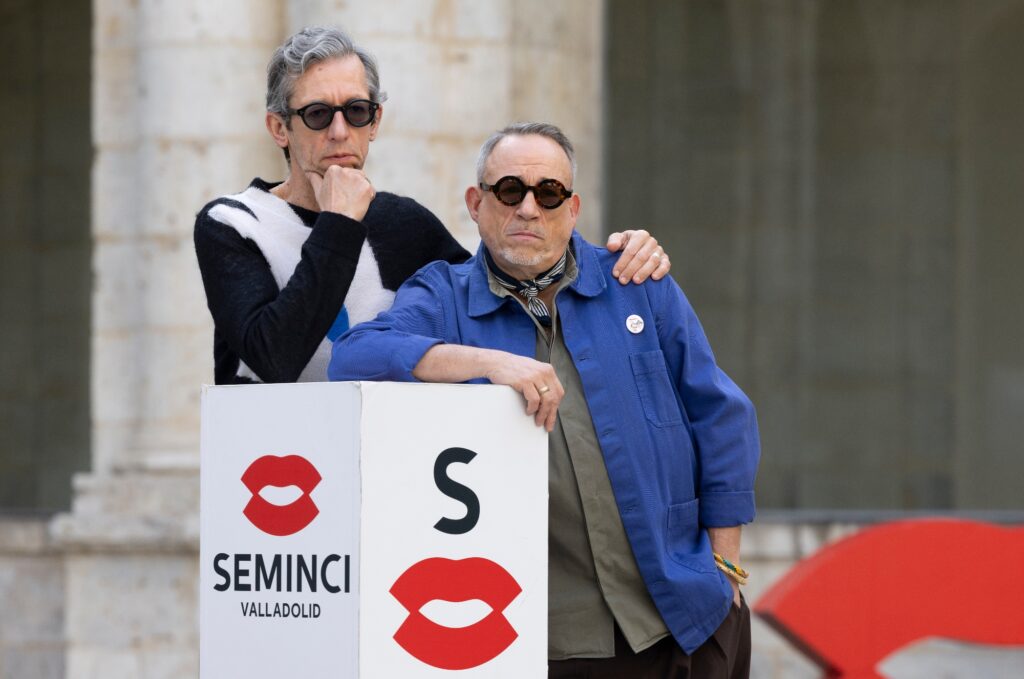
Popular traditions and legend come together in an exploration of the role miracles play in the modern world. “We’re in the realm of fantasy. We’re not believers, but we were interested in exploring how the presence of Saint Anthony and religion continues to shape our society”, Rodrigues concluded.
Castilla y León Features: a dream of theatre in New York
The Castilla y León Features section featured one of the two world premieres in its programme: Octurno o el sueño de Javier Molina, directed and written by Arantxa Vela and co-produced with the Teatro Calderón. The film follows the co-Artistic Director of New York’s Actors Studio as he works towards an adaptation of Arthur Miller’s celebrated play A View from the Bridge. Vela shared with the Valladolid audience the challenges and privileges of entering the intimate world of theatre: “When you’re filming something like this, you don’t want to disturb or get in the way of rehearsals. When they become aware that you’re there with a camera, you somehow disrupt their work, so you have to be very careful. The beauty of rehearsals lies in allowing people to dare to make mistakes”.
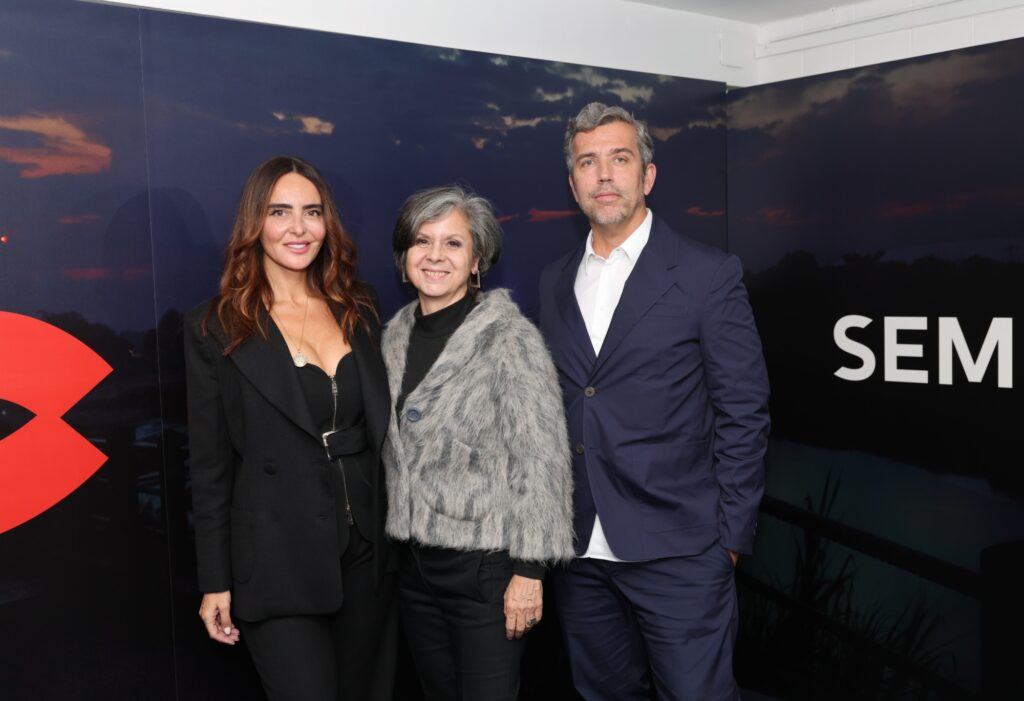
The director also encouraged audiences to go to the theatre: “That’s where the magic happens, because theatre is impossible to capture on film. Even if you film it well, you still haven’t captured it; the live presence is irreplaceable”. Actor Manuel Andrés del Carmen, who joined her for the discussion, paid tribute to the entire team: “You saw how many people came out for the final curtain call. There’s production, lighting, sound… and that wasn’t even everyone. You can’t imagine how many people are behind a production like this. It takes an incredible amount of effort to keep theatre going”.
MERCI presents its first José Luis Cienfuegos Award to Otilio García Gobeo
On its second day, the MERCI Independent Film Market, organised by SEMINCI in collaboration with ADICINE, held the presentation of its first José Luis Cienfuegos Award at the Cines Broadway. The award went to Otilio García Gobeo, who has been at the helm of Cines Golem and Golem Distribución for more than forty years. The ceremony was chaired by Mariona Viader, alongside Olimpia Pont Cháfer, Enrique Costa and Lara Pérez Camiña.
Costa recalled how the idea for the award came about: “I remember one day he called us together and said, ‘MERCI needs a bit more polish’. That’s how he came up with the idea of an industry award”. Pérez Camiña reflected on its purpose: “To defend and help independent cinema grow, cinema that embraces diversity and is open to other perspectives and cultures. Cinema that he not only wanted to protect but also bring closer to audiences, especially younger viewers. ‘Without them, there is no future’, he used to say”. Pont Cháfer, who highlighted Cienfuegos’s direct influence on the choice of recipient, told the award winner: “If there was ever an obvious candidate to receive the first José Luis Cienfuegos Award, it was you”.
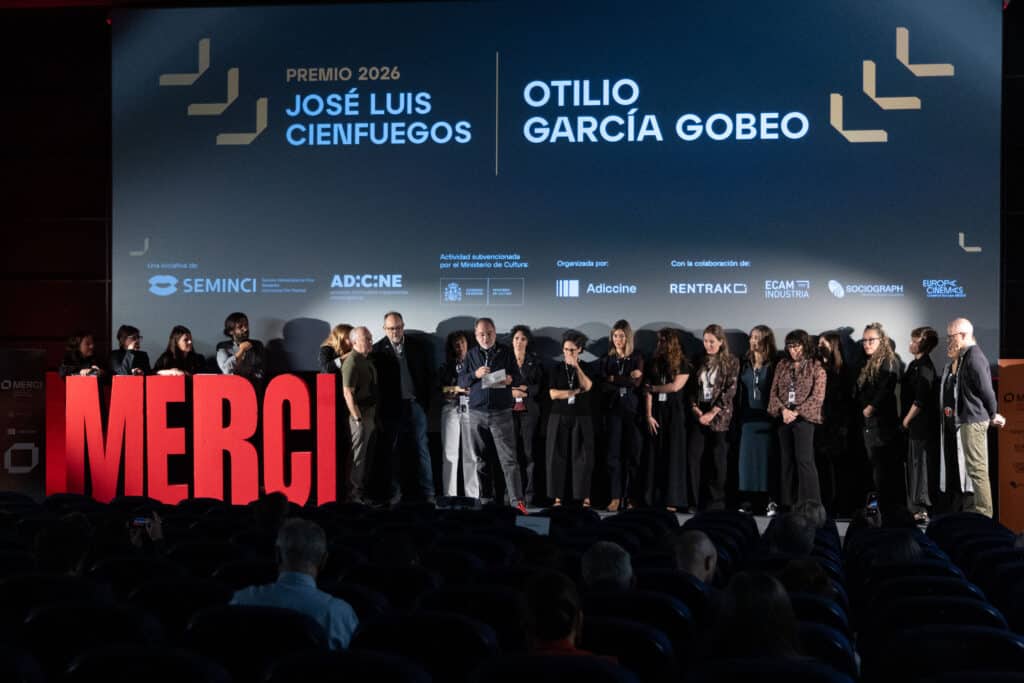
Since Golem was founded in 1982, when, as Pont Cháfer recalled, “five long-haired young men got together in Pamplona to screen films”, García Gobeo has helped bring the work of Lars von Trier, Aki Kaurismäki, Michael Haneke, Christian Petzold, Takeshi Kitano, Mia Hansen-Løve, Maren Ade and Claire Denis to Spanish audiences. “For more than forty years, he has devoted himself to audiences. A career that has given rise to one of the strongest and most consistent catalogues in film distribution in our country”, Viader highlighted. The evening’s surprise came when around twenty members of the Golem team took to the stage to present the award to their leader.
Clearly moved, García Gobeo accepted the award as a collective achievement: “I want to dedicate it to the five twenty-something dreamers who founded the company and to my entire team: the more than one hundred people who make it possible for the magic of cinema to reach so many places”. He concluded: “Having the award bear his name is a reminder that we must continue to believe in the transformative power of cinema. It is a symbol of cultural resistance, boldness and love for a cinema that challenges the margins”.
MERCI: cinemas, distributors and platforms working together for audiences
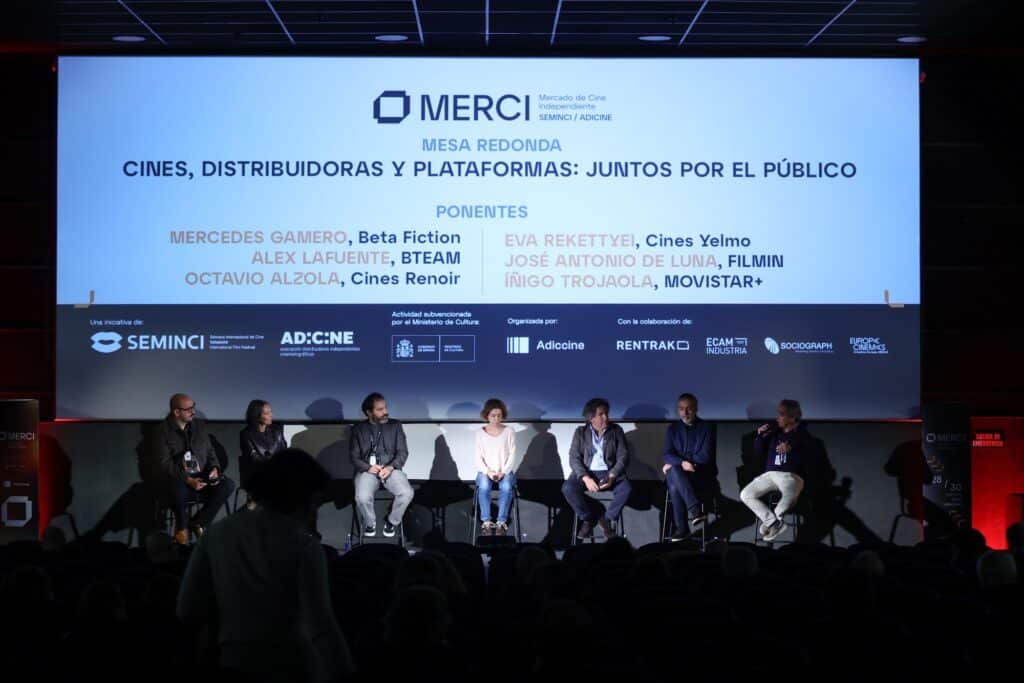
The MERCI programme also included two round-table discussions. The session Cinemas, distributors and platforms: working together for audiences brought together Eva Rekettyei (Cines Yelmo), Mercedes Gamero (Beta Fiction), Octavio Alzola (Cines Renoir), José Antonio de Luna (Filmin), Íñigo Trojaola (Movistar+) and Álex Lafuente (BTEAM Pictures).
All agreed that relations between the different sectors are becoming increasingly fluid, but that more bridges still need to be built. “There needs to be more variety, and one film shouldn’t take over the entire box office”, said Gamero. Trojaola summed up the challenge: “The important thing is to rebuild the habit of going to the cinema among audiences”. They also celebrated a successful year for Spanish cinema, with films such as Sirat (2025) and La bola negra (2026): “The bigger a film becomes in cinemas, the better it is for everyone», De Luna concluded.
Mark de Quervain, Head of Film Strategy at Indy Cinema Group, speaking remotely in collaboration with Europa Cinemas, championed the potential of artificial intelligence in cinema marketing and audience engagement: “With simple tools and very little risk, you can help people find the film that interests them most”.