- The Francoist concentration camps, a teenager filmed from the age of eight to eighteen, and a group of friends reading Anna Maria Ortese in Berlin: a day shaped by memory, time and listening.
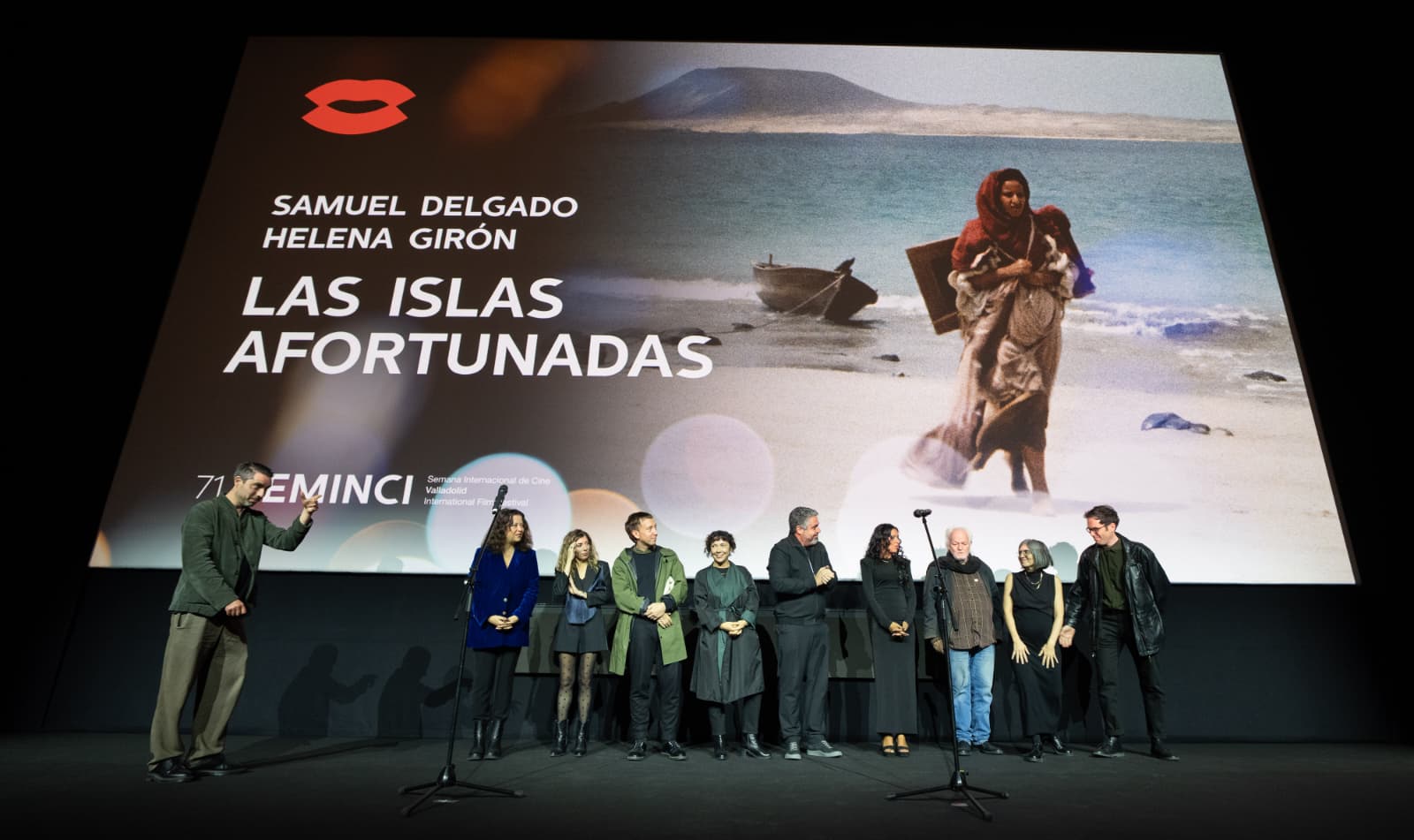
Tuesday brought filmmakers from across the world to Valladolid with films that confront the past head-on. Helena Girón and Samuel Delgado, alongside Lou Castel and Luisa Ahl Laabiad, presented Las islas afortunadas in the Official Section. Punto de Encuentro featured Rwandan filmmaker Marie-Clémentine Dusabejambo and Japanese director Yukiko Sode; Time of History welcomed Eloy Enciso, accompanied by his leading actress Elsa Pereira, French filmmaker Maxence Voiseaux and Spaniard Pablo Maqueda; while Alchemies featured American director Ted Fendt and Iranian filmmaker Karim Lakzadeh. The programme dedicated to sound also brought together five of Europe’s leading sound recordists and artist Aura Satz.
Official Section: a marquis, a well and a fifteenth-century island
Helena Girón and Samuel Delgado presented the Spanish premiere of Las islas afortunadas in competition. The film tells the story of Fátima, a woman in the service of a declining marquis who controls the only source of drinking water on La Graciosa, in the Canary Islands during the period of colonial resettlement. Following years of experimental and documentary filmmaking, the directors return to fiction after an extensive research process, drawing on everything from notarial records to the book Le Canarien. “We wanted to create new points of reference that challenge colonial narratives,” explained Delgado. Girón added that they wanted to embrace the tone of adventure films in order to take these stories “to other places and towards other protagonists who are not usually represented”.
Both directors also discussed what the film has to say about the present day. “There is an element of retrofuturism, as it is set in the past, but with just a few changes it could become a dystopia about the control of resources,” Delgado observed, recalling the Atlantic migration route: “The image of a pregnant woman in the middle of the sea immediately brings to mind the situations we are witnessing today.” The title, Girón added, refers to the irony with which the islands were marketed to settlers, “in much the same way as happens today with tourists”.
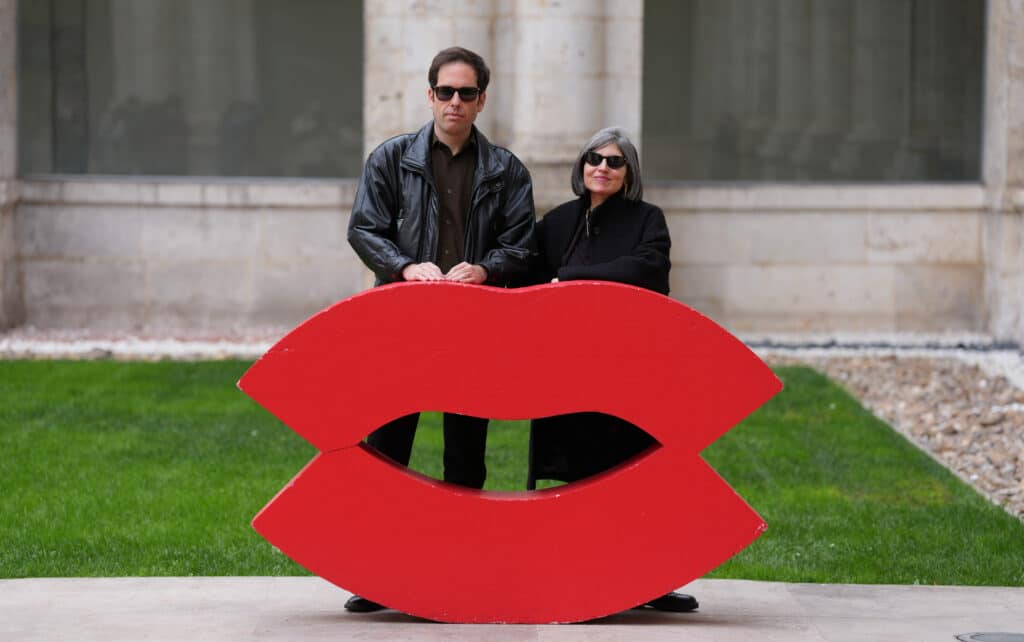
José Alayón, producer and director of photography, explained that they had finally overcome their fear of depicting the past: “The exterior looks the same in any period of history, but interiors change completely.” Producer Marina Alberti explained that casting with Cendrine Lapuyade took a year, while Luisa Ahl Laabiad revealed what persuaded her to accept the role: “When I realised the story was about my own origins, I had no hesitation in accepting the part.” As for the sound, the film aims to “create the feeling of a landscape that is gradually drying out”, said Girón. Delgado added that the entire sound team was Greek and did not understand Spanish, which allowed him to focus on the musicality of the voices, particularly that of actor Lou Castel, a legend of European arthouse cinema.
Meeting Point: healing in Rwanda and capturing emotion through the light of 16mm
Marie-Clémentine Dusabejambo, winner of the Caméra d’Or for Best First Feature at Cannes, presented Ben’ Imana, set in Rwanda in 2012. The film explores the consequences of the genocide against the Tutsi through three generations of women: a grandmother, Vénéranda, whose life is defined by waiting for her husband to return; a determined mother who refuses to leave the past behind; and her daughter Tina, the leader of a student rebellion whose relationship with her mother is fraught with conflict. The film thus addresses reconciliation, forgiveness and the role of women in processes of justice and reparation.
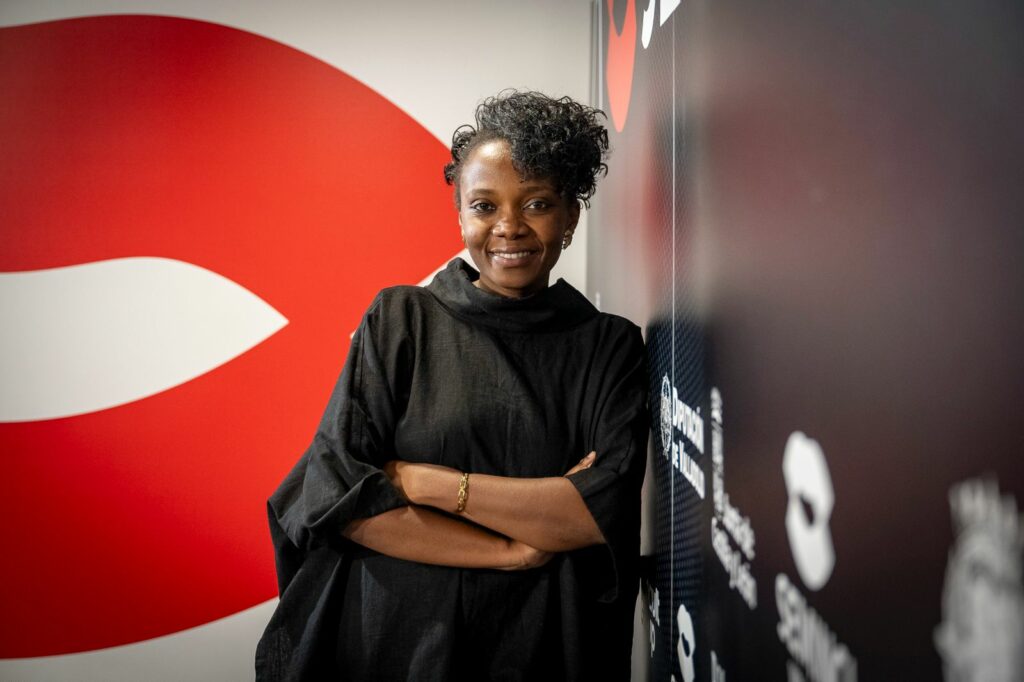
The film took the director “thirteen years of writing and searching”. From the outset, she knew what she wanted to achieve: “To recreate how the community experienced this long process of healing.” This made the team particularly important: “Eighty per cent of the crew are from Rwanda, which is why the process of making this film is so intimate. It is part of the transmission of the emotions and culture of our country.” Dusabejambo, who often works with non-professional actors, needs to establish a bond of trust with them beforehand: “I need them to make the script and the project their own. We have to build a relationship before filming, but also throughout the shoot.”
Forgiveness lies at the heart of the film, and the director defended this approach unequivocally: “From the very beginning, the film has been about collective healing. We have to forgive what happened and forgive the people involved. If we do not forgive, we cannot move forward.” Although the film has not yet been released in Rwanda, members of the Rwandan crew have already seen it and reacted intensely: “They are very emotional because, deep down, they all associate it with their own personal stories and see themselves reflected in the film.” She also emphasised the power of faces: “It was important for emotions to be visible in people’s expressions, which sometimes say far more than words.”
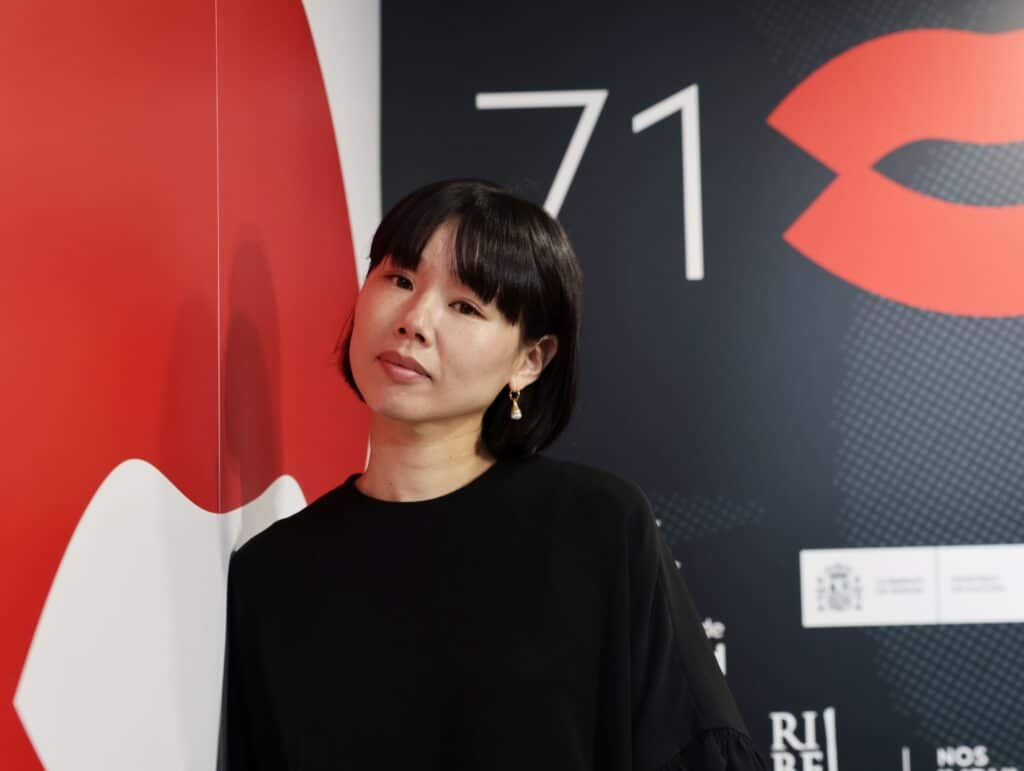
Japanese director Yukiko Sode presented the Spanish premiere of Los amantes de la noche, her fourth feature film and an adaptation of Mieko Kawakami’s novel. Fuyuko, a freelance proofreader trapped in her routine and loneliness, suddenly discovers the possibility of love when she meets Mitsutsuka, a reserved physics teacher with whom she begins to share occasional encounters. Sode wanted to move away from the book and develop a more visual language: “I wanted to express the protagonist’s feelings not through words, but through light.” This is why she chose the analogue 16mm format, which captures light in a particularly distinctive way.
Time of History: the letters of Franco’s victims and a teenager through time
Eloy Enciso presented Todo es cárcel at the Teatro Zorrilla, winner of the Grand Prize in the international competition at FIDMarseille, accompanied by its leading actress, Elsa Pereira, and much of the film crew. The film begins with a question: “Why had a film like this never been made in Spain before?” Through Elsa and her family history, it develops an investigation into Francoist repression, visiting some of the more than 200 concentration camps established under Franco and bringing them into dialogue with prisoners’ letters, read in voice-over, which recover their convictions, concerns and love stories.
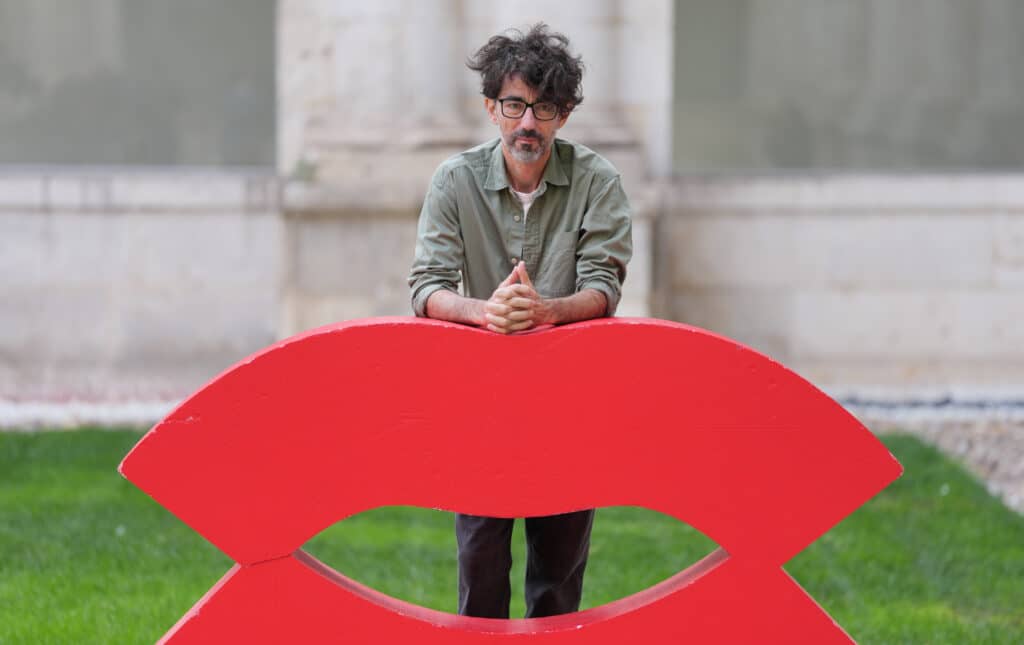
During the Q&A, Enciso explained that the research process had revealed significant gaps: “During the creative process, I realised something was missing: there were very few women in the first layer of general data. When we moved on to the second layer and began looking at more specific information about women, we discovered that there was virtually no evidence that so many women had also been persecuted by the dictatorship.” The letters therefore provide a means of making their experiences visible: “Most of the texts are reconstructions based on extensive research. They are not literal transcriptions.” There is also a third, anthropological layer, exploring family wounds: the regime “tried to silence these everyday tragedies, whose traces remain in objects and family photo albums”.
Pereira spoke about the objects her character sorts, photographs and eventually burns: “My character brings together the two sides of the family by selecting and choosing the objects to photograph. This is what wars do, even within families: they create two opposing sides. These small family objects are important, but so are the body and memory, which are also archives in their own right.” Enciso added that these objects are “a kind of game that also portrays the inner workings of families, the divisions within them and how these objects are fought over across time and generations of inheritance, symbolically belonging to one side or the other, to the winners or the losers”.
French filmmaker Maxence Voiseaux presented his debut feature, Gabin, a documentary with echoes of Richard Linklater that follows its young protagonist from the age of eight to eighteen, charting his journey of self-discovery and the ups and downs of his relationship with his parents. To capture the passage of time, he followed two principles: “First, spend as much time with him as possible, even without filming or recording anything, so that I could get to know him and tell his story. Second, make the passage of time perceptible through ellipsis, including both major and minor moments in which Gabin and his relationship with the world change.” The film is set within a rural family in northern France, a region “devastated by globalisation and neoliberal policies, but also one in which the entire history of humanity is reflected”. Voiseaux believes in the power of the local: “The more local we are, the more universal we become.” Gabin, he explained, loves his home and his roots, but also wants to explore other possibilities: “It is a story of emancipation that moves away from grand narratives and takes us along a much more subtle path.”
Out of competition, Pablo Maqueda, director and screenwriter, presented Caro Nanni, a film which, as he explained, found him rather than the other way round. It all began with a question from Werner Herzog, with whom he had made a documentary: “Would you stay and live inside cinema…?” Maqueda then began wondering which film he would choose to live in, and the answer was Caro diario, by Nanni Moretti, “a film that saves my life when I am having a bad day, right in the middle of my midlife crisis”. That initial intuition became a personal journey and a statement of principles: “The film is a tribute to failure, to being lost and realising that it is perfectly all right, to chaos.” The experience changed him: “I am not the same person who started shooting. I have learnt a great deal and overcome many fears.”
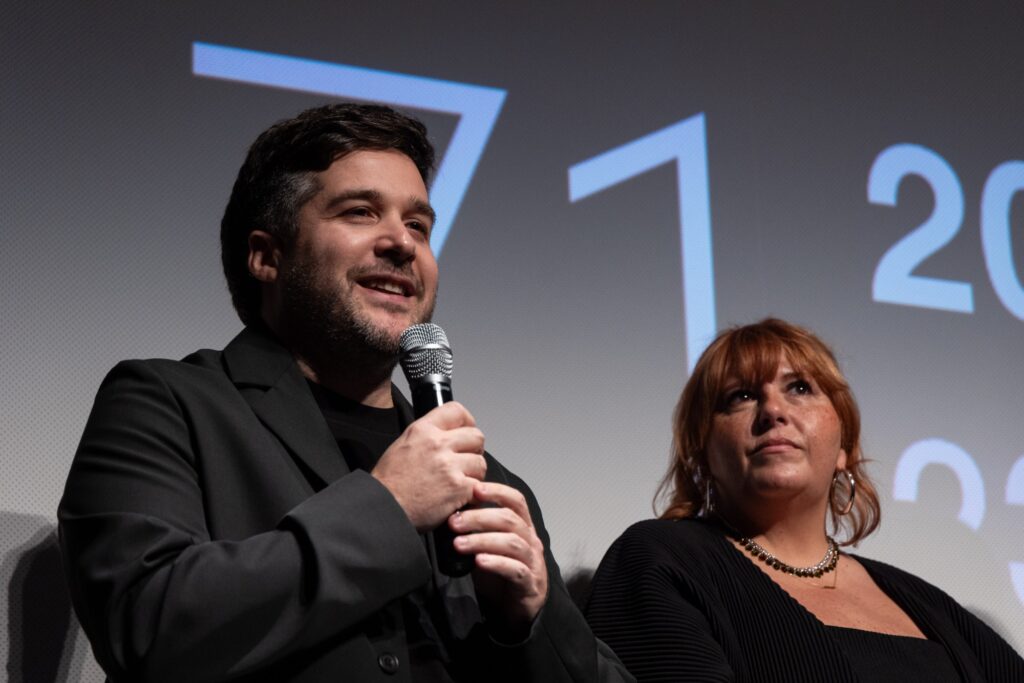
The journey brought several surprises, the most fascinating being his encounter with Margherita Buy, Moretti’s favourite actress and an important figure in the history of Italian cinema. Recalling his meeting with Moretti himself, he admitted to feeling nervous: “I was nervous. I learnt Italian and felt the weight of cinema history standing beside him.” He cited Agnès Varda’s films as an influence, particularly her documentaries, which are “full of life, playful, free and entertaining”. Like Varda, he did not want to make the journey alone, inviting his crew, his partner and himself to question why they wanted to appear in the film. His ambition is not to leave his mark on film history: “I want to lead the audience towards an emotion, towards an experience that surprises them.” And he does so freely, thanks to the production companies that, he says, have given him the freedom to pursue an approach to cinema close to that of Herzog, Moretti and Varda: “Yes, I feel free when I make films.”
Alchemies: friends in Berlin and black humour in Iran
Ted Fendt, one of the recognised names in independent cinema, arrived in Valladolid to present the premiere of Foreign Travel. The American filmmaker, who is based in Europe, returns to his longstanding interests: the relationship between cinema and literature, conversations between very different characters, uncomfortable humour and the 16mm image. In the film, a group of friends meet throughout the year in Berlin’s squares and cafés to discuss the work of Italian writer Anna Maria Ortese. Their readings gradually begin to echo their own lives, in a work that is as poetic as it is everyday.
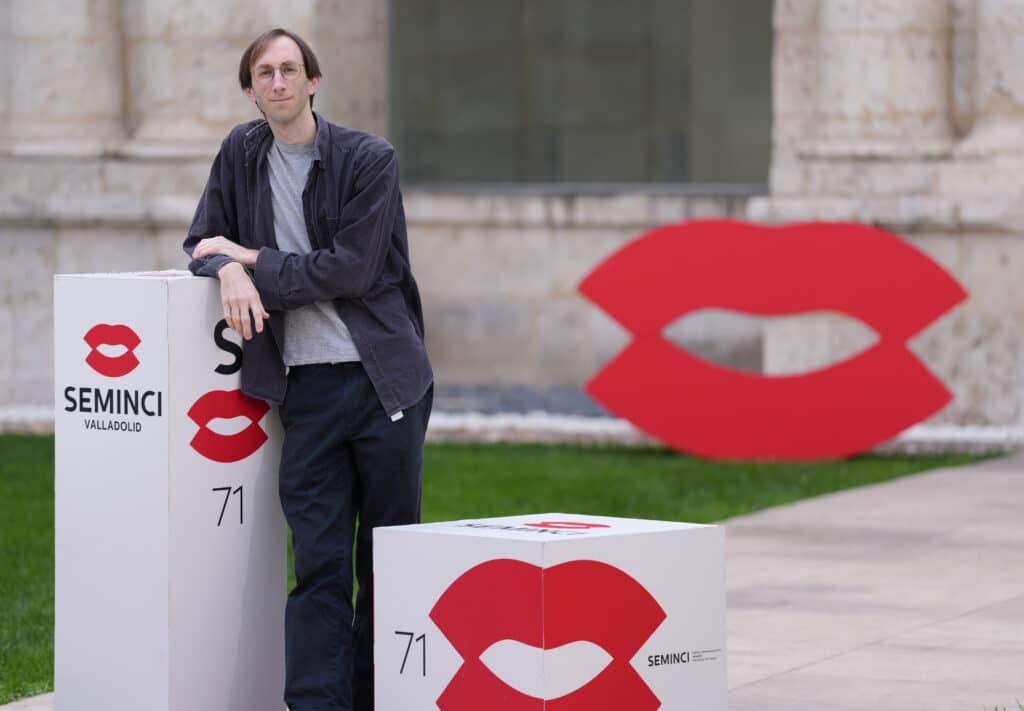
For Fendt, the most interesting aspect of cinema lies at a crossroads: “For me, the most interesting thing about cinema is the dialectic between fiction and documentary. The screen shows real people and real objects at a specific moment in history. But the audience sees characters, fictional figures. Some films try to avoid one of these two languages, but I like those that move back and forth between them.” For the dialogue, he drew on many of his conversations with friends and his own experiences of living in Berlin, and included Sigrid Vagt, Ortese’s German translator, in the cast. Speaking about the Italian writer, he admitted: “I didn’t want to copy Ortese’s style, but it is something that interests me greatly. Her thoughts on literature and realism during the period when she lived in Italy, when she was one of the few women saying these things and criticising the industry.” He concluded with a sense of relief: “I think Sigrid understood all of this, and I received a positive response from her.”
Iranian filmmaker Karim Lakzadeh presented his second feature film, Living Twice, Dying Thrice, which was shot clandestinely over the course of a year. Three workers survive a mine collapse and decide to conceal the incident so that their families can claim financial compensation. From this premise, he constructs an adventure combining thriller, comedy and surrealism to portray a society marked by precarious living conditions and bureaucracy. The idea came to him through a news story: “Mining accidents and collapses are a constant, tragic reality.” Black humour became his tool: “When you live surrounded by sadness and hardship, there is no other option. Humour is necessary for survival.”
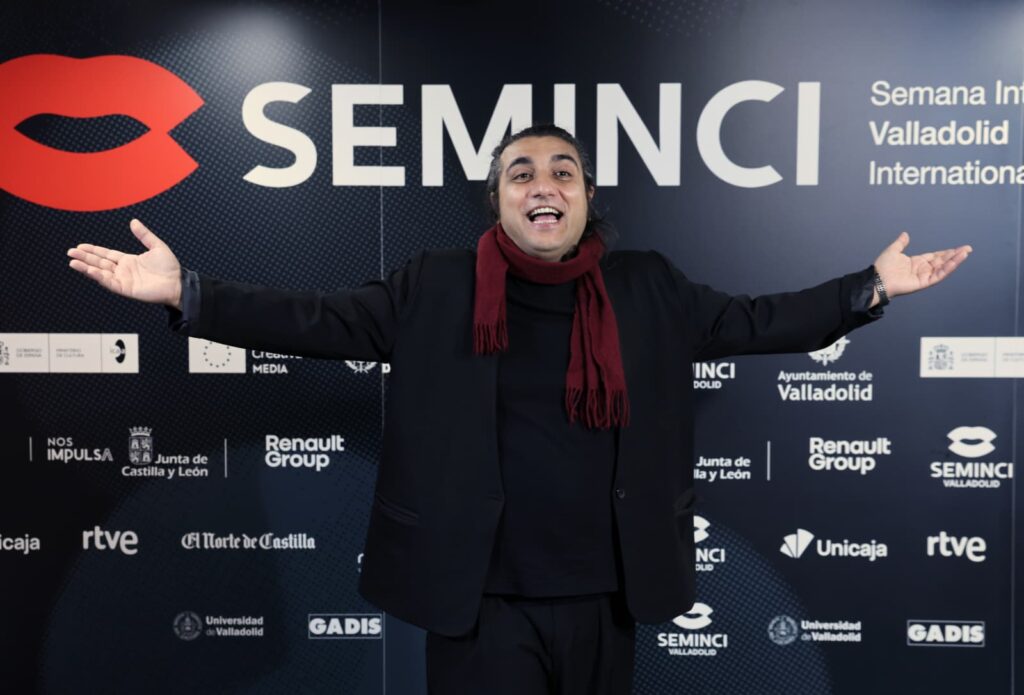
The shoot was an adventure in itself: “The crew worked clandestinely for approximately a year, spending long days underground. Almost nobody knew about it. We stayed hidden, came out, filmed and hid again.” He also acknowledged the uncertainty surrounding their return: “When we go back to Iran, we don’t know what is going to happen.” During a Q&A that continued past midnight with a sizeable audience still in attendance, one of the actresses summed up the team’s spirit: “We shared everything, slept together, had dinner together, shared sadness and laughter.” One of the leading actors highlighted what brings people together: “Despite cultural differences and the difficult political situation Iran has experienced for decades, shared emotions allow us to recognise ourselves in others. People laugh, cry, dance and enjoy themselves, and in reality, that is exactly what we do too.”
The Art of Listening: Europe’s leading sound recordists
The programme Thinking (and Listening to) Cinema brought together, in the Hall of Mirrors at the Teatro Calderón, five leading figures in European sound recording for the first Valladolid meeting of the European Film Academy’s Sound Designers Chapter: Axel Arft (Wings of Desire), Silvia Moraes (Life Is Beautiful, It Was the Hand of God), Daniela Bassani (Gomorrah), Krzysztof Stasiak (In the Name Of…) and Tarn Willers, Oscar winner for The Zone of Interest. Willers described his work on set: “We are there to record sound, but also to remove it.” Moraes, who worked on The Echo Chamber, recalled that the entire film was shot in an apartment in Rome and that they had to create the impression of an affluent London neighbourhood: “Cinema is image and sound, but sound is always working in the service of the image.”
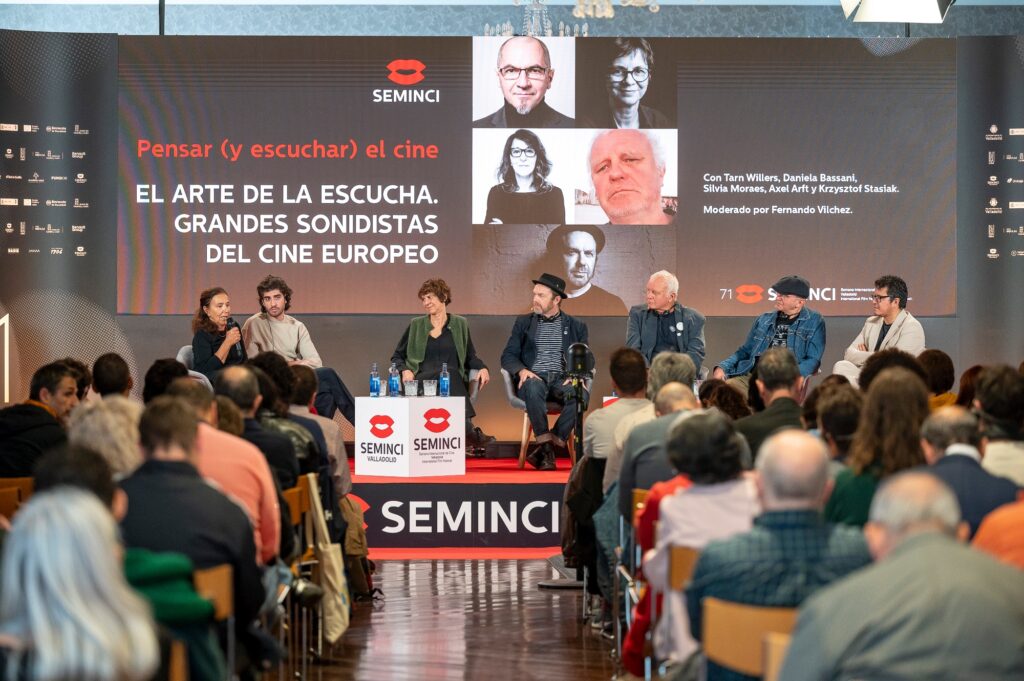
The conversation moved from whispers, which are becoming increasingly common in cinema, to the screening room compared with watching films at home. Arft recalled an occasion when he was filming with Gene Hackman and could not understand a word he was saying, so he asked him to speak louder: “He told me: ‘I’m an actor, I’m not allowed to speak.’” Bassani defended the cinema experience, although “you can make the effort at home too”. Willers looked back at 35mm film: “When you press the record button, the money starts adding up. You lose that tension, that sense of craftsmanship that used to be so present.” Opinions differed on artificial intelligence. Stasiak said: “I’m open to it and I’m not afraid of it.” Arft joked: “I’m too old for this conversation.” Willers drew the line at performance: “AI can do many things, but one thing it cannot do is act.” Bassani concluded with an open question: “What is more important: the accent or the performance?”
The retrospective A History of Sound (in Cinema) continued with two screenings. Willers introduced Jonathan Glazer’s The Zone of Interest, which portrays the horrors of the Holocaust without showing them, leaving the storytelling to sound: “It was entirely his vision in the creation of every element. He is the complete artist.”
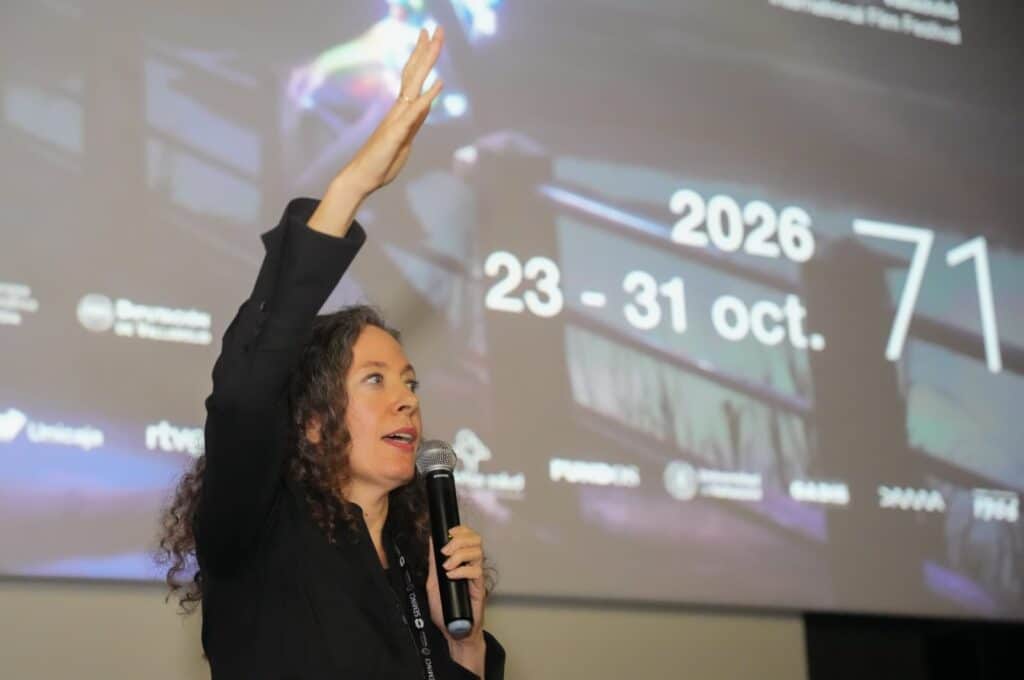
Artist and filmmaker Aura Satz presented Preemptive Listening, a collaborative work that uses the siren as an object through which to reflect on a world in crisis. She began the project in 2016 and, she explained, it remains politically relevant today: “I wish that weren’t the case, but with the pandemic and the genocide in Palestine, we are still living in a state of emergency.” Even so, she retains a sense of hope: “What I like about the siren is its warning quality. It tells us that something is wrong and needs to change, but it is also an arrow pointing us towards a way out.”