


- Three Iranian films, including Rehearsals for a Revolution by Pegah Ahangarani – winner of the Best Documentary Award at Cannes – are among the selection
- Also standing out are revelations such as the American film Once Upon a Time in Harlem by William and David Greaves, At Night by the British director Beatrice Gibson, and The Nights by the Argentine director Ana Bovino
Time of History will bring together some of the season’s most outstanding non-fiction works at this 71st Valladolid International Film Festival, forming one of the most ambitious selections in this year’s programme. The five Spanish titles previously announced are now joined by twelve international films that broaden the perspectives of contemporary documentary cinema.
Valladolid, 15 September 2026.—Time of History will bring together some of the season’s most outstanding non-fiction works at this 71st Valladolid International Film Festival. The five Spanish titles previously announced are now joined by twelve international films, rounding off an ambitious selection of 17 feature-length films.
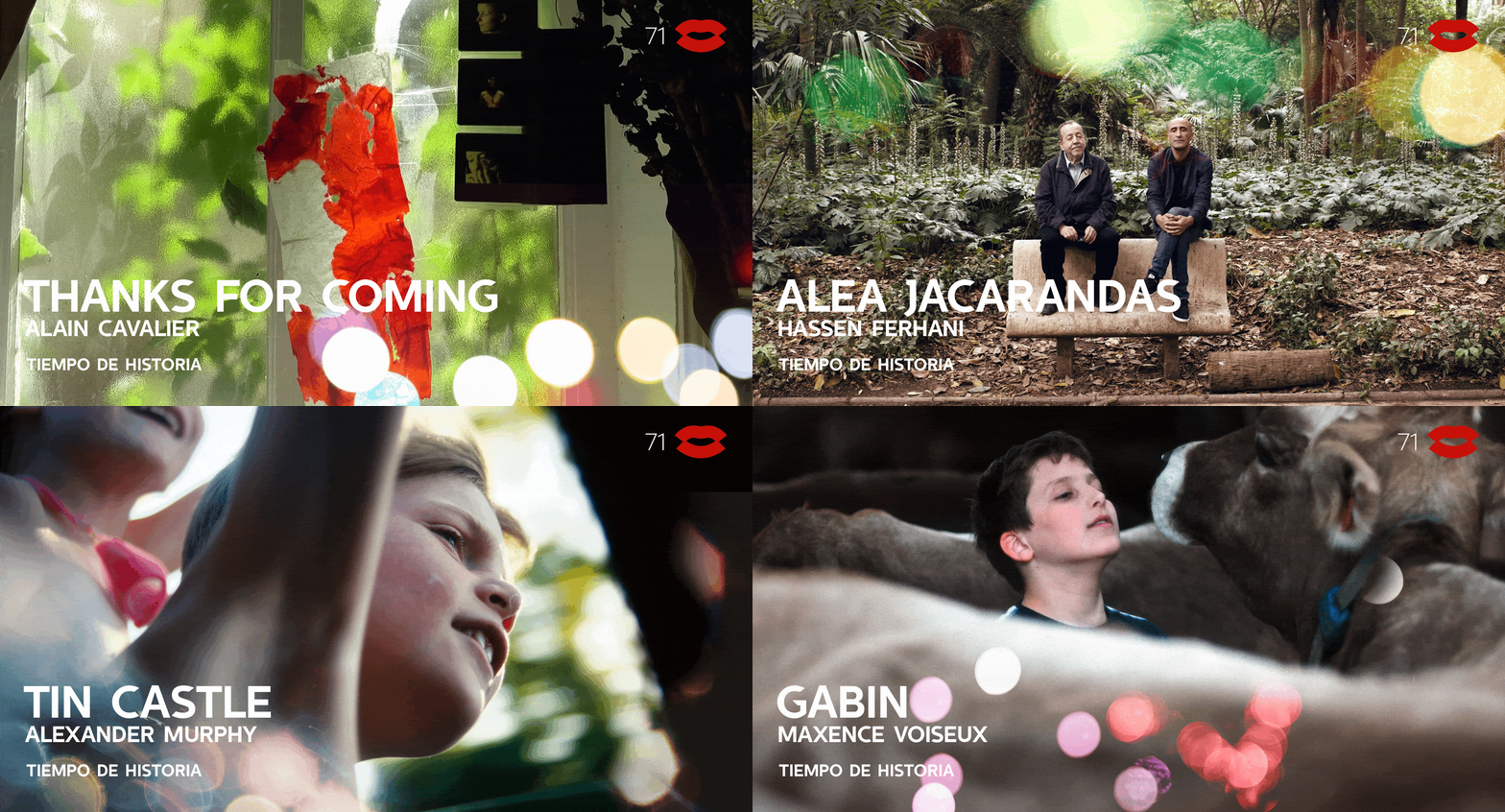
This new selection brings together filmmakers presenting their debut feature films with established directors such as Sergei Loznitsa, Mariano Llinás, Mani Haghighi and Alain Cavalier, who, in Thanks for Coming, bids farewell to cinema. The grand master of documentary returns to filming everyday life with the simplicity, intimacy and humour that have characterised his work for decades. Far from any sense of solemnity, the filmmaker turns this potential farewell into yet another celebration of the people, the conversations and the small moments that have given meaning to his approach to filmmaking.
Family Portraits
In Alea Jacarandas, Hassen Ferhani films his father, a journalist and writer, as he wanders through Algiers in search of the city’s jacaranda trees. What begins as a quest ultimately reveals two ways of looking at the world: the father turns his walks into literature, and the son into film. Together, they create a delicate film about the city, memory and the relationship between generations, which was awarded the Burning Lights Jury Prize at Visions du Réel.
In Tin Castle, Alexander Murphy discovers something different from what he was initially looking for. After years of living alongside them, the portrait of a community gradually becomes a portrait of a large family to which the filmmaker eventually belongs almost as if he were another member. The difficult conditions in which they live are never used to paint a picture of precariousness or suffering: what appears on screen is a world sustained by affection – vulnerable and under threat, yet also full of life.
Gabin is the result of a ten-year film project, during which Maxence Voiseux followed his young protagonist from the age of eight to eighteen. The son of a butcher and a livestock farmer in northern France, Gabin grows up believing he will take over the family business, although other aspirations gradually emerge, along with the need to make his own decisions. The film captures this process of maturing without emphasising it: suddenly several years have passed and that child has become a young man who is beginning to take control of his own life, even when that means straying from the future others had imagined for him.
Iran: family and collective memory
The journey of two brothers separated by exile lies at the heart of Into the Jaws of the Ogre, Mahsa Karampour’s debut feature film. Both left Iran and their lives have taken almost opposite paths; now they are travelling together along the American motorways from New York, whilst memories of Tehran and the differences that led them there resurface. The road movie structure allows this physical journey to also become a journey towards a family bond that seemed lost.
In I Deserve a Lover Whose Every Rise Sets Fiery Dooms Raging Across the Skies, the veteran filmmaker Mani Haghighi – undoubtedly one of Iran’s most unorthodox and rebellious filmmakers – turns his attention to two artists who have made collecting a way of preserving memory. Photographs, documents and objects belonging to people who are unlikely to feature in the official history paint a different picture of Iran. A film about art, but also about the need to remember.
Rehearsals for a Revolution, by Pegah Ahangarani, draws on her own family’s memories to ultimately piece together something much greater: the history of several decades of Iranian resistance. Personal archives, domestic images and political moments intertwine to show how the experiences of a few individuals can hold the memory of an entire country and its enduring aspiration for freedom. The film won the Œil d’Or for Best Documentary at the Cannes Film Festival.

Rewriting history: from the USSR to Harlem
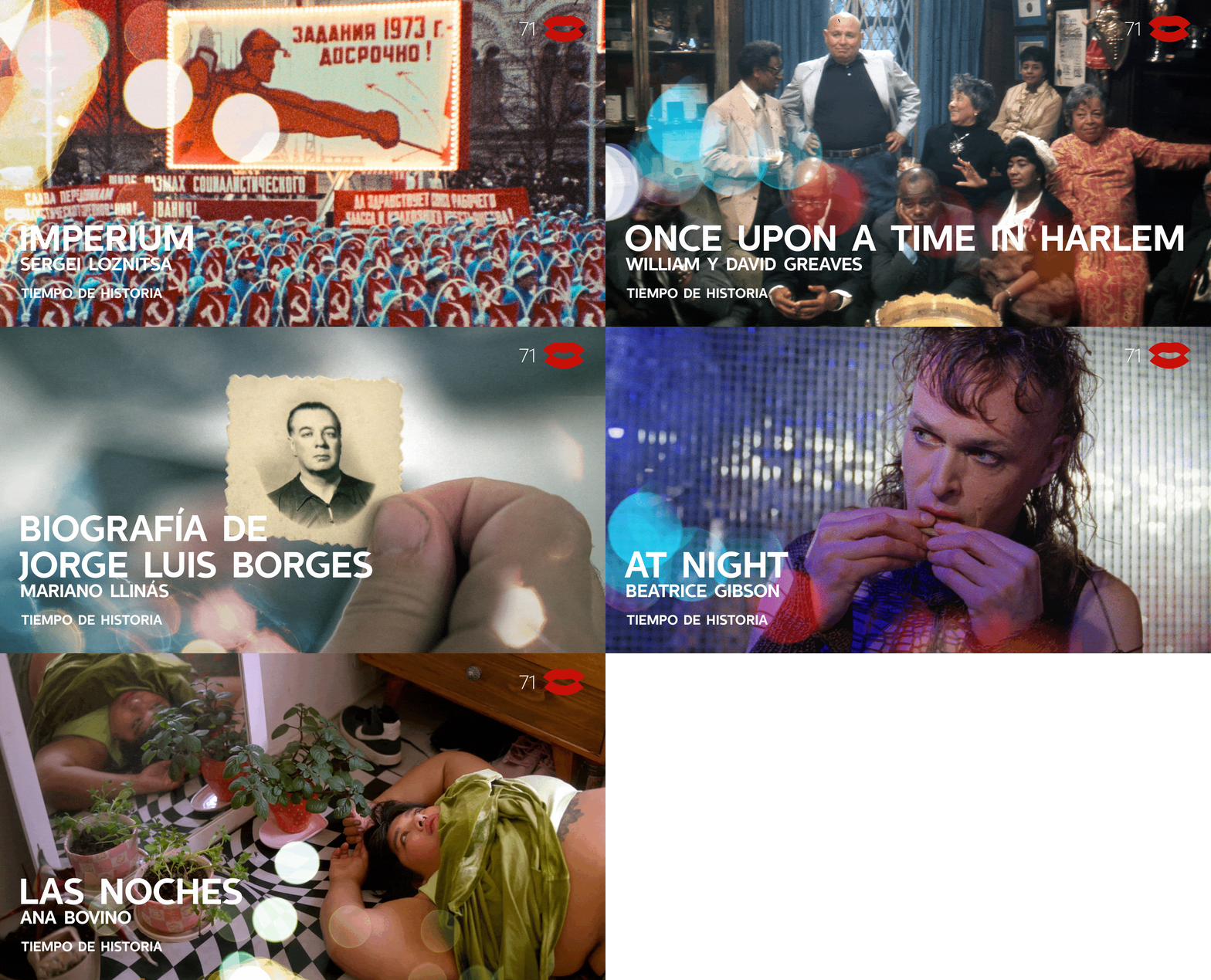
Sergei Loznitsa’s Imperium also tackles something that seems impossible to encompass: the vastness of the Soviet Union. Archive footage shot between 1970 and 1973 shows, as it moves further away from Moscow, a succession of faces, landscapes, cultures and ways of life that make it impossible to reduce that territory to a single identity. With no voice-over and no explanations, the archive reveals the vast gulf between the uniform image of the state and the multitude of worlds that existed within its borders.
Once Upon a Time in Harlem, directed by William and David Greaves, brings to life a night in 1972 when artists, musicians and intellectuals linked to the Harlem Renaissance gathered to talk, debate, laugh and reflect on their times. More than fifty years later, David Greaves has recovered and completed the footage shot by his father. The result is something extraordinary: those faces and voices are present once more and establish an unexpected dialogue between two generations of filmmakers. The film premieres at SEMINCI after screening at the Sundance and Cannes film festivals.
The Art of Storytelling
Mariano Llinás’s film is based on a fascinating paradox: the more he tries to get closer to Borges, the more impossible it becomes to fully grasp him. Life of Jorge Luis Borges brings together manuscripts, objects, places, books and episodes from the writer’s life, but each discovery opens up a new story and leads to another place. Rather than confining Borges to a conventional biographical sketch, Llinás brings his worlds back to life and transforms his film into a labyrinthine adventure that seems to have no end.
The Parisian night becomes a meeting place in At Night, Beatrice Gibson’s debut feature film, which won the award for Best Emerging Director at Locarno. Six women share experiences, memories, desires and fantasies in a film that pays as much attention to what they say as to the possibility of listening to one another. From this exchange emerges an intimate and open space in which the protagonists can imagine themselves differently and in which conversation becomes a form of collective creation.
Ana Bovino’s The Nights finds a fascinating protagonist in “La Pichi”: a woman who tells stories like a contemporary Scheherazade and who uses that ability as a means of asserting herself. The documentary draws on the fable to accompany her through a process in which shame is transformed into pride and storytelling into resistance. Here, telling her own story means carving out a place in the world and opening up the possibility of imagining another life.
The twelve new titles round off the five Spanish feature films announced at the Spanish cinema showcase: Camionero, by Francisco Marise; Papagayo, by Omar Al Abdul Razzak; Todo es cárcel, by Eloy Enciso Cachafeiro; Caro Nanni, by Pablo Maqueda; and Vacío luminoso, by Uberto Rapisardi. The collection makes Time of History one of the major highlights of the 71st SEMINCI, bringing together an extraordinary concentration of talent and approaches to non-fiction cinema.

- Thanks for Coming, de Alain Cavalier
- Alea Jacarandas, de Hassen Ferhani
- Tin Castle, de Alexander Murphy
- Gabin, de Maxence Voiseux
- Into the Jaws of the Ogre, de Mahsa Karampour
- I Deserve a Lover Whose Every Rise Sets Fiery Dooms Raging Across the Skies, de Mani Haghighi
- Ensayos para una revolución, de Pegah Ahangarani
- Imperium, de Sergei Loznitsa
- Once Upon a Time in Harlem, de William y David Greaves
- Biografía de Jorge Luis Borges, de Mariano Llinás
- At Night, de Beatrice Gibson
- Las noches, de Ana Bovino