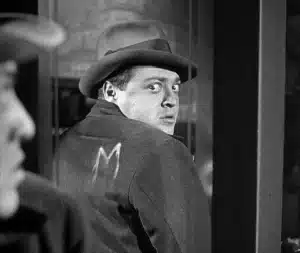
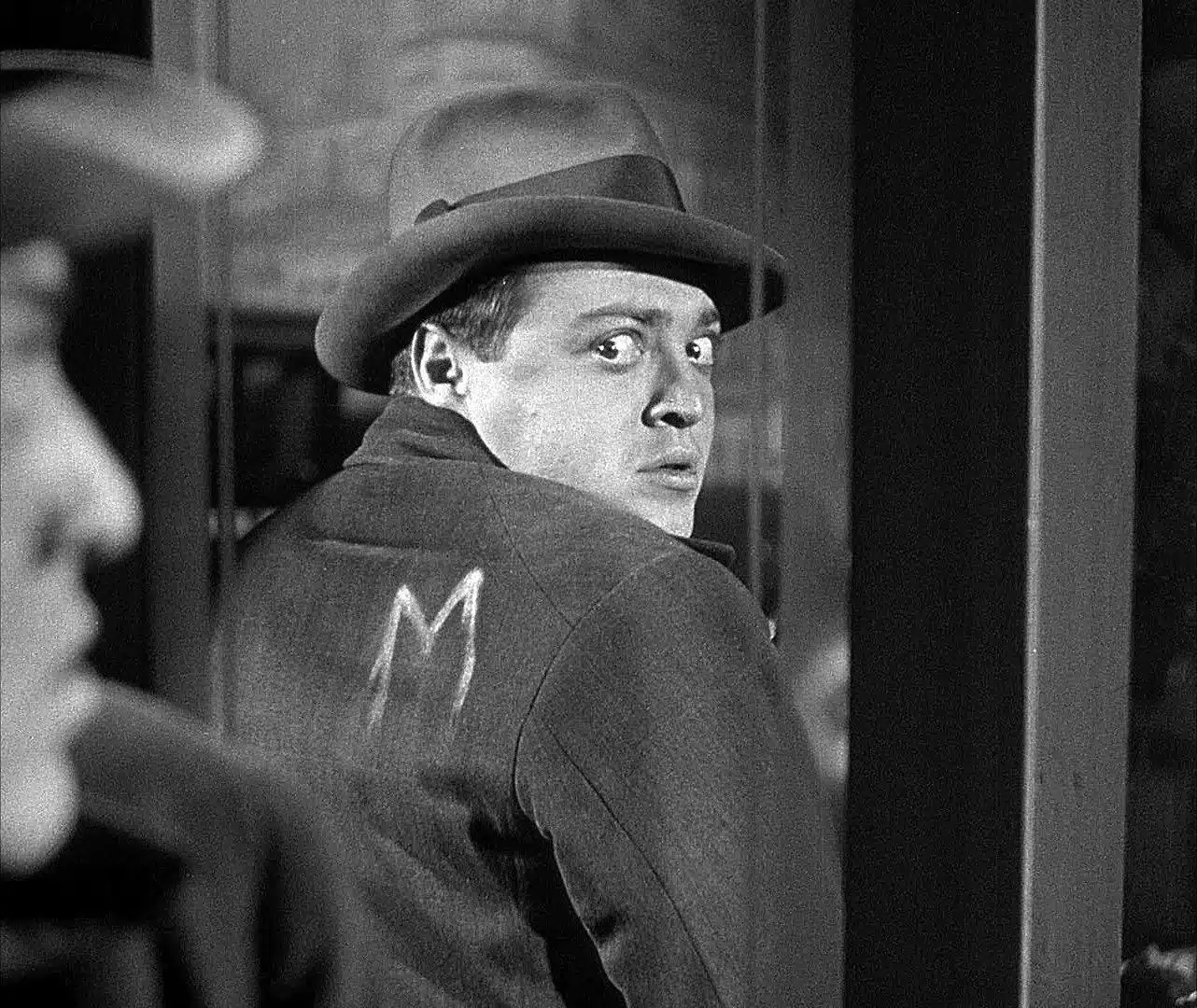
A killer of young girls has the whole city of Berlin in a state of fear. The police are searching for him frantically and desperately, arresting anyone who is even remotely suspicious. Meanwhile, the underworld bosses, furious at the raids they are suffering because of the killer, decide to hunt him down themselves.
Fritz Lang
An Austro-Hungarian filmmaker regarded as one of the great masters of expressionist cinema and film noir, whose legacy had a decisive influence on modern film. He was born in Vienna in 1890 and held German and, later, American citizenship in the United States where he died in 1976. After studying architecture and serving in the First World War, he made his directorial debut in 1919 and achieved international renown with films such as ‘Dr Mabuse’ (1922), ‘The Nibelungs’ (1924), the groundbreaking ‘Metropolis’ (1927) and his first sound film, ‘M’ (1931). In 1933, following the rise of Nazism and an offer from Goebbels to head up German cinema, he fled to France and then to Hollywood, where he directed more than twenty films, including ‘Fury’ (1936), ‘Scarlet Street’ (1945) and ‘The Big Heat’ (1953). In the late 1950s, he returned to Europe, where he directed films such as ‘The Tiger of Eschnapur’ (1959) and ‘The Thousand Eyes of Dr. Mabuse’ (1960).
DIRECTOR
Fritz Lang
SCREENPLAY
Fritz Lang, Thea von Harbou
CINEMATOGRAPHY
Fritz Arno Wagner
EDITOR
Paul Falkenberg
SOUND
Adolf Jansen, Paul Falkenberg
MUSIC
Edvard Grieg
PRODUCTION
Seymour Nebenzal
PRODUCTION COMPANY
Nero-Film AG
CAST
Peter Lorre, Otto Wernicke, Gustaf Gründgens, Ellen Widmann, Inge Landgut, Theo Lingen, Theodor Loos, Georg John