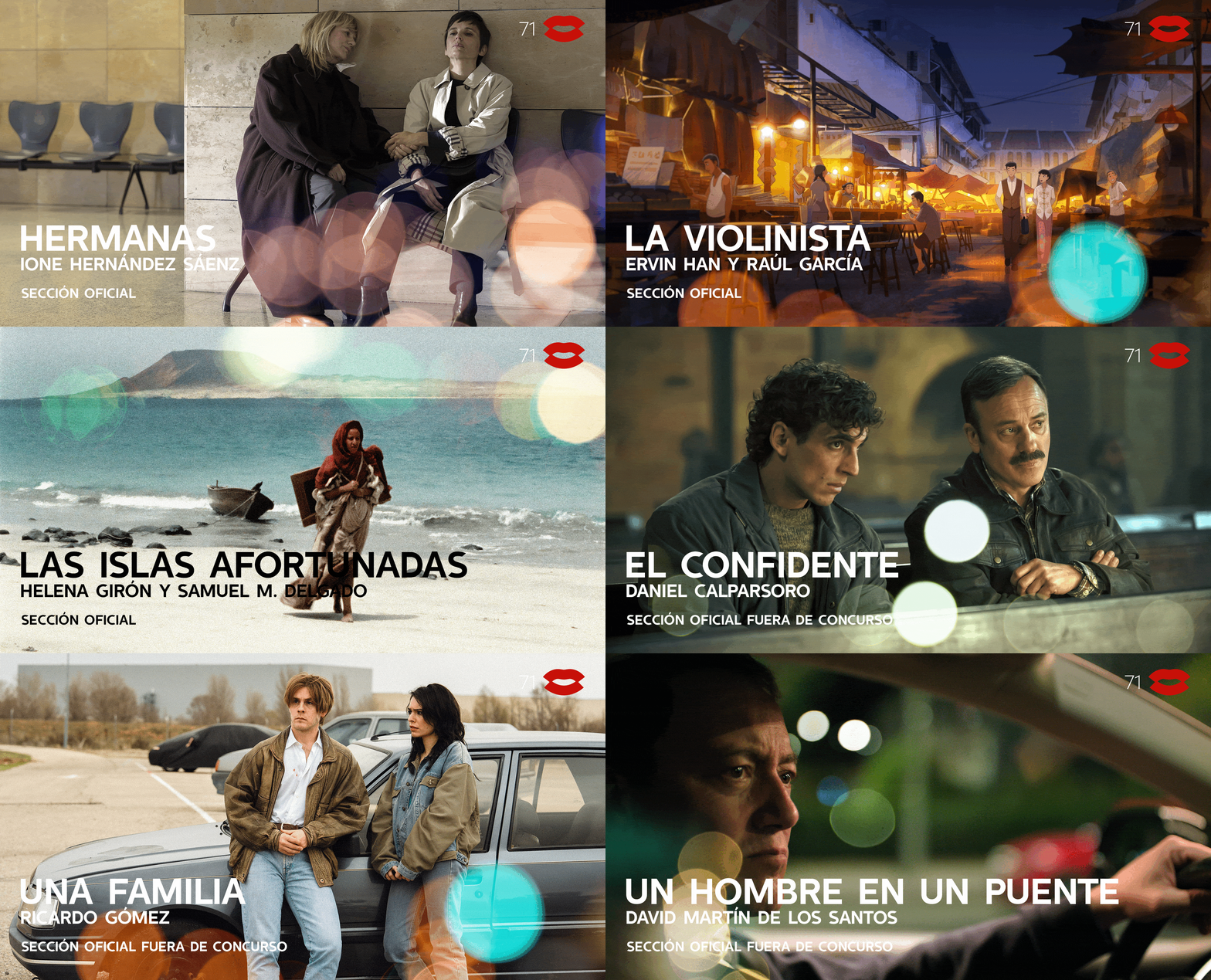
- Sisters, by Ione Hernández Sáenz; The Violinist, by Ervin Han and Raúl García; and The Fortunate Isles, by Helena Girón and Samuel Delgado, will compete for the Golden Spike
- The Official Selection will host, out of competition, the world premieres of El confidente, by Daniel Calparsoro; Una familia, Ricardo Gómez’s directorial debut; and David Martín de los Santos’s new film, Un hombre en un puente
- The festival will premiere the Movistar Plus original series Matar a un oso by Jorge and Alberto Sánchez-Cabezudo, and SerYo, a documentary directed by Marta Solaz, Sergio Peris-Mencheta and Verónica Díaz Pérez
The 71st Valladolid International Film Festival will bring together 20 Spanish productions and co-productions across its various sections; nine will have their world premiere at SEMINCI and one its European premiere. A diversity of cinematic forms and languages coexists in a selection that reflects the vitality and variety of Spanish auteur cinema and which finds in memory — whether personal, familial, historical or linked to places — one of its main recurring themes. The films explore the bonds we forge, the communities that sustain us and the ways of life that are disappearing.
The Official Section brings together three very different films. In Sisters, directed by Ione Hernández Sáenz – making its European premiere at SEMINCI after screening in Toronto – Elena Anaya and Emma Suárez are confronted with a family wound that forces two sisters to rethink the bonds that unite them. Chelo and Marta face a dilemma in which protection, justice and loyalty come into conflict, whilst what is left unsaid takes on as much importance as the words themselves. Hernández’s debut feature also features Carlota Keiko, León Martínez, Josean Bengoetxea, Aritz Kortabarria and Nora Otxoeko in the cast. Sisters is produced by Noesno Film AIE, Solita Films, Gariza Films, Elastica Films and ISB Films, with distribution handled by Elastica Films.
The Violinist will be only the second animated film to be in the running for the Golden Spike in the history of SEMINCI. The film is directed by Ervin Han and Raúl García, an animator and filmmaker from Madrid with an extensive international career, which includes a decade at Walt Disney Studios and his involvement in films such as Who Framed Roger Rabbit, as well as a Goya Award for The Missing Lynx: Paws of the Run and an Oscar nomination as producer of Death and the Lady. Set against the backdrop of 1930s Singapore and the present day, the film blends 2D and 3D animation to follow two young people united by music, whose fate is shaped by the war and the Japanese occupation. The Violinist, produced by TV ON Producciones, Robot Playground Media and Altri Occhi, and distributed by Wanda Visión, has become the first Spanish film to win the Cristal Award for Best Feature Film at Annecy.
The Fortunate Isles, by Helena Girón and Samuel Delgado, takes us back to the Canary Islands of the 15th century to tell the story of Fátima, an enslaved woman whose fate is linked to the island’s only freshwater well. The film stars Luisa Ahl Laabiad, making her film debut alongside Lou Castel, an iconic figure in European cinema, and Grégoire Colin, a regular in Claire Denis’s films. Amidst adventure, mystery and historical drama, the setting takes on a decisive role: the landscape and the faces of those who inhabit it seem to preserve a memory of the archipelago’s colonial history. The Fortunate Isles is produced by El Viaje Films, La Banda Negra and the Greek company Asterisk*.
Three world premieres in the Official Section (Out of Competition)
The 71st SEMINCI Special Gala will feature El confidente by Daniel Calparsoro, a thriller inspired by real events about the final years of ETA, produced by Bowfinger International Pictures and Esto También Pasará, in co-production with El Confidente Films AIE and Lionceau Films, in association with Sony Pictures and with the participation of Atresmedia and Movistar Plus. The film explores this period through the relationship between two men with opposing ideologies: a veteran police officer and the young separatist who becomes his informant, a relationship that develops into a sincere friendship between the two. Starring Javier Gutiérrez and Miguel Herrán, it is based on the research of journalist Pablo Muñoz and features a screenplay by Fernando Navarro. Calparsoro, who revitalised the Spanish thriller and urban cinema genres in the 1990s with his debut feature Void (1995) and subsequently with Pasajes, A ciegas and Asfalto, offers in El Confidente a revealing insight into a particularly complex period of our recent history.
Ricardo Gómez makes his debut as a screenwriter and feature film director with Una familia, a film born of his personal need to examine his own origins and understand the bonds that define us. A co-production by El Desorden Crea, Lágrima Films, Estela Films, Tondero and Nuestro Ayer AIE, with the participation of RTVE and Movistar Plus, and distributed by Filmax. Set in Madrid in the 1990s, the film traces three moments in the lives of a father, a mother and a son, bound together by the same wound and the same question: who we are and who we want to be. Claudia Traisac, Patrick Criado, Ana Wagener and the young debutant Víctor Lite star in this story about three lives separated in time but marked by the same wound and by a decision that will change their future. Una familia will be screened at this year’s Gala RTVE.
David Martín de los Santos presents his second feature film, Un hombre en un puente, a Vértigo Films production, in collaboration with Icónica, LaNube Películas and the Peruvian company Suena Perú, shot in the town of Cervera de Pisuerga in Palencia. Starring Roger Casamajor, Belén Cuesta, Nidia Bermejo, Font García and Juanfra Juárez, the film tells the story of Andrés, a man who returns to his home village after having lost practically everything, where he is reunited with key figures from his past. This return to his roots is not, however, a straightforward one: the protagonist faces the challenge of rebuilding his life when he no longer knows where he belongs. Vértigo Films is distributing the film in Spain.
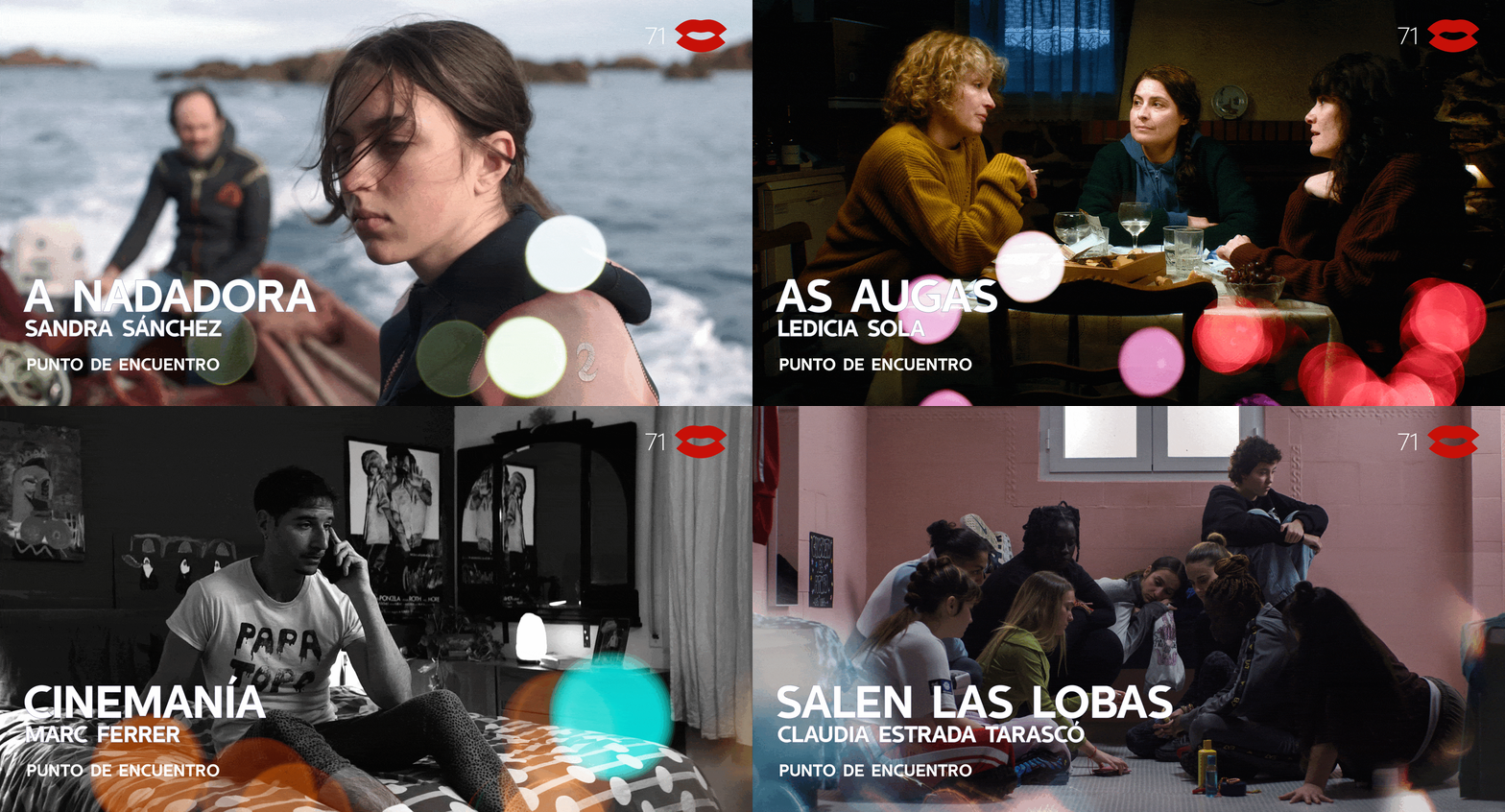
Meeting Point: four world premieres exploring new forms of community
In A nadadora, Sandra Sánchez tells the story of a teenager trying to escape a childhood marked by a difficult family environment. The film, starring Nuria López, María de Dina, Lucía Veiga and Diego Anido, is set on Galicia’s Costa da Morte. Water runs through the narrative as an almost subconscious presence: swimming, moving forward and distancing herself from what weighs heavily on the protagonist ultimately become part of a single movement. The film is a Spanish-Portuguese co-production by Setembro Cine, Tandem Films and Ukbar Filmes.
Also from Galicia comes As augas, Ledicia Sola’s debut feature, produced by Maruxiña Film Company and Matriuska Producciones. The director wrote the screenplay and stars in the film alongside Marta Larralde, Melania Cruz, Lidia Veiga and Toni Salgado. Nora returns to the place where she grew up whilst going through a life crisis and finds in her friends the support she needs to start afresh. The house, the landscape and the water form the physical setting for a story in which four women find refuge in their friendship and consider the possibility of broadening their very concept of family.
In Cinemanía, Marc Ferrer steps back in front of the camera to craft a comedy with hints of metafiction – unrestrained and frenetic, yet also warm and deeply human – about desire, the passage of time and the need to keep making films. Surrounded by a quirky community of characters in contemporary Barcelona, Ferrer transforms cinephilia not only into a passion, but also into a way of seeking companionship and inventing new ways of life. The film, produced by Películas Inmundas, DVEIN Films, Debut Films and CANADA, stars Judit Martín and Sandra Soro.
Claudia Estrada Tarascó’s feature film debut, Wolf Grrrls!, draws on a family experience and delves into the reality of a youth justice centre through Luna, a teenager who finds a form of resistance in urban music and her peers. Valeria Estrada, Huda Laamarti, Vanessa Badji and Sara Martínez lead a cast that also includes Àlex Brendemühl and Rosa Boladeras in this film produced by Oceanika, Paloma Productions, Novak Prod and Vampire Films, and distributed by Silencio Cinema. The young women themselves were involved in creating their characters and in writing and performing the songs. Rather than dwelling on the labels imposed upon them, the film uncovers within that community a sense of belonging and, in trap music, a tool for imagining a different future.
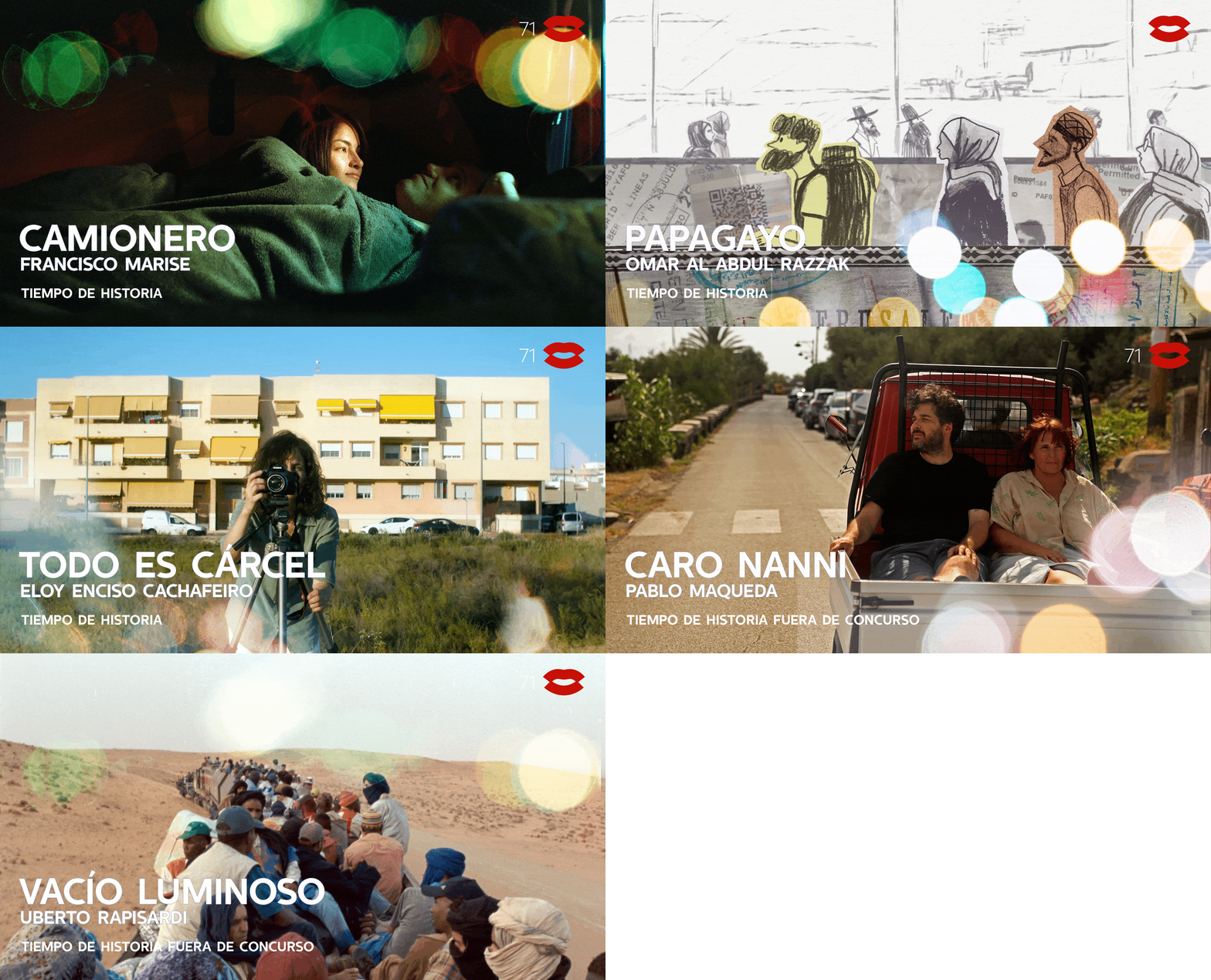
Memory and Territory in Time of History and Alchemies
This year’s Time of History section at the 71st SEMINCI will offer an overview of the most incisive and visionary non-fiction cinema, such as Camionero by Francisco Marise, an Argentine-Spanish co-production by La Claqueta, Amania Films, Amateur Cinéma, Acheron Films and La Cruda Realidad. Marise co-wrote the screenplay with Javier Rebollo for a film in which the road ceases to be merely a place of passage. Lonely lives, service stations, waiting times and journeys form an ephemeral community that continually comes together and drifts apart. The film observes this world through a particularly physical and sensory lens, supported by the sound design of Xabier Erkizia (Samsara), in which the night-time images of the lorries take on an almost mythical dimension. La Claqueta is also distributing the film in Spain.
Intimacy meets history head-on in Papagayo, directed by Omar Al Abdul Razzak, produced by Tourmalet Films and Rayuela Productions, and distributed by Begin Again. The film centres on a relationship shaped by two different backgrounds — Syrian and Israeli — and explores how the Middle East conflict ultimately affects a couple’s most private spaces. A month after the outbreak of war between Israel and Hamas, an Israeli Jewish illustrator breaks up with the director himself. The interplay between intimate imagery and animation shifts the focus from the political conflict to a crucial question: what happens to relationships when history insists on reminding us of what divides us?
In Letters from an Inner Exile, Eloy Enciso Cachafeiro draws on correspondence and testimonies linked to Franco’s concentration camps to establish a dialogue between the violence of the dictatorship and the present day. The film, produced by Filmika Galaika and Umbracle Cine, draws on letters reconstructed from real testimonies. The past is thus embodied in voices that speak of repression, but also of love for those who remained on the outside: historical material which, when brought into contact with today’s landscapes, takes on a contemporary resonance.
Out of competition, Pablo Maqueda channels his admiration for Nanni Moretti into Caro Nanni, a moving and passionate journey through the places and films of the great Italian filmmaker, narrated by Eva Llorach and featuring Isabel Coixet, Margherita Buy and Rocío León, produced by Querido Nanni AIE, Viva Films Media and Colosé Producciones. This cinematic journey, with its inspired comic tone, also serves as a personal quest for Maqueda: turning to the films of another filmmaker for inspiration when his own creative process hits a dead end.
Also out of competition, Vacío luminoso by Uberto Rapisardi – a Spanish-French co-production by Los Desertores Films – follows the making of Sirāt by Oliver Laxe, from the initial meetings in Galicia through to filming in the desert. The film explores that moment when a film is yet to be made and all decisions remain open. The result is a glimpse into the creative process from its most fragile stage: when a film begins to take shape through the people who imagine and build it.
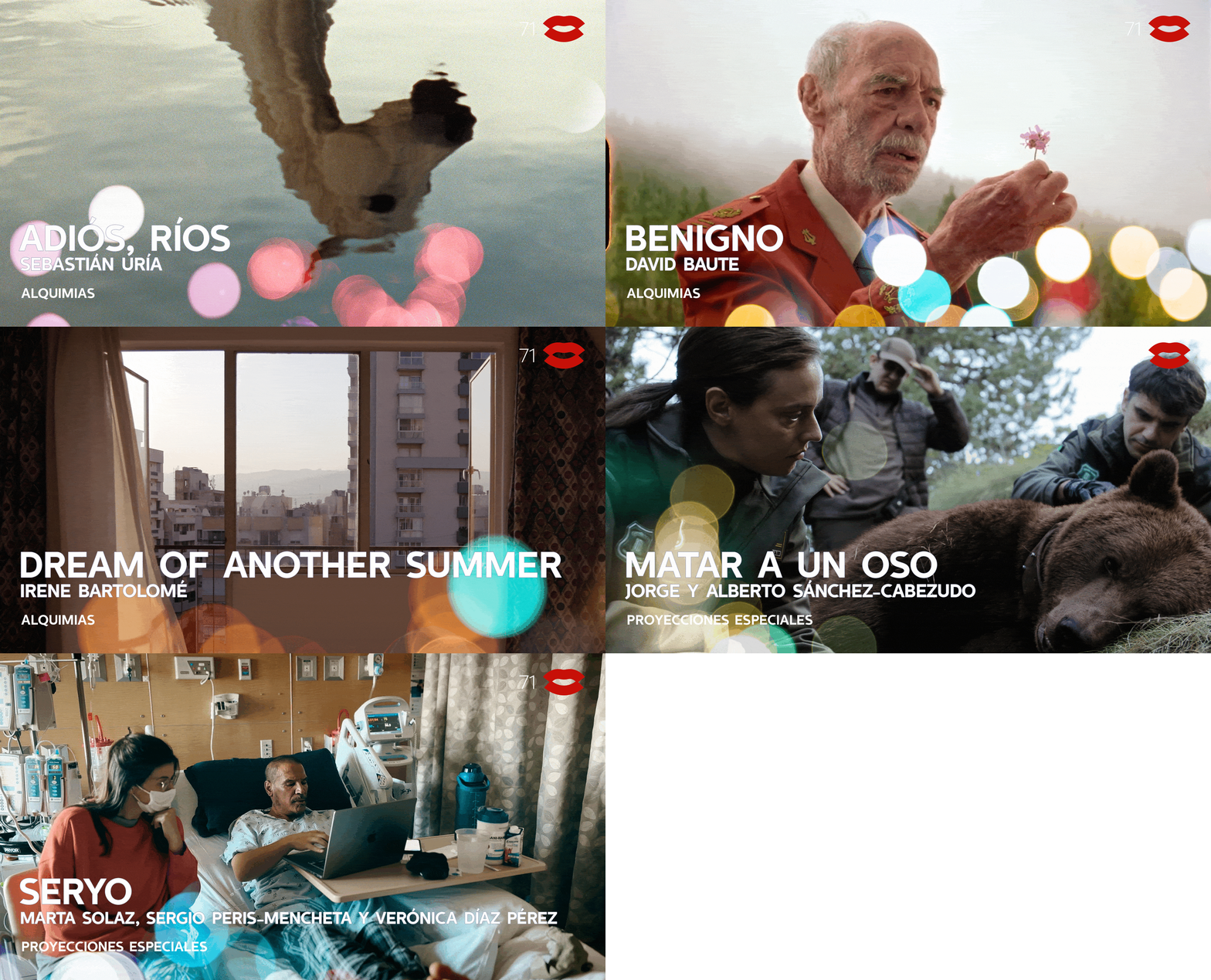
The Alquimias section will screen Adiós, ríos by Sebastián Uría, starring Amador Arias – who played the lead role in O que arde – in the lead role. The film, produced by Tamboura Films, also explores a changing landscape, but from the perspective of the gradual disappearance of a village and the way of life of its inhabitants. Nature begins to reclaim the spaces left behind by humans, and the film observes this process with particular attention to the landscape, cinematography and sound. Abandonment is not merely the end of a community: it is also the transformation of an ecosystem and the legacy associated with it.
In Benigno, David Baute films in Super 8 – with outstanding cinematography by Mauro Herce – a man in the final stages of his life, placing his everyday actions at the heart of the film. Benigno de León Tosco, aged 88, continues to live in the house where he was born and to work in the family vegetable garden. Tinglado Film produces this film, in which every gesture takes on a testimonial value, just like the landscape that frames them: preserving a man’s life also means preserving a house, a community and a particular relationship with the land.
In Dream of Another Summer, a Spanish-Lebanese co-production by Colibrí Studio, Lemu Helu and The Attic Productions, director Irene Bartolomé looks at Beirut through its buildings, its streets and its empty spaces. The city becomes a living archive in which the voices and traces of those who are no longer with us remain linked to the places they once inhabited. Through this unhurried observation, the film finds a way to reconstruct a memory that needs no explanation to make itself felt.
Special Screenings
The Spanish programme is expanded with Matar a un oso, a series by Jorge and Alberto Sánchez-Cabezudo, creators of Crematorium, The Zone and See You in Another Life. This Movistar Plus original series, co-produced with ARTE France and in collaboration with Kubik Films (STUDIO TF1), adapts the real-life case of the death of the bear Cachou in the Aran Valley into fiction, crafting a gripping thriller centred on the tensions between territory, tradition and the environment. The cast includes Eduard Fernández, María Rodríguez Soto, Miki Esparbé, Pol López, Nora Navas and Àlex Monner.
This programme concludes with SerYo, a documentary making its world premiere at SEMINCI, produced by El Terrat and directed by Marta Solaz, Sergio Peris-Mencheta and Verónica Díaz Pérez. From his hospital bed, whilst battling illness, Peris-Mencheta continues to direct a theatre production remotely, and the creative process ceases to be merely his profession, becoming instead the driving force that brings him back to life and reconnects him with others. The camera captures this moment of extreme fragility, but also the network of support that forms around him: his family, the theatre and friends such as Penélope Cruz, Javier Bardem and Juan Diego Botto.

- Hermanas, de Ione Hernández Sáenz.
- La violinista, de Ervin Han y Raúl García.
- Las islas afortunadas, de Helena Girón y Samuel Delgado.

- El confidente, de Daniel Calparsoro.
- Una familia, de Ricardo Gómez.
- Un hombre en un puente, de David Martín de los Santos.

- A nadadora, de Sandra Sánchez.
- As augas, de Ledicia Sola.
- Cinemanía, de Marc Ferrer.
- Salen las lobas, de Claudia Estrada Tarascó.

- Camionero, de Francisco Marise.
- Papagayo, de Omar Al Abdul Razzak.
- Todo es cárcel, de Eloy Enciso Cachafeiro.

- Caro Nanni, de Pablo Maqueda.
- Vacío luminoso, de Uberto Rapisardi.

- Adiós, ríos, de Sebastián Uría.
- Benigno, de David Baute.
- Dream of Another Summer, de Irene Bartolomé.

- Matar a un oso, de Jorge y Alberto Sánchez-Cabezudo.
- SerYo, de Marta Solaz, Sergio Peris-Mencheta y Verónica Díaz Pérez.